
Sesimbra Castle
Castelo de Sesimbra
Portugal · Setúbal District — Sesimbra, Arrábida coast, south of Lisbon · Near Sesimbra
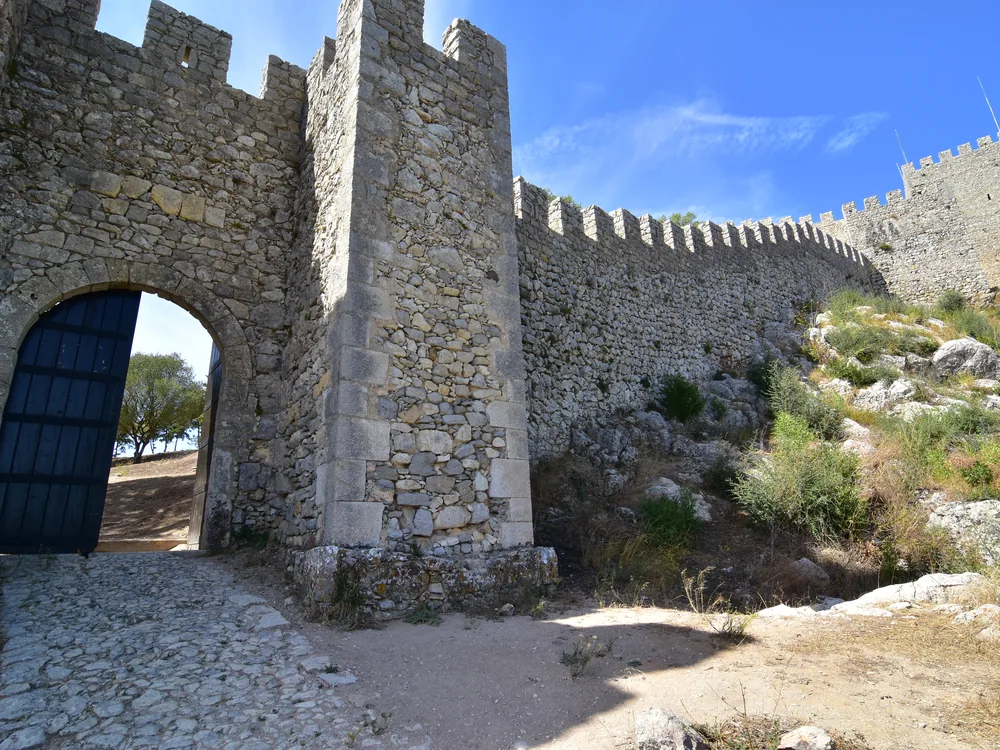
Built 1165 · Moorish and Portuguese medieval hilltop castle, 12th–17th century — the castle at Sesimbra occupies a hilltop above the Arrábida coast at an elevation that commands the Atlantic approaches south of Lisbon; originally a Moorish stronghold, reconquered by Afonso Henriques in 1165; recaptured by the Moors and retaken by Sancho I in 1200; substantially rebuilt by the Portuguese crown in the 12th–13th centuries; the existing curtain wall, towers, and castle village reflect the medieval Portuguese fortification of the site; partially rebuilt and expanded under Dom Afonso VI in the 1670s–80s; inside the castle enclosure, a small village with a parish church (Nossa Senhora do Castelo) and several houses has persisted within the walls since the medieval period; the castle's position on the Serra da Arrábida gives it panoramic views over the Atlantic, the Arrábida coastline, and the Serra on clear days — one of the most dramatic coastal viewpoints in mainland Portugal
This page is part of an independent travel guide and is not affiliated with, endorsed by, or operated by Sesimbra Castle.
© Castles & Palaces
Quick Facts
- Hours
- Daily 09:00–18:00
- Guided tour from
- €300
- Duration
- 45 minutes–1 hour (castle walls, towers, parish church of Nossa Senhora do Castelo, and Atlantic viewpoints); allow extra time to walk down and explore Sesimbra fishing town below
- Best time
- April to June and September to October
- Nearest city
- Sesimbra
Featured Tour
Arrábida Full Day Private Tour
Cancellation available · Instant confirmation
Highlights
- ✦Free entry and a panoramic Atlantic viewpoint — Sesimbra Castle is one of Portugal's best-kept secrets: free to enter, considerably less visited than the Sintra castles, and positioned on a hilltop with a 360-degree view that includes the open Atlantic to the west, the Arrábida Natural Park's limestone ridges to the east, and the fishing town of Sesimbra directly below; the combination of a genuine medieval castle and a great free viewpoint makes it underrated on Portugal's heritage circuit
- ✦Moorish to Portuguese reconquest history — a site changed hands twice — the castle at Sesimbra has a layered reconquest history unusual even by Portuguese standards: Afonso Henriques reconquered it from the Moors in 1165 during his southward campaign; the Moors retook it; Sancho I reconquered it definitively in 1200; this double reconquest reflects the difficulty of holding coastal positions in 12th-century Portugal, where Moorish maritime supply lines and counter-offensives could reverse Portuguese gains before permanent settlement was established; Sesimbra's hilltop was worth taking twice
- ✦Arrábida Natural Park — the most dramatic coastal landscape in mainland Portugal — the Arrábida Natural Park south of Sesimbra is defined by its limestone ridge (Serra da Arrábida, up to 501m) dropping to turquoise-coloured waters and small coves with some of Portugal's clearest coastal water; the park's combination of Mediterranean scrubland, limestone karst, and Atlantic sea gives it a visual character more reminiscent of the northern Adriatic than the typically Atlantic Portuguese coast; the castle sits at the edge of this landscape, giving the visit a natural heritage dimension alongside the medieval
- ✦Sesimbra fishing town — one of Portugal's most charming coastal villages — directly below the castle, the fishing town of Sesimbra retains its character as an active fishing port with a daily fish auction, traditional boats, and a seafront promenade; the town is one of the less commercialised of Portugal's Atlantic coastal settlements and pairs naturally with the castle visit as the human landscape at the foot of the medieval hilltop
- ✦The GYG Arrábida private tour — a full regional day combining wine, food, and castle — the GYG private day tour (t663642, departing from Azeitão/Lisbon area) covers the Azeitão wine village, Sesimbra Castle, Serra da Arrábida coastline, Setúbal city, and the Livramento fish market — a full Arrábida regional programme with the castle as one of the confirmed standard stops
Skip the queue with a guided tour
Skip-the-line tickets & expert guides
The hilltop above Sesimbra is approximately 200 metres above the town and the Atlantic below. From the castle walls, the view southwest takes in the open ocean without obstruction; the northwest gives the limestone ridges of the Serra da Arrábida and the Cabo Espichel headland; the south shows the coast running down toward Setúbal and the broad mouth of the Sado estuary. This is one of the better coastal viewpoints in mainland Portugal, and it is free.
The castle at Sesimbra was first a Moorish stronghold. The Moors, who controlled much of the Iberian Peninsula from the 8th century and retained significant territories in southern Portugal well into the 13th, understood the hilltop's strategic value: a fortified position above an Atlantic landing point controlled the coastal approach and gave visibility over the sea that the Portuguese crown would later depend on to defend Lisbon from seaborne attack. Afonso Henriques — the first king of Portugal and the driver of the Portuguese Reconquista southward from the Minho — reconquered Sesimbra in 1165 as part of the same campaign that was securing the Tagus valley and pushing toward the Alentejo. The Moors took it back. Sancho I reconquered it in 1200 and the Portuguese crown held it permanently thereafter.
The double reconquest left a double heritage. The underlying structure of the hilltop position is Moorish — the site choice, the initial fortification logic, and some elements of the lower enclosure reflect the Moorish military use of the hill. The Portuguese rebuilt over and around the Moorish structure from the 12th century, adding curtain walls, towers, and eventually a small village within the castle enclosure — a parish church (Nossa Senhora do Castelo), several houses, and a community that lived within the medieval walls — that persists to the present. Dom Afonso VI commissioned further works in the 1670s–80s, giving the castle its partially 17th-century character.
The position of Sesimbra Castle on the northern edge of the Arrábida Natural Park gives the visit its largest context. The Arrábida is defined by the Serra da Arrábida — a limestone ridge running southwest from Palmela to the Cabo Espichel, reaching 501 metres at its highest point and dropping to the Atlantic in a sequence of limestone cliffs and small coves with some of Portugal's clearest coastal water. The Mediterranean character of the Arrábida — warm, dry, dense maquis vegetation on the limestone slopes, turquoise sea in the sheltered coves — is distinctive in a country whose Atlantic coast is typically cooler and rougher. The castle sits at the transition between the urban coast of the Setúbal Peninsula and this protected natural park.
The GYG private Arrábida day tour (t663642, from the Azeitão area/Lisbon) places Sesimbra Castle as one of the confirmed standard Visit stops in a programme that also covers Azeitão's wine village (Setúbal Peninsula wines), the Serra da Arrábida's coastal scenery, Setúbal city, and the Livramento fish market. The price — approximately €300 per private group of up to three people — is for the full regional day, not a per-person castle-only entry; the castle itself is free.
The fishing town of Sesimbra, directly below the castle, is one of Portugal's more genuinely charming Atlantic coastal settlements: an active fishing port with daily fish auction, traditional wooden boats, and a compact seafront promenade that has not yet been entirely absorbed into beach tourism. Walking down from the castle into the town for lunch extends the visit into the human dimension at the foot of the medieval hill.
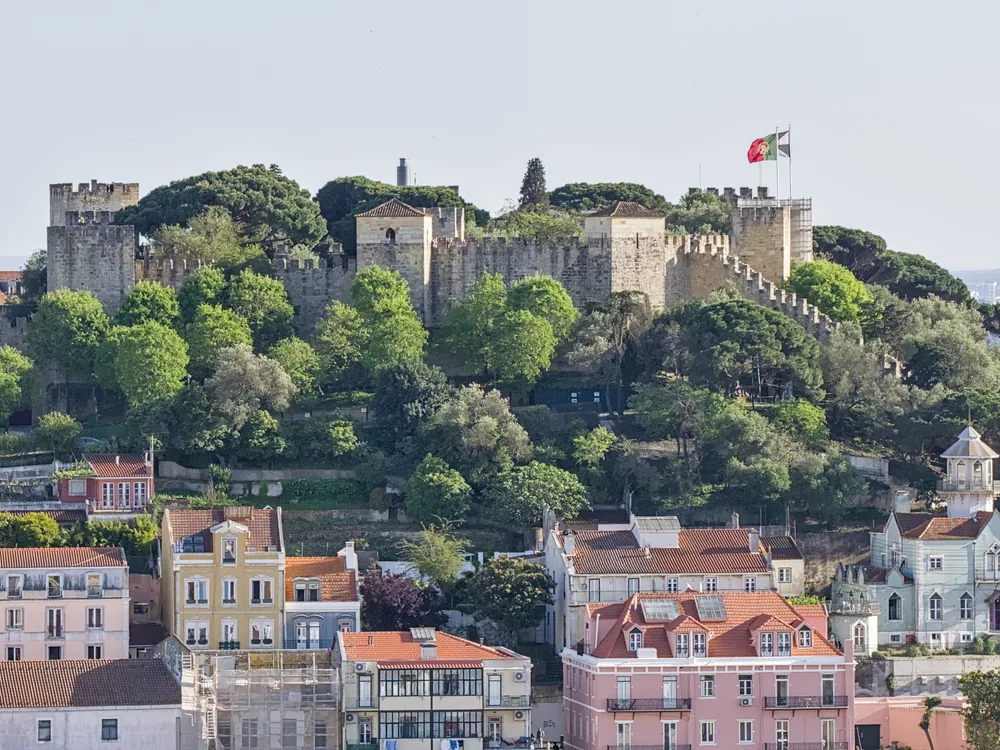
[Queluz Palace](/castles/portugal/queluz-palace) — the 18th-century rococo royal residence on the outskirts of Lisbon — and [Castelo de São Jorge](/castles/portugal/castelo-sao-jorge) — the Moorish-Portuguese hilltop castle at the heart of Lisbon — are the main Lisbon-area heritage comparators for visitors combining Sesimbra with the capital. [Pena Palace](/castles/portugal/pena-palace) in Sintra completes the Lisbon-Setúbal coastal heritage circuit for visitors with more days in the region.
History
A Moorish stronghold on the Sesimbra hilltop controlled the Atlantic coastal approach south of Lisbon before the Portuguese Reconquista reached the Serra da Arrábida coast. Afonso Henriques, the first king of Portugal, reconquered Sesimbra in 1165, but the Moors retook it. King Sancho I definitively reconquered Sesimbra around 1200, and Portuguese construction began on the Moorish foundation — the curtain walls, towers, and the small settlement of church and village that grew within the enclosure were built in their current medieval form through the 12th and 13th centuries.
The castle was maintained by the Portuguese crown as part of the coastal defensive network protecting the sea approach to Lisbon through the 13th to 17th centuries. Dom Afonso VI commissioned further works and a partial rebuilding of the castle in the 1670s and 1680s, adding to the medieval fabric. Through the 18th to 20th centuries the castle was preserved as a heritage site while a small resident community continued to use buildings within the enclosure.
The castle is freely accessible daily. The parish church of Nossa Senhora do Castelo continues to operate within the enclosure.
How to Visit
Getting there: From Lisbon (40 km north), drive via A2 motorway then IC32 in about 45 minutes. Public bus TST line 208/209 from Lisbon's Praça de Espanha to Sesimbra takes roughly 1 hour; there is no direct train. From Sesimbra town, the castle is 2 km uphill — a 30–40-minute walk or a short drive on the narrow castle road.
Tickets: Walk-up entry free. The GYG tour (t663642, from €300 per private group of up to 3, 5.0★/2 reviews) — a full 8-hour private day from Lisbon covering Sesimbra Castle, Azeitão wine village, Serra da Arrábida coastline, Setúbal, and the Livramento fish market — book in advance; note that wine/food tasting and Christ the King stops are marked as extra fee on the itinerary, but the castle visit is standard included.
Practical tips: Arrive in the morning for the clearest Atlantic views — sea haze can build by afternoon. The castle road from town is narrow; if driving, be prepared for tight passing. After the castle, walk down to Sesimbra fishing town for lunch — it is one of Portugal's most genuinely charming active fishing ports and pairs naturally with the hill visit.
Combine with: [Queluz Palace](/castles/portugal/queluz-palace) for a Lisbon-area heritage day, and [Castelo de São Jorge](/castles/portugal/castelo-sao-jorge) in central Lisbon for a complete Setúbal Peninsula and capital circuit.
Frequently Asked Questions
Sesimbra Castle and the Sintra castles (Pena Palace, Castle of the Moors, Sintra National Palace) offer substantially different experiences. Sintra's castles are larger, more elaborate architecturally, and significantly more crowded — Pena Palace alone receives 1.5 million visitors per year. Sesimbra Castle is smaller, architecturally less elaborate, and receives a fraction of that number, which gives the visit a calmer, more contemplative character. The strongest argument for Sesimbra over Sintra is the view: the Atlantic panorama from Sesimbra's hilltop, with the Arrábida coast and open sea, has no equivalent in the Sintra hills. Entry is also free. For visitors who have already done Sintra, Sesimbra offers something genuinely different rather than a lesser version of the same experience.
Location
Castelo de Sesimbra, Rua do Castelo, 2970-779 Sesimbra, Portugal
Nearby Castles


Tours & Tickets
Powered by GetYourGuide
From
€300/ group