
Alba Iulia Citadel
Cetatea Alba Iulia
Romania · Transylvania, Alba County · Near Alba Iulia
Built 1716 · Baroque star fort (Vauban-style system) built 1716–1735 by Habsburg military engineers under the direction of Giovanni Morando Visconti for Emperor Charles VI; seven-pointed star design with angled bastions, outer defensive ditches, and three ceremonial Baroque gates, of which the Gate III (Kaisertor) is the most elaborately decorated, with relief sculptures depicting Habsburg military achievements; the citadel was built on the site of earlier Roman, medieval, and Ottoman military works, of which the Roman city of Apulum (2nd–3rd century CE) underlies the current structure; the citadel encloses the 13th-century Cathedral of Saint Michael — the largest Romanesque/Gothic cathedral in Transylvania — and the Hall of the Union, where the union of Transylvania with Romania was proclaimed on 1 December 1918; the Coronation Cathedral (built 1921–1922) was erected within the citadel specifically for the coronation of Ferdinand I and Marie of Romania in 1922
This page is part of an independent travel guide and is not affiliated with, endorsed by, or operated by Alba Iulia Citadel.
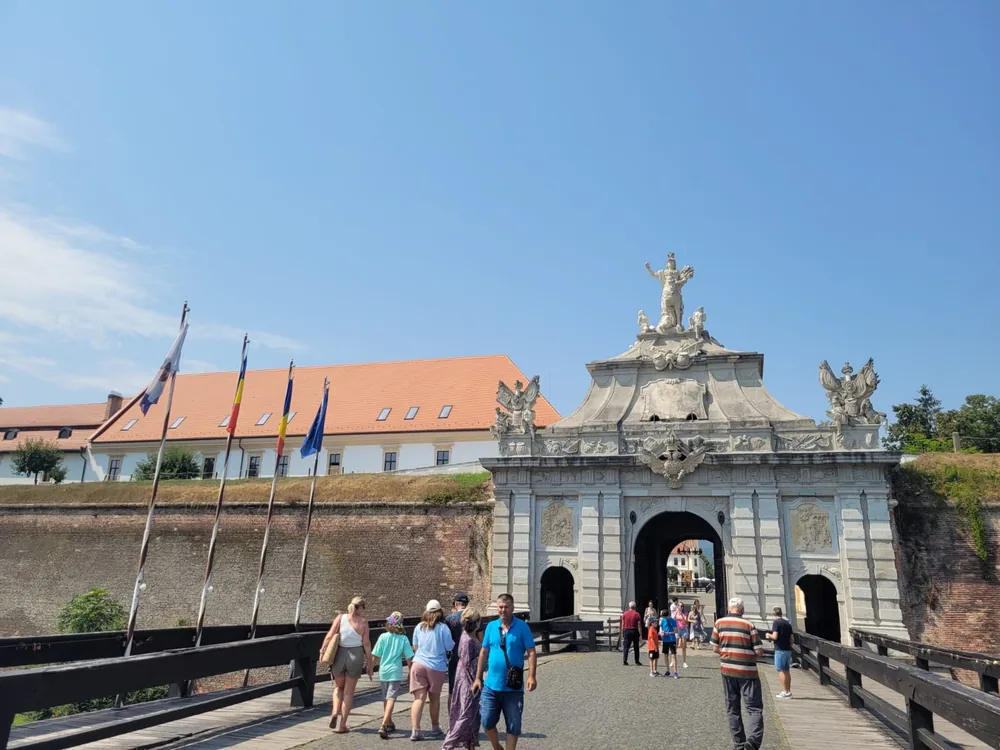
© Castles & Palaces
Quick Facts
- Hours
- Daily 00:00–24:00
- Day trip from
- €119
- Duration
- 2–3 hours
- Best time
- April to October
- Nearest city
- Alba Iulia
Featured Tour
From Brașov: Corvin Castle & Alba Iulia Citadel Day Tour
Cancellation available · Instant confirmation
Highlights
- ✦On 1 December 1918 — now Romania's National Day — the Assembly of Romanians of Transylvania gathered in Alba Iulia to proclaim the union of Transylvania, Banat, Crișana, and Maramureș with the Kingdom of Romania; the citadel and the Hall of the Union where the vote was taken are the physical memorial to the act of Romanian national unification, making Alba Iulia the symbolic birthplace of modern Romania in the same way that Philadelphia or Versailles function in American and French national identity
- ✦The Coronation Cathedral within the citadel was built in 1921–1922 specifically for the coronation of Ferdinand I and Queen Marie of Romania on 15 October 1922 — the first coronation of the united Romanian state, presided over by Patriarch Miron Cristea; the cathedral was constructed and completed in under two years to be ready for the ceremony, and remains the dynastic church of the Hohenzollern-Sigmaringen dynasty (Romania's royal family) in Romania
- ✦The Baroque citadel was built from 1716 on the site of the Roman colony of Apulum (2nd–3rd century CE), one of the most important cities in the province of Dacia; the Roman city's streets, walls, and public buildings lie beneath the current citadel surface, with extensive Roman finds displayed in the National Museum of Unification housed within the citadel
- ✦Gate III of the citadel — the Kaisertor, the Kaiser's Gate — is a masterpiece of Habsburg Baroque military architecture: an arched ceremonial portal flanked by statues and decorated with relief sculptures depicting the Habsburg victory at the Battle of Zenta (1697) and other military achievements of Emperor Charles VI, designed to assert imperial power as dramatically in stone as in the military might of the star fort behind it
- ✦The Cathedral of Saint Michael within the citadel is the largest Romanesque/Gothic cathedral in Transylvania, begun in the 13th century and containing the tomb of John Hunyadi — the Hungarian regent (father of King Matthias Corvinus, who built Corvin Castle) who was one of the most significant military leaders against the Ottoman expansion in the 15th century
Tickets & tours
Book through GetYourGuide
Alba Iulia is a small city on the Mureș River in western Transylvania that carries more Romanian national symbolism than any other place in the country. This is where Romania was proclaimed a united nation. The date — 1 December 1918 — is Romania's National Day. The place — the Hall of the Union within the Alba Iulia Citadel — is Romania's most sacred civic site. The citadel built by Habsburg military engineers between 1716 and 1735 on the western edge of what is now the city centre was not built with Romanian national unification in mind — it was built to impose Austrian imperial control on a strategically important point in Transylvania — but history redirected its symbolism in 1918 with an assembly of Romanian delegates that voted, in this space, to join the existing Kingdom of Romania. The Habsburg star fort became the birthplace of the unified Romanian state.
The citadel's architectural form is the seven-pointed Vauban-style star fort: angled bastions projecting from a central enclosure, with outer defensive ditches designed to eliminate the blind angles that earlier round towers left for attacking forces. This design, developed by the French military engineer Sébastien Le Prestre de Vauban in the late 17th century, was adopted by every major European military power and represents the most sophisticated defensive architecture of the gunpowder era. The Habsburg engineering team, led by Giovanni Morando Visconti, applied the Vauban system to the Alba Iulia site starting in 1716, the year after the Habsburg victory over the Ottoman Empire at Petrovaradin — a moment of maximum Imperial confidence, when the Habsburgs controlled Transylvania firmly enough to invest in its military infrastructure.
The citadel has three ceremonial gates, of which Gate III — the Kaisertor — is the most dramatically decorated: relief sculptures on the entrance arch and flanking walls depict Habsburg military victories, most prominently the Battle of Zenta (1697), and the overall architectural programme is an assertion of imperial power in stone as unambiguous as anything built in Vienna's formal ceremonial context. Walking through the Kaisertor into the citadel interior — the paved central street of a town within a town, with the Cathedral of Saint Michael ahead and the Coronation Cathedral to the left — gives an immediate sense of the compressed historical density that the site contains.
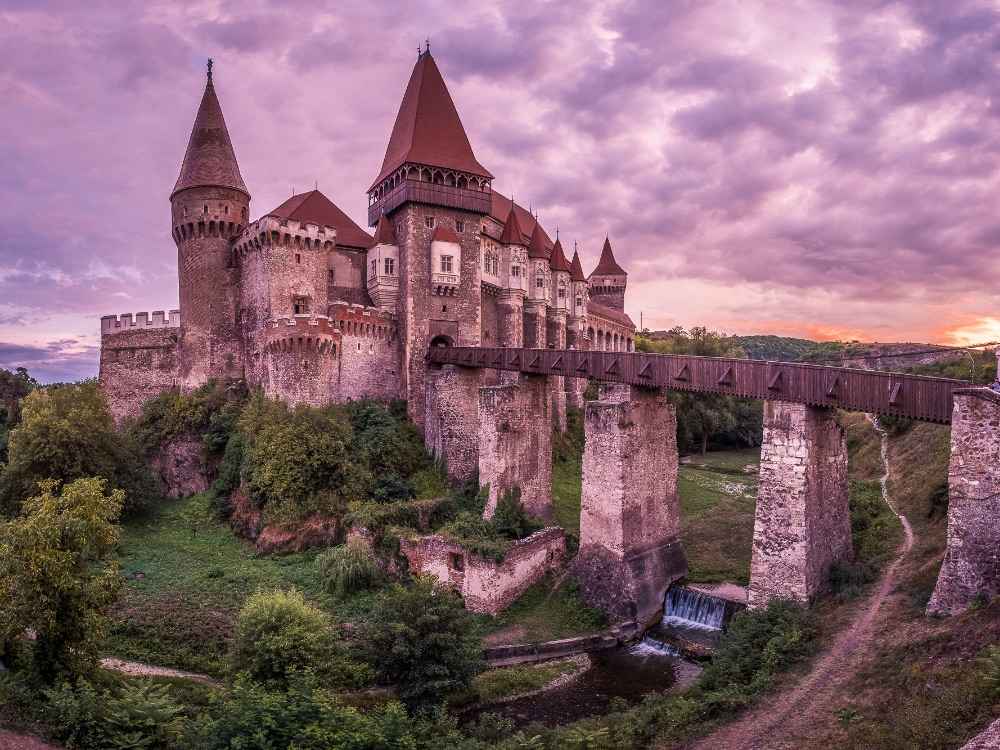
The Cathedral of Saint Michael is the citadel's oldest major building: a Romanesque and Gothic structure begun in the 13th century, the largest cathedral in Transylvania, which contains within its walls the tomb of John Hunyadi, the Hungarian regent who was the single most effective military commander against Ottoman expansion in the 15th century. Hunyadi's son, Matthias Corvinus, went on to become King of Hungary and commissioned [Corvin Castle](/castles/romania/corvin-castle) at Hunedoara — which means that the two most significant castle-fortresses in western Transylvania (Corvin and Alba Iulia Citadel) are connected by the Hunyadi family relationship.
The Coronation Cathedral is a deliberately newer building: designed in the Neo-Byzantine Romanian ecclesiastical style, built in 1921–1922 for the specific purpose of hosting the coronation of Ferdinand I and Queen Marie on 15 October 1922 — the first formal coronation of the united Romanian state. The site of the coronation is now accessible as a church; the thrones used at the ceremony are preserved inside. Busts and statues in the citadel complex include Ferdinand and Marie, and the Romanian national consciousness embedded in the site is expressed in the stone programme of every building.
The Roman layer beneath the citadel is substantial. Apulum was one of the most important cities in the province of Dacia — a legionary fortress (legio XIII Gemina), a colony, and eventually a municipium. Extensive Roman remains have been excavated across the urban area, and the National Museum of Unification within the citadel houses Roman sculpture, inscription stones, and objects from the Dacian and Roman periods that represent one of the strongest Roman collections in Romania.
The citadel itself is free to enter and accessible at all hours. The individual monuments — the Hall of the Union Museum, the National Museum of Unification, the Coronation Cathedral, and Saint Michael's Cathedral — charge small separate entry fees and have their own hours. A horse-drawn carriage circuit of the citadel walls is available from near the main entrance — a popular practical option for visitors who want to see the seven-pointed star from the level of the ramparts without walking the full circuit on foot.
[Corvin Castle](/castles/romania/corvin-castle) at Hunedoara, 75 kilometres west, is the natural companion visit: the Hunyadi family connection, the shared western Transylvanian geography, and the GetYourGuide day tour that covers both sites in a single day make this the standard combination.
History
The Roman colony of Apulum was established at this site in the 2nd and 3rd centuries CE as one of the most important cities in the province of Dacia, with a legionary fortress (legio XIII Gemina), extensive civilian settlement, and major public buildings. Roman withdrawal from Dacia in the 4th century left the site to pass through successive Gepid, Avar, and early Hungarian overlayers before a Hungarian medieval town emerged on the Roman foundations in the 10th and 11th centuries. The Cathedral of Saint Michael was begun in the 13th century, making the city the ecclesiastical centre of Transylvania as the seat of the Transylvanian bishop. John Hunyadi, who led the Hungarian military campaigns against the Ottomans in the 1430s and 1440s, was buried in the cathedral when he died in 1456.
Alba Iulia became the capital of the independent Principality of Transylvania during the 16th and 17th centuries, when the principality maintained autonomy under Ottoman suzerainty. Michael the Brave, Voivode of Wallachia, briefly united Wallachia, Moldavia, and Transylvania under his rule from Alba Iulia in 1599–1600 — a momentary prefigurement of Romanian national unification that later became central to Romanian historical memory. Habsburg conquest of Transylvania in 1689 brought a Vauban-style star citadel, built by Giovanni Morando Visconti for Emperor Charles VI between 1716 and 1735, with the medieval city largely demolished to create the military zone.
The defining national moment came on 1 December 1918, when the Assembly of Romanians of Transylvania, Banat, Crișana, and Maramureș voted for union with the Kingdom of Romania at the Hall of the Union in the citadel. The Coronation Cathedral was built within the citadel in 1921–22, and Ferdinand I and Queen Marie were crowned there on 15 October 1922 in the first coronation of the united Romanian state. December 1 is Romania's National Day, marked annually at Alba Iulia.
How to Visit
Getting there: Alba Iulia is on the A1 motorway between Sibiu (60 km east) and Deva, roughly 1 hour from Sibiu and 4 hours from Bucharest by car. By train: Alba Iulia CFR station is 3 km from the citadel, with connections to Cluj-Napoca (1.5 hours), Sibiu (1 hour), and Bucharest (4–5 hours); local buses and taxis cover the station-to-citadel gap.
Tickets: Walk-up entry is free — the citadel is a public space open 24 hours. Individual monuments inside (Hall of the Union Museum, National Museum of Unification, Coronation Cathedral) charge small separate fees at each door (approx. 10–15 RON each). The GetYourGuide tour covers both Alba Iulia Citadel and Corvin Castle in a single Transylvania day trip from Brașov — book in advance.
Practical tips: Arrive by mid-morning to walk the central street before tour groups fill Gate III; the citadel is compact but the individual monuments add up in time. The horse-drawn carriage circuit of the ramparts, departing from near Gate III, is the best way to appreciate the seven-pointed Vauban star shape from outside the walls. If visiting on 1 December (Romania's National Day), book accommodation weeks ahead — large military parades and ceremonies make the citadel the focal point of the national celebration.
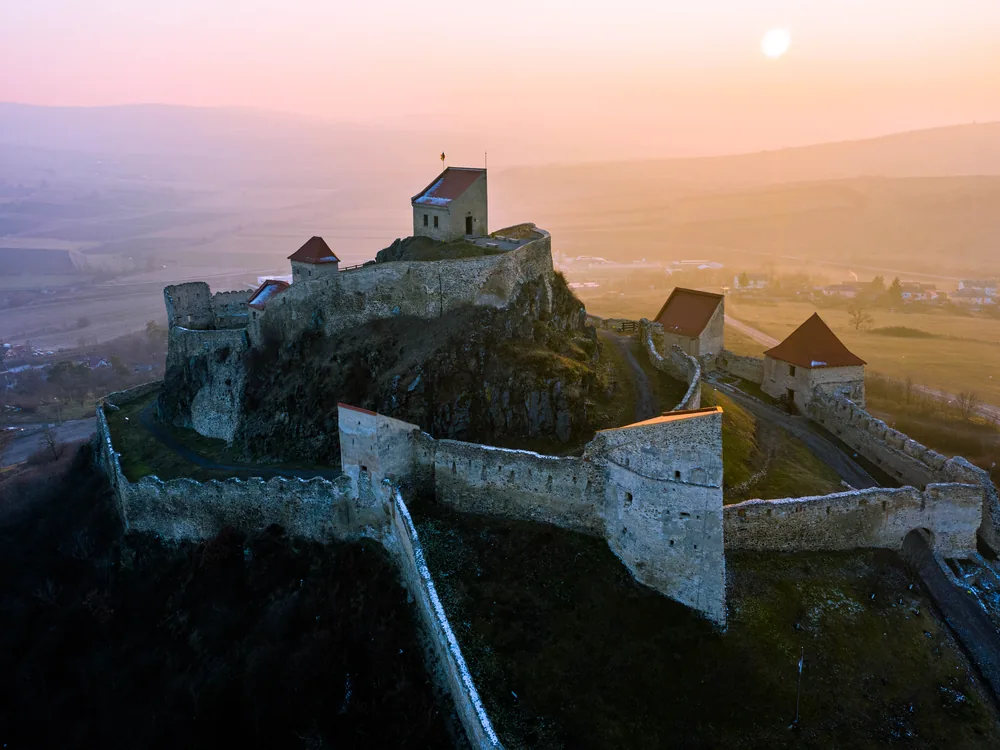
Combine with: Corvin Castle (75 km west at Hunedoara), the most dramatic Gothic fortress in Romania and the Hunyadi family stronghold directly linked to the tomb inside Saint Michael's Cathedral here; Rupea Fortress (90 km east on the Sibiu–Brașov road), a compact hilltop stronghold ideal as a same-day stop en route to Brașov.
Frequently Asked Questions
On 1 December 1918 — now Romania's National Day — the Assembly of Romanians of Transylvania, Banat, Crișana, and Maramureș gathered at the Hall of the Union in Alba Iulia's citadel and voted to unite with the Kingdom of Romania. This act of union created the unified Romanian state for the first time, joining the territories previously under Austro-Hungarian rule with the existing Kingdom of Romania (Wallachia and Moldavia). The date and location are considered the founding moment of modern Romania, equivalent to a declaration of independence or unification in other national narratives.
Location
Str. Mihai Viteazul, Alba Iulia 510009, Romania
Nearby Castles
Tours & Tickets
Powered by GetYourGuide
From
€119/ person