Brodie Castle
Brodie Castle
Scotland · Moray, near Forres · Near Inverness
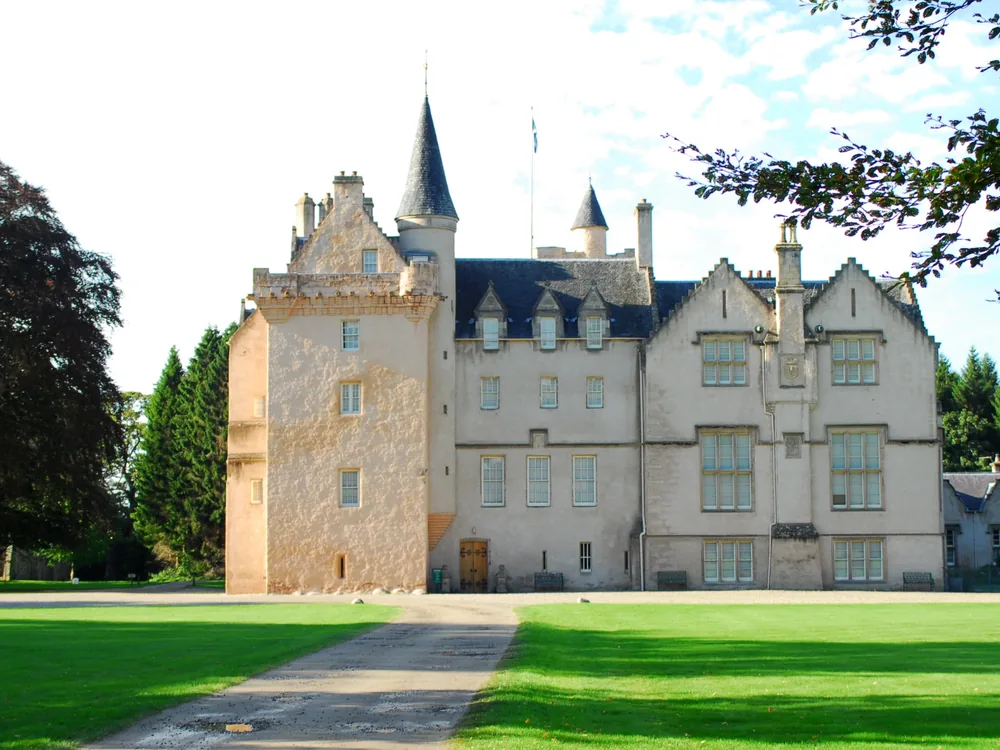
Built 1567 · 16th-century Z-plan tower house with 17th-century Baroque additions and 19th-century Scottish Baronial remodelling — the core of the present structure dates to around 1567, a Z-plan layout in which two towers project diagonally from opposite corners of a rectangular main block, the standard defensive plan of Scottish tower houses in the later 16th century; major interior additions in the 17th century following the 1645 fire include the plaster ceilings in the Baroque manner, with high-relief figures, foliage, and geometric patterns, which are the castle's most important interior architectural feature; the Edinburgh architect William Burn carried out substantial additions and exterior remodelling in the 1820s, adding the corbelled angles, stepped gables, and turrets of the Scottish Baronial revival idiom that give the castle its current silhouette; the combination of the genuine late-medieval and early-modern core with Victorian Baronial dressing is characteristic of the NTS's larger estate houses in the northeast of Scotland
This page is part of an independent travel guide and is not affiliated with, endorsed by, or operated by Brodie Castle.
© Castles & Palaces
Quick Facts
- Hours
- Daily 10:00–17:00
- Guided tour from
- €584
- Duration
- 1.5–2 hours (castle interior and grounds); the spring daffodil display adds significant grounds-walking time
- Best time
- Late March to April for the daffodil display
- Nearest city
- Inverness
Featured Tour
Moray-Shire Tour: To Brodie Castle, Fort George & More
Cancellation available · Instant confirmation
Highlights
- ✦Spring daffodil display — over 100,000 bulbs in dozens of varieties, accumulated and refined over generations of deliberate cultivation by the Brodie family, blooming in late March to early April; the display is one of the most photographed seasonal events in the NTS estate and transforms the castle grounds into a spectacle that draws visitors from across Scotland before the main tourist season
- ✦17th-century plaster ceilings — following the 1645 fire caused by Lewis Gordon's Royalist forces during the Scottish Civil War, the castle's reconstruction produced Baroque plaster ceilings in several rooms that are among the finest of their type in a Scottish domestic interior; the high-relief figures, foliage, and geometric patterns work at a scale and quality that points to substantial post-war investment and cultural ambition on the part of the Brodie family
- ✦Art and furniture collection — the castle's contents include European Old Masters among them a panel attributed to Giovanni Bellini, Flemish portraits, Scottish furniture and decorative arts assembled across four centuries of family occupation; the NTS preserved the collection in context rather than dispersing it, maintaining the rooms as furnished house interiors with objects in their domestic positions
- ✦Z-plan tower house to Scottish Baronial — the architectural progression of Brodie Castle is readable in its fabric: the 1567 Z-plan core, the 17th-century rebuilding, and the 1820s William Burn additions that gave the exterior its current Baronial silhouette; the combination of genuine 16th-century structure with Victorian remodelling is characteristic of the NTS's major northeast Scotland estate houses
- ✦Clan Brodie — 400 years of unbroken noble tenancy — the Brodies are documented holding the barony from the 12th century, one of the longer continuous tenancies in Scottish noble history; the 24th Brodie of Brodie gave the castle and its collections to the National Trust for Scotland in 1980, ensuring the house and contents remained intact and accessible
- ✦GetYourGuide Moray-shire private day tour — same 8-hour circuit also visits Fort George, a Benromach Distillery whisky tasting, and includes lunch; €584 per group up to 4 (not per person); entrance fees to all attractions included
Skip the queue with a guided tour
Skip-the-line tickets & expert guides
The daffodils come first. Each spring, in the weeks around late March and early April, the grounds of Brodie Castle produce one of the most striking seasonal displays in the National Trust for Scotland's estate portfolio — over a hundred thousand daffodil bulbs in dozens of distinct varieties, accumulated and refined across generations of deliberate cultivation, blanket the grass around the castle in colours from the palest cream to deep yellow. The display was the work of the Brodie family over the 20th century, each generation adding to what earlier members had planted, with later generations bringing in specialist varieties to extend the colour range and the season. For three or four weeks each year the castle draws visitors for the grounds alone; for the remaining forty-eight it presents a more measured face: a substantial Z-plan tower house rising from the flat agricultural landscape of Moray near the market town of Forres, its 1567 core surrounded by later additions, its interior filled with four centuries of family content.
The Brodie family's connection to this land is old even by Scottish standards. They are documented holding the barony of Brodie from the 12th century — one of the longer unbroken noble tenancies in Scotland, a country where political failure, failed dynastic succession, and royal forfeiture regularly terminated such arrangements. The family navigated the Reformation, the religious and dynastic conflicts of the Stewart monarchs, and the 17th-century wars without losing the estate. Their religious politics placed them firmly in the Covenanting camp during the mid-17th century — supporters of the Presbyterian settlement against Charles I's attempts to impose episcopacy — a positioning that made them targets in the brutal logic of the Scottish Civil War.
In 1645 Lewis Gordon, commanding Royalist forces in the northeast, burnt the Brodie estate. The 11th Brodie of Brodie and his family were Covenanters and their property was a legitimate target. The fire was significant enough to leave a documentary mark, though the core Z-plan structure of the 1567 castle was not entirely lost. The Z-plan layout — a rectangular main block with two towers projecting diagonally from opposite corners — is the characteristic defensive form of Scottish tower houses in the second half of the 16th century, a plan that allowed defenders to cover all four faces of the main block from the tower windows without exposing the towers themselves. The form was functional rather than merely conventional: the angled projection of the towers gives firing coverage that a simple rectangular layout cannot achieve.
The reconstruction that followed the 1645 fire produced the castle's most distinctive interior feature. The plaster ceilings that survive in several rooms — Baroque decorative work in high-relief plasterwork with figures, foliage, geometric patterns, and heraldic motifs — represent a quality of interior investment that is uncommon in Scottish domestic architecture of the period. Most comparable Scottish interiors of the late 17th century make do with painted ceilings or simple plaster work; the Brodie ceilings operate at the level of major European decorative craft, suggesting a family that, having survived the Civil War's disruptions, invested substantially in the cultural presentation of their rebuilt home.
The 19th century brought a further transformation. The Edinburgh architect William Burn, the leading practitioner of the Scottish Baronial revival for country house commissions in the early Victorian period, carried out major additions in the 1820s. The ranges he added — with their corbelled angles, stepped gables, crow-stepped parapets, and turrets — give the castle its current silhouette from most approaches: a recognisably Victorian reading of the historic Scottish tower house idiom applied to a structure with genuine 16th-century fabric beneath. Inside, the collections the family assembled across four centuries include material of considerable quality: a panel attributed to Giovanni Bellini among the Old Masters, Flemish portraits from the 17th century, Scottish furniture, ceramics, and the domestic accumulation of a family that occupied and cared for the same house across more than four hundred years of continuous ownership.
The 24th Brodie of Brodie gave the castle and its contents to the National Trust for Scotland in 1980. The donation included the collections within the house, which the NTS chose to preserve in situ rather than dispersing them to regional museums. The rooms are maintained as furnished house interiors — furniture, paintings, and objects in their domestic positions rather than extracted and presented as individual museum objects — which preserves the character of a house that was lived in by the same family for over four centuries. The walled garden, now in restoration, and the grounds' network of walks are managed separately and are accessible year-round.
The GetYourGuide Moray-shire tour is a private 8-hour circuit operated by Highland Guided Tours, covering both Brodie Castle and Fort George on the same day with a whisky tasting at Benromach Distillery near Forres and lunch included. The €584 price is per group of up to four — not a per-person ticket.
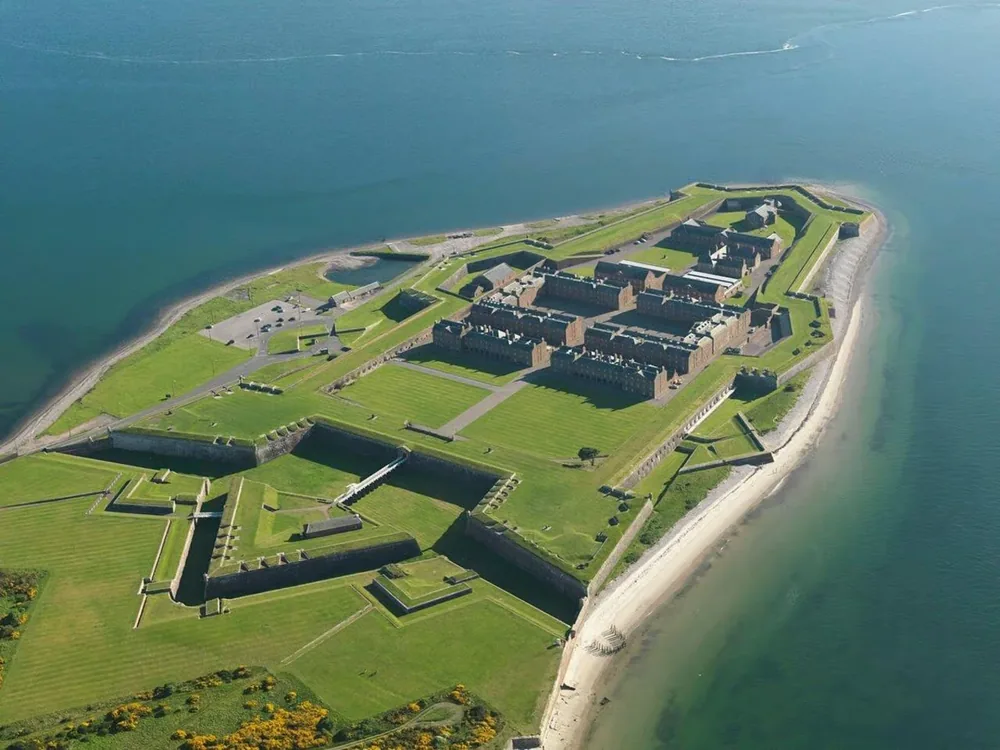
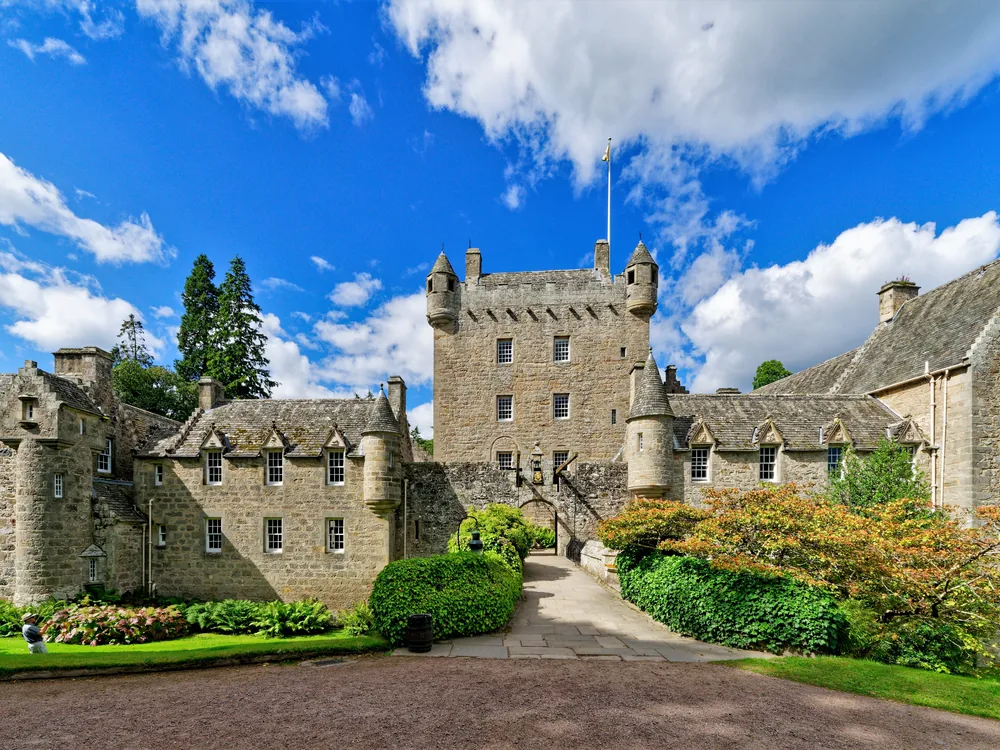
[Fort George](/castles/scotland/fort-george), the Hanoverian artillery fortress on the Moray Firth built in the aftermath of Culloden, is visited on the same GetYourGuide tour — 8 miles to the northeast, one of the finest intact 18th-century military fortifications in Europe and still an active British Army barracks. [Cawdor Castle](/castles/scotland/cawdor-castle), the seat of the Thane of Cawdor historically associated with Shakespeare's Macbeth, is 15 miles east near Nairn, completing the Moray triangle of major castle sites for visitors building a multi-day programme in this part of the Highlands.
History
Clan Brodie is documented holding the barony of Brodie from the 12th century — one of the longest unbroken noble tenancies in Scottish history, a continuity of ownership that persisted for approximately 800 years before the castle passed to the National Trust. The core of the present Z-plan tower house was constructed in 1567, replacing or substantially rebuilding an earlier structure on the estate.
Royalist forces under Lewis Gordon burned the Brodie estate in 1645 during the Scottish Civil War — the 11th Brodie of Brodie had supported the Covenanting cause, making the estate a legitimate target for opposing forces. Reconstruction and expansion following the fire produced some of the finest Baroque plaster ceilings in Scottish domestic architecture of the late 17th century. The Edinburgh architect William Burn carried out major additions and exterior remodelling in the 1820s in the Scottish Baronial revival style, giving the castle the silhouette it presents today — the crow-stepped gables and asymmetric turrets that characterise the Victorian Scottish Baronial tradition.
Through the 19th and 20th centuries the family assembled collections of Old Masters, Scottish furniture, and decorative arts, while the daffodil planting developed into the seasonal display that the grounds are now known for. The 24th Brodie of Brodie gave the castle and its collections to the National Trust for Scotland in 1980. The NTS manages it as a furnished house with year-round grounds access.
How to Visit
Getting there: Brodie Castle sits off the A96 about 5 miles west of Forres and 25 miles east of Inverness. The nearest train station is Forres (Inverness–Aberdeen line, roughly 25 minutes from Inverness); from Forres station the castle is about 4 miles with no local bus service, so a car or taxi is the practical option. Driving from Inverness takes about 25 minutes via the A96; a car is strongly recommended for a day combining Brodie with Fort George or other Moray sites.
Tickets: Admission approximately £12.50 adult (confirm current prices at nts.org.uk/brodie); free for NTS members. The Moray-shire private day tour (from €584 per group of up to 4) — an 8-hour circuit covering Brodie Castle and Fort George with a Benromach Distillery whisky tasting and lunch, entrance fees to all attractions included — is the only GetYourGuide option combining both Moray castles on a single day; book in advance. Not suitable for visitors with mobility impairments.
Practical tips: Late March to early April is the peak season for the daffodil display — over 100,000 bulbs in dozens of varieties transform the grounds before the main tourist season begins. No advance booking is required for general admission, but arriving earlier in the day during the spring peak avoids the largest crowds. Allow at least 1.5–2 hours for the castle interior and grounds, and more if the daffodil walks are at their best.
Combine with: Fort George, the Hanoverian artillery fortress 8 miles northeast on the Moray Firth, and Cawdor Castle, 15 miles east near Nairn, complete a classic Moray triangle of major sites that can be covered in a single day with a car.
Frequently Asked Questions
The Brodie daffodil collection is the result of deliberate long-term cultivation rather than a single planting event. The Brodie family and subsequently the NTS accumulated over a hundred thousand bulbs in dozens of varieties across the 20th century, with specialist varieties introduced to extend the colour range from the palest cream through to deep yellow and to stagger the blooming period across several weeks. The display is notable among Scottish National Trust properties because of its sheer scale and variety — it transforms the flat Moray parkland around the castle into a landscape that is visually almost overwhelming during the three to four weeks when peak bloom coincides, typically late March to early April. Scottish spring weather means no two years are identical: an early warm spell can advance the peak by a week, a cold April can extend it. The NTS updates bloom status through their website during the season.
Location
Brodie, Forres, Moray, IV36 2TE, Scotland
Nearby Castles
Tours & Tickets
Powered by GetYourGuide
From
€584/ group