
Fort George
Fort George
Scotland · Ardersier, Highland, near Inverness — Moray Firth · Near Inverness
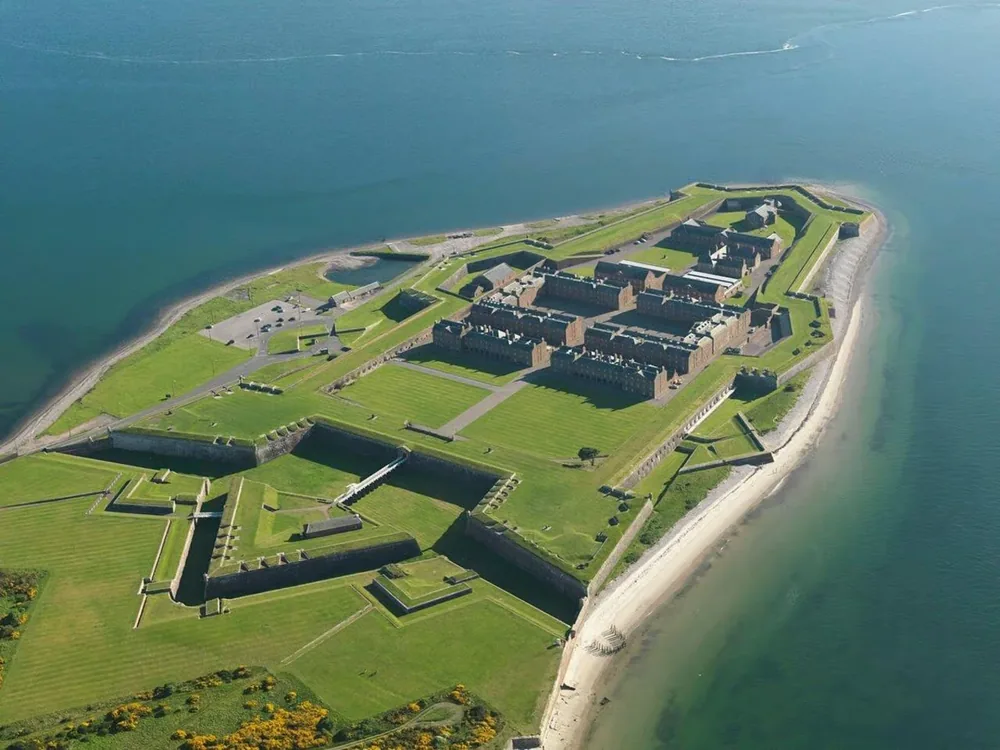
Built 1748 · 18th-century British artillery fortification — one of the most complete surviving examples of its type in Europe; designed by the military engineer William Skinner under the direction of the Board of Ordnance and constructed between 1748 and 1769 on a long spit of land projecting into the Moray Firth; the plan is a classic example of Vauban-influenced artillery-age fortress design as adapted for British military use in the mid-18th century: a symmetrical bastion trace with six projecting bastions covering each face and angle of the perimeter, a wide ditch, covered way, and glacis beyond, and the interior divided between barracks blocks, officers' quarters, magazines, chapels, and service buildings of considerable architectural quality; the fortification was built not to medieval standards but to resist contemporary siege artillery and field bombardment; the entire complex covers 42 acres and the perimeter wall extends to approximately one mile; the interior buildings are dressed-stone construction in a plain but well-proportioned Georgian manner, a contrast with the purely functional exterior defences
This page is part of an independent travel guide and is not affiliated with, endorsed by, or operated by Fort George.
© Castles & Palaces
Quick Facts
- Hours
- Daily 09:30–17:30
- Guided tour from
- €584
- Duration
- 2–3 hours (ramparts, barracks, regimental museum, magazine, and interior); the site is large and the full perimeter walk takes time
- Best time
- May to September
- Nearest city
- Inverness
Featured Tour
Moray-Shire Tour: To Brodie Castle, Fort George & More
Cancellation available · Instant confirmation
Highlights
- ✦One of Europe's most complete 18th-century artillery fortifications — built between 1748 and 1769 on a spit of land in the Moray Firth, Fort George covers 42 acres with six projecting bastions, a wide ditch, covered way, and glacis; the fortification has been continuously maintained in near-original condition since construction and was never besieged or structurally altered for military necessity, making it the finest intact example of Vauban-influenced British military engineering of the period
- ✦Built in the aftermath of Culloden — Fort George was commissioned by the British government in 1748, two years after the Battle of Culloden (April 16, 1746) defeated the Jacobite rising; the scale and cost of the project — equivalent to hundreds of millions of pounds in contemporary terms — was a deliberate political statement of Hanoverian permanence and military control over the Highlands; named after King George II, it was designed to be impossible to take by the kind of Jacobite irregular forces that had threatened the government less than a decade before
- ✦Never fired a shot in anger — Fort George was built with the expectation of warfare that never came; by the time the fort was completed in 1769, the political situation in Scotland had stabilised sufficiently that its defensive function became secondary to its role as a garrison barracks; it has been continuously occupied by British Army regiments ever since, including the Black Watch (Royal Highland Regiment) and their successors 3 Scots
- ✦Regimental Museum of the Highlanders — the museum within the fort covers the history of the highland regiments from the 18th century to the present, including the Black Watch, the Queen's Own Highlanders, and the Seaforth Highlanders; the collection includes uniforms, medals, weapons, colours, and documentary material spanning three centuries of highland military service
- ✦Moray Firth bottlenose dolphins visible from the ramparts — the resident Moray Firth pod of bottlenose dolphins, one of the northernmost resident populations in Europe and the most northerly in the UK, regularly feeds and socialises in the waters around Fort George's sea face; the rampart walk provides elevated sightlines over the firth and is one of the more reliable dolphin-watching viewpoints accessible from land in the region
- ✦GetYourGuide Moray-shire private day tour — same 8-hour circuit also visits Brodie Castle, Benromach Distillery whisky tasting, and includes lunch; €584 per group up to 4 (not per person); entrance fees to all attractions included
Skip the queue with a guided tour
Skip-the-line tickets & expert guides
Fort George was built to make a point. The decision to construct it was taken in 1748, two years after the Battle of Culloden ended the last serious Jacobite rising on the site that would become one of the most powerful fortifications the British state had ever built on its own soil. The scale of the project — 42 acres, six projecting bastions, a perimeter of approximately one mile, and a construction cost that translated into hundreds of millions of pounds in contemporary terms — was not a purely military calculation. It was a demonstration. The Hanoverian government wanted a fortress on the Highland fringe so large and so well-engineered that the question of another rising could not seriously be entertained. Named after King George II, Fort George was designed to make Hanoverian dominance visible and permanent in the landscape of the Moray Firth.
The defeat at Culloden on April 16, 1746, was the decisive end of the Jacobite cause in its military form. Prince Charles Edward Stuart's army, composed largely of Highland clan levies fighting for a Stuart restoration, was shattered in under an hour by the Duke of Cumberland's professional forces. The aftermath was brutal: Cumberland's forces conducted a systematic campaign of repression in the Highlands, burning settlements, disarming the clans, and dismantling the traditional clan social structures through legislation including the Heritable Jurisdictions Act and the Acts forbidding Highland dress. Fort George was the physical embodiment of this policy: a fortress built not to defend against external enemies but to garrison the Highlands into permanent submission.
The military engineer William Skinner, working under the Board of Ordnance, designed the fort on a long spit of land at Ardersier projecting into the Moray Firth — a position that allowed the sea to defend two of its faces while the main landward approach was covered by the bastion trace and the elaborate system of ditch, covered way, and glacis beyond. The design follows the principles of Vauban-influenced artillery-age fortification as adapted for British military practice: the six projecting bastions are positioned to eliminate dead ground and allow each face of the perimeter to be covered by flanking fire from the adjacent bastions, so that no attacking force could approach the walls without being exposed to cannon fire from multiple angles simultaneously.
Construction took over twenty years, from 1748 to 1769, at a cost that contemporaries considered extraordinary. The interior is not merely functional: the barracks blocks, officers' quarters, chapel, and magazine buildings are designed in a plain but well-proportioned Georgian manner, with dressed stone construction and regular fenestration that creates an enclosed campus of considerable architectural quality behind the purely defensive exterior. The Grand Magazine is the most visited interior space, its arched brick vaults designed to contain enough powder for sustained siege conditions.
Fort George was never besieged. By the time it was completed, the political conditions that had justified its construction had already passed. The Highland clans had been effectively disarmed and the clan social structure dismantled through legislation; the Jacobite cause had no remaining military infrastructure; and the Highland regiments that the British Army was raising from the same populations — including the Black Watch, raised originally in 1739 and formalised as a regiment in the aftermath of Culloden — were becoming some of the most reliable in the British order of battle. Fort George's role shifted almost immediately from planned defensive installation to garrison barracks, a function it has fulfilled continuously from 1769 to the present.
The Regimental Museum of the Highlanders, housed within the fort, covers the history of the highland regiments across three centuries: the Black Watch, the Seaforth Highlanders, the Queen's Own Cameron Highlanders, the Gordon Highlanders, and their subsequent amalgamations. The collection of uniforms, medals, weapons, colours, and documentary material is one of the significant regimental museum collections in Scotland.
From the seaward ramparts, the Moray Firth spreads north and east toward the Black Isle. The resident bottlenose dolphin pod — one of the northernmost in Europe, the most northerly in the UK — regularly appears in the waters around the fort's sea face, visible from the elevated walkway of the ramparts on calm days. The Moray Firth dolphin population is well-established and studied; the fort provides some of the most accessible elevated dolphin-watching sightlines available from land in the region.
The GetYourGuide Moray-shire tour is a private 8-hour circuit operated by Highland Guided Tours, covering Fort George and Brodie Castle on the same day with a whisky tasting at Benromach Distillery near Forres and lunch included. The €584 price is per group of up to four.
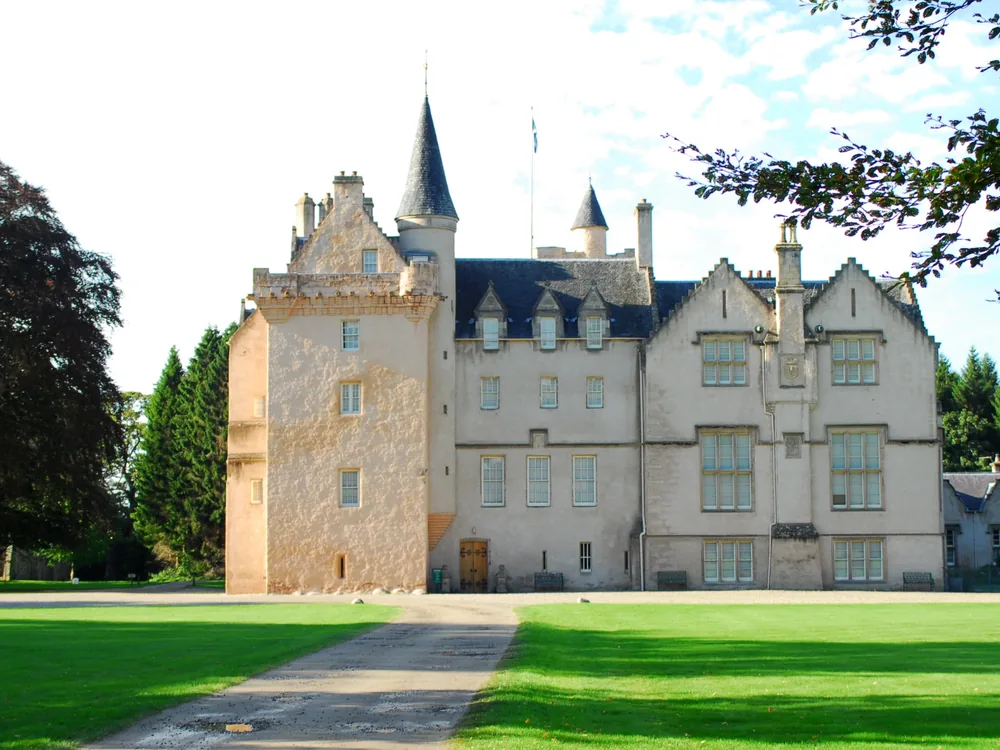
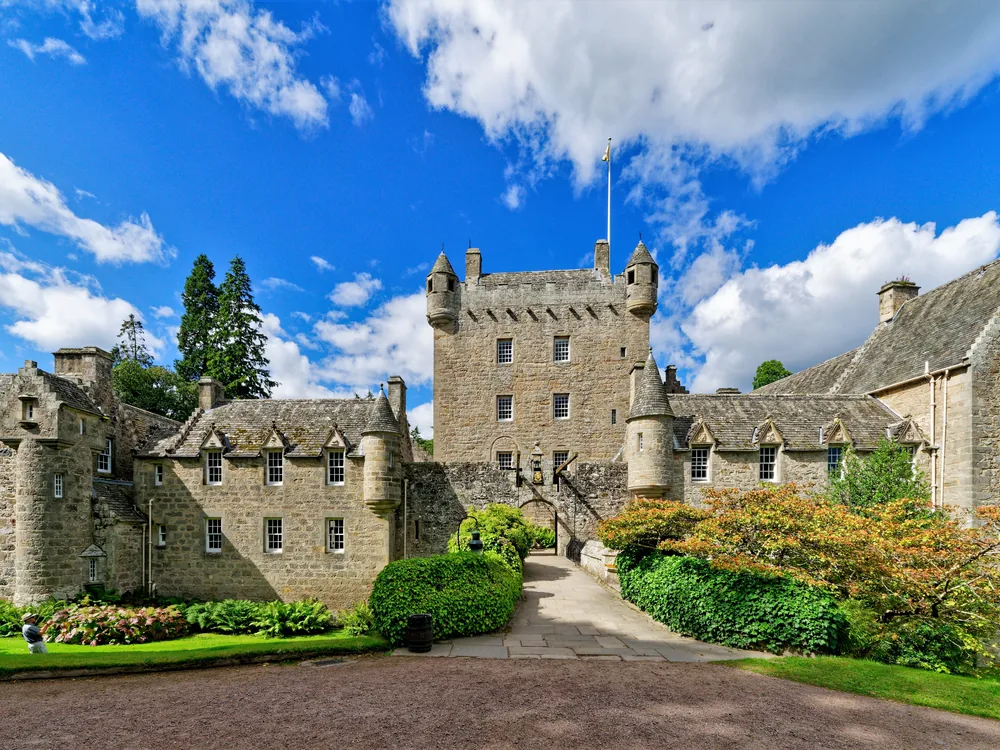
[Brodie Castle](/castles/scotland/brodie-castle), the Clan Brodie's 16th-century Z-plan tower house with its Baroque plaster ceilings and famous spring daffodil display, is visited on the same GetYourGuide tour — 8 miles southwest near Forres. [Cawdor Castle](/castles/scotland/cawdor-castle), the seat of the Thane of Cawdor associated with Shakespeare's Macbeth, is 9 miles west of Fort George near Nairn, completing the Moray-shire castle cluster.
History
The Battle of Culloden on 16 April 1746 defeated the Jacobite rising of 1745 in the last pitched battle on British soil. The British government's response was not merely military but architectural: in 1748, two years after Culloden, it authorised the construction of Fort George at Ardersier on the Moray Firth — a fortress of sufficient scale and strength to make any future Highland insurrection strategically impossible. Military engineer William Skinner was appointed designer.
Construction proceeded over 21 years at enormous cost, producing a Vauban-influenced bastion trace covering 42 acres with six bastions, a ditch, covered way, and glacis — the most technically sophisticated military fortification the British state had built on its own soil. Fort George was formally completed and garrisoned in 1769, by which time the Jacobite threat it had been built to contain had long since ceased to be credible. It has never been besieged or fired upon in anger.
The fortress served continuously as a British Army garrison barracks from 1769 onward, garrisoned through the 19th and 20th centuries by successive highland regiments including the Black Watch, the Seaforth Highlanders, and the Queen's Own Cameron Highlanders. Part of the fort remains an active British Army barracks (3 Scots). The Regimental Museum of the Highlanders and the historic interior are managed by Historic Environment Scotland and open to visitors daily.
How to Visit
Getting there: Fort George sits at Ardersier on the Moray Firth, about 11 miles northeast of Inverness via the B9006. A car is essential — there is no direct public transport to the fort and no nearby village. The drive from Inverness takes about 20 minutes; free parking is on site. Inverness is well served by rail from Edinburgh (about 3.5 hours) and Glasgow (about 3 hours).
Tickets: Admission approximately £9.50–£11 adult (confirm current prices at historicenvironment.scot); free for HES members. The Moray-shire private day tour (from €584 per group of up to 4) — an 8-hour circuit combining Fort George and Brodie Castle with a Benromach Distillery whisky tasting and lunch, entrance fees to all attractions included — is the only GetYourGuide option linking these two Moray sites on the same day; book in advance. Not suitable for visitors with mobility impairments.
Practical tips: May to September gives the most comfortable conditions for the exposed rampart walk — the Moray Firth setting is open and can be cold and windy in other seasons. Allow 2–3 hours for the full site including the Grand Magazine, Regimental Museum, chapel, and barracks interior. Part of Fort George remains an active British Army barracks, so occasional restricted access to certain interior areas may apply on operational days.
Combine with: Brodie Castle, the NTS tower house with Baroque plaster ceilings 8 miles southwest near Forres, and Cawdor Castle, the Shakespearean Macbeth castle 9 miles west near Nairn, complete the Moray-shire castle cluster.
Frequently Asked Questions
Fort George was built as a direct response to the Jacobite rising of 1745 — the last serious military attempt to restore the Stuart dynasty to the British throne. The Battle of Culloden (April 16, 1746) ended the rising, but the British government wanted a permanent fortified presence in the Highlands to deter any future uprising. The scale of the project — 42 acres, six bastions, a perimeter of roughly one mile, built over 21 years at enormous cost — was as much a political statement as a military necessity. Named after King George II, it was designed to make Hanoverian dominance visible and permanent in the Highland landscape. The fort was never attacked. By the time it was completed in 1769, the political situation had stabilised and the clan social structures that had supported Jacobitism had been effectively dismantled through legislation. Fort George transitioned almost immediately from a planned defensive installation to a garrison barracks, a function it has fulfilled continuously to the present day.
Location
Ardersier, Inverness, IV2 7TD, Scotland
Nearby Castles
Tours & Tickets
Powered by GetYourGuide
From
€584/ group