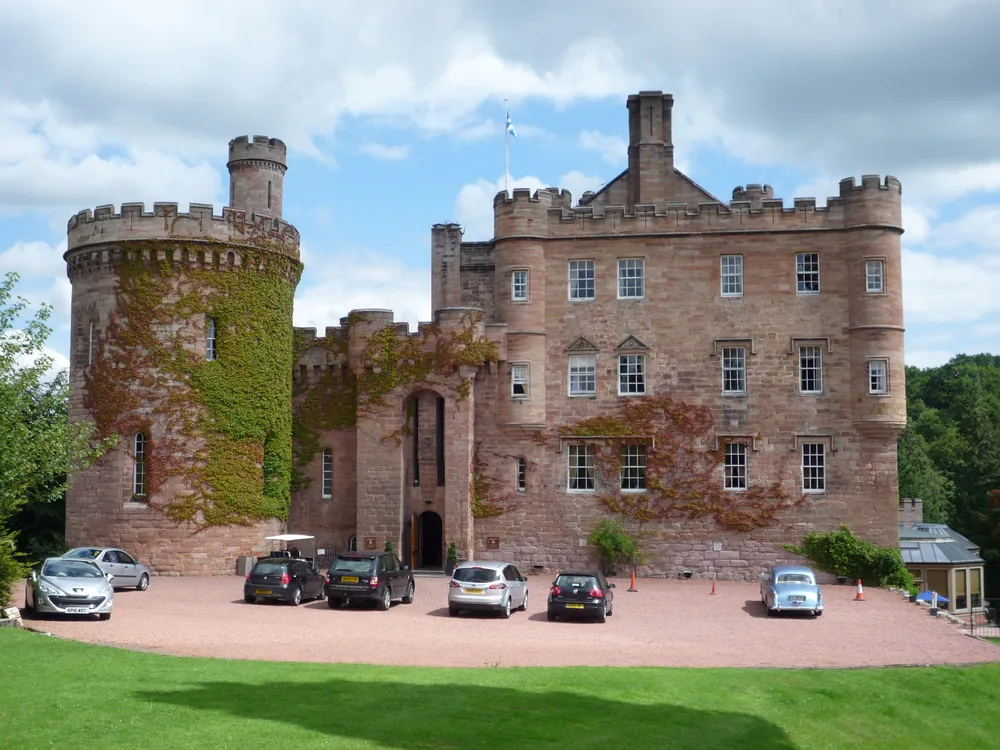
Dalhousie Castle
Scotland · Midlothian — Bonnyrigg, near Edinburgh · Near Edinburgh
13th century · 13th-century castle core, extended around 1450 with red sandstone quarried beside the River South Esk — one of the longest continuously held castles in Scotland, converted to a luxury hotel with spa in 1972
This page is part of an independent travel guide and is not affiliated with, endorsed by, or operated by Dalhousie Castle.
© Castles & Palaces
Quick Facts
- Rooms from
- £106 / night
- Hotel rating
- ★★★★ 4-Star Hotel
- Duration
- Restaurant dining or afternoon tea: 1–2 hours; overnight stay separately bookable
- Best time
- Year-round
- Nearest city
- Edinburgh
Stay Here
Dalhousie Castle & Spa
★★★★ 4-Star HotelRooms are within the historic castle building itself
Booked via Booking.com · Cancellation terms vary by rate
Dungeon Restaurant and Orangery open daily to non-residents 12:00-21:00; Afternoon Tea 13:00-16:00 — see Highlights above
Highlights
- ✦A 13th-century castle core, extended around 1450 using red sandstone quarried beside the River South Esk that runs past the walls
- ✦Held by the Ramsay family of Dalhousie from 1280 until the castle became a hotel in 1972 — one of the longest single-family tenures of any castle in Scotland
- ✦Historic visitors include King Edward I, Sir Walter Scott, Oliver Cromwell, Mary Queen of Scots, and Queen Victoria
- ✦The Dungeon Restaurant occupies the castle's original stone-vaulted vault, decorated with historic armour, and is open to non-residents daily from 12:00 to 21:00 alongside the separate Orangery dining room
- ✦Daily Afternoon Tea served 13:00–16:00 — though children under 12 are not permitted in the Dungeon Restaurant for dinner service, they are welcome in the Orangery
Stay in the castle itself
Book a room via Booking.com
Dalhousie Castle sits above the River South Esk in Midlothian, a short distance south of Edinburgh, and its documented history begins earlier than almost any other Scottish castle still standing and in continuous use. The land came to Simunus de Ramesia, who arrived in Scotland with King David I around 1140 from Ramsay in Huntingdonshire — one of the Norman and Anglo-Norman families David invited north to help consolidate his kingdom. The Ramsay family took possession of Dalhousie in 1280, and what followed was an extraordinarily long single-family tenure: the Ramsays of Dalhousie held this castle continuously from 1280 until it finally passed out of private family use and became a hotel in 1972, a run of nearly seven centuries that stands among the longest of any Scottish family holding any single Scottish castle.
The castle's original core dates to the 13th century, with a substantial expansion around 1450 using red sandstone quarried directly beside the South Esk — the same stone that gives the castle its distinctive warm colour today. Over the centuries that followed, Dalhousie's position close to Edinburgh and its long-standing prominent family made it a natural stopping point for figures at the centre of Scottish and British history. The roster of recorded visitors reads like a survey of the country's turbulent past: King Edward I of England, whose military campaigns in Scotland shaped centuries of Anglo-Scottish conflict; the novelist Sir Walter Scott, whose romantic vision of Scottish history did more than perhaps anyone else's writing to shape how the country's castles are perceived today; Oliver Cromwell, during his campaigns in Scotland in the 1650s; Mary Queen of Scots; and Queen Victoria, whose visits to numerous Scottish castles in the 19th century form a recurring thread across the country's country-house history.
Before its conversion to a hotel, Dalhousie had already left family hands for institutional use, having served for a period as a private boarding school. The 1972 conversion to a luxury hotel with spa marked the definitive end of nearly 700 years of Ramsay ownership and the beginning of the castle's current identity as one of the more historically substantial Scottish castle hotels open to the public in any form.
That public form centres on two distinct dining spaces, both explicitly open to non-residents as well as overnight guests. The Dungeon Restaurant occupies the castle's original stone-vaulted vault — a genuinely medieval space, decorated with historic armour and pieces that lean into the building's age rather than disguising it — and operates daily from 12:00 to 21:00. A separate, lighter dining room called the Orangery offers an alternative setting for those who prefer it. One specific and slightly unusual house rule is worth knowing before booking: children under 12 are not permitted to dine in the Dungeon Restaurant, though they are welcome in the Orangery, a distinction that reflects both the formality of the vaulted dining room and, presumably, a degree of practical caution around a working historic space with genuine armour and stone surfaces. Daily Afternoon Tea, served between 13:00 and 16:00, is recommended to book ahead given its popularity.
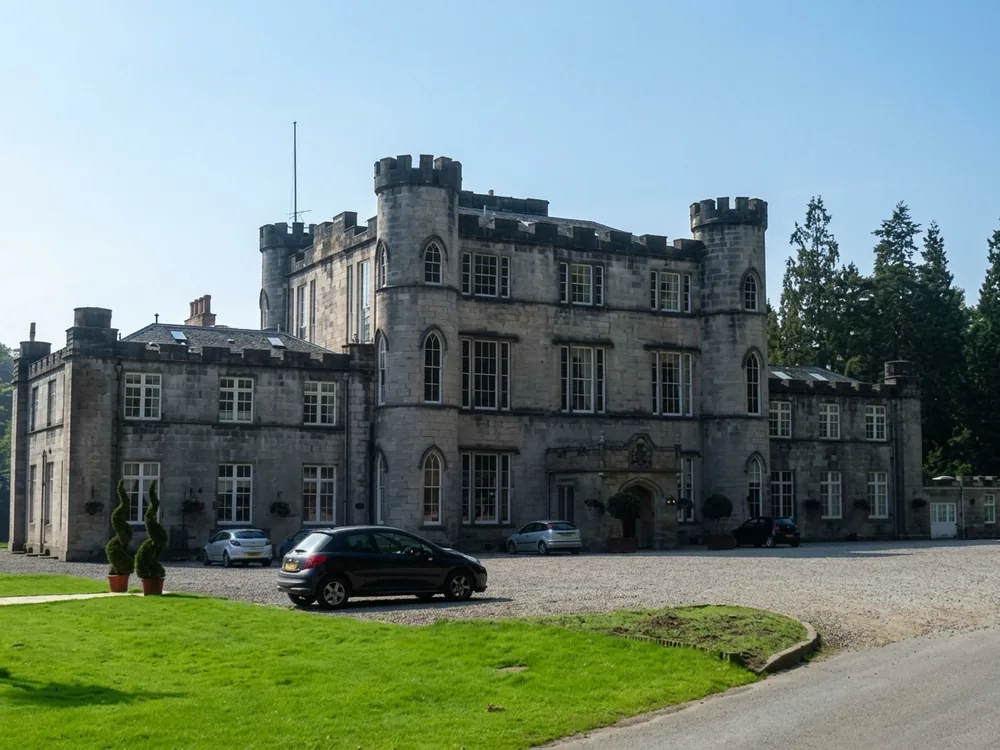
For visitors based in Edinburgh, Dalhousie's location in Bonnyrigg — close enough for a half-day or evening visit without an overnight commitment — makes it one of the more accessible castle-hotel dining experiences near the capital, alongside its Midlothian neighbour Melville Castle a short distance away.
History
The land at Dalhousie passed to Simunus de Ramesia, who came to Scotland from Ramsay, Huntingdonshire, around 1140 as part of King David I's programme of inviting Anglo-Norman families north to help consolidate royal authority. The Ramsay family took formal possession of Dalhousie Castle in 1280, beginning a tenure that would last, remarkably, until 1972 — nearly seven centuries under a single family, one of the longest such records for any Scottish castle. The castle's core dates to the 13th century, with a major expansion around 1450 using red sandstone quarried beside the South Esk river. Over the following centuries, Dalhousie's prominence and proximity to Edinburgh brought a succession of significant historical visitors, including King Edward I, Sir Walter Scott, Oliver Cromwell, Mary Queen of Scots, and Queen Victoria. Before its final conversion to a hotel, the castle had already left Ramsay family residential use, having served for a period as a private boarding school. Dalhousie became a luxury hotel with spa in 1972, ending nearly seven hundred years of continuous family ownership.
How to Stay
Getting there: Bonnyrigg, Midlothian, about 20 minutes south of Edinburgh.
Rooms & rates: All 20 themed rooms — Castle Suites, Castle Superior Four Poster, Castle Superior and Castle Classic categories — are within the historic castle building itself, drawing on 800 years of Ramsay family history in their individual themes.
On-site: Dungeon Restaurant, Orangery, spa, falconry displays on the grounds.
Good to know: Note that children under 12 cannot dine in the Dungeon Restaurant (the Orangery has no such restriction) — worth knowing if traveling with young children.
Combine with: Edinburgh city centre, 20 minutes away, or Rosslyn Chapel, 15 minutes away.
Frequently Asked Questions
Yes. The Dungeon Restaurant, housed in the castle's original stone-vaulted vault, and the separate Orangery dining room are both open to non-residents daily from 12:00 to 21:00. Daily Afternoon Tea is also served, from 13:00 to 16:00, and reservations are recommended given its popularity. Note that children under 12 are not permitted to dine in the Dungeon Restaurant for dinner service, though they are welcome in the Orangery.
Location
Bonnyrigg, Midlothian EH19 3JB, Scotland
Nearby Castles
Rooms from
£106/ night