
Melville Castle
Scotland · Midlothian — Lasswade, near Edinburgh · Near Edinburgh
Built 1786 · Late Georgian castellated mansion, designed 1786–1791 by Edinburgh architect James Playfair for Henry Dundas, 1st Viscount Melville, on the site of an earlier fortified house with 12th-century origins
This page is part of an independent travel guide and is not affiliated with, endorsed by, or operated by Melville Castle.
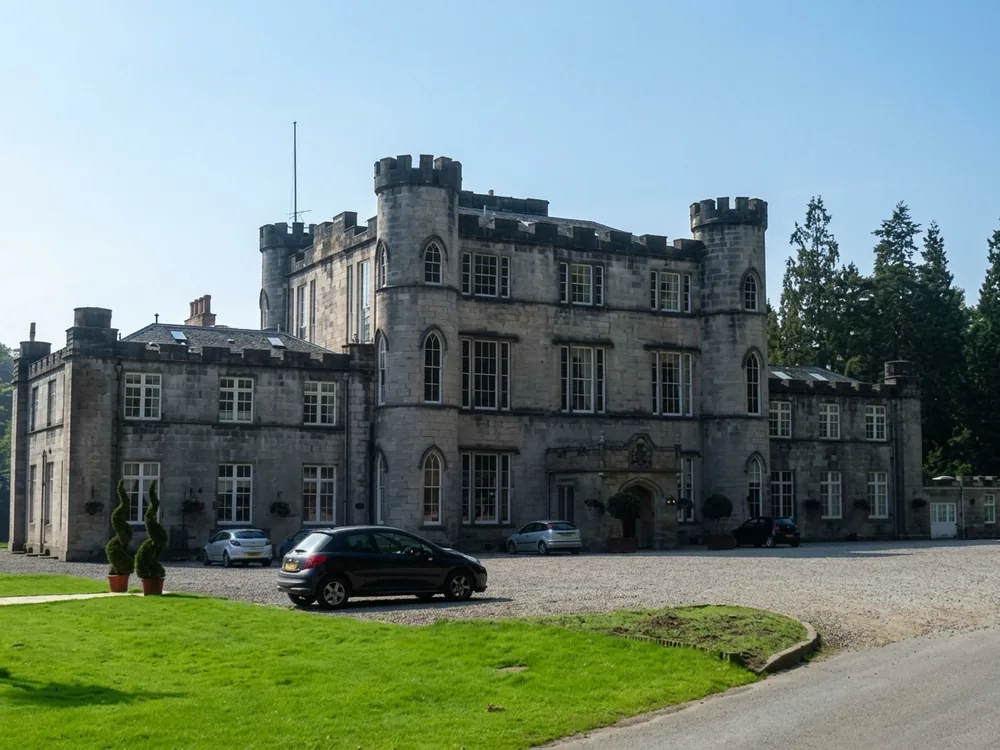
© Castles & Palaces
Quick Facts
- Rooms from
- £150 / night
- Hotel rating
- ★★★★ 4-Star Hotel
- Duration
- Restaurant dining or afternoon tea: 1–2 hours; overnight stay separately bookable
- Best time
- Year-round
- Nearest city
- Edinburgh
Stay Here
Melville Castle
★★★★ 4-Star HotelRooms are split between the historic building and a newer wing
Booked via Booking.com · Cancellation terms vary by rate
The Brasserie and daily Afternoon Tea open to non-residents, no room booking required — see Highlights above
Highlights
- ✦Site first recorded in 1155 under Galfrid de Malle, with a possible later connection to Mary Queen of Scots and her secretary David Rizzio
- ✦The current mansion was designed 1786–1791 by Edinburgh architect James Playfair for Henry Dundas, 1st Viscount Melville — a dominant figure in late 18th-century Scottish and British politics
- ✦Funded originally by East India Company wealth: Sir David Rannie bought the estate in 1762, and it passed to Dundas through marriage to Rannie's daughter
- ✦Fell into disuse in the early 1980s after decades as an army rehabilitation centre and hotel, before an eight-year restoration by the Hay Trust from 1993 returned it to use as a hotel in 2003
- ✦The Brasserie and a three-tier Afternoon Tea (13:00–16:00, sweet and savoury) are both open to non-residents without booking a room
Stay overnight
Book a room via Booking.com
Melville Castle stands above the River North Esk at Lasswade, in Midlothian just south of Edinburgh, on a site with a documented history stretching back further than the current building itself. The earliest record dates to 1155, under a landholder named Galfrid de Malle, and the property passed to Sir John Ross in 1371. A persistent local tradition connects the earlier fortified house on this site to Mary Queen of Scots and her Italian secretary David Rizzio — one of several such associations that recur across Midlothian's castle landscape, reflecting the density of sites connected, whether firmly or loosely, to the queen's turbulent mid-16th-century reign.
The mansion visitors see today, however, is a distinctly later building, with origins in 18th-century commercial wealth rather than medieval nobility. Sir David Rannie, who had made his fortune with the East India Company, purchased the original estate in 1762. The property subsequently passed by marriage to Henry Dundas — Rannie's son-in-law — who would go on to become one of the most powerful and controversial figures in late 18th-century British politics, a dominant force in Scottish patronage networks and eventually 1st Viscount Melville. Dundas commissioned the Edinburgh architect James Playfair to design an entirely new castellated mansion, built between 1786 and 1791, replacing whatever earlier structure had stood on the site and giving Melville Castle its current late-Georgian form — castellated in silhouette, in the fashion of the period, without being a genuine defensive structure.
The Dundas family retained Melville Castle well beyond Henry Dundas's own lifetime, holding the property until after the Second World War. In the mid-20th century the castle took on institutional functions distinct from its origins as a private mansion, serving for a period as an army rehabilitation centre before a subsequent period of use as a hotel. That hotel use did not last indefinitely: the castle fell into disuse in the early 1980s, entering a period of decline that lasted over a decade.
The turning point came in 1993, when the Hay Trust purchased Melville Castle and undertook an eight-year restoration, returning the building to a condition suitable for reopening as a hotel in 2003. The castle has continued to evolve since then: a further renovation saw it reopen again in 2021 under the Original Collection group, refreshing the property for its current era of operation while retaining the Georgian mansion's essential character.
For visitors who don't want to book a room, Melville Castle's Brasserie restaurant and its Afternoon Tea service are both explicitly open to the public without any requirement to stay overnight. The Afternoon Tea runs from 13:00 to 16:00 and follows the traditional three-tier format, offering a mix of sweet and savoury items — a straightforward, well-established way to spend an afternoon inside a genuine Georgian mansion a short distance from Edinburgh, and a natural pairing with a visit to nearby Dalhousie Castle, which sits close by in the same corner of Midlothian and offers a similar public-facing dining arrangement in a considerably older building.
History
The site at Melville was first recorded in 1155 under a landholder named Galfrid de Malle, and passed to Sir John Ross in 1371 — a lineage of early ownership with a persistent, if unverified, local tradition connecting an earlier fortified house here to Mary Queen of Scots and her secretary David Rizzio. The estate's modern history began in 1762, when Sir David Rannie, who had made his fortune with the East India Company, purchased the property. It passed by marriage to Henry Dundas, Rannie's son-in-law, who became one of the dominant figures in late 18th-century Scottish and British politics and was created 1st Viscount Melville. Dundas commissioned Edinburgh architect James Playfair to design an entirely new castellated mansion, built 1786–1791, establishing the late-Georgian building that stands today. The Dundas family retained the castle until after the Second World War, after which it served as an army rehabilitation centre and later a hotel, before falling into disuse in the early 1980s. The Hay Trust purchased the property in 1993 and undertook an eight-year restoration, reopening Melville Castle as a hotel in 2003; a further renovation saw it reopen again in 2021 under the Original Collection group.
How to Stay
Getting there: Lasswade, near Edinburgh, Midlothian.
Rooms & rates: 29 rooms split between the main castle building (including West Wing suites) and a separate lodge on the estate grounds.
On-site: The Brasserie restaurant, three-tier Afternoon Tea, estate grounds.
Good to know: Specify a castle room if sleeping inside the historic 1786-91 building is the priority — the lodge accommodation is comfortable but a separate structure.
Combine with: Edinburgh city centre and Rosslyn Chapel, both within a 20-30 minute drive.
Frequently Asked Questions
Yes. Melville Castle's Afternoon Tea, served from 13:00 to 16:00, follows the traditional three-tier format of sweet and savoury items and is explicitly open to non-residents — no room booking is required. The hotel's Brasserie restaurant is similarly open to the public for regular dining, making it possible to experience the Georgian mansion without an overnight stay.
Location
Gilmerton Road, Lasswade, Midlothian EH18 1AZ, Scotland
Nearby Castles
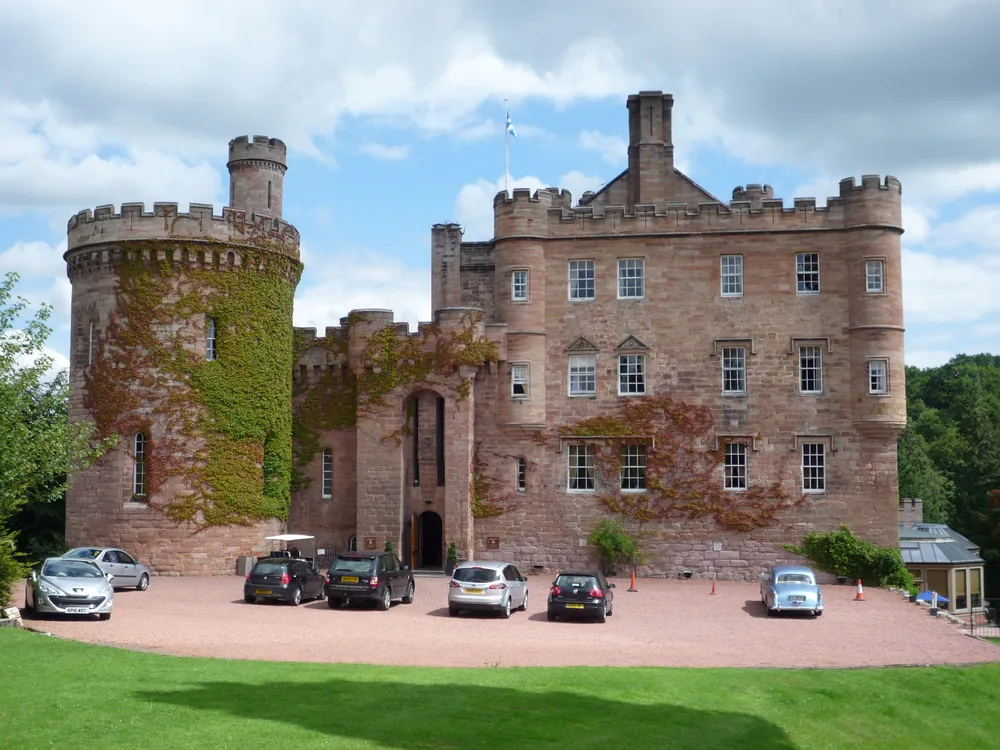
Rooms from
£150/ night