
Floors Castle
Floors Castle
Scotland · Scottish Borders · Near Kelso
Built 1721 · Georgian Palladian origins 1721 by William Adam for the 1st Duke of Roxburghe; dramatically transformed 1838–1845 by William Henry Playfair into the current Scottish Baronial style with towers, turrets, and castellated roofline; the largest inhabited house in Scotland; set above the River Tweed overlooking the ruins of Roxburgh Castle; seat of the Dukes of Roxburghe since 1721
This page is part of an independent travel guide and is not affiliated with, endorsed by, or operated by Floors Castle.
© Castles & Palaces
Quick Facts
- Hours
- Daily 11:00–16:30
- Entry via GetYourGuide
- €26
- Duration
- 2–3 hours
- Best time
- April to September
- Nearest city
- Kelso
Featured Tour
Floors Castle: Castle, Gardens & Grounds Ticket
Cancellation available · Instant confirmation
Highlights
- ✦The largest inhabited house in Scotland, built in stages across 120 years by two entirely different architectural visions
- ✦A plain Georgian Palladian mansion by William Adam (1721), buried beneath a full Scottish Baronial remodelling by William Henry Playfair (1838–1845)
- ✦One of the finest private tapestry collections in Scotland, alongside Meissen, Sèvres and Chinese export porcelain accumulated across six generations
- ✦Set above the River Tweed directly opposite the scant ruins of Roxburgh Castle, once one of medieval Scotland's four great royal burghs
- ✦A 4-acre walled garden including a Victorian kitchen garden, the French-style Millennium Garden, and a 20-year replanting plan by Chelsea Gold Medal winner Dan Pearson
Skip the queue with a guided tour
Skip-the-line tickets & expert guides
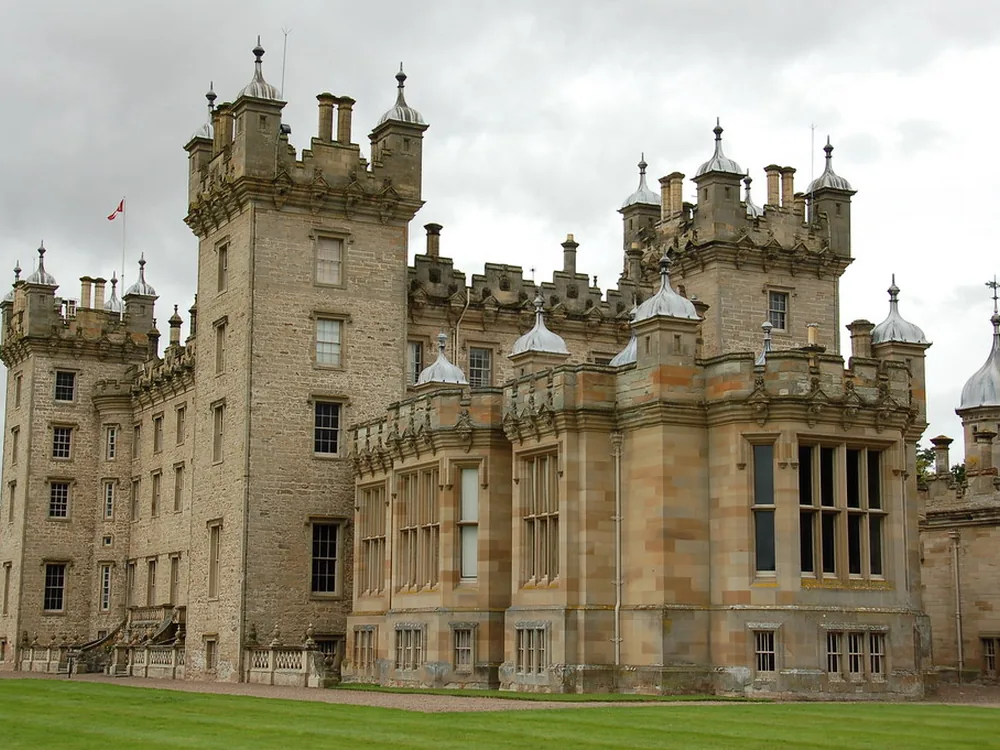
On the north bank of the River Tweed, looking across the water to the few remaining stones of Roxburgh Castle, once one of the most important royal strongholds in medieval Scotland, stands the largest inhabited house in Scotland. Floors Castle is vast, preposterously so: a long Baronial silhouette of towers, turrets and crenellations that stretches above the river bank for what seems an unreasonable distance. It was built in stages across 120 years by two different architectural visions, resulting in a building that is simultaneously one of the finest Georgian houses in Scotland underneath and one of the most theatrical pieces of Victorian Baronialism on top. The 11th Duke and Duchess of Roxburghe still live here.
The title of Duke of Roxburghe was created in 1707, the year of the Act of Union between Scotland and England, a creation closely connected to the political negotiations that produced the Union. The 1st Duke commissioned William Adam, the patriarch of Scotland's most distinguished architectural dynasty and father of Robert Adam, to design a new house at Floors in 1721. Adam's original building was a plain Palladian mansion, elegant, symmetrical and thoroughly English in character, reflecting the Duke's political alignments at the time. It looked nothing like the castle that stands there today.
The transformation came under the 6th Duke, who commissioned William Henry Playfair, the Edinburgh architect responsible for much of the New Town's neoclassical streetscape, to remodel the house in the Scottish Baronial style between 1838 and 1845. Playfair added towers, turrets, conical roofs, castellated parapets and a general air of medieval romantic grandeur that bore no real relationship to the building underneath. The result is one of the most complete examples of Scottish Baronial architecture in existence, an architectural fantasy built over a Georgian core, the outside all Walter Scott romance, the inside still essentially 18th-century in its proportions and comfort.
The interior contains one of the finest private collections of tapestries in Scotland, with 17th-century Brussels and Gobelin tapestries hanging throughout the state rooms. The porcelain collection includes Meissen, Sèvres and Chinese export porcelain accumulated across six generations of the Roxburghe family. A significant portion of the current collection arrived through an American connection: the 8th Duke married Mary Goelet of New York in 1903, bringing the typical Gilded Age infusion of American wealth into a British title struggling with the agricultural depression of the late 19th century. The 1st Duke of Roxburghe also owned one of the greatest book collections in Britain, sold in 1812 in a sale that lasted 41 days and established new records for book auction prices that stood for decades.
The ruined Roxburgh Castle, visible from the Floors grounds across the Tweed, was one of the four great royal burghs of medieval Scotland, comparable in importance to Edinburgh, Berwick and Stirling. It was a meeting point for many transactions between the Scottish and English crowns, was taken and retaken repeatedly during the Wars of Independence, and was finally demolished by the Scots themselves in 1460 to prevent English reoccupation. The siege of 1460 is also where James II of Scotland was killed when one of his own cannons exploded, a peculiarly Scottish way for a king to die. The stones of Roxburgh are now barely visible, and Floors today commands the position the royal burgh once held over this stretch of the Tweed.
The 4-acre walled garden is considered a highlight of the visit by most who come to Floors: a Victorian kitchen garden with glasshouses, a formal Millennium Garden with French-style parterres, and the Queen's House summerhouse where Queen Victoria took tea in 1867. The garden has been redesigned over a 20-year plan beginning in the 2000s by Dan Pearson, a Chelsea Gold Medal-winning designer, layering contemporary planting onto the Victorian structure without erasing its historic character.
History
The 1st Duke of Roxburghe, holder of a title created in 1707 alongside the Act of Union, commissioned William Adam to design a new Palladian mansion at Floors in 1721, producing a plain, symmetrical Georgian house overlooking the River Tweed and the ruins of Roxburgh Castle opposite. The house remained in this Georgian form for over a century until the 6th Duke commissioned the Edinburgh architect William Henry Playfair to remodel it comprehensively in the Scottish Baronial style between 1838 and 1845, adding the towers, turrets and castellated parapets that define its current appearance.
The house's collections expanded considerably across the following generations, including a significant infusion of American wealth and decorative arts following the 8th Duke's 1903 marriage to Mary Goelet of New York. Floors Castle has remained continuously in the ownership and occupation of the Roxburghe family since 1721, and is today recognised as the largest inhabited house in Scotland, with its surrounding walled garden undergoing an ongoing 20-year redesign by garden designer Dan Pearson.
How to Visit
Getting there: Floors Castle is on the edge of Kelso, 45 miles south of Edinburgh. Borders Buses run the X95 service from Edinburgh St Andrew Square direct to Kelso (around 1 hour 45 minutes); from Kelso bus station it is a 20-minute walk or short taxi to the castle gate. By car from Edinburgh take the A68 south, then the A699 east into Kelso — about 55 minutes. From Newcastle, the A697 north reaches Kelso in around 75 minutes.
Tickets: Walk-up entry £29 adult, children free. The GetYourGuide ticket covers castle, gardens and grounds access and is valid for 7 days from first activation — a useful flexibility if your Borders itinerary might shift — book in advance.
Practical tips: The walled garden opens at 10:00, one hour before the castle itself, so arriving early lets you enjoy Dan Pearson's replanting scheme before the crowds build. The castle is open only 12 April to 30 September — check dates before travelling. The ruins of Roxburgh Castle are visible from the grounds across the Tweed at no extra cost: they mark the site of one of medieval Scotland's four great royal burghs.
Combine with: Edinburgh Castle is 45 miles north and the natural anchor for a Borders day trip — or the other way round, making Floors a full-day excursion from Edinburgh.
Frequently Asked Questions
The core of Floors Castle is a plain, symmetrical Georgian Palladian mansion designed by William Adam in 1721, reflecting early 18th-century taste for restrained classical proportion. Between 1838 and 1845, the 6th Duke commissioned William Henry Playfair to add an entirely new exterior in the Scottish Baronial style, with towers, turrets and castellated parapets layered over Adam's original structure. The interior retains much of its 18th-century proportion and comfort, while the exterior presents the romantic medieval-revival image most visitors associate with the building today.
Location
Kelso TD5 7SF, Scottish Borders, Scotland
Nearby Castles
Tours & Tickets
Powered by GetYourGuide
From
€26/ person