
Glenapp Castle
Scotland · Ayrshire — Ballantrae, southwest coast · Near Ballantrae
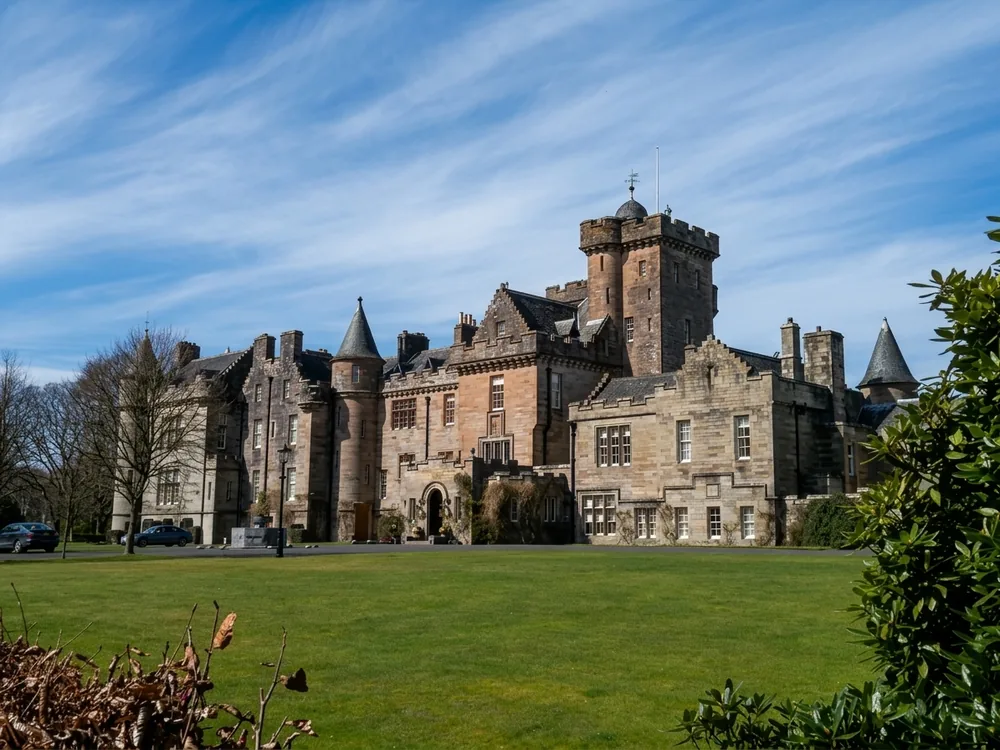
Built 1870 · Scottish Baronial mansion designed by David Bryce, one of the style's defining architects, blending Gothic and Renaissance elements — turrets, crow-stepped gables, and a picturesque asymmetrical silhouette typical of Bryce's country house work
This page is part of an independent travel guide and is not affiliated with, endorsed by, or operated by Glenapp Castle.
© Castles & Palaces
Quick Facts
- Rooms from
- £400 / night
- Hotel rating
- ★★★★★ 5-Star Hotel
- Duration
- Overnight stay; non-residents can book lunch, dinner, or afternoon tea in the Castle Restaurant
- Best time
- May to September
- Nearest city
- Ballantrae
Stay Here
Glenapp Castle
★★★★★ 5-Star HotelRooms are split between the historic building and a newer wing
Booked via Booking.com · Cancellation terms vary by rate
No day-visitor access confirmed — a highly exclusive country-house hotel, not open to the public
Highlights
- ✦Designed by David Bryce, one of the defining architects of the Scottish Baronial revival, whose distinctive blend of Gothic and Renaissance detailing shaped country house architecture across 19th-century Scotland
- ✦5-star rated, with an award-winning 3 AA Rosette restaurant open to both overnight guests and non-residents by reservation
- ✦Passed in 1917 to James Lyle Mackay, who built a career in the P&O shipping line and became the first Earl of Inchcape — one of the great commercial dynasties of the British Empire era
- ✦Restored across six years after the McMillan family, established Scottish hoteliers, purchased the castle in 1994 — returning both the building and its historic gardens to their original condition
- ✦A converted Victorian glasshouse now serves as one of the hotel's dining spaces, and the property sleeps up to 42 guests across its 17 suites and four-bedroom penthouse
Stay overnight
Book a room via Booking.com
Glenapp Castle stands on Scotland's southwest coast above the Firth of Clyde, near the small Ayrshire village of Ballantrae — a position chosen in 1870 by James Hunter, then Deputy Lieutenant of Ayrshire, for its commanding views over the water toward the Mull of Kintyre and, on a clear day, the coast of Northern Ireland. Hunter commissioned David Bryce, one of the defining architects of the Scottish Baronial revival, to design the house. Bryce's distinctive vocabulary — turrets, crow-stepped gables, and an asymmetrical silhouette that reads as picturesque rather than fortified — appears across dozens of Scottish country houses of the period, and Glenapp is among his more complete and best-preserved examples.
The estate changed hands in 1917, passing to James Lyle Mackay, a Scottish businessman who had built an extraordinarily successful career with the P&O shipping line, one of the great commercial enterprises of the British imperial era. Mackay's business success was formally recognised when he was created the first Earl of Inchcape, and Glenapp became one of the residences befitting his new status. The castle's later 20th-century history followed the trajectory common to many Scottish country estates of its scale: increasingly difficult to maintain as a private residence, it eventually required a new custodian with both the resources and the specific intention to restore rather than simply occupy the building.
That custodian arrived in 1994, when the McMillan family — established Scottish hoteliers — purchased Glenapp Castle. What followed was a six-year restoration led by the McMillans' daughter Fay and her husband Graham Cowan, returning both the castle's interiors and its historic gardens to something close to their original condition before opening the property as a hotel. The restoration extended to the estate's Victorian glasshouse, an ornamental structure originally built for growing exotic plants and fruit, which the Cowans converted into one of the hotel's principal dining spaces — a distinctive architectural feature that few other Scottish castle hotels can match.
Glenapp today holds a 5-star rating and operates its award-winning Castle Restaurant, which carries 3 AA Rosettes — a serious culinary distinction — under head chef Adam Stokes. The restaurant is explicitly open to non-residents as well as overnight guests: lunch, a daily-changing dinner menu of up to seven courses, and afternoon tea are all bookable without staying the night, though reservations are essential given the property's small scale. The hotel's 17 individually designed suites, together with a four-bedroom penthouse that can sleep the full group of 42 guests the property accommodates at capacity, position Glenapp firmly in the same tier of exclusive small Scottish castle hotels as its Highland counterpart Inverlochy — private, intimate, and built around a single grand house rather than a large-scale resort structure.
The setting itself does much of the work that a coastal Ayrshire castle hotel needs to do: the grounds run down toward cliffs above the Firth of Clyde, with formal gardens closer to the house and wilder woodland walks further out, and the Mull of Kintyre and the Irish coast are visible from the castle's upper floors on clear days. For visitors travelling the Ayrshire coast — whether en route to or from the ferry crossings to Northern Ireland at nearby Cairnryan, or exploring Robert Burns country further north — Glenapp offers both a destination in its own right and a genuinely dramatic stopping point.
History
James Hunter, then Deputy Lieutenant of Ayrshire, commissioned the house in 1870 from David Bryce, one of the principal architects of the 19th-century Scottish Baronial revival, choosing a coastal site above the Firth of Clyde near Ballantrae for its panoramic views toward the Mull of Kintyre. In 1917 the estate passed to James Lyle Mackay, a Scottish businessman whose career with the P&O shipping line brought him great commercial success and the title of first Earl of Inchcape. The castle remained a private residence through the changing fortunes of the 20th century until 1994, when the McMillan family — Scottish hoteliers with existing experience in country house hospitality — purchased the property. A six-year restoration followed, led by the McMillans' daughter Fay Cowan and her husband Graham, returning the castle's interiors, historic gardens, and Victorian glasshouse to something close to their original splendour before the property opened to guests as a hotel.
How to Stay
Getting there: Ballantrae, Ayrshire, on Scotland's southwest coast facing the Firth of Clyde.
Rooms & rates: 17 suites spread across the castle's ground, first and second floors, plus two East Wing Suites and 'The Nest,' a separate one-bedroom garden cottage in the walled garden. The Castle Penthouse Suite occupies the entire third floor of the main castle.
On-site: Restaurant (former Victorian conservatory dining room), spa, walled gardens, 36-acre estate.
Good to know: Most suites are within the main castle itself, but 'The Nest' garden cottage is a separate structure — specify a castle suite if staying inside the historic building is the priority.
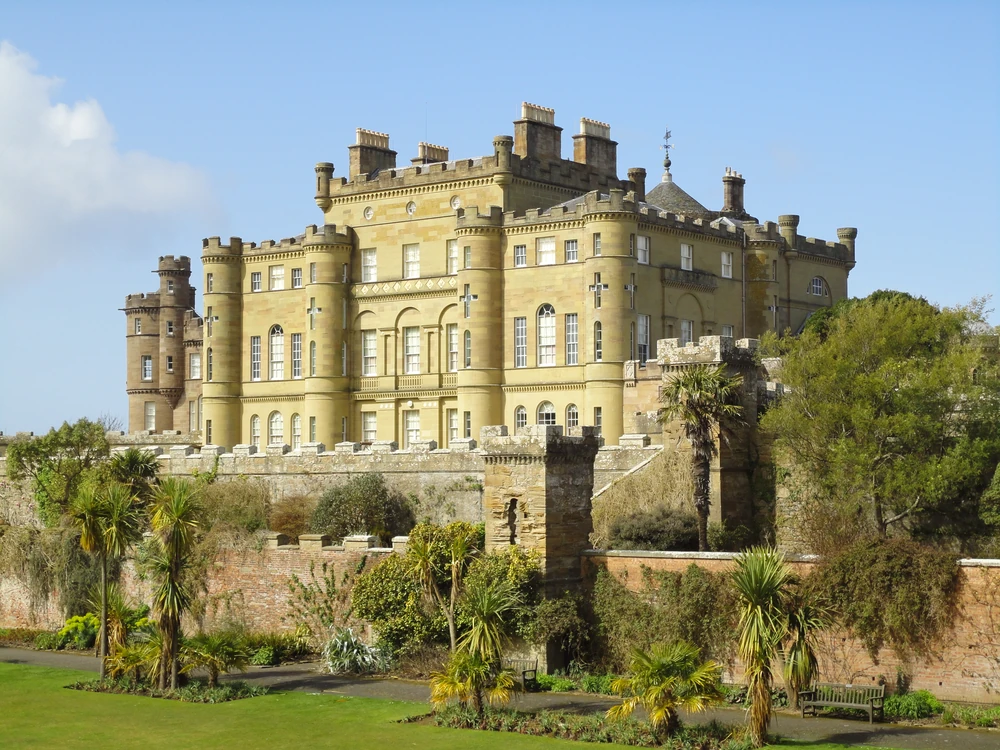
Combine with: Culzean Castle, about 30 minutes north along the coast.
Frequently Asked Questions
Yes. The Castle Restaurant, which holds 3 AA Rosettes, is explicitly open to non-residents for lunch, dinner, and afternoon tea, in addition to serving overnight guests. Reservations are strongly recommended given the hotel's small scale — the restaurant's tasting menu and daily-changing dinner service in particular should be booked in advance.
Location
Glenapp, Ballantrae, Ayrshire KA26 0NZ, Scotland
Nearby Castles
Rooms from
£400/ night