
Inverness Castle
Caisteal Inbhir Nis
Scotland · Highland · Near Inverness
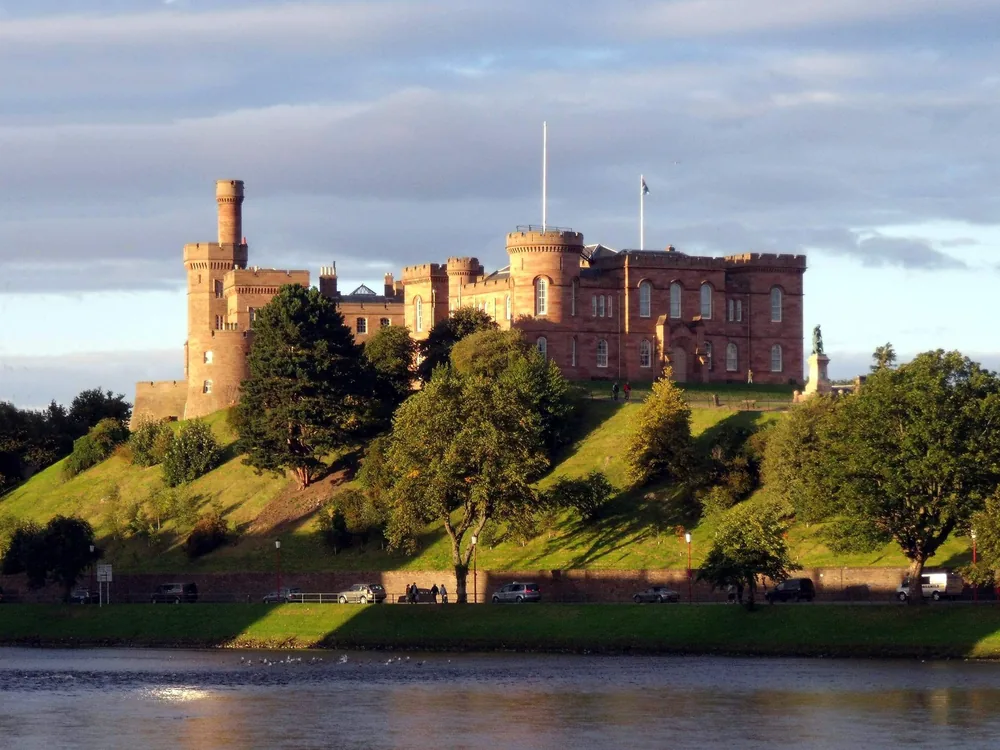
Built 1836 · Gothic Revival red sandstone courthouse-castle designed by architect William Burn, completed 1836 and extended in 1847; a two-towered castellated structure built to project civil authority over the Highlands, replacing a series of earlier medieval and early-modern fortresses demolished in 1746 by Jacobite forces; converted from a working Sheriff Court into The Inverness Castle Experience visitor attraction in 2020, with the interior redesigned as an immersive Highland history exhibition while retaining the Victorian exterior
This page is part of an independent travel guide and is not affiliated with, endorsed by, or operated by Inverness Castle.
© Castles & Palaces
Quick Facts
- Hours
- Daily 09:30–17:30
- Entry via GetYourGuide
- €30
- Duration
- Up to 2 hours
- Best time
- May to September
- Nearest city
- Inverness
Featured Tour
The Inverness Castle Experience Ticket and City Audio Tour
Cancellation available · Instant confirmation
Highlights
- ✦The Inverness Castle Experience opened in 2020 after a major redevelopment of the Victorian courthouse building, creating one of Scotland's most modern castle visitor attractions — the South Tower's immersive audio-visual journey traces Highland history from Pictish settlement through the Jacobite risings to the Highland Clearances
- ✦The Great Glen Roof Terrace offers panoramic 360-degree views over Inverness city, the River Ness, the Moray Firth to the north, and the surrounding Highland hills — the castle's bluff position above the river makes this terrace one of the best elevated vantage points in the Highlands
- ✦The site's turbulent history predates the Victorian building by centuries: a castle has stood on this bluff since at least the 11th century, associated with Scottish kings projecting authority into the Highlands, until Jacobite forces demolished it in 1746 to deny it to Hanoverian troops advancing toward Culloden
- ✦The North Tower explores Highland cultural identity through tapestries and music — covering the traditions of piping, weaving, and Gaelic storytelling that survived the legal proscription of Highland dress and language after Culloden and eventually formed the basis of the Victorian Highland revival
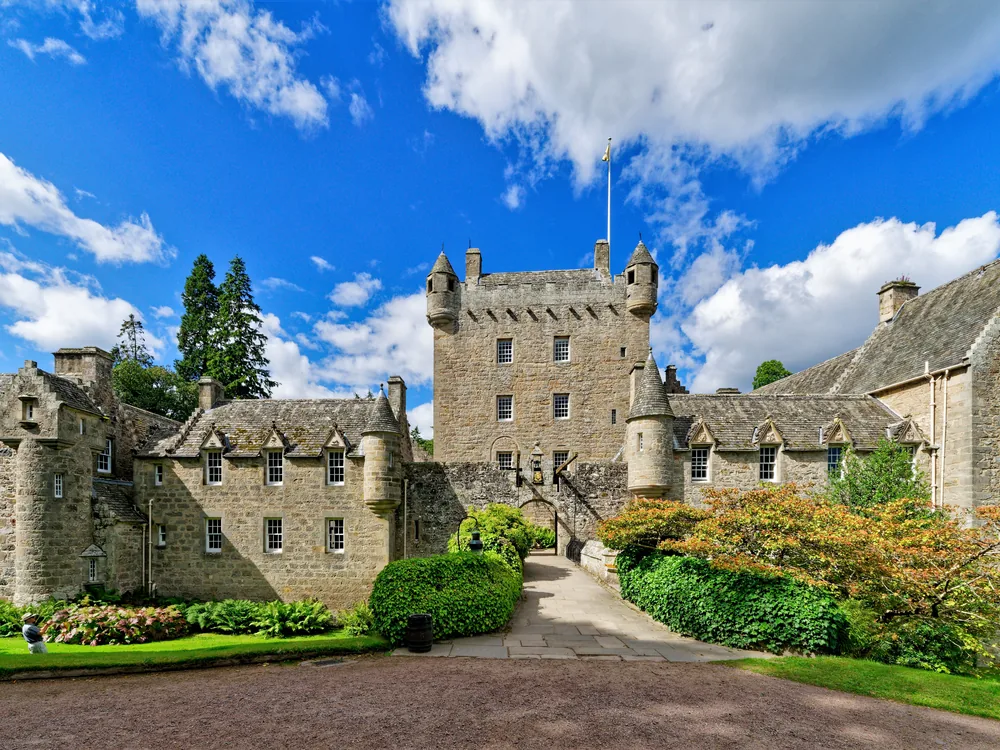
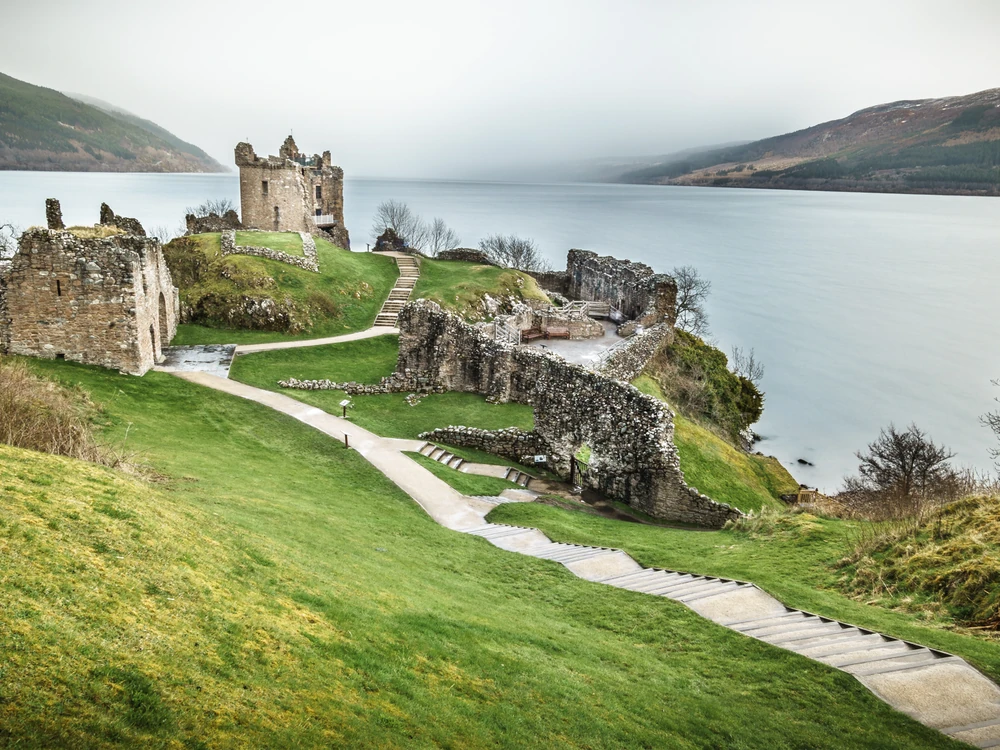
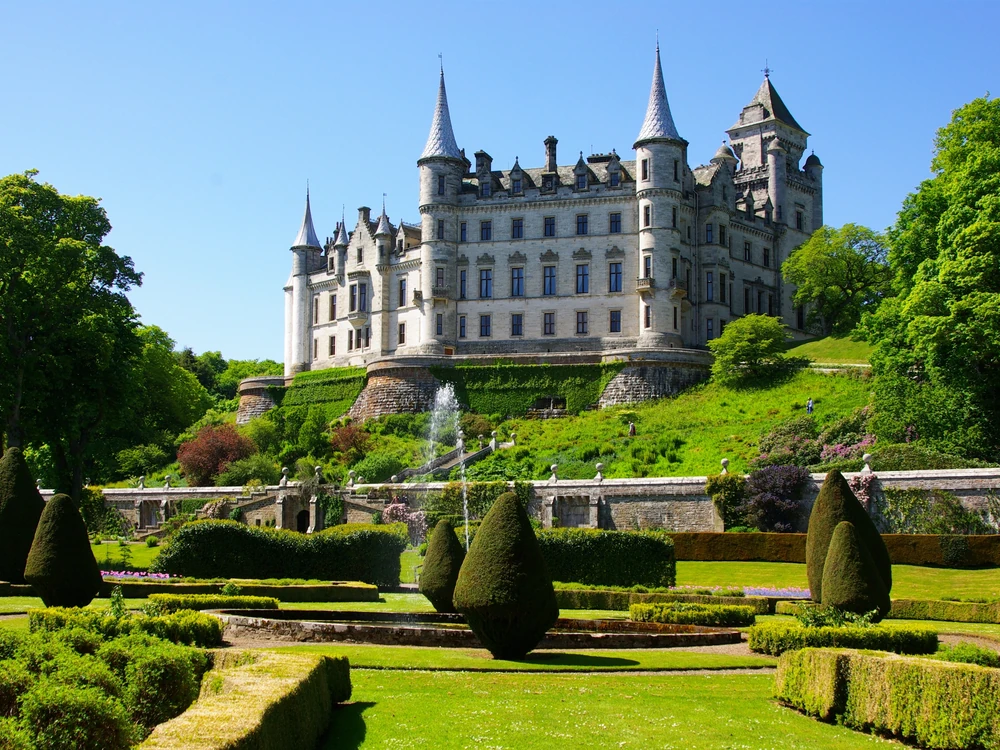
- ✦Inverness is the gateway to the wider Highland day-trip circuit: Loch Ness and Urquhart Castle (30 minutes), Cawdor Castle (20 minutes), Dunrobin Castle (1 hour north), and Culloden Battlefield (15 minutes) are all reachable from the city, making the castle a natural starting point for exploring the region
Skip the queue with a guided tour
Skip-the-line tickets & expert guides
Inverness occupies a peculiar position in the Scottish Highlands: it is simultaneously the region's administrative capital, its busiest tourist hub, and the city most often used as the overnight base for visiting the wider Highland circuit — Loch Ness, Culloden, Cawdor, Dunrobin — yet until relatively recently its own castle offered visitors almost nothing to see. The red sandstone fortress on the bluff above the River Ness was an active working courthouse until 2020; interesting enough to photograph from the riverbank, but closed to the public in any meaningful sense for most of its history as an administrative building.
The site's more eventful history predates the current Victorian structure by several centuries. A castle has occupied this bluff — the most defensible promontory in the central Highlands, commanding the crossing of the River Ness where it narrows before the firth — since at least the 11th century. Macbeth is associated with the site by historical tradition, though the connection is more literary than archaeologically verified. More certainly, the medieval castle here served as a royal stronghold for Scottish kings attempting to project authority into the chronically resistant Highlands, and was repeatedly sieged, captured, and damaged across centuries of conflict between the Scottish crown and various Highland lordships.
The Jacobite rising of 1745 produced the castle's most consequential act of destruction. When Prince Charles Edward Stuart's army retreated north after the failed English campaign, Jacobite forces demolished the existing castle to deny it to the Duke of Cumberland's advancing Hanoverian forces. The logic was militarily sound: the Hanoverian army required a fortified base in the Highlands, and Inverness Castle, sitting above the river crossing and commanding the town, was the obvious candidate. Destroying it forced the Hanoverians to conduct a siege rather than simply occupy an intact fortress. The Culloden campaign that followed — April 16, 1746, thirteen miles east of the city — ended the rising decisively, with consequences for Highland culture that extended for decades through the proscription of Highland dress, the disarmament of the clans, and the systematic dismantling of the clan social structure that had governed the region for centuries.
The castle's rebuilding came nearly ninety years later, when the growing administrative machinery of Victorian Scotland required a proper courthouse for the Highlands. William Burn's 1836 design produced the building that stands today: a two-towered red sandstone structure in a castellated Gothic Revival style, its turrets and crenellations projecting the authority of law and civil administration rather than military function. A second building phase in 1847 completed the complex as seen from the riverbank today. This Victorian castle — functionally a courthouse with battlements — served as Inverness Sheriff Court for nearly two centuries, well into the 21st century, before the courts relocated and the building was freed for its current purpose.
The Inverness Castle Experience, which opened following the court's relocation, transformed the interior into a substantial Highland history attraction. The South Tower houses the main immersive experience: a multi-sensory audio-visual journey through Highland history designed to communicate both the chronological sweep and the emotional texture of the region's past. The arc runs from the earliest Pictish and Celtic settlements through the Norse raids of the 9th and 10th centuries, the clan era's complex politics of loyalty and conflict, the catastrophic Jacobite risings and their aftermath, and the Highland Clearances of the 18th and 19th centuries, during which landlords systematically removed tenant populations from the land to make way for sheep — a depopulation whose effects are still visible in the empty glens and dispersed diaspora communities of the modern Highlands.
The approach is experiential rather than primarily object-based. Rather than displaying a collection of artefacts in cases, the Experience uses spatial design, projection, and sound to place visitors within the historical narrative. This format works particularly well for a building whose interior is Victorian courthouse architecture rather than an original medieval great hall — the conversion has produced something more theatrically engaging than a conventional museum layout would permit in the same spaces.
The North Tower takes a complementary approach, using tapestries and music to explore the resilience and eventual revival of Highland cultural identity. This section covers the traditions of piping, weaving, Gaelic poetry, and clan storytelling that survived the legal prohibition on tartan and the systematic suppression of Gaelic after Culloden, eventually re-emerging as the romanticised Highland identity that Queen Victoria and Prince Albert embraced at Balmoral and that shaped the global image of Scotland that persists today. It is a more nuanced story than the dramatic politics of the South Tower — about cultural memory rather than military conflict — and it provides useful context for visitors who will encounter Highland cultural forms throughout the rest of their travels in the region.
The Great Glen Roof Terrace is the single most visually striking element of the visit. The castle's bluff position above the River Ness means the terrace commands a full panoramic view of Inverness city, the river winding toward the Moray Firth to the north, the Black Isle beyond, and the Highland hills in every other direction. On clear days the panorama extends to the distinctive outline of Inverness Cathedral and the Victorian terrace houses along the riverbank that make the city centre unusually handsome by Scottish urban standards. The terrace is a specific photographic destination in its own right, distinct from the exhibition content inside.
The GetYourGuide ticket covers the full Experience plus an Inverness city audio tour that continues the visit into the surrounding streets, covering the cathedral, the Victorian riverside district, and key sites in the city centre. The combined castle-and-city format makes this a more substantial half-day activity than the castle visit alone would provide.
History
A castle has occupied the bluff above Inverness since at least the 11th century, serving as a royal stronghold and repeatedly sieged across centuries of Highland conflict. Jacobite forces demolished the castle in 1746 before the Battle of Culloden to deny it to advancing Hanoverian troops. The Victorian replacement — William Burn's 1836 red sandstone courthouse — served as Inverness Sheriff Court until 2020, when the courts relocated and the building was converted into The Inverness Castle Experience, a modern Highland history visitor attraction opened to the public.
How to Visit
Getting there: Inverness Castle sits in the city centre, a short walk uphill from the riverbank and the main shopping streets. Inverness is accessible by train from Edinburgh (3.5 hours), Glasgow (3 hours), and via the Caledonian Sleeper from London. City-centre parking is available at Eastgate Shopping Centre and Rose Street multi-storeys.
Tickets: The GetYourGuide ticket covers the full castle experience plus the Inverness city audio tour. Book in advance during July–August when capacity fills. Walk-up tickets available at quieter times.
Visit length: Up to 2 hours for the castle experience plus audio tour city walk. The roof terrace is included.
Practical tips: May to September.
Combine with: Loch Ness and Urquhart Castle (30 min southwest), Cawdor Castle (20 min east), Culloden Battlefield (15 min east), and Dunrobin Castle (1 hour north) are all practical day-trip additions from Inverness.
Frequently Asked Questions
The medieval castle on this site was demolished in 1746 by Jacobite forces retreating after the failure of the 1745 rising, specifically to deny the fortification to advancing Hanoverian troops before the Battle of Culloden. The site remained as ruins until the Victorian replacement — William Burn's 1836 courthouse — was built on the same prominent bluff.
Location
Castle Hill, Inverness IV2 3EG, Scotland
Nearby Castles
Tours & Tickets
Powered by GetYourGuide
From
€30/ person