
Thirlestane Castle
Scotland · Scottish Borders — Lauder · Near Edinburgh
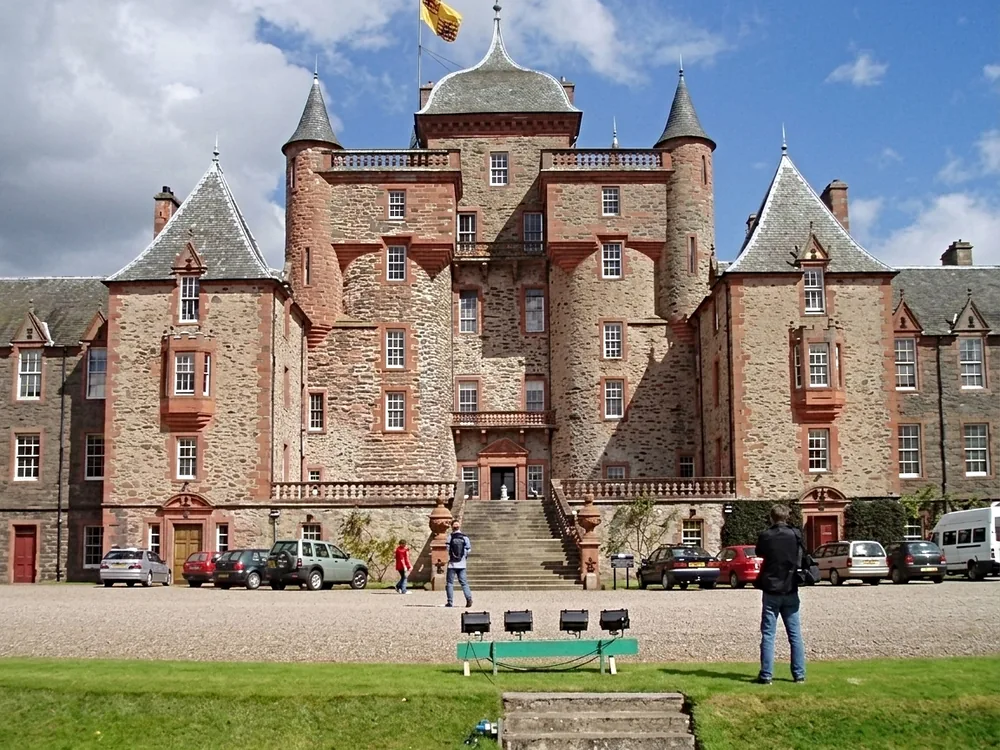
Built 1590 · Late 16th-century castellated house, built 1590 on the site of the earlier 'Lauder Fort,' substantially rebuilt around 1670 by architect Sir William Bruce
This page is part of an independent travel guide and is not affiliated with, endorsed by, or operated by Thirlestane Castle.
© Castles & Palaces
Quick Facts
- Rooms from
- £165 / night
- Hotel rating
- ★★★★★ 5-Star Hotel
- Duration
- Guided castle tour: 1 hour, seasonal April–October; self-catering apartment stay separately bookable year-round
- Best time
- April to October for guided tours of the castle
- Nearest city
- Edinburgh
Stay Here
Glenburnie at Thirlestane Castle
★★★★★ 5-Star HotelRooms are within the historic castle building itself
Booked via Booking.com · Cancellation terms vary by rate
Real guided tours available, but seasonal (April-October only) — see Highlights above
Highlights
- ✦An earlier fortification, 'Lauder Fort,' occupied this site from around 1250; the Maitland family acquired lands in Lauderdale by marriage
- ✦The present castellated house was built in 1590 by John Maitland, created Lord Maitland of Thirlestane and Chancellor of Scotland, on the hillside above the Leader Water
- ✦Around 1670, the architect Sir William Bruce was engaged by John Maitland, 1st Duke of Lauderdale, to rebuild the 16th-century house on a far grander scale
- ✦'Glenburnie at Thirlestane Castle' offers a 5-star, VisitScotland-graded self-catering apartment within the castle, furnished with period pieces from the collection
- ✦Guided tours of the castle run seasonally, April through October 2026, with a standard tour and specialist tours focused on particular parts of the collection; the castle is closed to visiting the rest of the year
Stay in the castle itself
Book a room via Booking.com
Thirlestane Castle stands on a hillside above the Leader Water at Lauder in the Scottish Borders, and its site carries a defensive history stretching back well before the building visitors encounter today. An earlier fortification known as 'Lauder Fort' occupied this position from around 1250, and the Maitland family — who would go on to shape Thirlestane's fortunes for centuries — acquired lands in Lauderdale through marriage, establishing the connection between family and place that defines so much of the castle's subsequent story.
The castellated house that forms the core of the present building was constructed in 1590 by John Maitland, who was created Lord Maitland of Thirlestane and served as Chancellor of Scotland — one of the most senior offices in the Scottish state, roughly equivalent to a modern head of government's chief minister. Maitland's original house was a rectangular, crenellated structure, dignified but relatively restrained by the standards of what would follow within the same family a century later.
That transformation came around 1670, when John Maitland, by then 1st Duke of Lauderdale and one of the most powerful figures in Restoration-era Scottish and British politics, engaged the architect Sir William Bruce to rebuild the 16th-century house on a considerably grander scale. Bruce, widely regarded as the father of classical Scottish country house architecture and the designer behind Holyroodhouse's own Restoration-era remodelling, reshaped Thirlestane into something closer to a genuine palace than a fortified Border house — a transformation that reflects both Lauderdale's immense wealth and influence at the height of his political power and Bruce's own emerging reputation as Scotland's leading architect of the period.
Thirlestane's accommodation today, marketed as 'Glenburnie at Thirlestane Castle,' occupies a self-catering apartment within the castle's south wing, holding a 5-star VisitScotland grading and furnished throughout with period pieces drawn directly from the castle's own historic collection — a considerably more intimate way to experience Thirlestane's interior than a standard day visit alone would allow, since guests staying at Glenburnie have the run of their own private space inside a genuinely historic structure rather than a modern hotel room built to resemble one.
Unlike several other properties in this collection with year-round public access, Thirlestane's guided castle tours run on a clearly defined seasonal schedule: April through October 2026, with the castle closed to general visiting for the remainder of the year. Within that season, visitors can choose between a standard guided tour covering the castle's principal rooms and history, or more specialist tours focused on particular aspects of Thirlestane's collection — a level of curatorial depth uncommon among Scotland's castle-hotels, most of which offer either no visiting option at all or a single standard tour format. Anyone planning a visit specifically to see the castle's interior, rather than simply booking the Glenburnie apartment, should check the current season's exact opening dates before travelling, since the guided-tour offer does not run year-round the way the self-catering booking does.
Set in the rolling countryside of Lauderdale, within easy reach of Edinburgh to the north and the wider Scottish Borders towns to the south, Thirlestane combines a genuinely significant architectural pedigree — a Maitland fortified house transformed by one of Scotland's greatest architects — with two distinct, complementary ways to experience it: a seasonal guided tour of the state rooms, and a private self-catering stay within the castle's own walls.
The Maitland family's association with Thirlestane did not end with the Duke of Lauderdale's 17th-century transformation of the house — the family's descendants, the Earls and later Marquesses of Lauderdale, continued to shape the castle and its estate across subsequent centuries, and Thirlestane remains connected to that same family line today, giving the building a continuity of ownership and stewardship that few Scottish castles of comparable scale can claim over such a long span.
History
An earlier fortification, 'Lauder Fort,' occupied the site of Thirlestane Castle from around 1250, and the Maitland family acquired lands in Lauderdale by marriage. The present castellated house was built in 1590 by John Maitland, created Lord Maitland of Thirlestane and Chancellor of Scotland. Around 1670, the architect Sir William Bruce was engaged by John Maitland, 1st Duke of Lauderdale, to rebuild the 16th-century house on a much grander scale, transforming it into one of the finest examples of Restoration-era Scottish country house architecture. The castle remains connected to the Maitland family history and today combines seasonal public guided tours with a 5-star self-catering apartment, Glenburnie, within its south wing.
How to Stay
Getting there: Lauder, Scottish Borders.
Rooms & rates: 5 individually designed suites (8 bedrooms total) occupy the South Wing of the historic castle itself, bookable individually or all together for groups up to 16; separate Woodland Lodges elsewhere on the Lauderdale Estate offer a more contemporary, hot-tub-equipped alternative.
On-site: Courtyard, vaulted cellars and the historic Victorian kitchen for dining; self-catering or catered options.
Good to know: Specify the South Wing suites if sleeping inside the historic castle building itself is the priority — the Woodland Lodges are a separate, more modern option elsewhere on the estate.
Combine with: Lauder village and the Scottish Borders' castle-and-abbey circuit.
Frequently Asked Questions
No. Guided tours of the castle run on a seasonal schedule, confirmed for April through October 2026, with the castle closed to general visiting for the rest of the year. The self-catering apartment, Glenburnie at Thirlestane Castle, can be booked year-round independently of the tour season, but anyone specifically wanting to see the castle's interior on a guided tour should check the current season's exact dates before travelling.
Location
Lauder, Scottish Borders TD2 6RU, Scotland
Nearby Castles
Rooms from
£165/ night