
Belalcázar Castle
Castillo de Belalcázar
Spain · Andalusia — Córdoba Province, Los Pedroches comarca, town of Belalcázar · Near Córdoba
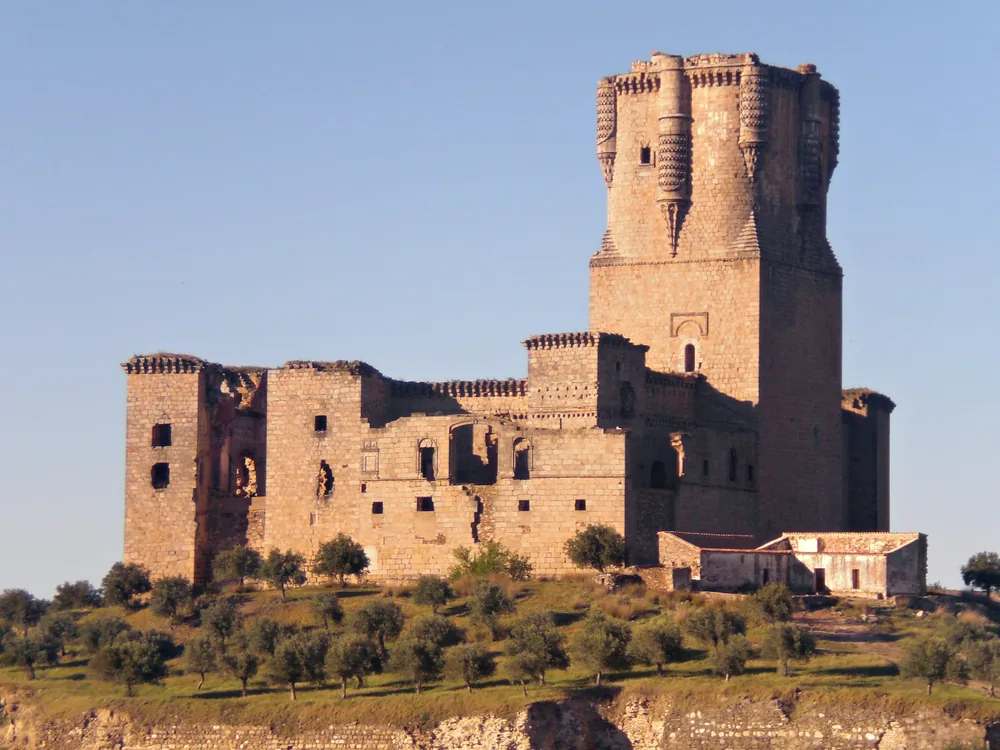
Built 1466 · Late medieval Gothic castle commissioned by the Sotomayor family; the principal feature is the Torre del Homenaje (keep), standing approximately 50 metres — one of the tallest surviving medieval towers in Andalusia; the castle complex comprises the tower, a walled curtain with corner towers, and an inner courtyard; construction represents the mature Gothic military style of 15th-century Castilian castle-building, when dynastic display was as important as active military function; the adjacent Convento de Santa Clara (15th–16th century) was founded by the same family and forms an integral part of the patronage complex — its Gothic church and cloister survive in substantially intact condition
This page is part of an independent travel guide and is not affiliated with, endorsed by, or operated by Belalcázar Castle.
© Castles & Palaces
Quick Facts
- Hours
- Daily By arrangement
- Guided tour from
- €1290
- Duration
- 1.5 hours (guided)
- Best time
- March to June and September to November
- Nearest city
- Córdoba
Featured Tour
Córdoba: Excursion to the Castles of Belmez and Belalcázar
Cancellation available · Instant confirmation
Highlights
- ✦Torre del Homenaje — at approximately 50 metres, the castle's keep is among the tallest surviving medieval towers in Andalusia, dominating the Los Pedroches plateau for kilometres in every direction; the Sotomayor family designed the tower not merely as a military structure but as a dynastic declaration — its exceptional height was proportionate to the family's ambitions as Counts of Belalcázar and Masters of the Order of Alcántara
- ✦Convento de Santa Clara — the Franciscan convent founded by the Sotomayor family in the 15th–16th century immediately adjacent to the castle; the Gothic church and cloister survive in substantially intact condition and contain tombs and funerary monuments of the Sotomayor dynasty; castle and convent together form a single dynastic patronage project — temporal power in the tower, religious commemoration in the vaults
- ✦Sotomayor dynasty — commissioned by Don Gutierre de Sotomayor, Count of Belalcázar and Master of the Order of Alcántara; the Sotomayor were among the most powerful noble families of 15th-century Castile, and the Belalcázar complex represents one of the most complete expressions of late medieval noble patronage in the Córdoba province
- ✦Los Pedroches plateau setting — the castle stands in the heart of the Los Pedroches comarca, a broad granite plateau characterised by oak dehesa, extensive livestock farming, and a strong local cultural identity; the plateau's near-flat topography makes the tower visible from an exceptional distance, reinforcing the visual logic of its construction as a dynastic landmark rather than a purely military one
- ✦Paired excursion from Córdoba with Belmez — Belalcázar is most efficiently visited alongside [Belmez Castle](/castles/spain/belmez-castle), 45 km to the south; the two sites together span four centuries of castle-building in the Los Pedroches, from the Moorish-origin rock tower at Belmez to the ambitious Gothic programme at Belalcázar, making the full-day excursion from Córdoba the natural format for seeing both
Skip the queue with a guided tour
Skip-the-line tickets & expert guides
Belalcázar Castle rises from the Los Pedroches plateau with a height and vertical authority that immediately distinguishes it from the modest defensive structures typical of rural Andalusia. The Torre del Homenaje — the castle's main keep — stands approximately 50 metres from base to battlement, making it one of the tallest surviving medieval tower structures in Andalusia and one of the most imposing expressions of 15th-century noble power in the entire province of Córdoba. From the plateau's flat terrain, the tower is visible as a landmark for many kilometres in every direction — which was precisely the intention behind building it at this scale.
The castle was commissioned in 1466 by Don Gutierre de Sotomayor, Count of Belalcázar and Master of the Order of Alcántara — one of the three great Iberian military-religious orders that had managed significant portions of the Reconquista campaign in Extremadura and western Andalusia. By the mid-15th century, the military frontier had moved decisively south and the practical requirement for a functioning defensive castle in the Los Pedroches was minimal. What the Sotomayor family were building at Belalcázar was therefore something different from a working fortress: an architectural statement of dynastic importance, a physical assertion that the Counts of Belalcázar ranked among the great noble houses of Castile. The tower's scale is comprehensible only in this context — it was built to be seen and recognised, not merely to be defended.
The castle complex extends beyond the tower to include a curtain wall with corner towers and an inner courtyard. Immediately adjacent stands the Convento de Santa Clara, a Franciscan convent founded by the Sotomayor family in the same period, whose Gothic church and cloister survive in substantially intact form. The convent represents the other dimension of Sotomayor patronage: where the castle proclaimed temporal power, the convent expressed religious piety and the family's aspiration to posthumous commemoration — several members of the Sotomayor dynasty are buried in the convent church. Together, castle and convent form a single statement of noble identity that is one of the most complete examples of 15th-century aristocratic patronage in the province.
The interior of the castle, including the upper levels of the Torre del Homenaje, is accessible via the guided day excursion from Córdoba. The guided visit covers both the castle and the adjacent convent, giving visitors a complete picture of the Sotomayor complex. The guide contextualises the tower's construction within the competitive noble culture of 15th-century Castile, where the height of a family's torre del homenaje functioned as a publicly visible index of their standing in the aristocratic hierarchy — the medieval equivalent of a corporate headquarters designed to communicate status before a word is spoken.
The setting adds considerably to the experience. The Los Pedroches plateau is a landscape of broad horizons, dehesa oak woodland, and grazing cattle — a Castilian granite plateau that feels decisively different from the olive groves and whitewashed towns of the Córdoba lowlands. The plateau's characteristic flatness makes Belalcázar's tower silhouette against the sky all the more striking. The natural companion visit is [Belmez Castle](/castles/spain/belmez-castle), 45 kilometres to the south, whose Moorish rock-top tower offers a contrasting architectural and historical narrative that makes the two sites an ideal single day's excursion from Córdoba.
History
The settlement at Belalcázar had medieval origins predating the Sotomayor building campaign, and an earlier fortification occupied the site before Don Gutierre de Sotomayor began his ambitious programme in 1466. The Sotomayor family had risen to pre-eminence through their role in the military Order of Alcántara — one of the three great Iberian military-religious orders that managed significant portions of the Reconquista campaign in Extremadura and western Andalusia — and Don Gutierre's appointment as Master of Alcántara represented the apex of the family's political influence in the mid-15th century.
The castle he commissioned was scaled to express that influence. A keep of approximately 50 metres was among the tallest in Andalusia — a height that would have been immediately legible to contemporaries as a statement of rank equivalent to, or exceeding, that of most other noble houses in the province. The adjacent Convento de Santa Clara, founded in the same period, served as the Sotomayor dynastic pantheon. Together, castle and convent formed a complete statement of noble identity: temporal power declared in stone, religious patronage expressed in Gothic vaults, with the family tombs as the permanent record of the dynasty's passage.
Belalcázar passed through subsequent noble ownership following the decline of the Sotomayor line and eventually settled into the preserved rural complex it is today — a 15th-century Gothic castle and Franciscan convent on the Los Pedroches plateau, their scale and ambition somewhat at odds with the quiet agricultural landscape that surrounds them on every side.
How to Visit
Getting there: Belalcázar is 90 km north of Córdoba; by car, take the A-3178 north toward Peñarroya-Pueblonuevo, then continue north to Belalcázar — journey time approximately 1 hour 15 minutes. Public transport from Córdoba is infrequent; the car or the GetYourGuide day excursion are the practical options for most visitors. The castle is visible from the main road into town and a short walk from the town centre.
Tickets: No stand-alone walk-up ticket is available for Belalcázar Castle's interior. The GetYourGuide day excursion (from €1,290 per group of up to 50 people, 10 hours) covering both Belalcázar and Belmez Castle with round-trip transportation and a licensed local guide provides a structured 1.5-hour guided visit of the castle complex including the Torre del Homenaje and the adjacent Convento de Santa Clara. Minimum 4 participants required to run; book in advance. The €1,290 is a flat group price, not a per-person fee, and covers the full day's programme and transport, not a standalone castle entrance fee. The exterior of the castle and tower is visible from the town without charge.
Practical tips: Visit between March and June or September to November — Córdoba province summers are extreme, regularly exceeding 40°C in the northern comarca. The Torre del Homenaje's upper levels involve stairs; wear comfortable shoes. Allow time after the castle for the Convento de Santa Clara next door — the Gothic cloister and church are included in the guided excursion and contain the Sotomayor family tombs that make the patronage story concrete.
Combine with: Belmez Castle lies 45 km south — the two castles are paired on the GetYourGuide full-day excursion from Córdoba as complementary sites representing the full span of medieval fortress-building in the Los Pedroches comarca.
Frequently Asked Questions
Interior access to the castle, including the upper levels of the Torre del Homenaje, is generally available only through an organised visit rather than independent walk-up entry. Contact the Ayuntamiento de Belalcázar directly to enquire about current independent access arrangements, which can vary seasonally. The GetYourGuide day excursion from Córdoba is the most reliable way to access the full interior with a licensed guide and is the format in which most visitors experience the castle.
Location
Castillo de Belalcázar, 14280 Belalcázar, Córdoba, Spain
Nearby Castles
Tours & Tickets
Powered by GetYourGuide
From
€1290/ group