
Belmez Castle
Castillo de Belmez
Spain · Andalusia — Córdoba Province, Los Pedroches comarca, town of Belmez · Near Córdoba
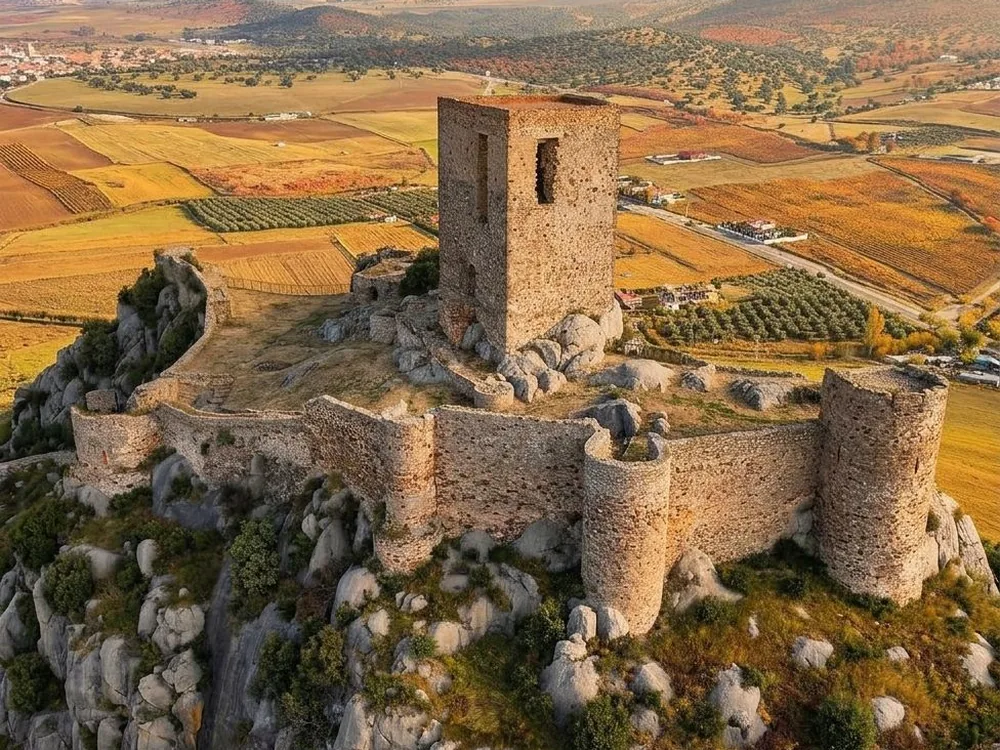
Built 1241 · Moorish-origin hilltop fortress on a near-vertical quartzite rock outcrop; the surviving fabric is primarily from the Islamic taifa period, with modifications following the Reconquista of 1241; the site consists principally of a square Moorish tower and outer defensive wall fabric that follow the contours of the quartzite rock formation; the natural geology of the site — an ancient metamorphic outcrop rising approximately 50 metres above the town — effectively substitutes for defensive works on three sides, requiring only a controlled approach on the fourth; the dramatic quartzite base is itself the dominant architectural feature of the site
This page is part of an independent travel guide and is not affiliated with, endorsed by, or operated by Belmez Castle.
© Castles & Palaces
Quick Facts
- Hours
- Daily Open daylight hours
- Guided tour from
- €1290
- Duration
- 1–1.5 hours (grounds and panoramic viewpoints)
- Best time
- March to June and September to November
- Nearest city
- Córdoba
Featured Tour
Córdoba: Excursion to the Castles of Belmez and Belalcázar
Cancellation available · Instant confirmation
Highlights
- ✦Quartzite rock formation — Belmez Castle sits atop one of the most dramatic natural rock outcrops in Andalusia: a near-vertical mass of ancient quartzite rising above the town rooftops, visible across the Los Pedroches valley for kilometres in every direction; from a distance, the castle walls appear to grow directly from the geology, building and rock merging into a single vertical landmark that dominates the surrounding landscape
- ✦Reconquista frontier position — taken by Ferdinand III of Castile in 1241 during the campaign that was systematically driving the Moorish taifa states from the upper Guadalquivir basin, Belmez was an active frontier castle for both the Muslim and Christian administrations that held it; the Sierra Morena ranges running north of the castle formed a natural boundary between the contested territories of the northern meseta and the Guadalquivir valley below
- ✦Sierra Morena panoramas — the viewpoints from the castle's grounds offer sweeping views over the forested ridges of the Sierra Morena to the north and the rolling Los Pedroches plains to the south; in spring, the hillsides carry an exceptional wildflower display typical of the Mediterranean scrubland ecosystem, making March–May visits particularly rewarding
- ✦Free access to grounds and viewpoints — the castle grounds and exterior viewpoints are freely accessible year-round during daylight hours without charge, making Belmez one of the few Andalusian Moorish castle sites where the panoramic experience is available to all visitors without a ticket
- ✦Combined excursion with Belalcázar — Belmez is most efficiently visited alongside [Belalcázar Castle](/castles/spain/belalcazar-castle), 45 km to the north; the two sites together demonstrate the full range of medieval castle-building in the Los Pedroches comarca, from the Moorish-origin rock tower at Belmez to the massive 15th-century Gothic keep at Belalcázar, one of the tallest medieval towers in Andalusia
Skip the queue with a guided tour
Skip-the-line tickets & expert guides
Belmez Castle occupies one of the most striking natural sites in Andalusia — not for the architectural elaboration of its surviving structure, but for the rock it stands on. The quartzite outcrop beneath the castle is itself the monument: a near-vertical mass of ancient metamorphic rock rising almost 50 metres above the rooftops of the town of Belmez, visible from the plains and hillsides of the Los Pedroches valley for kilometres in every direction. From a distance, the castle's walls seem to grow directly from the rock formation, building and geology merging into a single vertical mass that dominates the surrounding landscape with unusual authority.
The castle began as a Moorish fortification during the taifa period, when the Sierra Morena ranges formed the northern frontier of the Muslim territories in the upper Guadalquivir basin. The quartzite rock's natural defensibility made it an obvious fortification point — the outcrop eliminates the need for defensive works on three of its four sides, and the single accessible approach can be controlled with minimal construction. Ferdinand III of Castile took the castle in 1241 during the Reconquista campaign that had taken Córdoba itself five years earlier, and Belmez thereafter served as a Castilian frontier post in the contested borderlands between the expanding crown territory and the remaining Nasrid Emirate of Granada to the south.
The castle's later history was less dramatic than its origins suggest. As the Reconquista frontier moved decisively south and the Los Pedroches comarca settled into peacetime administration, Belmez declined in strategic importance. The town subsequently developed around its mining character — the Sierra Morena subsoil is rich in coal and iron — and the castle became a town landmark rather than an active fortification. What survives today is primarily the Moorish-period tower and the outer defensive wall fabric, without the substantial later rebuilding that characterises the more prominent Reconquista fortifications further south in the province.
The practical experience of visiting Belmez focuses on the exterior viewpoints and the panorama rather than interior architectural spaces. The approach from the town centre offers increasingly dramatic views over the rooftops and surrounding countryside as the path climbs to the castle grounds; the tower summit, where accessible, provides a 360-degree panorama of the Sierra Morena foothills to the north and the Los Pedroches plain extending south and east toward Córdoba. Spring visits are particularly rewarding: the Sierra Morena hillsides around Belmez carry an exceptional wildflower display from March through May, with cistus, rockrose, and a range of bulbous species covering the scrubland slopes in conditions that make the approach as much a botanical as a historical experience.
The most natural companion visit is [Belalcázar Castle](/castles/spain/belalcazar-castle), 45 kilometres to the north — a 15th-century Gothic castle with one of the tallest keeps in Andalusia, paired with Belmez on the full-day guided excursion from Córdoba. The two sites together span four centuries of castle-building in the same comarca and represent opposite ends of the medieval Andalusian fortification typology.
History
The quartzite outcrop above Belmez was fortified by the Moorish administration during the taifa period, when the Sierra Morena ridgelines marked the frontier between the Muslim territories of the Guadalquivir basin and the Christian kingdoms pressing southward from the meseta. The rock's near-vertical faces on three sides made it a logical fortification requiring minimal construction to achieve maximum defensive effect — the geology did the majority of the work, and the Moorish builders concentrated their effort on the tower and the controlled approach on the fourth side.
Ferdinand III of Castile incorporated Belmez into the expanding Castilian frontier in 1241, in the decade of the great Reconquista advances that had already delivered Córdoba in 1236 and would take Seville in 1248. Under Christian control, the castle served as a frontier post in the contested territory between Castile and the Nasrid Emirate of Granada, which retained its independence further south until 1492. As the frontier moved definitively south and the Los Pedroches settled into peacetime, the castle's active military function faded. The town of Belmez developed as a mining centre — the Sierra Morena is rich in coal and metallic minerals — and the castle remained a dominant landmark above the town rather than a working military installation. The surviving fabric is primarily of Moorish origin, with the dramatic quartzite base the site's most enduring and defining feature.
How to Visit
Getting there: Belmez is 75 km northwest of Córdoba; by car, take the A-81 motorway northwest from Córdoba toward Belmez — journey time approximately 55 minutes. Limited bus services connect Córdoba with Los Pedroches towns including Belmez, but schedules are infrequent and a car is advisable for independent visitors. The castle is a short uphill walk from the town centre.
Tickets: No stand-alone ticket is sold for Belmez Castle directly. The exterior grounds and panoramic viewpoints are freely accessible year-round during daylight hours. The GetYourGuide day excursion (from €1,290 per group of up to 50 people, 10 hours) covering both Belmez and Belalcázar Castle with round-trip transportation and a licensed local guide is the structured way to visit both sites; minimum 4 participants required to run, book in advance. The €1,290 is a flat group price, not a per-person fee, and covers the full day's programme rather than a castle entrance charge.
Practical tips: Visit between March and June, or September to November — Córdoba province summers regularly exceed 40°C and the exposed quartzite rock becomes extremely hot by midday in July and August. Spring is particularly rewarding: the Sierra Morena hillsides carry an exceptional wildflower display from March through May. The town of Belmez is small; allow time for a coffee in the market square before or after the climb.
Combine with: Belalcázar Castle lies 45 km north — the two sites are paired on the GetYourGuide full-day excursion from Córdoba and represent the natural companion visit for any trip to the Los Pedroches castles.
Frequently Asked Questions
The castle's exterior grounds and panoramic viewpoints are freely accessible year-round during daylight hours — no ticket or booking is required for an independent visit. If you want a fully guided experience covering both Belmez and Belalcázar Castle with round-trip transport from Córdoba, the GetYourGuide excursion (from €1,290 per group of up to 50 people) is a 10-hour guided programme; book it in advance as departures are scheduled rather than continuous.
Location
Castillo de Belmez, 14240 Belmez, Córdoba, Spain
Nearby Castles
Tours & Tickets
Powered by GetYourGuide
From
€1290/ group