
Casa de Pilatos
Casa de Pilatos
Spain · Andalusia — Seville, Santa Cruz / El Arenal historic districts · Near Seville
Built 1483 · Mudéjar-Gothic and Renaissance; earliest construction documented 1483, principal building 1516–1534 by Don Fadrique Enríquez de Ribera, 1st Marquis of Tarifa; main courtyard (Patio Principal) with Plateresque Gothic arches and Mudéjar azulejo tilework; gilded staircase hall with Mudéjar cupola; private residence of the Dukes of Medinaceli
This page is part of an independent travel guide and is not affiliated with, endorsed by, or operated by Casa de Pilatos.
© Castles & Palaces
Quick Facts
- Hours
- Mon–Fri 09:00–18:00. Sat & Sun 09:00–19:00
- Entry via GetYourGuide
- €12
- Duration
- 1.5–2 hours (both floors with audio guide)
- Best time
- October to April
- Nearest city
- Seville
Featured Tour
Seville: Casa de Pilatos Ticket
Cancellation available · Instant confirmation
Highlights
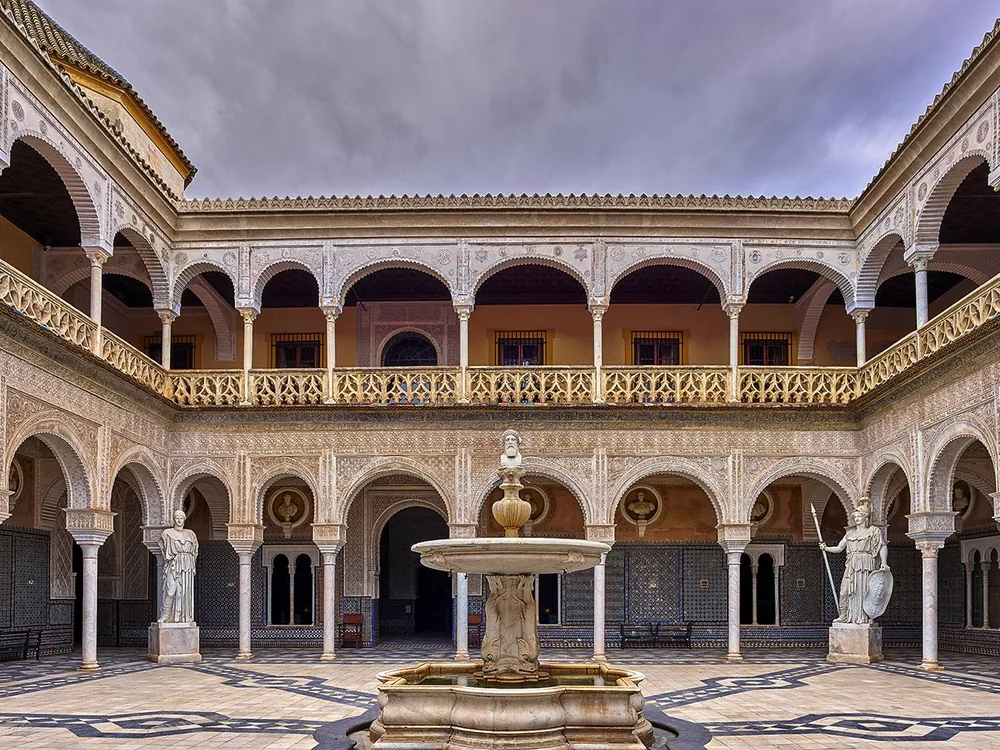
- ✦The Patio Principal — the main courtyard combining Plateresque Gothic arches on the upper storey with exceptional Mudéjar azulejo tilework below, completed in the 1530s at the height of Seville's aristocratic building programme
- ✦The name derives from a 1519 tradition linking the palace's proportions to Pontius Pilate's praetorium in Jerusalem; the 1st Marquis of Tarifa established a Via Crucis route from the gate, still walked on Good Friday
- ✦The upper floor apartments retain five centuries of Medinaceli family life — original furniture, Flemish tapestries from the 16th century, and family portraits in rooms that still feel genuinely inhabited rather than institutionally preserved
- ✦The Salón del Pretorio and surrounding ground-floor rooms display a private collection of Roman sculpture accumulated by the Dukes of Medinaceli, giving the palace the quality of a cabinet of curiosities as much as a state palace
- ✦Less than 400 metres from the Alcázar of Seville yet consistently less crowded, offering a more intimate encounter with Mudéjar palatial architecture at a human, residential scale that the royal palace cannot replicate
Skip the queue with a guided tour
Skip-the-line tickets & expert guides
In a city dominated by the Alcázar of Seville and the Cathedral, Casa de Pilatos offers something both more modest and more revealing: an aristocratic Mudéjar-Renaissance palace in active private ownership, where the rooms on the upper floor still contain the accumulated furnishings, portraits, and tapestries of five centuries of Medinaceli family life. Seville is exceptional for the quality of its surviving urban palaces, but Casa de Pilatos is the finest among them and the most generously opened to visitors.
The house takes its peculiar name — Pontius Pilate's House — from a tradition established by Don Fadrique Enríquez de Ribera, 1st Marquis of Tarifa, after his return from a pilgrimage to Jerusalem in 1519. Observing that the distance from his palace gate to the church of San Esteban was equivalent to the route Christ walked on the Via Dolorosa, he established a Via Crucis (Stations of the Cross) beginning at Casa de Pilatos that pilgrims still walk on Good Friday, four and a half centuries later. The name itself predates the route by decades, arising from an older tradition that the building's proportions recalled Pilate's praetorium — but it is the Via Crucis that embedded the association permanently in Sevillian consciousness.
The building is contemporary with the Alcázar's most celebrated interiors: the main courtyard (Patio Principal) was completed in the 1530s, at the peak of Mudéjar influence on Seville's aristocratic architecture. The courtyard combines Plateresque Gothic arches on the upper storey with Mudéjar azulejo tilework of exceptional quality on the lower walls — the same aesthetic vocabulary used in the palaces of the royal Alcázar, but at the scale of a private urban residence rather than a royal ceremonial complex. The gilded staircase hall with its Mudéjar cupola, the garden loggia, and the Salón del Pretorio — now displaying Roman sculptures from the Medinaceli collection — make the ground floor one of the richest sequences of aristocratic interior space surviving in Spain.
The upper floor, accessible with the combined ticket, is a different experience entirely: less a formal showroom and more an inhabited private apartment, with rooms arranged around original furniture, Flemish tapestries, and family portraits that document the Medinaceli dynasty from the 16th century to the 20th. The private-residence quality — the sense of a family present in the accumulation of objects rather than performed through curatorial staging — is what many visitors remember most from Casa de Pilatos, and what distinguishes it most sharply from the more heavily touristed Alcázar a few hundred metres southwest.
Many experienced visitors to Seville rate Casa de Pilatos above the Alcázar for atmosphere, for the quality of its Mudéjar interiors per visitor, and for the upper floor's capacity to show what an inhabited Spanish aristocratic palace actually looked and felt like. The combined ticket covering both floors is essential; the ground floor alone, while magnificent, is only half the building's story.
History
The Enríquez de Ribera family began constructing a palace on this site in the late 15th century, and the building assumed its essential form between 1516 and 1534 under Don Fadrique Enríquez de Ribera, 1st Marquis of Tarifa. Don Fadrique completed the main courtyard and principal state rooms in the Mudéjar-Gothic style then at its height in Seville, incorporating azulejo tilework, plasterwork decoration, and architectural vocabulary indistinguishable in quality from the royal Alcázar nearby. His pilgrimage to Jerusalem in 1519 brought back classical sculptures from Italy and gave the palace its lasting name, through the tradition that the building recalled Pilate's praetorium; he subsequently established the Via Crucis route from the palace gate to San Esteban that is still walked on Good Friday.
The palace passed by inheritance to the Dukes of Medinaceli in 1612, with whom it has remained continuously ever since — one of the longest unbroken aristocratic ownerships of a major urban palace in Spain. The Medinaceli accumulated the Roman sculpture collection displayed in the ground-floor rooms, the Flemish tapestries on the upper floor, and the furniture and portraits that give the house its distinctive quality of lived-in continuity. Restorations in the late 19th and early 20th centuries addressed accumulated damage while preserving the 16th-century interior fabric. The Fundación Medinaceli, which manages the palace's public opening, maintains the ground floor as a formally accessible monument and the upper floor as a partially habitable private apartment open to visitors by the combined ticket.
How to Visit
Getting there: Casa de Pilatos is in the historic Santa Cruz district of Seville, approximately 400 metres northeast of the Alcázar and 10 minutes' walk from Seville Cathedral. The nearest tram stop is Archivo de Indias on Line T1 (a 5-minute walk). Seville is connected to Madrid by AVE high-speed rail (2.5 hours) and to Córdoba (45 minutes), and the city's old quarter is compact and walkable.
Tickets: Walk-up admission covers either the ground floor alone (€12 adult, €6 child) or both floors combined (€16 adult). The GetYourGuide entry ticket provides ground-floor access with the convenience of online booking; the combined two-floor ticket is available at the palace entrance. Advance booking is not required, but the GetYourGuide ticket is useful during busy spring and autumn periods.
Practical tips: The combined ticket covering both floors is strongly recommended — the upper-floor apartments give the visit a completely different character from the ceremonial ground floor alone, and the private-residence quality of the rooms is the most memorable thing about the palace. October to April is the most comfortable visiting period; Seville's summer heat regularly reaches 40°C, which makes the interior courtyards a genuine refuge but the upstairs rooms warm. Arrive at opening time to have the Patio Principal quiet before other visitors fill the space.
Combine with: Alcázar of Seville (less than 1 km southwest in the Santa Cruz district — the UNESCO-listed royal palace and the greatest surviving example of Mudéjar palatial architecture in the world; Casa de Pilatos and the Alcázar together form the essential Seville Mudéjar palace circuit, walkable within minutes of each other).
Frequently Asked Questions
The name — 'Pontius Pilate's House' — derives from a tradition, current by the early 16th century, that the palace's proportions mirrored those of Pilate's praetorium in Jerusalem. The association was strengthened by Don Fadrique Enríquez de Ribera, 1st Marquis of Tarifa, who after his pilgrimage to Jerusalem in 1519 established a Via Crucis (Stations of the Cross) route beginning at the palace gate and ending at the church of San Esteban, following the same distance Christ walked on the Via Dolorosa. The Good Friday procession continues to this day.
Location
Plaza de Pilatos, 1, 41003 Sevilla, Spain
Nearby Castles
Tours & Tickets
Powered by GetYourGuide
From
€12/ person