
Castillo de Luna
Castillo de Luna y Villa Adentro de Alburquerque
Spain · Extremadura · Near Badajoz
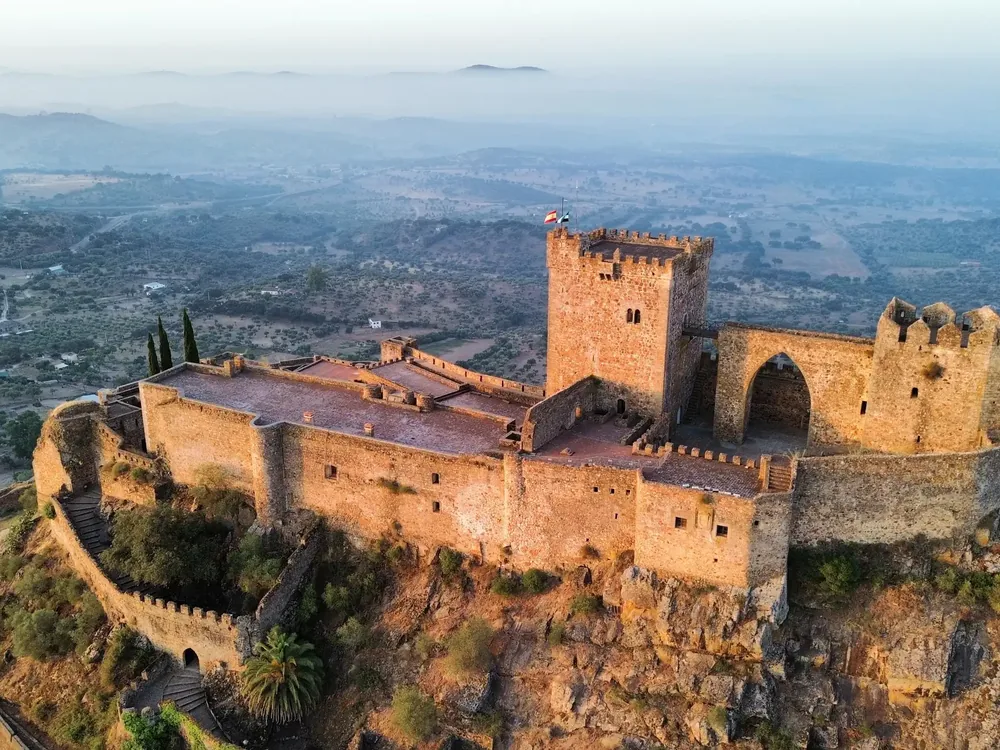
Built 1276 · Late medieval Iberian military architecture — a hilltop castle with rectangular keep (Torre del Homenaje), cylindrical corner towers, and two concentric defensive perimeters; well-preserved Castilian-Leonese frontier castle on the Portugal-Spain border; the Villa Adentro (walled medieval town) survives within the outer perimeter
This page is part of an independent travel guide and is not affiliated with, endorsed by, or operated by Castillo de Luna.
© Castles & Palaces
Quick Facts
- Hours
- Tue–Sun 10:00–14:00. Closed Mon
- Guided tour from
- €15
- Duration
- 1.5–2 hours (castle) + 1 hour (Villa Adentro) if combined
- Best time
- Spring
- Nearest city
- Badajoz
Featured Tour
Guided Tour of Castillo de Luna & Villa Adentro de Alburquerque (Spanish only)
Cancellation available · Instant confirmation
Highlights
- ✦The castle's double defensive perimeter — the inner walled castle complex and the outer enclosure containing the Villa Adentro (the surviving medieval walled town), together forming one of the most complete frontier fortress systems in Extremadura
- ✦The Torre del Homenaje (Keep) — the rectangular main tower with intact battlements and staircase, offering panoramic views over the Extremaduran countryside toward Portugal; on clear days the Portuguese border is visible
- ✦The Villa Adentro — the surviving medieval walled town within the castle's outer perimeter, with Romanesque and Gothic church remains, the original street layout, and the 15th-century Templo de Santa María del Mercado (now a cultural space)
- ✦Connection to Inês de Castro — Alburquerque's fortress was connected to Afonso Sanches, illegitimate son of Portuguese King Dinis I, who held the castle in the early 14th century; the Inês de Castro story (the Portuguese noblewoman assassinated in 1355 and posthumously crowned by her bereaved king) runs through the border castle landscape of this region
- ✦First Extremadura entry on this site — Alburquerque is among the most historically significant frontier towns of the medieval Castile-Portugal border, and the Castillo de Luna is the most substantial surviving monument of the Extremaduran frontier castle tradition
- ✦⚠️ Spanish-only guided tour — the GetYourGuide-listed guided tour (3 hours, from €15) is conducted in Spanish only; no English-language option is available for this specific booking
Skip the queue with a guided tour
Skip-the-line tickets & expert guides
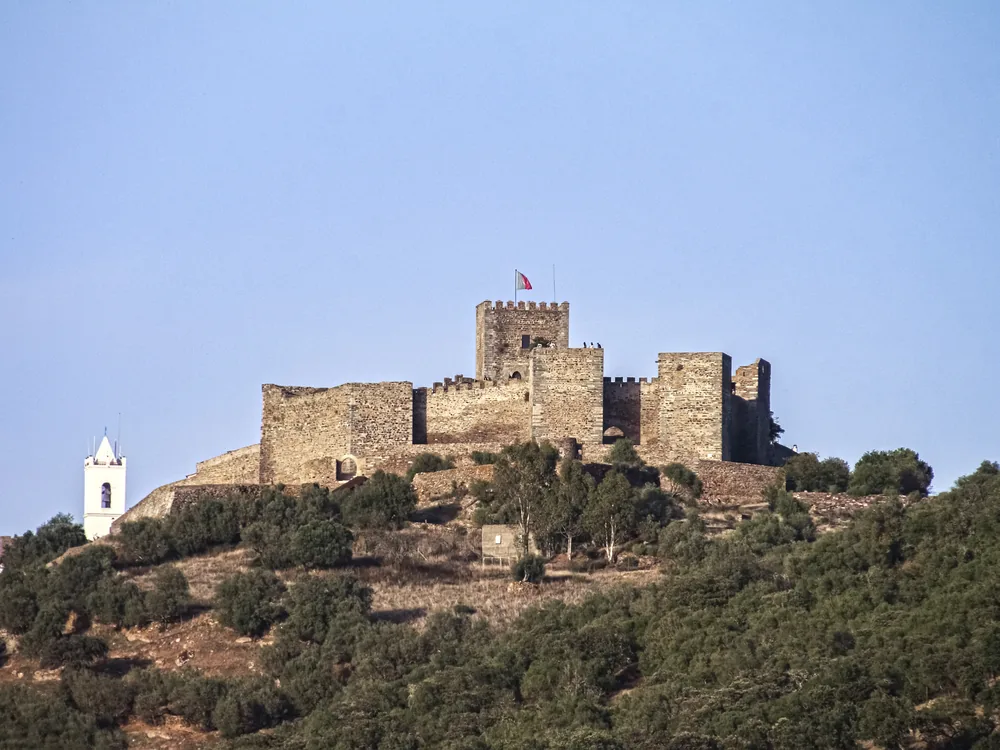
The Castillo de Luna stands on a granite hill above the small Extremaduran town of Alburquerque, approximately 35 kilometres north of Badajoz and 20 kilometres from the Portuguese border. It is one of the best-preserved frontier fortresses in a region full of them — Extremadura, the 'extreme lands' between the Tagus and Guadiana rivers, was one of the principal contested zones of the medieval Reconquista, a landscape shaped by centuries of castle-building on both sides of a fluctuating border. The Castillo de Luna is unusual within this tradition in that it survives with two complete defensive perimeters — the inner castle and the outer walled enclosure containing the Villa Adentro — and has undergone minimal later modification or 19th-century 'restoration' of the kind that obscures the medieval fabric at many better-known Spanish sites.
The castle's history begins in the 1270s, when Alfonso X of Castile granted the Alburquerque territory and its fortifications as part of the reorganisation of frontier defence following the Battle of Las Navas de Tolosa (1212) and the progressive Castilian advance south. The name 'de Luna' attaches to the castle through the Álvaro de Luna, Constable of Castile and the most powerful man in Castile during the reign of Juan II in the early 15th century — a connection that gives the castle its popular name, though the Álvaro de Luna connection may postdate the castle's primary construction phases.
The Portuguese dimension of the castle's history is the most complex and the most interesting for visitors approaching it from a European historical perspective. Alburquerque, directly on the Castile-Portugal border, was contested territory throughout the 13th and 14th centuries. Afonso Sanches, an illegitimate son of the Portuguese King Dinis I (who reigned 1279–1325), held Alburquerque and its castle as part of a complex cross-border territorial arrangement that reflected the instability of the Portugal-Castile frontier in this period. Afonso Sanches is a significant figure in the Inês de Castro story that runs through the border regions: Inês de Castro, the Galician noblewoman who became the secret wife of Prince Pedro of Portugal, was connected to the de Castro family which itself was entangled in the Castile-Portugal border nobility network. When Pedro became King Pedro I of Portugal, he exhumed Inês's body, reputedly had her crowned posthumously, and forced the court to kiss her hand. The story — one of the most extraordinary episodes in medieval Iberian dynastic history — echoes through the frontier castles of the Alentejo and Extremadura, and Alburquerque is part of that landscape.
The castle's built fabric spans the 13th to 15th centuries. The inner enclosure contains the Torre del Homenaje (the keep), a rectangular tower with battlements and views across the Extremaduran plain toward Portugal. The cylindrical corner towers of the inner enceinte are intact. The outer wall system encloses the Villa Adentro — the surviving medieval walled town that developed in the shadow of the castle — with its Romanesque and Gothic remains, the street layout preserving the medieval urban form, and the Templo de Santa María del Mercado, a 15th-century church now used as a cultural space. This combination of military fortress and surviving walled town within the same defensive system is what makes Alburquerque unusual compared to most surviving Spanish castles, which have lost the medieval settlement around them to later development.
The GetYourGuide-listed guided tour (3 hours) covers both the castle and the Villa Adentro on a walking circuit with a live guide from Ecoturismo Alburquerque. **The tour is conducted in Spanish only — there is no English-language option for this specific booking.** Spanish-speaking visitors get full interior access to the castle walls, towers, and the Villa Adentro street circuit, which is genuinely comprehensive for the price. English-speaking visitors should confirm language options with the provider before booking, or plan a self-guided visit to the exterior using the free castle approach path, which gives access to the outer walls and views without the guided circuit.
History
Fortifications at Alburquerque developed from the 13th century as Castile consolidated control of the Extremaduran frontier. The castle was associated with Afonso Sanches (illegitimate son of Portuguese King Dinis I) in the early 14th century border territory disputes. The name 'de Luna' connects to Álvaro de Luna, Constable of Castile (1388–1453), the most powerful nobleman of his era. The castle remained a frontier defensive position through the Reconquista and the later Castile-Portugal wars. The Villa Adentro (walled town within the outer perimeter) developed in the castle's shadow and survives with its medieval street layout.
How to Visit
Getting there: Alburquerque is approximately 35 km north of Badajoz on the N-432 (~40 minutes by car). There is no frequent public bus service suitable for day visitors from Badajoz — a hire car or taxi is the practical option. From Cáceres, the drive is around 90 km (1 hour 15 minutes) south on the EX-A1 and N-432.
Tickets: Walk-up entry €3 adult, €1 child; no advance booking required. Open Tuesday–Sunday 10:00–14:00; closed Monday. Confirm hours before visiting as they can change (contact Ecoturismo Alburquerque). The GetYourGuide tour — a 3-hour guided walking circuit of the castle and Villa Adentro with full interior access — is conducted in Spanish only; no English-language option is available. Book in advance.
Practical tips: Visit March–May or September–October to avoid Extremadura's 40°C+ summer heat. Allow 1.5–2 hours for the castle alone; add 1 hour for the Villa Adentro walking circuit. English-speaking visitors can do a self-guided visit to the exterior walls and the Villa Adentro streets freely — the interior tower circuit requires the Spanish-language guided tour.
Combine with: No nearby castles are currently published on this site within easy range. Within Extremadura, Cáceres (UNESCO medieval walled city, ~90 km north) and Mérida (Roman theatre and amphitheatre, ~75 km southeast) are the natural day-trip pairings for visitors based in the region.
Frequently Asked Questions
No — the GetYourGuide-listed tour is offered in Spanish only by Ecoturismo Alburquerque. There is no English-language option for this specific booking. Contact the provider directly (ecoturismoalburquerque.com or via GetYourGuide) if you want to enquire about private English-language options. Independent visitors can access the castle exterior and outer walls freely during opening hours without a guide.
Location
Calle Castillo, 06510 Alburquerque, Badajoz, Spain
Nearby Castles
Tours & Tickets
Powered by GetYourGuide
From
€15/ person