
Denia Castle
Castell de Dénia
Spain · Valencia — Alicante Province, Marina Alta comarca, town of Dénia · Near Alicante
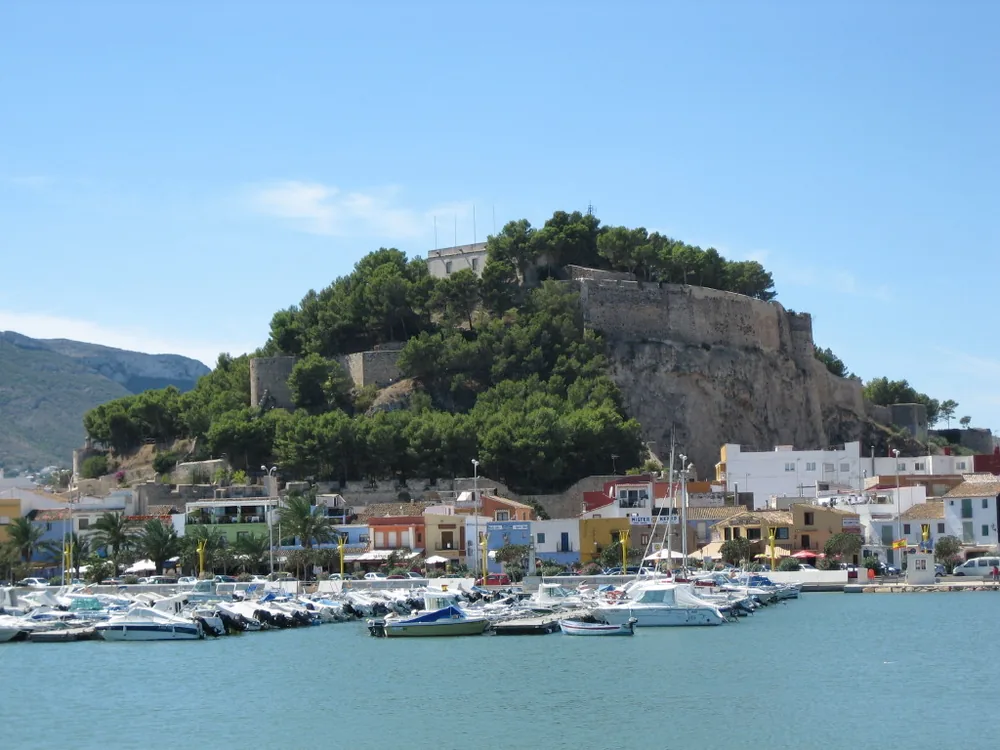
Multi-period hilltop fortification with successive Iberian, Roman, Islamic, and medieval Christian building phases; the surviving defensive perimeter is primarily Islamic in origin (10th–11th century), substantially developed under the taifa ruler Mujahid al-Amiri; Christian additions from the 14th–16th centuries include the palace building (palau) that now houses the archaeological museum; the walled circuit follows the natural contours of the hill above Dénia's port; the architectural character is layered rather than unified — each civilisation has left distinct fabric, and the site reads as a stratigraphy of Mediterranean history as much as a single-period fortress
This page is part of an independent travel guide and is not affiliated with, endorsed by, or operated by Denia Castle.
© Castles & Palaces
Quick Facts
- Hours
- Mon–Fri 10:00–18:00. Sat & Sun 10:00–19:00
- Guided tour from
- €28.08
- Duration
- 1.5–2 hours (self-guided); 70 minutes (Segway tour)
- Best time
- April to June and September to October
- Nearest city
- Alicante
Featured Tour
Dénia Castle Segway Tour
Cancellation available · Instant confirmation
Highlights
- ✦Segway tour — the GetYourGuide Segway circuit (castle admission included) guides visitors through the castle complex and the old town below on a 70-minute tour; the combination of the castle's elevated position, the mobility of the Segway, and the guided format allows visitors to cover far more of the site and its surroundings than a standard walking visit in the same time
- ✦2,500 years of continuous occupation — Denia Castle has been occupied since at least the Iberian period, with successive Roman, Islamic, and medieval Christian phases all leaving physical traces in the site; the archaeological museum in the castle's palace building presents material culture from all four periods, making it one of the most stratigraphically layered castle sites on the Costa Blanca
- ✦Mediterranean panorama — from the castle walls, the view takes in the port of Dénia directly below, the Cap de Sant Antoni headland to the north, the Montgó massif rising behind the town, and on clear days the island of Ibiza approximately 90 kilometres offshore to the east; it is one of the most complete Mediterranean coastal panoramas available from any hilltop fortification in the Valencian Community
- ✦Islamic origins under the Mujahidid dynasty — the castle was substantially developed under Mujahid al-Amiri, the taifa ruler of Dénia in the early 11th century, who extended Moorish control to the Balearic Islands and oversaw the castle's major Islamic building campaign; the taifa of Dénia under the Mujahidids was one of the few Iberian taifa states with a significant maritime dimension, and the castle reflects the ambition of that period
- ✦Montgó Natural Park — the castle hill sits at the foot of the Montgó massif, a 750-metre limestone mountain forming the backdrop to Dénia and the northern Costa Blanca; the Montgó Natural Park's trails are accessible from the town, and the combination of coastal castle and inland mountain terrain makes Dénia one of the more scenically diverse destinations on the Alicante coast
Skip the queue with a guided tour
Skip-the-line tickets & expert guides
Denia Castle rises on a hill directly above the town's port and fishing harbour, in a position that has made it the focal point of this section of the Costa Blanca since at least the Iberian period. The hill commands the maritime approaches from the south and east, the inland agricultural plain behind the town, and the base of the Montgó massif — the 750-metre limestone mountain that dominates the northern Alicante coast. It is the kind of site that never stopped being occupied: too strategically visible, too easily defended, and too embedded in the town's identity to ever be abandoned entirely. The result is a castle with a 2,500-year history of continuous use, and a stratigraphy of successive civilisations all readable within the same defensive perimeter.
The castle's most historically significant period was the early 11th century, under the taifa ruler Mujahid al-Amiri. When the Caliphate of Córdoba fragmented in the 1030s into competing city-states, Mujahid established an independent Muslim polity at Dénia that extended its influence to the Balearic Islands — Mallorca, Menorca, and Ibiza fell under the taifa's control in the early 11th century, making it one of the few Iberian taifa states with a meaningful maritime dimension. The castle was Mujahid's principal fortress, and the major Islamic building campaign he commissioned substantially shaped the defensive circuit that still defines the site today. The earlier Roman occupation of the hill — as Dianium, a settlement whose name referenced the goddess Diana — is confirmed by inscriptions, architectural fragments, and material now displayed in the castle's on-site museum, and the Iberian-period occupation predates even the Roman phase.
The Crown of Aragon took Dénia in 1244 as part of James I's conquest of the Kingdom of Valencia, ending the Islamic taifa period and beginning the medieval Christian phase of occupation. The Christian modifications to the fabric are visible primarily in the palace building — the palau — and in additions to the defensive circuit; the underlying Islamic structure was largely retained. The palau now houses the Museu de la Dénia, the town's archaeological museum, whose collection covers material from all four major periods. The museum's layout uses the castle's own fabric as exhibition context: Roman architectural fragments are displayed in rooms that still carry their Islamic-period masonry, so that the building itself is both subject and setting.
The standard walking visit takes 1.5 to 2 hours and covers the castle grounds, defensive walls, viewpoints, and museum. A practical option for visitors wanting to combine the castle with the old town below is the GetYourGuide Segway tour (castle admission included), a 70-minute guided circuit that routes through the castle complex and the medieval town on Segway, covering significantly more ground than a walking visit allows in the same time. The Montgó Natural Park is accessible on foot from the town for visitors combining a castle visit with a half-day mountain excursion.
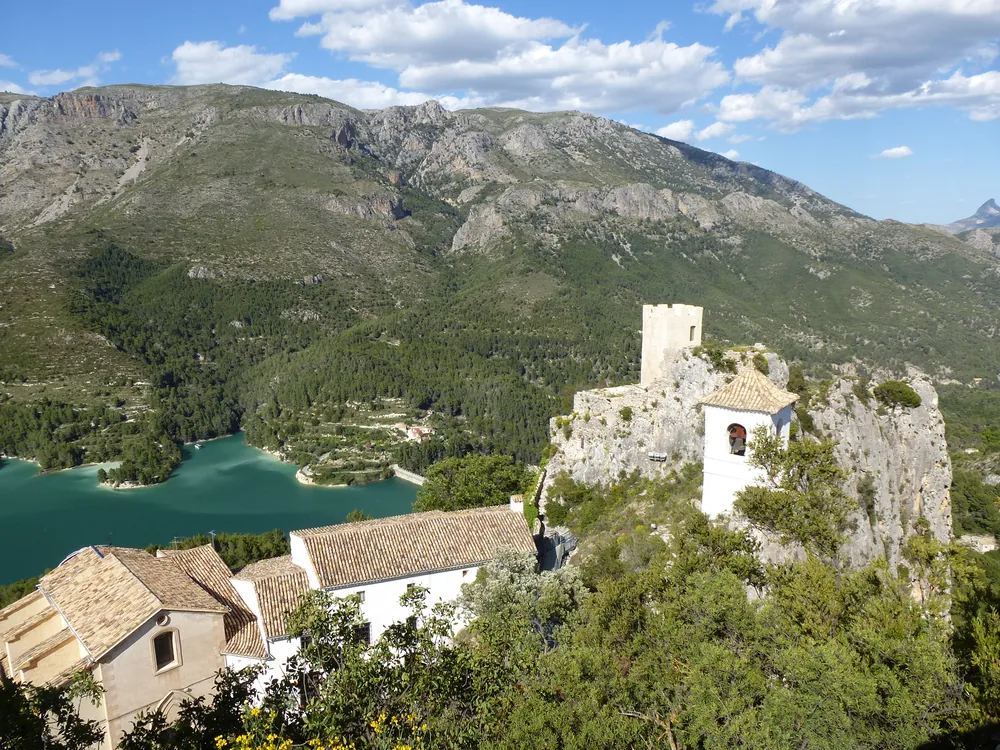
The closest castle pairing is [Guadalest Castle](/castles/spain/guadalest-castle), 33 km southwest in the Serra d'Aitana interior — a dramatically sited Moorish fortification above a mountain village, offering a contrasting inland experience to Dénia's coastal setting on the same day trip from Alicante.
History
The hill above Dénia's harbour has been occupied without significant interruption since the Iberian period, and the castle's layered fabric reflects that continuity across more than two millennia. A Roman settlement — Dianium, whose name most likely referenced the goddess Diana — occupied the same strategic position, controlling both the coastal trade routes and the agricultural plain behind the town. The site's Islamic period gave the castle its most formative phase: under Mujahid al-Amiri, the taifa ruler who established an independent Muslim city-state at Dénia following the collapse of the Caliphate of Córdoba in the early 11th century, the fortress was substantially developed and served as the seat of a maritime polity whose reach extended across the Balearic Islands.
The Crown of Aragon took Dénia in 1244 as part of James I's systematic conquest of the Kingdom of Valencia, ending the Mujahidid taifa and beginning a medieval Christian phase marked primarily by the construction of the palace building within the existing Islamic defensive perimeter. The castle's subsequent history was one of gradual military diminishment as Dénia's significance shifted from fortress-port to market and fishing town; by the modern period, the castle served civic rather than military functions. A sustained programme of archaeological investigation from the mid-20th century onward revealed the Iberian, Roman, Islamic, and medieval strata in sequence, all of which are now presented in the on-site museum in the castle palace — giving visitors a layered historical narrative that spans the full arc of Mediterranean civilisation on this one hill.
How to Visit
Getting there: Dénia is 95 km north of Alicante and about 100 km south of Valencia. By car from Alicante, take the AP-7 motorway north to Ondara, then the N-332 or CV-725 to Dénia — approximately 1 hour 15 minutes. From Valencia, take the AP-7 south to Gandía, then the N-332 north — approximately 1 hour 30 minutes. By rail, the narrow-gauge FGV (Ferrocarrils de la Generalitat Valenciana) connects both Alicante and Valencia to Dénia; from Alicante the journey takes approximately 2 hours 30 minutes with a change at Benidorm. The castle entrance is a 10-minute uphill walk from the town centre.
Tickets: Walk-up entry is €3 for adults and €2 for children; the ticket covers the castle grounds and the archaeological museum. The GetYourGuide Segway tour includes castle admission and guides visitors through the castle complex and old town on a 70-minute circuit — a popular way to see the castle in Dénia. Book the Segway tour in advance via GetYourGuide, as departure times are scheduled and availability is limited, particularly in spring and autumn.
Practical tips: The castle's open hilltop position makes it exposed to direct sun; morning visits are more comfortable in summer (July–August regularly reaches 34–36°C in Dénia) and the sea views are clearest before midday haze develops over the Mediterranean. The archaeological museum is worth at least 30 minutes — its collection spans 2,500 years of occupation on the same hill and is one of the better-contextualised town museums on the Costa Blanca. After the castle, Dénia's historic old town, which retains its Moorish street plan, is 10 minutes downhill on foot.
Combine with: Guadalest Castle lies 33 km southwest in the Serra d'Aitana — a dramatically positioned Moorish fortification above a mountain village, worth pairing with Dénia for a day that moves between coastal and interior Alicante landscapes.
Frequently Asked Questions
The GetYourGuide Segway tour includes castle admission plus a 70-minute guided circuit on Segway covering the castle complex and the old town of Dénia. No prior Segway experience is required — the tour begins with a brief orientation and practice session before departing. The format allows visitors to cover both the elevated castle grounds and the medieval town streets below in a single guided experience. The tour is a popular way to see the castle in Dénia; advance booking is recommended as departure times are scheduled.
Location
Carrer del Castillo, 03700 Dénia, Alicante, Spain
Nearby Castles
Tours & Tickets
Powered by GetYourGuide
From
€28.08/ person