
Guadalest Castle
Castell de Guadalest / Castillo del Guadalest
Spain · Valencian Community / Alicante Province · Near Benidorm
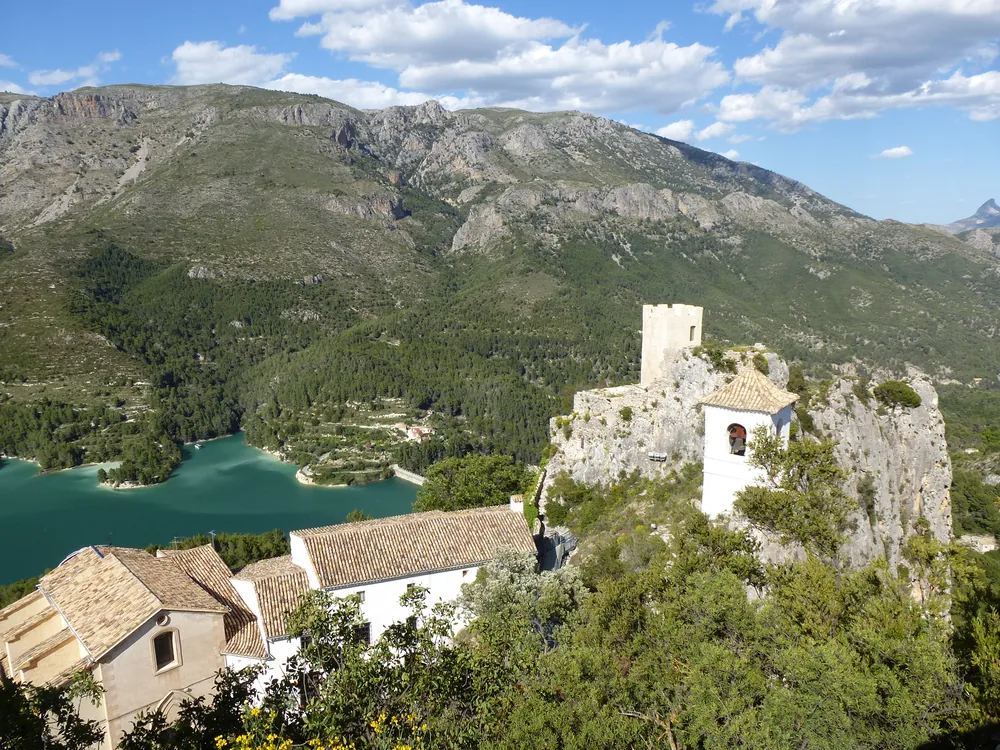
Built 711 · Moorish origin castle with subsequent Christian additions — the original fortress was built during the Moorish period on a natural rock pinnacle above the Guadalest Valley; after the Christian Reconquista, it was taken by Jaime I of Aragon in 1258 and incorporated into the Crown of Aragon defensive network; the current accessible structure is a rock-cut gateway, a partially reconstructed keep, and the walls of the fortified medieval village below; the upper fortress is extremely compact given the constraints of the pinnacle site, and the village retains a well-preserved historic urban fabric
This page is part of an independent travel guide and is not affiliated with, endorsed by, or operated by Guadalest Castle.
© Castles & Palaces
Quick Facts
- Hours
- Daily 10:00–18:00
- Day trip from
- €65
- Duration
- 2–3 hours in the village and castle complex (walking the village, museums, upper castle area); 4 hours total with the GetYourGuide round-trip transfer
- Best time
- April to June and September to November
- Nearest city
- Benidorm
Featured Tour
From Alicante/Benidorm: Guadalest Castle Round-Trip Transfer (Entrance Fees Not Included)
Cancellation available · Instant confirmation
Highlights
- ✦⚠️ ENTRANCE FEES NOT INCLUDED — the GetYourGuide tour is a **round-trip transfer with driver-accompanied walk only**: it provides transport from Alicante/Benidorm and a driver who accompanies visitors. **Castle admission, the Orduña House museum, and all other village museums (4–8 EUR each) must be purchased separately on-site.** Do not book this tour expecting an all-inclusive admission package.
- ✦Guadalest village — one of the most visited villages in Spain, a medieval fortified settlement of approximately 200 permanent residents that receives approximately 700,000 visitors per year; the village is built on a rocky spur and accessible only through a tunnel cut in the rock; the main street is narrow, atmospheric, and lined with souvenir shops, local craft businesses, and the entrances to the small private museums
- ✦The rock-cut entrance and tunnel — to enter the village, visitors pass through a narrow tunnel cut through the limestone rock, then climb steep steps to reach the historic street level; the entrance is one of the most photographed moments of the Guadalest visit and gives a genuine sense of the site's medieval defensive logic: controlling a narrow passage through rock that no army could rush
- ✦The Orduña House (Casa Orduña) museum — the principal heritage museum in the village, housed in the 17th-century manor house of the Orduña family, covering the village's history from the Moorish period through the Christian occupation, the catastrophic 1748 earthquake, and the 19th–20th centuries; entry is approximately 6 EUR, purchased separately at the site
- ✦The Guadalest Reservoir (Embalse de Guadalest) — the turquoise reservoir below the village, visible from the castle viewpoint, is one of the most photographed sights in Alicante province; the colour results from the mineral content of the mountain water; the reservoir view from the upper castle terrace is the classic Guadalest image
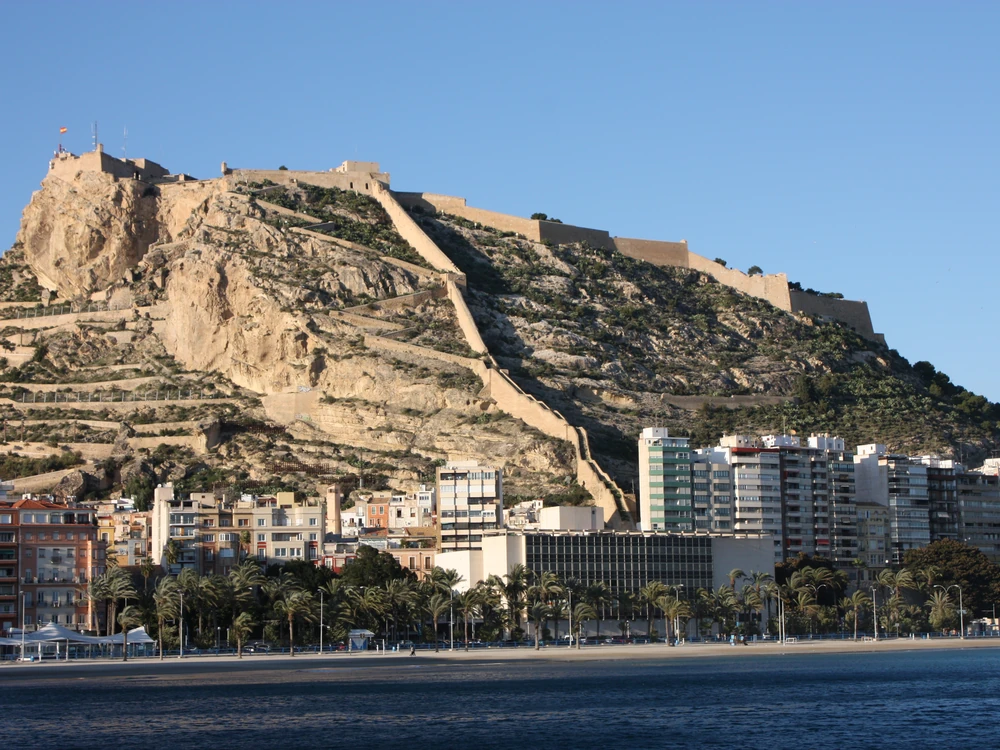
- ✦Near Santa Bàrbara Castle in Alicante (~50km east) — Santa Bàrbara (on this site) is the major Alicante city castle; Guadalest and Santa Bàrbara together cover the Alicante province's two most visited castle sites in a natural pair
Skip the queue with a guided tour
Skip-the-line tickets & expert guides
Guadalest is one of those places that shouldn't work at the scale it operates. A medieval fortified village of approximately 200 permanent residents on a rocky pinnacle in the Alicante hinterland, accessible only through a tunnel cut in the limestone rock, with the ruins of a Moorish castle at the top and a turquoise reservoir glinting in the valley below — it receives approximately 700,000 visitors per year, making it one of the most visited villages in Spain and one of the most intensely concentrated tourist sites in the Valencian Community. In high summer, the narrow main street has been compared to Disneyland; before 10am in April, it is one of the most beautiful villages in Spain.
The site's human occupation predates the Arab period: the natural rock pinnacle above the Guadalest Valley was a defensible position long before the Moorish settlement. The Arab fortress was built during the occupation of al-Andalus, and the village that grew below it — accessed through the rock tunnel — was a fortified community dependent on the castle for defence. The Reconquista brought Guadalest into the Crown of Aragon in 1258 under Jaime I, and the castle became a Christian defensive installation in the Sierra de Aitana system that the Aragonese crown built to control the formerly Moorish interior of the Valencian territory.
The 1748 Alicante earthquake — one of the most destructive in Spanish history, with its epicentre in the mountains near Guadalest — destroyed much of the upper castle and damaged the village severely. The ruins left by the earthquake are the principal remains of the medieval upper fortress; what visitors see on the castle pinnacle today are the partial walls and the restored keep section, with the rock-cut steps and tunnel as the defining access experience. The earthquake paradoxically preserved the village's medieval character by making rebuilding financially difficult: the village remained small and largely unchanged while the coastal areas of Alicante recovered and grew.
The village's contemporary tourist economy is dominated by small museums — private collections opened by local families and entrepreneurs, covering subjects from miniatures to automobiles to torture instruments; none of these are scholarly institutions, but several (particularly the Orduña House) are genuinely informative about the village's history. The Orduña House (Casa Orduña), the principal manor house of the village's dominant family from the 17th century, is the museum most worth visiting for historical context. All museum admissions are paid separately on-site, with individual prices ranging from approximately 4 to 8 EUR.
The GetYourGuide-listed tour (4 hours, from Alicante and Benidorm) is a **round-trip transfer with driver-accompanied walk** — it provides private transport to Guadalest from the Alicante/Benidorm coastal resorts and a driver who accompanies visitors through the village. **What it does not include is castle admission, museum entries, or any site entrance fees.** The castle approach (€4 per adult), the Orduña House (approximately €6), and any other village museums (€4–8 each) must all be purchased separately on-site. Visitors should budget an additional €15–30 per person in on-site admissions beyond the GetYourGuide transfer price.
Santa Bàrbara Castle in Alicante city (on this site, approximately 50km east of Guadalest) is the natural companion site — the major Alicante city castle versus the mountain village castle; together they cover the province's two most visited medieval fortifications.
History
Moorish fortress established during the Arab occupation of al-Andalus (from 711). Taken by Jaime I of Aragon in 1258 during the Valencian Reconquista. Castle and village incorporated into the Crown of Aragon defensive network. 1748 Alicante earthquake caused major damage to the upper fortress and village. Village never substantially rebuilt to pre-earthquake scale; preserved its medieval character. 19th–20th century: gradual development of tourism infrastructure. Now one of the most visited villages in Spain, receiving approximately 700,000 visitors annually. Upper castle ruins maintained by the municipality.
How to Visit
Getting there: By car from Alicante, approximately 1 hour northwest on the CV-70 through the Sierra de Aitana (~60 km). A free car park is a 10-minute walk from the village entrance. A seasonal public bus from Benidorm (line 11) operates on limited days — check ALSA or local schedules. From Benidorm by car, around 30 minutes inland on the CV-70.
Tickets: Walk-up entry €4 adult, €2 child for the upper castle area; no advance booking required. The Orduña House museum requires a separate ticket (~€6). The GetYourGuide tour — a 4-hour round-trip private transfer from Alicante or Benidorm with driver accompaniment — does NOT include castle or museum entry fees; budget an additional €15–30 per person for on-site admissions. Book at least 3 days in advance for the transfer.
Practical tips: Arrive before 10:00 to beat the crowds — July and August afternoons can bring 3,000+ visitors to the narrow main street. Allow 2–3 hours in the village and castle complex. Weekdays are significantly quieter than weekends. The reservoir view from the upper castle terrace is the classic Guadalest image — best in morning light.
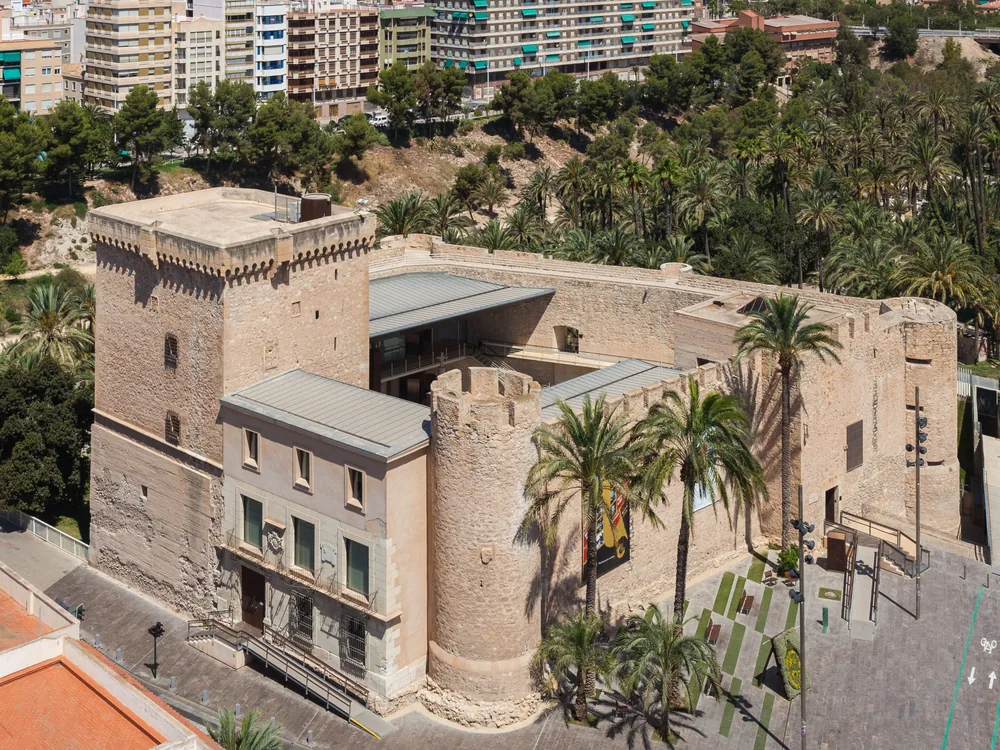
Combine with: Santa Bárbara Castle — the great clifftop fortress above Alicante city, 50 km east, the major medieval castle of the province. Altamira Palace — the medieval palace and MAHE museum in Elche, part of the Alicante province heritage circuit.
Frequently Asked Questions
No. The GetYourGuide tour is explicitly a round-trip transfer with driver-accompanied walk. It provides transport from Alicante/Benidorm and a driver who accompanies the visit. Castle admission (approximately €4), the Orduña House museum (approximately €6), and any other village museums (€4–8 each) must all be purchased separately on-site. Budget approximately €15–30 per person in additional on-site admissions beyond the GetYourGuide transfer price.
Location
Carrer Callosa, 03517 Guadalest, Alicante, Spain
Nearby Castles
Tours & Tickets
Powered by GetYourGuide
From
€65/ person