
March Palace
Palau March
Spain · Balearic Islands (Mallorca) · Near Palma de Mallorca
Built 1945 · Mid-20th-century private palace commissioned by Bartolomé March Servera on the Palma waterfront in the 1940s and 1950s, completed in the late 1960s and opened to the public in 1974; the building is a large neoclassical-influenced residential palace in central Palma, adjacent to the Almudaina royal palace and facing the Parc de la Mar; the principal public feature is an outdoor sculpture terrace containing works by Auguste Rodin, Henry Moore, Barbara Hepworth, Eduardo Chillida, and other 20th-century sculptors, making it one of the most significant accessible outdoor sculpture collections in Spain; the interior houses private family rooms, a music season, and exhibition spaces managed by the Fundació Bartolomé March
This page is part of an independent travel guide and is not affiliated with, endorsed by, or operated by March Palace.
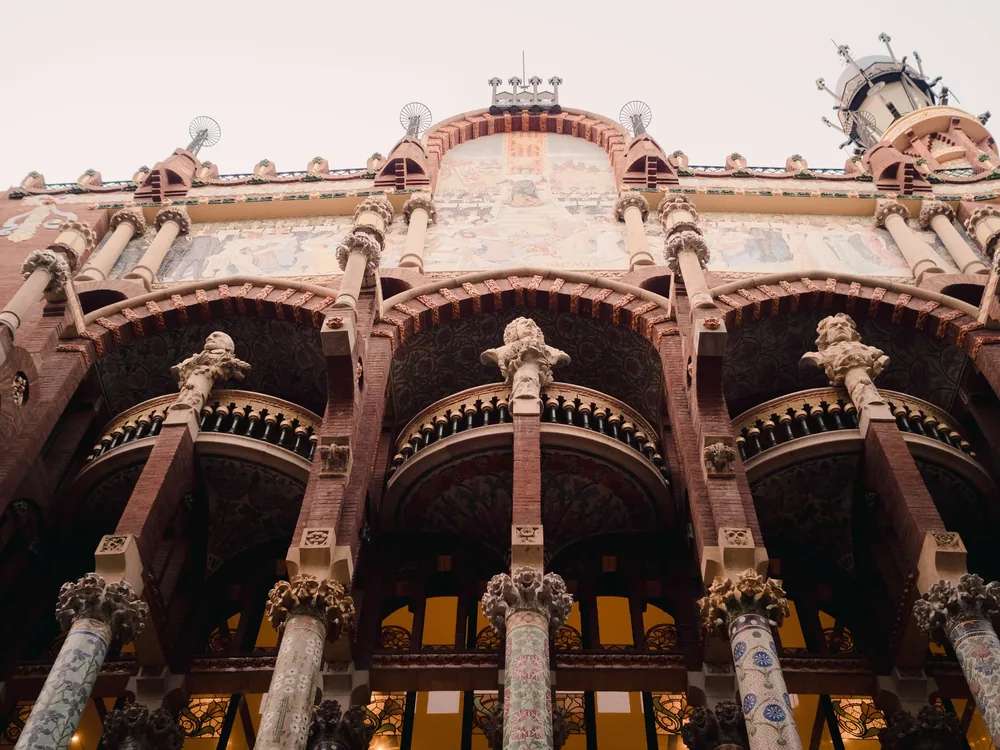
© Castles & Palaces
Quick Facts
- Hours
- Mon–Fri 10:00–18:30. Sat 10:00–14:00. Closed Sun
- Entry via GetYourGuide
- €10
- Duration
- 1–2 hours
- Best time
- October to May
- Nearest city
- Palma de Mallorca
Featured Tour
Palma: Palau March Entry Ticket
Cancellation available · Instant confirmation
Highlights
- ✦The outdoor sculpture terrace at Palau March is one of the finest accessible open-air sculpture collections in Spain: works by Auguste Rodin (including The Kiss), Henry Moore, Barbara Hepworth, Eduardo Chillida, and other major 20th-century sculptors are displayed on a terrace overlooking the Parc de la Mar and the bay of Palma, combining high-quality modern sculpture with one of the best views in the city
- ✦The palace was commissioned by Bartolomé March Servera (1917–1998), son of Joan March Ordinas — the Mallorcan financier whose tobacco smuggling, private banking, and decision to fund Franco's military uprising in 1936 (providing money and ships at the critical moment) made him, by some estimates, one of the wealthiest individuals in mid-20th-century Spain
- ✦Joan March Ordinas is sometimes described as the last pirate — a characterisation that overstates the romance and understates the complexity of a man who ran an illegal tobacco trade across North Africa in his early career, built a private shipping fleet, established the Banco March (still operating), and used his fortune and political connections across the Franco period with the kind of amoral efficiency that made him both indispensable and feared
- ✦The palace stands adjacent to the Almudaina Royal Palace and a short walk from Palma's Cathedral (La Seu) — the 13th-century Gothic cathedral built on the site of a mosque that is one of the most recognisable buildings in the Balearic Islands — placing the 20th-century private palace in direct adjacency with the medieval royal and ecclesiastical architecture that gives Palma its visual identity
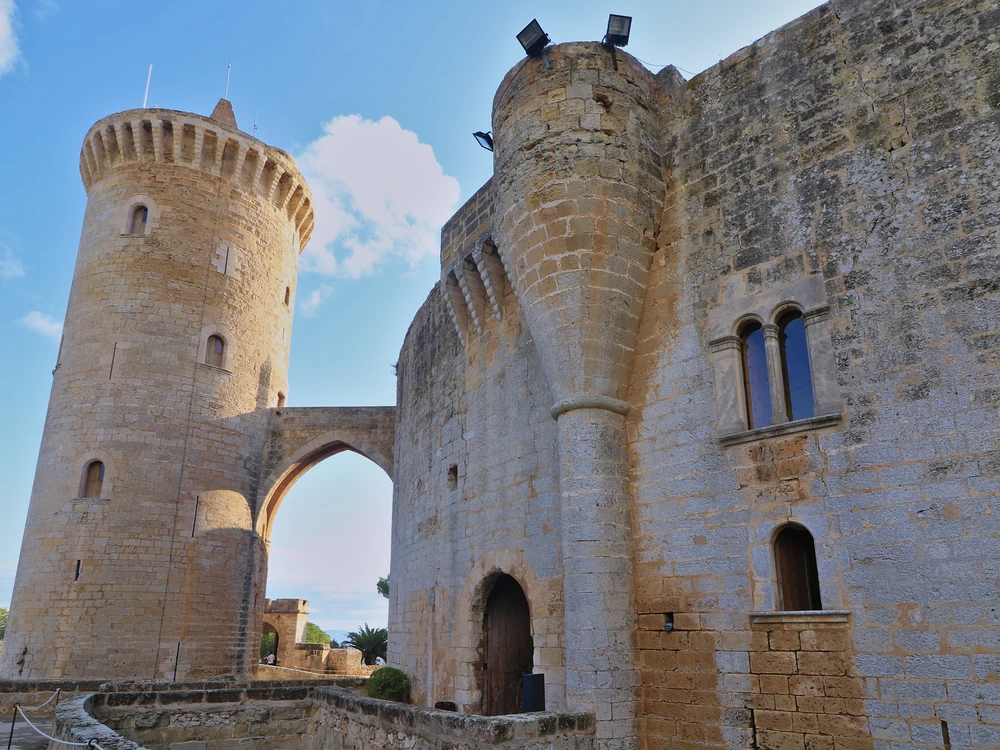
- ✦Bellver Castle, approximately 3 km west of the city centre and already on this site, is the natural pairing — the 14th-century circular Gothic castle above Palma bay complementing the March family's 20th-century cultural accumulation in the city centre, and together covering Mallorca's range from medieval defensive architecture to modern private patronage
Skip the queue with a guided tour
Skip-the-line tickets & expert guides
Joan March Ordinas was born in 1880 in Santa Margalida, a village in the Mallorcan interior, and built one of the most extraordinary private fortunes in 20th-century Spanish history by methods that combined legal commerce, smuggling, banking, and political calculation in proportions that varied across his career. The tobacco trade across North Africa — where March exploited a monopoly concession in a way that blurred consistently into smuggling — was the foundation. The Banco March, founded in 1926 and still operating today as one of Spain's private banks, was the formal financial structure. The private fleet of ships, the political leverage accumulated under successive Spanish governments, and the decision in July 1936 to place his financial resources and shipping capacity at Franco's disposal during the military uprising — providing both money and naval support at a moment when the Nationalist faction's logistical situation was critical — these were the choices that defined his relationship to the Spain that would take shape around him.
His son, Bartolomé March Servera, born in 1917, inherited the fortune and chose to spend a significant portion of it on cultural patronage. The Palau March in Palma was his principal architectural commission: a large palace in the historic centre of the city, adjacent to the Almudaina Royal Palace (the medieval royal residence that the Spanish royal family still uses occasionally for state functions) and within five minutes' walk of Palma's Gothic cathedral. Construction began in the 1940s and the building was completed in the late 1960s; the Fundació Bartolomé March opened the palace to the public in 1974 with a programme that has since included regular concerts, temporary exhibitions, and permanent display of the family's sculpture collection.
The outdoor sculpture terrace is the feature that gives Palau March its place in any account of accessible Spanish cultural spaces. The terrace faces the Parc de la Mar and the bay of Palma, with views over the water towards the Tramuntana mountains on clear days, and it contains a collection of 20th-century sculpture that represents a level of private art patronage in a specific medium that is uncommon anywhere in Spain. The works include pieces by Auguste Rodin — among them a version of The Kiss, one of the most reproduced sculptures in Western art — alongside Henry Moore's large-scale bronze forms, Barbara Hepworth's abstracted figures and voids, and Eduardo Chillida's Basque-inflected steel and iron constructions. The combination of these four sculptors on a Mediterranean terrace in Palma is not accidental: Bartolomé March was making a specific statement about the relationship between modern European sculpture and the Mallorcan Mediterranean setting, and the terrace's architecture gives the sculptures enough separation and air to be encountered individually rather than crowded together.
Henry Moore and Barbara Hepworth are the two British sculptors whose large-scale outdoor works have become the standard reference points for mid-20th-century public sculpture. Moore's biomorphic bronze forms — the reclining figures, the upright motives, the family groups — respond to outdoor settings in a way that his stated aesthetic programme explicitly intended: he was a maker of forms for landscape, and placing his work on a terrace above a Mediterranean bay is an appropriate way to encounter it. Hepworth's approach was formally more austere — holes and voids in stone and bronze that described the relationship between form and the space it displaces — and the Mediterranean light does things with her surfaces that northern English or London gallery settings do not.
Eduardo Chillida, the Basque sculptor who worked primarily in iron, steel, and stone from the 1950s through the 1990s, is the continental European sculptor whose presence on the terrace most marks the collection as specifically Spanish in its range of reference. Chillida's work draws on Basque iron-working tradition, on the philosophical vocabulary of Heidegger (with whom he had an extended correspondence), and on the specific landscape and light of the Basque Country — but his large-scale pieces function in outdoor settings across Spain with a visual authority that makes them appear to have grown there. His presence alongside Moore and Hepworth gives the Palau March terrace a European scope that purely British or purely Spanish collections tend not to achieve.
The palace's location within Palma's historic centre means the visit naturally extends into the surrounding streets. The Almudaina Royal Palace is immediately adjacent — a Gothic-Moorish royal residence with origins in the Islamic period of Mallorca, still used by the Spanish royal family for state receptions during the summer season. Palma Cathedral (La Seu) is a five-minute walk along the sea front: a 13th-century Gothic building of exceptional visual impact, built on the site of the former main mosque, with a rose window of considerable size over the west door and the distinction of having had part of its interior redesigned by Antoni Gaudí in the early 20th century. The combination of the March family's modern private palace with the medieval royal and ecclesiastical architecture immediately around it gives the central Palma waterfront block a layering of historical and cultural periods that few city blocks in Spain can match.
The GetYourGuide entry ticket covers the outdoor sculpture terrace and the publicly accessible areas of the palace. Bellver Castle, approximately 3 kilometres west of the city centre on a wooded hill above Palma bay, is the recommended complement — a circular 14th-century Gothic castle that is among the most unusual medieval structures in Spain, whose position above the bay gives a view of Palma's skyline that includes the cathedral and, in the middle distance, the location of the Palau March terrace.
History
The Palau March was commissioned by Bartolomé March Servera (1917–1998), son of Joan March Ordinas, the Mallorcan financier who built a large fortune through tobacco trading, the Banco March, and political alignment with Franco's regime during and after the Spanish Civil War. Construction of the palace in central Palma began in the 1940s and was completed in the late 1960s. The Fundació Bartolomé March opened the building to the public in 1974 with a cultural programme including the outdoor sculpture collection — works by Rodin, Moore, Hepworth, and Chillida — regular concerts, and temporary exhibitions. The palace is managed by the Fundació Bartolomé March as a cultural institution.
How to Visit
Getting there: The palace is in central Palma, a 5-minute walk from the Cathedral (La Seu) and Almudaina Palace. From Palma airport: approximately 20 minutes by taxi or 30–40 minutes by bus (line 1 to Plaça d'Espanya, then walk). From the port or Parc de la Mar: 5 minutes on foot.
Tickets: GetYourGuide entry ticket. Walk-up tickets available at the entrance.
Visit length: 1–2 hours for the sculpture terrace and public areas. Combine with the Cathedral and Almudaina Palace for a half-day in central Palma.
Practical tips: October to May.
Combine with: Palma Cathedral (5 minutes' walk) and the Almudaina Royal Palace (immediately adjacent) are the natural historic-centre pairings. Bellver Castle (3 km west, 10-minute drive or 30-minute walk) is the best full-day companion for a Palma castle-and-palace circuit.
Frequently Asked Questions
Joan March Ordinas (1880–1962) was a Mallorcan financier who built a major fortune through tobacco trading in North Africa (legally ambiguous at best), private banking (founding the Banco March in 1926), and political relationships with successive Spanish governments, including decisive financial and logistical support for Franco's military uprising in 1936. His son Bartolomé March Servera inherited the fortune and commissioned the Palau March as a private palace and cultural institution. The Fundació Bartolomé March continues to manage the palace as a public cultural space.
Location
Carrer del Palau Reial, 18, 07001 Palma, Illes Balears, Spain
Nearby Castles
Tours & Tickets
Powered by GetYourGuide
From
€10/ person