
Montsonís Castle
Castell de Montsonís
Spain · Catalonia — Lleida Province, La Noguera comarca, near Artesa de Segre · Near Lleida
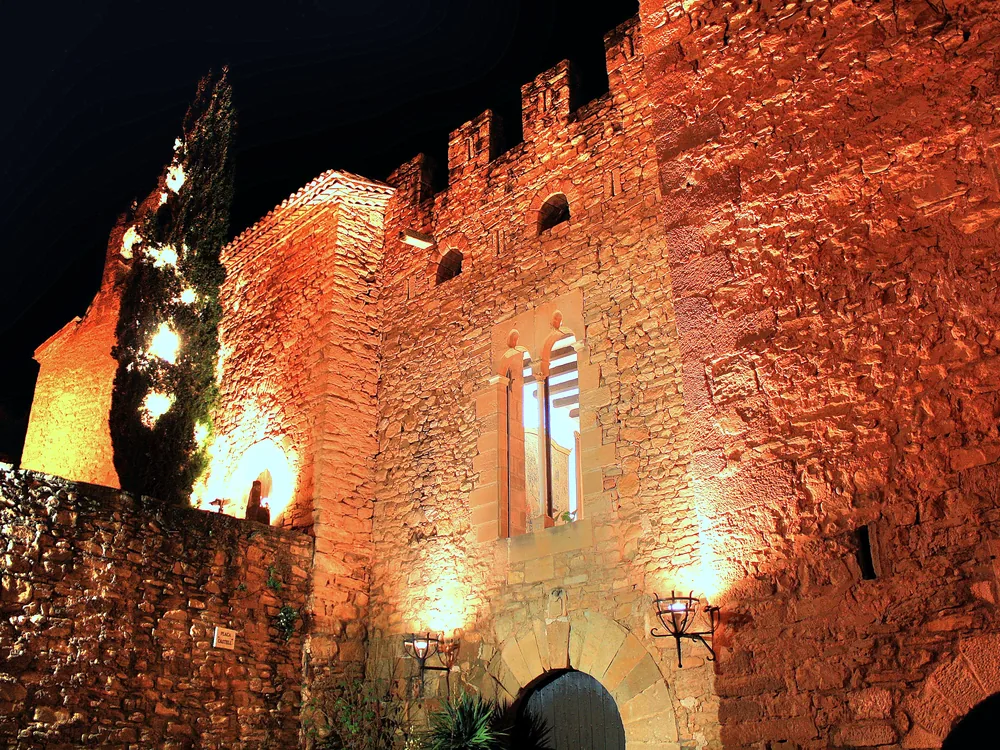
Built 1024 · 11th-century Catalan pre-Romanesque defensive castle of the County of Urgell; the hilltop plan follows the narrow limestone ridge with a rectangular keep at the summit, a barbican protecting the single accessible approach, and a peripheral circuit of defensive walls enclosing the domestic complex below; the interior spaces — noble hall, dining room, medieval kitchen, prison, and watchtower — retain a greater proportion of original masonry fabric than most comparable frontier fortifications of the period; the construction is characteristically austere, using the local limestone in coursed rubble and dressed block; the site represents the 11th-century Catalan model of a combined residential and military stronghold on a commanding hilltop position, built to hold both a garrison and the administrative functions of a frontier lordship
This page is part of an independent travel guide and is not affiliated with, endorsed by, or operated by Montsonís Castle.
© Castles & Palaces
Quick Facts
- Hours
- Sat & Sun 10:00–18:00. Closed Mon–Fri
- Guided tour from
- €9
- Duration
- 1 hour (guided)
- Best time
- Year-round
- Booking
- Required — book 1+ days ahead
- Nearest city
- Lleida
Featured Tour
Visit Montsonís Castle
Cancellation available · Instant confirmation
Highlights
- ✦All interior spaces accessible — unlike most medieval Catalan fortifications where only the exterior walls survive, Montsonís opens the noble hall, dining room, medieval kitchen, prison, and watchtower to guided-tour visitors, making it among the most complete castle experiences in inland Catalonia
- ✦Strategic pre-Pyrenean position — the castle occupies a narrow limestone ridge commanding the Noguera Ribagorçana valley at the medieval boundary between the County of Urgell and the Moorish frontier, with panoramic views over a landscape that was actively contested throughout the 11th-century Reconquista campaigns in this zone
- ✦County of Urgell history — built by the Counts of Urgell in 1024 as a key node in the defensive chain controlling the pre-Pyrenean approaches; the County of Urgell was among the most territorially aggressive of the Catalan counties during the 11th century, and Montsonís was one of its principal frontier fortifications against the Moorish taifa states to the south
- ✦Medieval kitchen and prison — the preserved kitchen with its original hearth and the barrel-vaulted prison room bring the castle's domestic and punitive life to life in concrete detail; these are the spaces most visitors specifically mention, and they survive to a degree that is genuinely unusual for a fortress of this age and scale
- ✦Proximity to Florejacs Castle — Montsonís sits just 13 km from [Florejacs Castle](/castles/spain/florejacs-castle), a 12th-century fortress-tower in La Segarra, making the two sites a natural combined day trip from Lleida or Cervera for visitors exploring inland Catalonia's medieval heritage
Skip the queue with a guided tour
Skip-the-line tickets & expert guides
Montsonís Castle stands on a narrow limestone ridge above the village of the same name, in the pre-Pyrenean foothills of the La Noguera comarca in the province of Lleida. The position is one of those that immediately explains why a castle was built here: the ridge falls away sharply on three sides, the valley of the Noguera Ribagorçana stretches west toward the Aragonese frontier, and the approach from the south — the direction from which the Moorish frontier lay in the 11th century — is controlled entirely by whoever holds the summit.
The castle was constructed around 1024 by the County of Urgell, one of the most powerful of the medieval Catalan counties, as a strategic fortification in the contested borderlands between the Christian counties of the Pyrenean foothills and the Muslim territories to the south. In this period, the County of Urgell commanded the central section of the Catalan pre-Pyrenean zone, and Montsonís was a key node in the network of fortifications that held the county's southern frontier. The castle's position, sitting directly above the valley routes connecting the lowland plains to the Pyrenean passes, gave it a significance that its modest scale might not suggest.
What distinguishes Montsonís from most medieval Iberian castles of comparable period and scale is the degree to which its interior spaces have survived and can be visited. Many 11th-century Catalan fortifications retain only their exterior walls and towers — the domestic and institutional fabric of the interior having long since collapsed or been stripped. At Montsonís, the guided tour moves through a sequence of spaces that was genuinely rare in medieval Catalan castle architecture: the noble hall where the castellan received guests, the dining room, the medieval kitchen with its original hearth and cooking infrastructure, the prison — a barrel-vaulted room where the social order was enforced — and the watchtower at the summit of the complex with its panoramic views over the valley.
The tour takes approximately one hour under the guidance of a licensed local guide and covers all major interior spaces as well as the defensive circuit of walls and towers that form the castle's outer shell. The guide contextualises each space in terms of both its architectural character and its historical function, giving visitors with no specialist background a coherent picture of how a medieval Catalan frontier castle functioned as a residential, administrative, and military institution.
The setting reinforces the experience. The castle is surrounded by the characteristically Catalan pre-Pyrenean landscape of eroded limestone hills, holm oak scrub, and occasional cultivated valley floors, and the views from the watchtower extend in clear weather to the higher Pyrenean ridgelines to the north. Closest in both distance and historical context is [Florejacs Castle](/castles/spain/florejacs-castle), just 13 kilometres to the south in La Segarra, which offers a complementary portrait of 12th-century Catalan frontier military architecture and makes for an efficient combined day trip from Lleida.
History
The hilltop above Montsonís had been occupied and watched over since the early medieval period, and the documentary record for the County of Urgell places the first structured fortification here in the early 11th century. The county itself was among the most territorially assertive of the Catalan counties — a cluster of highland territories in the Pyrenean foothills whose counts had been steadily pushing their frontier southward against the Moorish taifa states during the ninth and tenth centuries. By 1024, when the castle at Montsonís was formally established, the line of conflict ran through precisely this zone of pre-Pyrenean valleys, and the ridge commanded a passage that the counts of Urgell could not afford to leave uncontrolled.
Through the 11th and 12th centuries, Montsonís served as a garrison post and administrative centre for the Urgell frontier. As the Reconquista pushed south through the 12th century and the county's military frontier moved away from the pre-Pyrenean zone, the castle's strategic importance diminished and it passed through a succession of noble lordships. The castle was substantially maintained through the medieval period and retains today a greater portion of its original interior fabric than most comparable Catalan fortifications. Its subsequent history was one of gradual administrative diminishment rather than destruction — which accounts for the survival of the interior spaces that now give the site its distinctive character as a visitor destination.
How to Visit
Getting there: Montsonís is 50 km northeast of Lleida; car is the only practical option, as the site is not served by public transport. From Lleida, take the C-14 north toward Artesa de Segre (approximately 35 minutes), then follow local roads to Montsonís village — signposted from Artesa de Segre. The final approach road is narrow and steep; park in the village and walk uphill to the castle entrance.
Tickets: Guided tour admission is €9 for adults and €5 for children. The tour covers all interior spaces and lasts approximately 1 hour. Advance booking of at least one day is required — tours do not run without a confirmed group; walk-up entry on the day is not available. Book via castelldemontsonis.com or through the GetYourGuide listing to confirm your place.
Practical tips: The guided tour is the only format available — there is no self-guided option. Wear comfortable flat-soled shoes for the uneven stone floors and the uphill climb from the village. Spring and autumn bring the most comfortable temperatures in the pre-Pyrenean zone; summer visits are pleasant in the morning but warm by midday on the exposed ridge. Tours are most reliably available on weekends and daily in July–August; contact the castle to confirm availability outside these periods.
Combine with: Florejacs Castle lies just 13 km to the south — a 12th-century Catalan fortress-tower in La Segarra that makes an efficient paired visit with Montsonís for a day exploring the medieval heritage of inland Lleida.
Frequently Asked Questions
No — Montsonís operates exclusively on guided tours that require at least one day's advance booking. Walk-up visits on the day are not available, and the castle does not open for self-guided entry. The guided tour is the only format in which the site is accessible, and it will not run without a confirmed booking. Reserve via castelldemontsonis.com or the GetYourGuide listing to secure your place.
Location
Castell de Montsonís, 25735 Montsonís, Lleida, Spain
Nearby Castles
Tours & Tickets
Powered by GetYourGuide
From
€9/ person