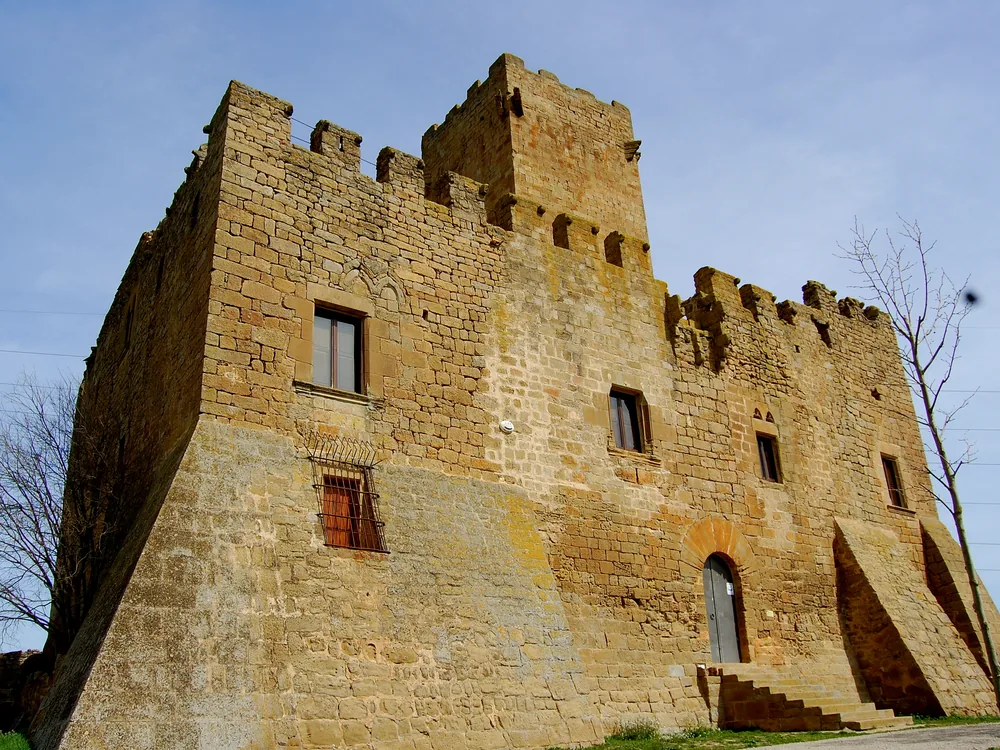
Florejacs Castle
Castell de Florejacs
Spain · Catalonia · Near Cervera
Built 1050 · Medieval castle first documented in the 11th century, built by the Catalan nobleman Arnau Mir de Tost on the site of an earlier fortress in the Segarra comarca of Lleida province; a 16th-century stately mansion with a medieval tower was later attached to the old village wall; uniquely, the castle has remained in continuous ownership by the same family since its founding, today held by the Jaumandreu-Balanzó family; interior includes the cardinal's room, the Sanllehi room, the great hall, weapons room, cellar, dungeon, and a secret passage
This page is part of an independent travel guide and is not affiliated with, endorsed by, or operated by Florejacs Castle.
© Castles & Palaces
Quick Facts
- Hours
- Mon–Sun By arrangement
- Guided tour from
- €9
- Duration
- 1 hour
- Best time
- April to October
- Nearest city
- Cervera
Featured Tour
Lleida: Visit Florejacs Castle
Cancellation available · Instant confirmation
Highlights
- ✦One of the rare European castles in continuous ownership by the same family for nearly a millennium — held today by the Jaumandreu-Balanzó family, descendants of the founding lineage that has held Florejacs since the medieval period
- ✦Founded by Arnau Mir de Tost, one of the most significant frontier lords of 11th-century Catalonia, whose military campaigns extended Christian territory southward through Lleida province during the early phase of the Catalan Reconquista
- ✦A privately inhabited castle visited as a living home rather than a museum — the accumulation of family furniture, documents, and objects across generations gives the visit a character unavailable at institutionally-run heritage sites
- ✦Interior rooms including the cardinal's room, the Sanllehi room, a weapons room, cellar, dungeon, and a genuine secret passage — presented as a working three-level house rather than a curated exhibition
- ✦Set in the Segarra, inland Catalonia's rolling wheat landscape — off the main tourist routes, naturally combined with nearby Cardona Castle and the Cardona Salt Mountain for a day of lesser-known Catalan heritage
Skip the queue with a guided tour
Skip-the-line tickets & expert guides
In the rolling wheat country of the Segarra — inland Catalonia's quiet agricultural heart, between Lleida and Barcelona — a single family has owned the same castle for nearly a thousand years. Florejacs Castle is not a restored monument passed through state hands or converted into a hotel; it is a private residence, still lived in by descendants of the family that has held it since the medieval period, and one of the rare Catalan castles where a visit means stepping into a continuously inhabited noble home rather than a museum.
The castle's origins trace to the 11th century and the Catalan nobleman Arnau Mir de Tost, one of the most consequential frontier lords of his era. Mir de Tost's military campaigns across what is now the province of Lleida during the mid-11th century pushed Christian control southward through the Segarra and beyond, making him one of the architects of the territorial expansion that transformed Catalonia from a collection of Carolingian counties into a regional power capable of contesting the upper Ebro valley with the Muslim taifa states. Florejacs was part of this frontier-building project: constructed on the site of an earlier fortification, it was one of a network of hilltop strongholds that secured the contested Segarra territory in a period when the landscape around it was genuinely a military front rather than the settled agricultural plateau it has been for centuries since.
In the 16th century, a stately mansion was attached to the medieval tower and the old town wall, converting the fortress into a more comfortable noble residence while retaining the defensive core that defined its original character. This combination — medieval tower and curtain wall wrapped around an early modern house — gives the current building its layered quality, readable in stone if you know where to look. What makes Florejacs exceptional among Spain's many historic castles is the continuity that underlies this physical complexity: rather than passing to the crown, the church, military orders, or a succession of unrelated noble families, Florejacs has remained with descendants of the founding lineage across roughly a millennium. The family currently holding the castle, the Jaumandreu-Balanzó, are not curators of someone else's history — they are its continuation.
The visit moves through a working house rather than a prepared exhibition. The ground floor holds the stables, cellar, and dungeon; the noble floor contains the formal living room, a historically significant bedroom, and the dining room; the upper floor holds further family rooms. Specific named spaces give the interior its particular texture: the cardinal's room (associated with a family member's ecclesiastical career); the Sanllehi room, containing furniture and objects inherited through the family's network of Catalan noble connections; the weapons room; and, most concretely satisfying, a genuine secret passage built into the fabric of the medieval walls. Rooms are furnished with objects accumulated across generations rather than selected for interpretive coherence — the result is more personal, and more authentically historical, than most institutionally managed castle interiors in Spain.
The GetYourGuide guided visit runs approximately one hour and is available in Catalan, Spanish, and English. Importantly, this tour is listed as intermittently available — 'Rare find: usually unavailable' — reflecting the limited and seasonal nature of visits to a private residence. Check current availability before planning a trip specifically around this visit; if no dates are showing on GetYourGuide, contact the family directly, as visits are sometimes arranged outside the online booking system.
The village of Florejacs, built following the line of the old castle wall in a pattern common to medieval Catalan frontier settlements, is small and essentially untouristed — the Segarra as a whole receives a fraction of the visitors drawn to the Catalan coast or the Pyrenean foothills. This is inland Catalonia at its most unmediated: wheat fields, stone villages, and a light that is different from the coast's — drier, harsher in summer, luminous in spring. Florejacs works well as part of a slower Catalan day, paired with Cardona Castle to the east: the medieval hilltop town of Cardona, with its Romanesque collegiate church and the remarkable Muntanya de Sal (Salt Mountain) immediately below the castle walls, is one of the more distinctive heritage sites in Catalonia and about 30 kilometres by road from Florejacs.
History
Florejacs Castle was established in the 11th century by the Catalan nobleman Arnau Mir de Tost as part of the network of frontier fortifications extending Christian control southward through the Segarra comarca of what is now Lleida province. The castle was built on the site of an earlier fortification and formed part of the contested frontier between the Catalan counties and the Muslim taifa states during the early phase of the Catalan Reconquista.
The 16th century saw the attachment of a stately mansion to the original medieval tower and village wall, converting the primarily defensive structure into a more comfortable noble residence while retaining its historical fabric. The defining characteristic of Florejacs throughout its history is the continuity of its ownership: unlike the vast majority of European castles, which have changed hands through inheritance, purchase, confiscation, or institutional transfer across the centuries, Florejacs has remained with descendants of its founding family through approximately a millennium of continuous occupation. The current owners, the Jaumandreu-Balanzó family, operate the castle as a private residence with limited seasonal guided visits.
How to Visit
Getting there: Florejacs is most practically reached by car; it sits approximately 100 km west of Barcelona (about 1 hour 20 minutes by road) and 45 minutes east of Lleida. There is no significant public transport to the village. From the C-25 Lleida-Manresa motorway, exit at Cervera and follow local roads north.
Availability note: The GetYourGuide guided visit is listed as intermittently available — it is flagged as a 'Rare find: usually unavailable.' Check current dates carefully before planning a trip around this visit. If no dates appear on GetYourGuide, contact the castle directly, as visits are sometimes arranged independently of the online booking system.
Tour format: The guided visit runs approximately 1 hour, offered in Catalan, Spanish, and English. As the castle is a private residence, visiting hours are more limited and seasonal than at institutionally-managed sites.
Tickets: Walk-up entry €10 adult, €0 child. The tour — Lleida — offers a guided visit; book in advance.
Practical tips: April to October.
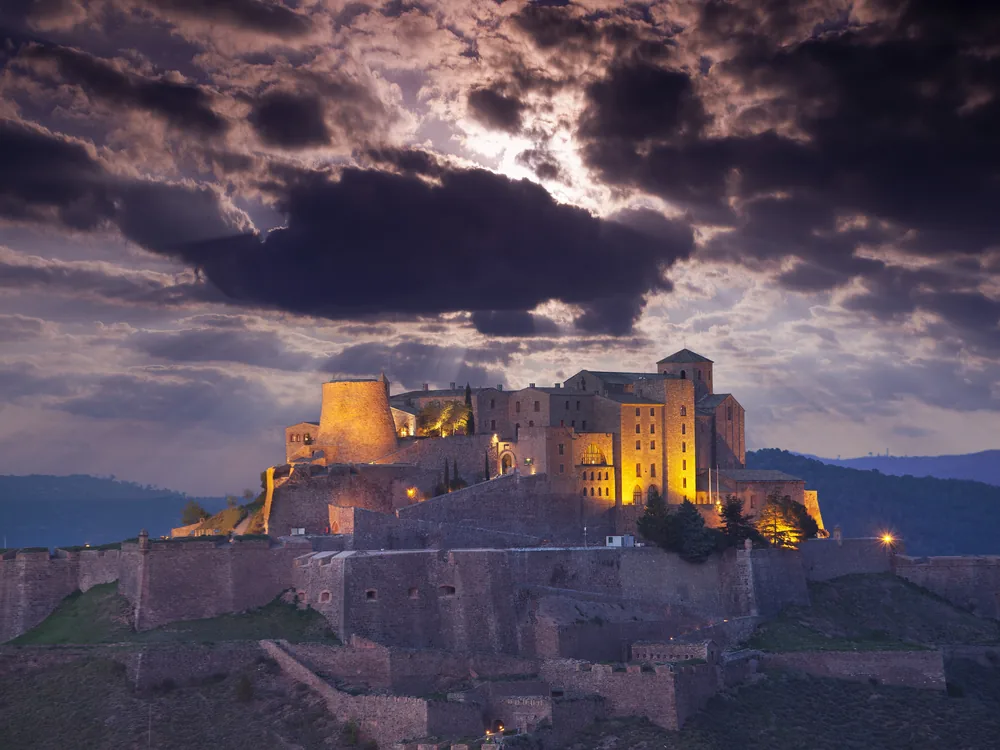
Combine with: Cardona (approximately 30 km east by road) combines the medieval hilltop castle of the Duchy of Cardona with the extraordinary Muntanya de Sal (Salt Mountain) below the walls — one of the more unusual geological and historical sites in Catalonia. The two make a natural full day in the Segarra.
Frequently Asked Questions
Yes — this is the castle's primary distinction. While many European castles changed hands repeatedly through conquest, purchase, confiscation, and institutional transfer across the centuries, Florejacs appears to have remained with descendants of the lineage established by Arnau Mir de Tost in the 11th century across roughly a millennium of continuous occupation. The current owners, the Jaumandreu-Balanzó family, hold the castle as a private residence and are understood to be descendants of this founding connection. Such unbroken continuity is genuinely rare in European castle history.
Location
Florejacs, 25333 Lleida, Spain
Nearby Castles
Tours & Tickets
Powered by GetYourGuide
From
€9/ person