
Palace of Mondragón
Palacio de Mondragón
Spain · Andalusia — Málaga Province, historic city of Ronda, above the El Tajo gorge · Near Málaga
Built 1314 · Mudéjar-Renaissance; Islamic origins before the 1485 Christian reconquest of Ronda; substantially remodelled in the late 15th and 16th centuries; two inner arcaded courtyards with ornamental azulejo tilework and carved columns; formal garden terraces with views over the Serranía de Ronda; now the Municipal Museum of Ronda
This page is part of an independent travel guide and is not affiliated with, endorsed by, or operated by Palace of Mondragón.
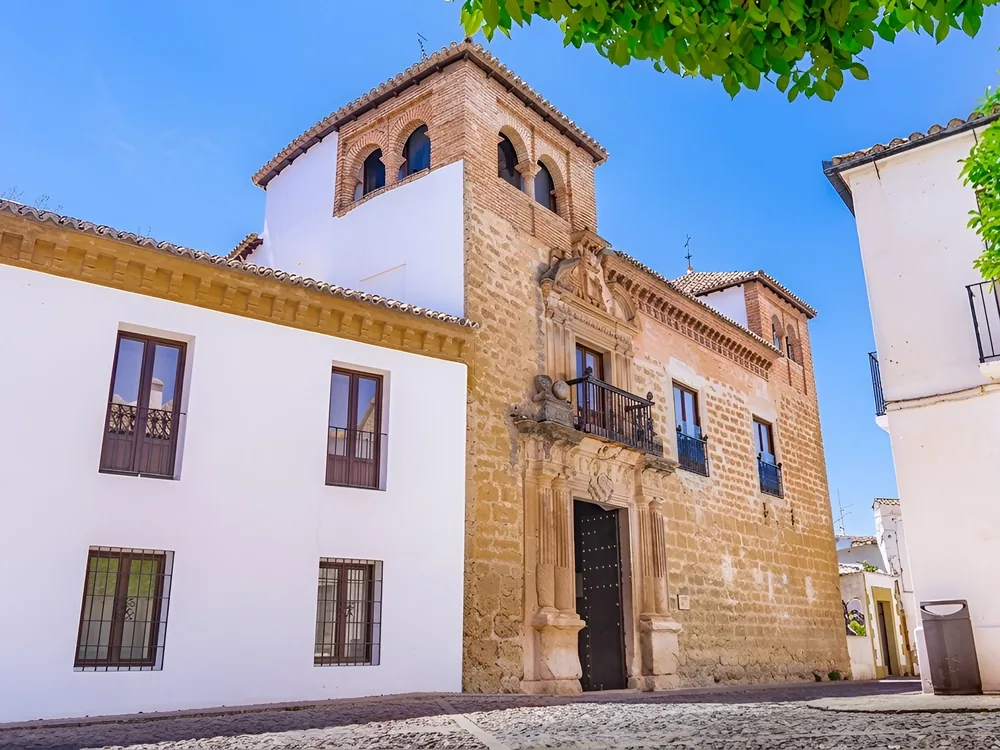
© Castles & Palaces
Quick Facts
- Hours
- Tue–Fri 10:00–18:00. Sat & Sun 10:00–15:00. Closed Mon
- Entry via GetYourGuide
- €12
- Duration
- 1–1.5 hours (self-guided with audio guide)
- Best time
- March to June and September to November
- Nearest city
- Málaga
Featured Tour
Ronda: Ticket to the Palace of Mondragón + Audio Guide
Cancellation available · Instant confirmation
Highlights
- ✦One of the oldest palace complexes in Ronda, with origins in the Islamic medina of Izn-Rand Onda before the 1485 Christian reconquest — the site was already a governor's residence in the Moorish city
- ✦Two inner courtyards in the Mudéjar-Renaissance tradition, with ornamental azulejo tilework and arched galleries that echo the decorative vocabulary of the royal Alcázar of Seville
- ✦Garden terraces on the edge of the plateau with unobstructed views south over the olive-covered hills toward the Sierra de Grazalema — among the finest palace garden views in Andalusia
- ✦Now the Municipal Museum of Ronda, with archaeological material covering the city's history from Bronze Age settlement through the Roman town of Acinipo, the Moorish medina, and the post-reconquest city
- ✦The name 'Mondragón' derives from the family who held the palace in the late 15th and 16th centuries — a rare case of an Andalusian Moorish palace that carries a Basque family name
Skip the queue with a guided tour
Skip-the-line tickets & expert guides
Ronda occupies one of the most dramatic natural positions in Andalusia — a medieval city split by the 120-metre El Tajo gorge, its white buildings pressing to the limestone edge above the Serranía de Ronda. The Palace of Mondragón sits at the heart of the old medina, close to the gorge rim, in a position that gives its garden terraces views across the mountains that have drawn travellers to Ronda since the Romantic era.
The palace is among the oldest structures in Ronda still open to visitors. Its origins are Islamic: the site is documented as a governor's residence in the Moorish city of Izn-Rand Onda before the Catholic Monarchs took Ronda in 1485, and its earliest written record dates to the early 14th century. The Christian reconquest brought immediate change — Fernando de Valera received the palace as a royal grant following the conquest, and in subsequent decades the building was substantially remodelled in the Mudéjar-Renaissance style then spreading across Castile and Andalusia. The Mondragón family held the palace through the late 15th and 16th centuries, giving the building the name it has carried ever since despite having no connection to the Basque town of the same name.
What the palace offers today is a building that wears its dual heritage openly. The two inner courtyards are the heart of the complex. The first, reached from the street entrance, is formal and arcaded, with ornamental azulejo tilework in the Mudéjar tradition — the same decorative vocabulary used in the Alcázar of Seville and at Málaga's Alcazaba, filtered here through a provincial Andalusian lens with a distinctly domestic quality. The second courtyard is more intimate, with arched galleries and a central fountain. Both open onto garden terraces on the cliff-side edge of the plateau, with views south over the olive groves and limestone ridges toward the Sierra de Grazalema.
The Municipal Museum of Ronda now occupies the palace, with displays covering the city's history from the Bronze Age Neolithic settlement on the plateau through the Roman town of Acinipo seven kilometres away, the Islamic medina period, and the post-reconquest Christian city. The archaeological collection — ceramics, coins, carved stonework — is genuine and specific to the region, and gives the building a contextual depth that a purely architectural visit would miss. The palace itself, however, remains the most compelling exhibit: the proportions of the courtyards, the quality of the tilework, and the relationship between the enclosed interior spaces and the open terrace with its mountain panorama are what stay with visitors after the museum labels have faded.
The audio guide included in the GetYourGuide ticket covers both the architectural phases of the palace and the key pieces in the museum collection, adding substantial depth to a self-guided visit and making efficient use of the available hour and a half.
History
Ronda's strategic position above the Tajo gorge made it one of the most defensible cities in Islamic al-Andalus, and its governors' palace — the complex now known as the Palace of Mondragón — was established here before its earliest written documentation in the early 14th century. Under the successive Islamic rulers of Ronda, including the Taifa kingdom and subsequently under Almohad and Nasrid influence, the palace served as the residence of the city's governors and its most powerful families.
The Christian reconquest of Ronda by the forces of Fernando II of Aragon and Isabella I of Castile in 1485 transferred the palace into Castilian hands; it was granted to Fernando de Valera as a reward for service to the Crown. In the years following the reconquest, the building underwent substantial Mudéjar-Renaissance remodelling: new arcaded courtyards, decorative azulejo tilework, and garden terraces were added or rebuilt, creating the hybrid character the palace retains today. The Mondragón family held the building through the late 15th and 16th centuries, lending it the name by which it has since been known. Various private owners held the palace across subsequent centuries before the city of Ronda acquired it to house the Municipal Museum, which now presents the history of Ronda from prehistoric times through the Islamic and Christian periods. The palace's elevated position above the gorge and its garden terraces with mountain views make it the most atmospheric architectural site in the city.
How to Visit
Getting there: Ronda is connected by rail from Málaga on the Málaga–Algeciras line (approximately 2 hours, changing at Bobadilla); direct coaches from Málaga, Seville, and Granada also serve the city. From Ronda's railway station, the old city and the Palace of Mondragón are a 15-minute walk uphill through the new town, or a short taxi ride. The palace is in the Plaza de España, within the historic medina a few minutes' walk from the Puente Nuevo bridge and the gorge viewpoints.
Tickets: Walk-up admission to the Municipal Museum is available at the door. The GetYourGuide entry ticket adds a digital audio guide covering the palace's architectural history and the museum collection, and can be purchased and confirmed in advance online.
Practical tips: Ronda's summer heat is intense — the palace courtyards offer some shade, but the garden terraces face south and are fully exposed to afternoon sun; visit before 11am in July and August. The gorge viewpoints near the Puente Nuevo are free and do not require palace entry. Note: if booking via GetYourGuide, the purchase confirmation is not the entry ticket — official tickets and audio guide instructions are emailed separately, typically the day before your visit. Check your email before arriving at the palace.
Combine with: Alcazaba de Málaga (100 km east — the 11th-century Moorish alcazaba rising above the Málaga seafront, the largest Moorish fortress in Andalusia in terms of surviving palatial enclosures; the natural Andalusian Moorish-architecture pairing for a visitor combining Ronda with the coast).
Frequently Asked Questions
The palace now operates as the Municipal Museum of Ronda (Museo Municipal de Ronda), covering the city's history from the Bronze Age through the Roman, Islamic, and post-reconquest Christian periods. The museum occupies the historic rooms and courtyards of the palace, with the two inner arcaded courtyards and the garden terraces — which have views over the Serranía de Ronda — accessible as part of the visit. The GetYourGuide ticket includes a digital audio guide covering both the architectural history of the palace and the museum collection.
Location
Plaza de España, s/n, 29400 Ronda, Málaga, Spain
Nearby Castles
Tours & Tickets
Powered by GetYourGuide
From
€12/ person