
Royal Palace of Madrid
Palacio Real de Madrid
Spain · Community of Madrid · Near Madrid
Built 1764 · Spanish Baroque / Neoclassical
This page is part of an independent travel guide and is not affiliated with, endorsed by, or operated by Royal Palace of Madrid.
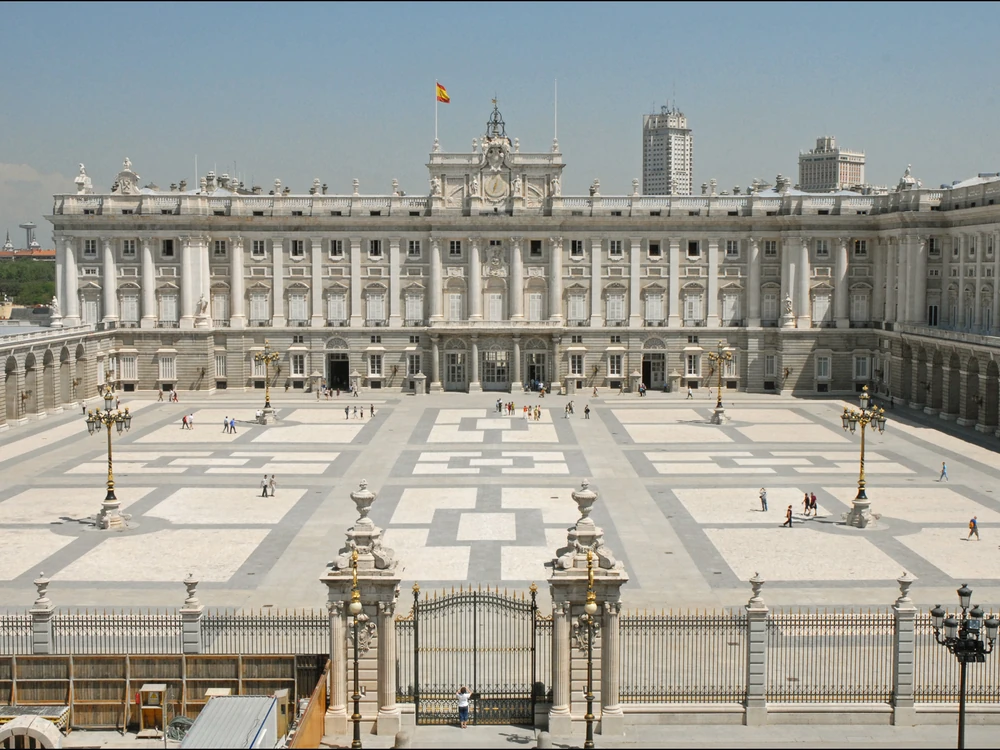
© Unsplash
Quick Facts
- Hours
- Mon–Sat 10:00–19:00. Sun 10:00–16:00
- Entry via GetYourGuide
- €22
- Duration
- 2–3 hours
- Best time
- Spring
- Nearest city
- Madrid
Featured Tour
Madrid: Royal Palace Fast-Access Admission Ticket
Cancellation available · Instant confirmation
Highlights
- ✦The largest royal palace in Western Europe by floor area — 135,000 m² and 3,418 rooms, though only around 50 are open to visitors
- ✦The Royal Armoury (Real Armería), one of the finest collections of historic arms and armour anywhere in the world
- ✦The Throne Room, crowned by a ceiling fresco by Giovanni Battista Tiepolo — the last great commission of his career
- ✦The Royal Chapel, home to a complete quartet of Stradivarius instruments still played on special occasions, part of a collection of five owned by the palace
- ✦The formal grounds of the Jardines de Sabatini and the Parterre gardens, framing the palace's western and southern approaches
Skip the queue with a guided tour
Skip-the-line tickets & expert guides
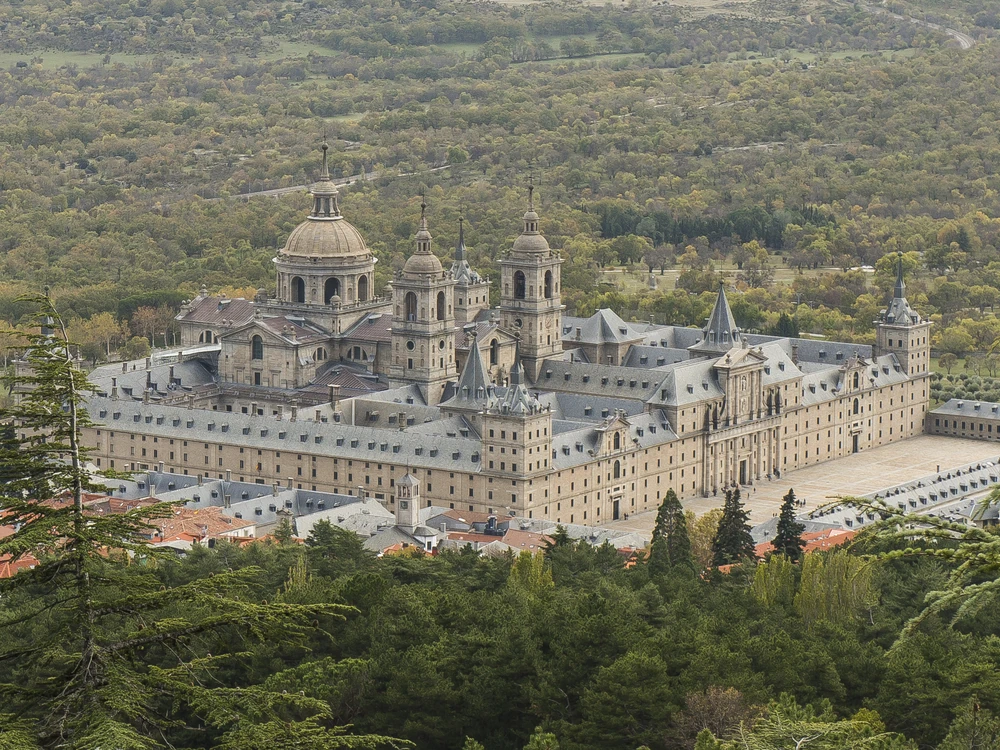
Seen from outside, the Royal Palace of Madrid is more austere than its scale would suggest — a long, grey-stone Baroque-Neoclassical block without the gilded flourishes of a Versailles or a Schönbrunn. That restraint is partly the result of Spanish taste and partly a matter of stone: where French and Austrian palaces use coloured plaster and applied ornament, Madrid's palace relies on the discipline of its façade, rows of identical windows and a continuous balustrade giving it a severity that only breaks once you step inside.
The interior tells a different story. Philip V, the first Bourbon king of Spain, commissioned the new palace after a catastrophic fire destroyed the old Habsburg Alcázar in 1734, and he wanted nothing less than a building to match the ambitions of his French and Italian relatives. The rooms that resulted — completed under his successors — are dense with gilt, brocade, and ceiling fresco in a way the exterior gives no hint of. This contrast between plain stone shell and ornate interior is part of what makes a visit here feel different from other European royal palaces: the grandeur is held in reserve, revealed only room by room.
Three spaces reward particular attention. The Throne Room retains its original 18th-century decoration nearly intact, including Tiepolo's ceiling fresco — one of the last major works the Venetian master completed before his death in Madrid in 1770. The Gasparini Room, named for its Neapolitan designer, is lined floor to ceiling in embroidered Chinese silk, an extravagant Rococo set piece unlike anything else in the building. And the Royal Armoury, housed in a separate wing, holds one of the world's great collections of parade and battle armour, much of it belonging to Charles V and Philip II.
Despite its scale and continued ceremonial role, the palace is no longer a residence. The current Spanish royal family lives at the considerably smaller Zarzuela Palace on the city's outskirts, leaving the Royal Palace as the formal backdrop for state functions, official receptions, and the daily life of roughly 1.4 million annual visitors.
History
The site has carried a royal fortress since the Moorish period, when an alcázar — a fortified palace — guarded a crossing point above the Manzanares river. After the Christian reconquest, the Habsburg kings of Spain adopted the same Alcázar as a royal residence, expanding and remodelling it over two centuries into a sprawling, architecturally mismatched palace that nonetheless served as the seat of the Spanish monarchy through the height of its global empire.
That building was destroyed by a fire on Christmas Eve 1734, an event so complete it left almost nothing standing. Philip V, who had grown up at Versailles as a grandson of Louis XIV, seized the opportunity to commission an entirely new palace in the contemporary Italian Baroque style, first hiring the Sicilian architect Filippo Juvara and, after Juvara's early death, his pupil Giovanni Battista Sacchetti to see the project through. Construction ran from 1738 to 1764, a 26-year campaign that outlasted Philip V himself.
Charles III became the first monarch to actually live in the completed palace, moving in in 1764 and overseeing much of the interior decoration that survives today. Successive Bourbon and Borbón monarchs continued to use the palace as their principal residence and seat of state ceremony into the 20th century. It survived the Spanish Civil War without serious damage despite Madrid's prolonged siege, and although no monarch has lived there full-time since the mid-20th century, it remains the official residence of the Spanish Crown and continues to host state banquets, the reception of foreign ambassadors, and other formal functions of government.
How to Visit
Getting there: Take Metro Line 2 to Ópera station, a 5-minute walk from the palace, or Line 5 to La Latina. Bus lines 3, 25, 39 and 148 also stop nearby. The palace sits at the western edge of central Madrid, an easy walk from Puerta del Sol or the Gran Vía.
Tickets: Buying online in advance secures skip-the-line access — on-site ticket queues can run long in summer. The audio guide included with standard entry covers the main rooms in good detail; a GetYourGuide guided tour adds expert narration on specific rooms and historical context that the audio guide doesn't cover.
Changing of the Guard: A formal Changing of the Guard ceremony takes place in the Plaza de la Armería on Wednesdays and Saturdays at 12:00 (suspended in extreme heat or on state occasions), free to watch from outside the palace gates — no ticket required.
Free Monday entry: EU and EEA citizens with valid ID can enter free on Mondays, but availability is limited and the slot must be booked in advance through the official Patrimonio Nacional website.
Practical tips: Spring (March–May) or autumn (September–October) — fewer queues than summer, comfortable weather for the gardens and the Plaza de la Armería.
Combine with: Almudena Cathedral sits directly across the Plaza de la Armería from the palace. The Sabatini Gardens on the palace's north side are free to enter year-round. Retiro Park is about a 20-minute walk east for those wanting a full day combining palace, cathedral, and green space.
Frequently Asked Questions
Not generally — standard admission costs €14 for adults. However, EU and EEA citizens can enter free on Mondays with valid ID; this slot has limited capacity and must be booked in advance through the official ticketing site. The Sabatini Gardens surrounding the palace are free to enter at any time.
Location
Calle de Bailén, s/n, 28071 Madrid, Spain
Nearby Castles
Tours & Tickets
Powered by GetYourGuide
From
€22/ person