
Palacio Vela de los Cobos
Palacio Vela de los Cobos
Spain · Andalusia, Úbeda, Jaén province · Near Úbeda
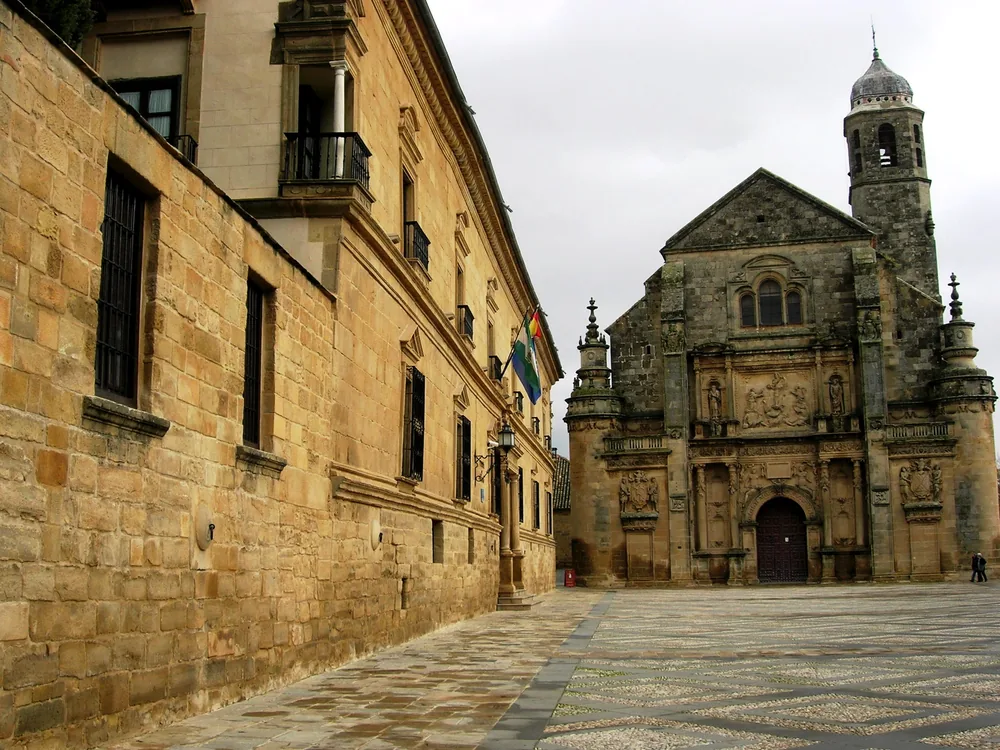
Built 1540 · Andalusian 'purista' Renaissance civic palace — built for Francisco Vela de los Cobos, secretary to Emperor Charles V, in the mid-16th-century wave of construction that transformed Úbeda into one of the most complete Renaissance urban ensembles in Spain; designed in the 'estilo purista' (purist style) associated with architect Andrés de Vandelvira and his circle — a Castilian-Andalusian adaptation of Italian Renaissance principles stripped of medieval Gothic ornament; the palace is best known for its corner loggia gallery: a two-storey arcaded loggia on the upper floor facing the street, an element unusual in Úbeda's streetscape and closely associated with the Italian Renaissance precedents that the Vandelvira circle was adapting; the facade combines dressed stone ashlar with finely carved Renaissance detail in the window surrounds and entablatures; the interior historic library is one of the finest private book collections in Andalusia still held in its original setting
This page is part of an independent travel guide and is not affiliated with, endorsed by, or operated by Palacio Vela de los Cobos.
© Castles & Palaces
Quick Facts
- Hours
- Mon Variable — confirm locally for current access. Tue–Fri 10:00–14:00 / 17:00–21:00. Sat 10:00–21:00. Sun 10:00–14:00
- Guided tour from
- €20
- Duration
- 40 minutes–1 hour (palace visit); 2.5 hours (GetYourGuide full evening walking tour of Úbeda)
- Best time
- April to October
- Nearest city
- Úbeda
Featured Tour
Úbeda monumental: Centro histórico + Palacio Vela de los Cobos
Cancellation available · Instant confirmation
Highlights
- ✦UNESCO World Heritage town — Úbeda (jointly with neighboring Baeza) was inscribed by UNESCO in 2003 as 'Renaissance Monumental Ensembles of Úbeda and Baeza,' recognized for the exceptional concentration of 16th-century Renaissance civic architecture produced by the Vandelvira circle and the Cobos family's patronage network; Palacio Vela de los Cobos is one of the key buildings within the inscribed ensemble
- ✦The corner loggia gallery — the palace's most distinctive exterior element is the arcaded loggia at the upper-floor corner, where a two-storey open gallery faces both streets of the corner site; the loggia references Italian Renaissance precedents — specifically the type developed in northern Italian palace design — and is unusual in Úbeda's streetscape, where most facades are solid ashlar planes punctuated by windows rather than open arcades; it gives the palace an immediately legible identity within a town of otherwise similar Renaissance palaces
- ✦One of Andalusia's finest private historic libraries — the palace holds a historic library in its original setting, considered one of the most significant private book collections in Andalusia; the library was assembled and maintained across the centuries by the Vela de los Cobos family and their successors and remains in the building for which it was originally gathered, a rarity in an era when private libraries were typically dispersed or sold
- ✦Francisco Vela de los Cobos and the Cobos family network — Francisco was secretary and chronicler to Emperor Charles V and a relative of Francisco de los Cobos y Molina, the most powerful secretary of state in Charles V's empire; the Cobos family's patronage network financed the construction of most of Úbeda's Renaissance monuments simultaneously in the mid-16th century, transforming a medieval Andalusian market town into one of the most complete Renaissance civic environments in Spain
- ✦The 'estilo purista' (purist style) of Andrés de Vandelvira — the Andalusian Renaissance architecture of Úbeda is specifically associated with Vandelvira and his followers, who developed a version of Italian Renaissance architectural vocabulary stripped of Spanish Gothic ornament; the palette of dressed stone ashlar, classically proportioned window surrounds, and medallion-decorated entablatures defines the visual character of Úbeda's historic streets
- ✦GetYourGuide Úbeda evening historic-centre walking tour with Palacio Vela de los Cobos entry (2.5 hours) — 40-minute dedicated palace visit included
Skip the queue with a guided tour
Skip-the-line tickets & expert guides
Úbeda had been a medieval Andalusian market town until the 1530s, when it transformed into something else entirely. The cause of the transformation was money, and the money came from one family: Francisco de los Cobos y Molina, Secretary of State and trusted minister of Emperor Charles V, whose administrative control over the empire's correspondence and treasury gave him access to wealth on a scale that made him one of the most powerful non-royal figures in 16th-century Europe. Cobos used a portion of that wealth to make his hometown into a monument — commissioning the Sacra Capilla del Salvador, the Palacio de las Cadenas, and a network of smaller Renaissance palaces from the architect Andrés de Vandelvira and his circle, all within a single generation of construction that left Úbeda with the most complete Renaissance urban ensemble in Andalusia.
Palacio Vela de los Cobos is one of the buildings from that wave. Francisco Vela de los Cobos was a relative of the great secretary — the Cobos family network extended through several branches, and Francisco's position as secretary and chronicler to Charles V gave him both the connections and the resources for a significant private commission. The palace was built in the mid-16th century in the 'estilo purista' — the purist style — that Vandelvira and his circle had developed as an Andalusian adaptation of Italian Renaissance architectural principles, specifically the approach of stripping away the Gothic ornament that persisted in Spanish architecture of the period and working with a clean vocabulary of dressed stone ashlar, classical proportions, and carefully controlled decorative detail.
The building's most distinctive external feature is the corner loggia gallery — a two-storey arcaded loggia at the palace's corner site, where open arches face both streets rather than presenting the solid ashlar walls that define most of Úbeda's Renaissance palace facades. The loggia type has Italian precedents — it appears in northern Italian palace design of the same period — and its presence in Úbeda signals the degree to which the Vandelvira circle was working from direct knowledge of Italian architectural developments rather than from secondary sources. In a streetscape where the dominant facade language is stone walls with window openings, the open arcade of the Vela de los Cobos loggia reads immediately as different: lighter, more transparent, more architecturally adventurous.
The interior historic library is the palace's other primary distinction. The collection — assembled across centuries by the Vela de los Cobos family and their successors — is considered one of the finest private historic libraries in Andalusia still held in its original building and spatial setting. At a moment when most comparable private libraries have been sold, dispersed, or transferred to public institutions, the Vela de los Cobos library surviving in the room for which it was gathered is a rarity that reflects the palace's continuous private ownership across nearly five centuries.
Úbeda's UNESCO inscription in 2003 as one of the 'Renaissance Monumental Ensembles of Úbeda and Baeza' recognized the exceptional concentration of 16th-century architecture that the Cobos patronage network created — the Sacra Capilla del Salvador (Charles V's own chapel commission, directly facing the Palacio de las Cadenas across Úbeda's main square), the palaces, the hospitals, and the urban planning that organized them. Palacio Vela de los Cobos is a contributing element of the inscribed ensemble: one of the smaller and less-celebrated buildings within a group that includes several major monuments, but notable for its loggia and library within a town where the standard of Renaissance civic architecture is unusually high.
The GetYourGuide evening walking tour covers the palace with a 40-minute dedicated interior visit as part of a 2.5-hour evening circuit of Úbeda's historic centre. The evening timing is deliberate: Úbeda's golden stone facades take on a particularly warm quality in late-afternoon light, and the evening tour format is how most knowledgeable visitors choose to see the town in summer.
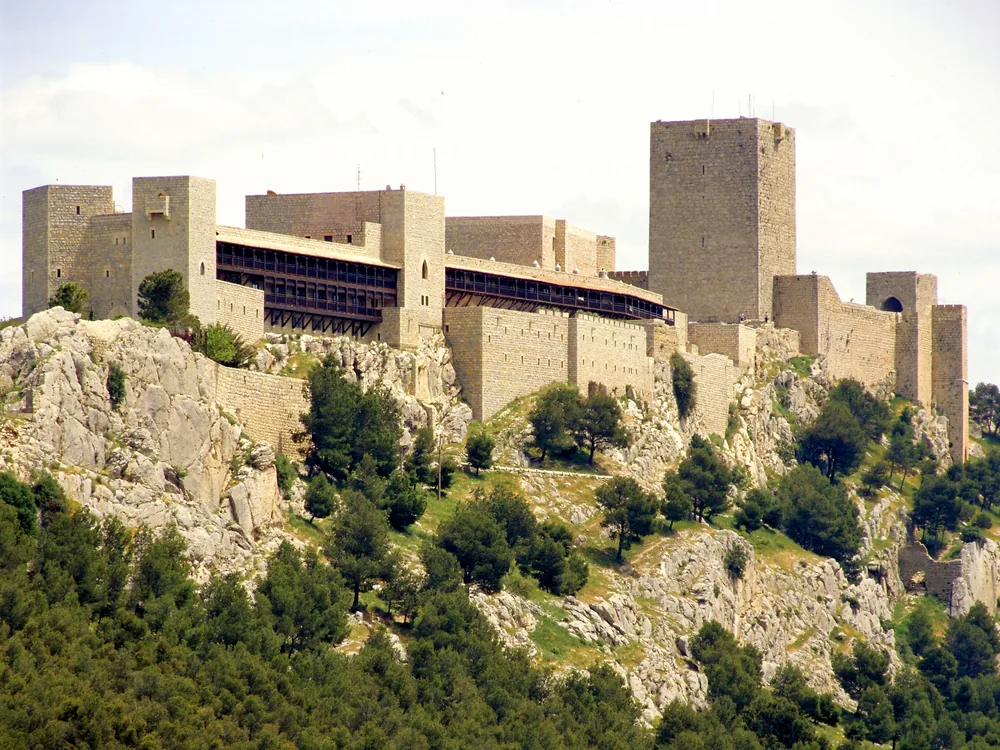
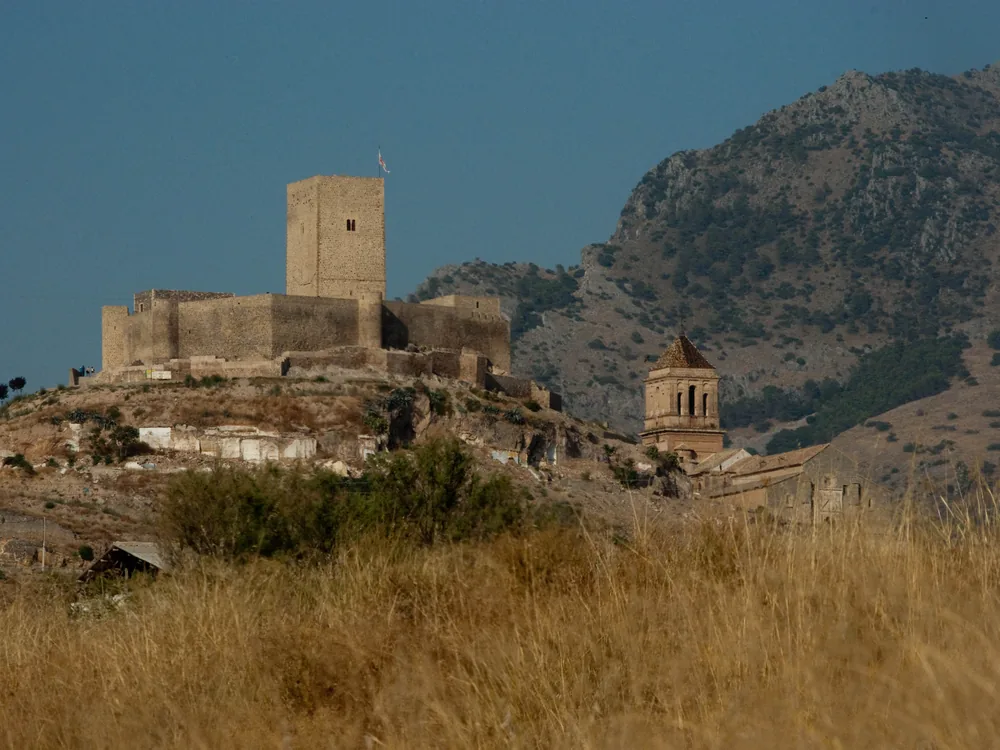
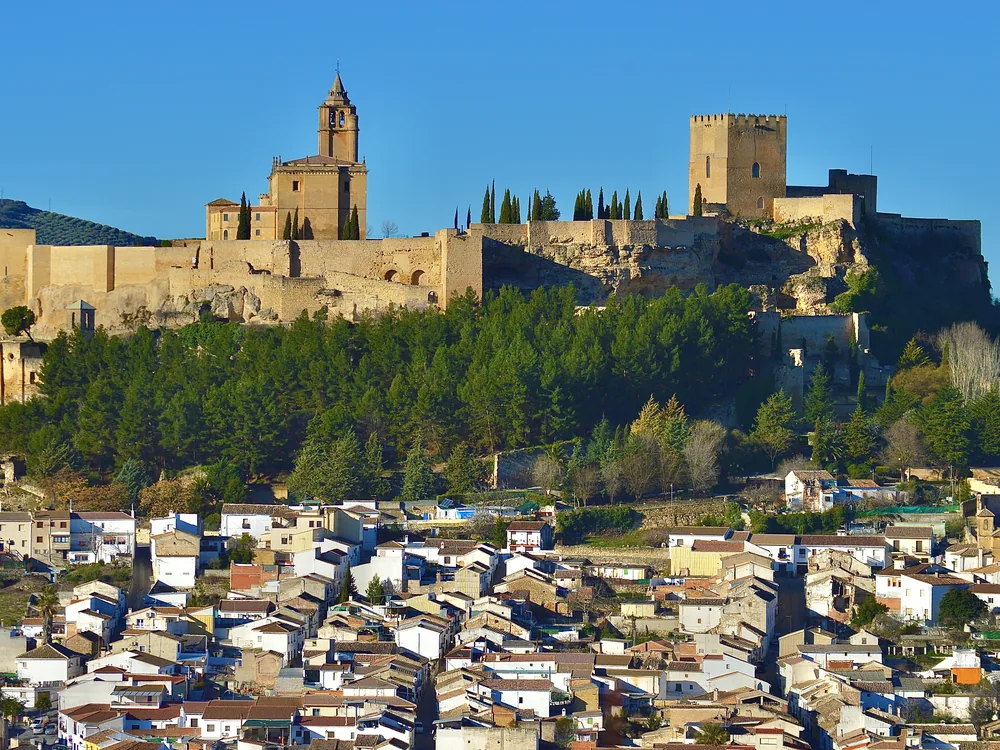
[Santa Catalina Castle in Jaén](/castles/spain/santa-catalina-castle), 35 kilometres southwest, stands on the same Moorish-to-Christian conversion history as Úbeda but in the hilltop parador format rather than as a civic palace. [The Castle of Alcaudete](/castles/spain/castle-of-alcaudete) and [Fortaleza de la Mota in Alcalá la Real](/castles/spain/fortaleza-de-la-mota-alcala-la-real) complete the Jaén province castle cluster — all within the same province and the same historical territory of the Reconquista frontier.
History
Early-mid 16th century: Úbeda transformed by the patronage network of Francisco de los Cobos y Molina, Secretary of State to Emperor Charles V; Andrés de Vandelvira and his circle commissioned to build the palaces, churches, and civic buildings of the 'estilo purista' Renaissance ensemble. c.1540s: Palacio Vela de los Cobos built for Francisco Vela de los Cobos, secretary and chronicler to Charles V; the arcaded corner loggia and Renaissance facade completed in the Vandelvira manner. 16th–20th century: Palace remains in private ownership; historic library assembled and maintained. 2003: UNESCO inscribes 'Renaissance Monumental Ensembles of Úbeda and Baeza' — Palacio Vela de los Cobos is a contributing element of the inscribed historic ensemble. Present day: Private family palace with selective opening to visitors; one of the key stops on Úbeda heritage tours.
How to Visit
Getting there: Úbeda is around 2 hours from Granada by car (A-44 north, then A-316) and 1.5 hours from Jaén. The nearest train station is Linares-Baeza, with connecting buses to Úbeda (about 35 minutes). Direct public transport from major cities is limited, so a car or guided tour is the most practical approach.
Tickets: The palace is privately owned and has no fixed walk-up entry price — access hours change seasonally. The GetYourGuide tour — a 2.5-hour evening walking tour of Úbeda's historic centre including a 40-minute dedicated interior visit with palace entry — is the most reliable way to guarantee access; book in advance. For an independent visit, confirm current hours with the Úbeda tourist office before arriving.
Practical tips: The evening tour format is deliberate and well-suited to the building — Úbeda's golden sandstone facades take on a warm amber quality in late-afternoon and evening light, and the streets are cooler. The corner loggia is best appreciated from the street intersection opposite; stand back far enough to see both arcade levels against the sky. Combine with the Sacra Capilla del Salvador and Plaza Vázquez de Molina, both within a 2-minute walk.
Combine with: Santa Catalina Castle in Jaén — 35 km southwest, a Moorish hilltop fortress converted into a parador — for a contrasting medieval to Renaissance itinerary across the same province.
Frequently Asked Questions
Úbeda (jointly inscribed with neighboring Baeza, 9km away) was designated by UNESCO in 2003 for its 'exceptional testimony to Renaissance humanism in southern Spain.' The inscription recognizes the extraordinary concentration of Renaissance civic architecture produced in Úbeda in a single generation — roughly the 1530s to 1560s — under the patronage of Francisco de los Cobos y Molina and by the architectural workshop of Andrés de Vandelvira. The result is a town whose historic centre contains more coherent and high-quality 16th-century Renaissance architecture than almost anywhere else in Spain. The 'purista' (purist) style that Vandelvira developed — Italian Renaissance vocabulary stripped of Gothic ornament, working in the local warm golden sandstone — gives Úbeda's streets a visual unity and quality that UNESCO recognized as having outstanding universal value.
Location
Calle Juan Montilla 14, 23400 Úbeda, Jaén, Spain
Nearby Castles
Tours & Tickets
Powered by GetYourGuide
From
€20/ person