
Santa Catalina Castle
Castillo de Santa Catalina
Spain · Jaén, Province of Jaén, Andalusia · Near Jaén
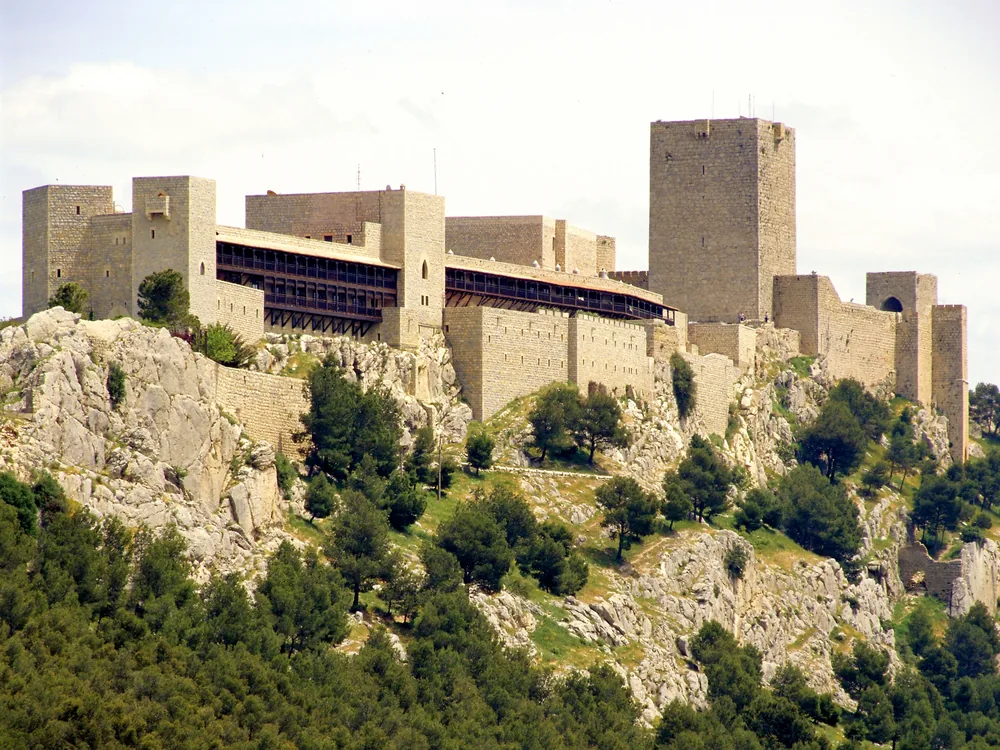
Built 1246 · Castilian reconquest castle on a Roman-Islamic hilltop site — the current fortification was built by Fernando III of Castile following the Christian reconquest of Jaén in 1246 on the foundations of an Almohad Islamic castle; the medieval structure preserves its curtain walls, towers, and the keep (Torre del Homenaje), partially restored and partly ruined; the site additionally houses a Parador hotel (converted into the parador complex in 1965) that occupies the southern wing of the castle grounds; the hilltop position at 940 metres above sea level commands views over the entire Jaén olive oil landscape and the Sierra de Jabalcuz beyond
This page is part of an independent travel guide and is not affiliated with, endorsed by, or operated by Santa Catalina Castle.
© Castles & Palaces
Quick Facts
- Hours
- Daily 09:00–21:30
- Guided tour from
- €15
- Hotel rating
- ★★★★ 4-Star Hotel
- Duration
- 1–1.5 hours (castle towers, walls, and panoramic views); add 30 minutes for the parador terrace bar (open to non-guests)
- Best time
- October to April
- Nearest city
- Jaén
Featured Tour
Historical Stories and Legends at Sunset at Santa Catalina Castle
Cancellation available · Instant confirmation
Stay Here
Parador de Jaén
★★★★ 4-Star HotelRooms are within the historic castle building itself
Booked via Booking.com · Free cancellation on most rates
Castle admission is covered separately by the walk-up ticket or GetYourGuide tour described above; the parador's bar and terrace are also open to non-guests, as already noted in the FAQ above.
Highlights
- ✦Panoramic view of the Jaén olive oil landscape — from the castle's hilltop at 940 metres, the view extends over the olive groves of the Province of Jaén, which produces approximately 20% of the world's olive oil and contains an estimated five million olive trees; the olive grove landscape from this elevation is one of the most distinctive agricultural panoramas in Europe, extending to the horizon in every direction
- ✦Fernando III and the reconquest of Jaén (1246) — the castle was built by Fernando III of Castile (who was later canonised as San Fernando) immediately following the Christian reconquest of Jaén from the Almohad dynasty; the city of Jaén had been the gateway between Castile and the Emirate of Granada for a century before the conquest, and the castle's construction consolidated Castilian control of this strategic pass
- ✦Parador de Jaén — the national Paradores chain converted the southern wing of the castle complex into a hotel in 1965; the parador bar terrace is accessible to non-guests and provides the best outdoor viewing point for the olive oil landscape panorama over a coffee or glass of Andalusian wine; the parador building blends with the castle structure and the combination of hotel and historic monument is one of the more successful in the national Paradores network
- ✦Free admission Wednesdays and Sundays — the castle offers free entry with advance reservation on Wednesday afternoons (15:00–18:00) and Sundays (09:00–15:00), making it one of the most accessible heritage sites in Andalusia; otherwise standard entry is €3.50
- ✦Jaén — the undervisited Andalusian city — Jaén is one of the least-touristed of Andalusia's provincial capitals despite its UNESCO-recognised Renaissance Cathedral (designed by Andrés de Vandelvira, one of the great Renaissance architects of Spain) and the Baños Árabes (Arab Baths, the largest and best-preserved in Spain); the combination of cathedral, Arab baths, and the castle on the hill makes Jaén a worthwhile Andalusian destination for visitors seeking an alternative to the overcrowded triangle of Sevilla, Granada, and Córdoba
Skip the queue with a guided tour
Skip-the-line tickets & expert guides
Castillo de Santa Catalina stands on the cerro (hill) that rises above Jaén to 940 metres above sea level — a site that has been fortified since at least the Roman period and which gave whoever controlled it a commanding position over the gateway between the Castilian meseta to the north and the Kingdom of Granada to the south. Today the castle's most immediate impact is the view: from the hilltop terrace, the Province of Jaén extends in every direction as a carpet of silver-green olive groves, interrupted only by the white walls of distant villages and the ridges of the Sierra de Jabalcuz. The Province of Jaén is the largest olive oil-producing territory in the world, contributing approximately 20% of global production, and from the castle it is possible to see what that means in landscape terms — an estimated five million trees, arranged in groves that fill every agricultural slope between the castle hilltop and the horizon.
The hill at Jaén was first fortified by the Romans; after the Arab conquest of the Iberian Peninsula in the early 8th century, it became an Islamic stronghold. Under the Almohad Berber dynasty (which ruled much of Muslim Spain in the 12th–13th centuries), Jaén was a major city and the castle was significantly expanded and strengthened. The city's strategic importance stemmed from its position at the Despeñaperros pass — the principal natural route through the Sierra Morena between the Castilian meseta and Andalusia — which made it the gateway city between Christian Castile and Muslim Granada. Control of Jaén was control of the passage between these two worlds.
Fernando III of Castile, who would later be canonised as San Fernando, besieged and captured Jaén in 1246 as part of the extended Castilian reconquest of Andalusia. The Arab population was expelled and Fernando immediately commissioned a new Christian castle on the hilltop, incorporating elements of the existing Almohad structure but reconfigured to serve Castilian defensive and residential purposes. The Torre del Homenaje (Keep) and the curtain walls of the current castle date primarily from this Fernandine rebuilding of the 13th century, with modifications through the 14th and 15th centuries as the Kingdom of Granada to the south remained unconquered and the castle continued to serve a military function. After the final conquest of Granada in 1492, Jaén lost its frontier significance; the castle declined from military use, was partially dismantled, and entered a long period of neglect.
The castle's modern history includes a significant cultural intervention: in 1965, the national Paradores de Turismo converted the southern wing of the castle complex into a Parador hotel, one of the chain's more dramatic hilltop properties. The parador building integrates with the castle fabric and its terrace provides the most celebrated view of the olive oil landscape below. Non-hotel guests can access the parador bar and terrace — the combination of a cortado or a glass of Jaén white wine with the olive grove panorama is one of the better incidental pleasures of the Jaén visit.
The castle's entry price is among the lowest for any significant historic monument in Andalusia: €3.50 general admission, with free access on Wednesday afternoons (15:00–18:00) and Sunday mornings (09:00–15:00) with advance reservation via the municipal tourism website. The visit covers the curtain walls, the towers, and the castle circuit accessible to visitors. The interior spaces are a mix of restored sections and picturesque ruined fabric; the architectural interest is primarily in the tower and wall ensemble rather than in an elaborate interior. The view is the centrepiece.
Jaén itself is chronically underestimated as an Andalusian destination. Its Renaissance Cathedral — designed by Andrés de Vandelvira from 1548 and completed through the 17th century — is one of the most important and least-visited examples of Spanish Renaissance church architecture, comparable in ambition and quality to the great cathedrals of Sevilla and Granada while receiving a fraction of their visitors. The Baños Árabes (Arab Baths) in the central city are the largest and best-preserved Arab baths in Spain, significantly more complete than those in Granada, and also substantially under-visited relative to their quality. The combination of the castle hilltop, the cathedral, and the Arab baths makes Jaén a complete Andalusian heritage day, without the overcrowding that characterises visits to the Alhambra, the Alcázar of Sevilla, or the Mezquita of Córdoba.
For visitors who want to see more of the Jaén province, a day trip from Córdoba (approximately 90km southwest) is feasible by car. The Parque Natural de las Sierras de Cazorla, Segura y las Villas — the largest protected natural area in Spain — begins approximately 60km east of Jaén city and provides one of the more spectacular landscapes in Andalusia for visitors with their own transport.
History
Roman fortification on the cerro. Arab conquest 8th century; Jaén becomes an Islamic city and the hilltop castle is a major stronghold. Almohad dynasty expands and strengthens the castle, 12th–13th century. Fernando III of Castile conquers Jaén 1246; constructs the Christian castle (Torre del Homenaje, curtain walls) on the Almohad site. Jaén's frontier importance wanes after the fall of Granada 1492; castle enters decline. Partial dismantlement and long neglect through early modern period. Paradores de Turismo converts the southern wing into a hotel 1965. Castle restored and opened to visitors; current €3.50 entry and free-day programme established.
How to Visit
Getting there: From Jaén city centre, the castle is a steep 20–25-minute walk via a hillside path from the old city quarter, or accessible by car via the N-323 ring road to the castle parking area (signposted). Taxis from the centre cost around €5–8. Jaén is about 90 km east of Córdoba (A-44/N-323, around 1 hour by car) and served by regional trains from Córdoba (1.5–2 hours) and Granada (about 1.5 hours).
Tickets: Walk-up entry €3.50 adult, free child. Free entry is available on Wednesday afternoons (15:00–18:00) and Sunday mornings (09:00–15:00) with advance reservation via turjaen.org. The GetYourGuide guided experience is a 45-minute storytelling tour of the castle's history and legends at sunset — a different, atmosphere-focused option to the standard walk-up entry; reserve in advance.
Practical tips: The parador bar and terrace within the castle complex are open to non-guests and offer the finest viewing point for the olive-grove panorama — a coffee or glass of Andalusian white on that terrace is one of the better incidental pleasures of the province. Jaén summers are extreme (38–42°C in July–August), so early morning or the free Wednesday afternoon window are the best options in peak heat. The olive harvest season (late October to December) gives the landscape its most distinctive character — the groves take on a silver quality at harvest time.
Combine with: Palacio Vela de los Cobos in UNESCO-listed Úbeda — 50 km northeast, the finest Renaissance civic palace in the province — or Alhambra of Granada about 75 km southeast, for the most complete Moorish royal palace in Spain.
How to Stay
Getting there: Already covered by the How to Visit section above.
Rooms & rates: The Parador occupies the southern wing of the castle complex since 1965; from about €175 per night.
On-site: Restaurant, panoramic terrace-bar over the sea of olive trees (also accessible to non-guests, as noted above), direct integration with the castle structure.
Good to know: The combination of hotel and historic monument is one of the most successful in the entire Paradores network — the terrace is already recommended above as the best viewpoint over the Jaén olive landscape, even for visitors not staying overnight.
Combine with: The castle's own olive-landscape panorama and Jaén's Renaissance cathedral, both already covered above.
Frequently Asked Questions
Yes — the parador bar and terrace are accessible to non-guests. The terrace provides the best viewing point for the olive oil landscape panorama and is a recommended stop on any Castillo de Santa Catalina visit. Have coffee, wine, or the parador's cold meats and cheese selection on the terrace and stay as long as you like. The parador restaurant also accepts non-guests for lunch and dinner (reservation recommended).
Location
Castillo de Santa Catalina, 23009 Jaén, Andalusia, Spain
Nearby Castles
Tours & Tickets
Powered by GetYourGuide
From
€15/ person