
Peñafiel Castle
Castillo de Peñafiel
Spain · Castile and León, Valladolid province, Ribera del Duero · Near Peñafiel
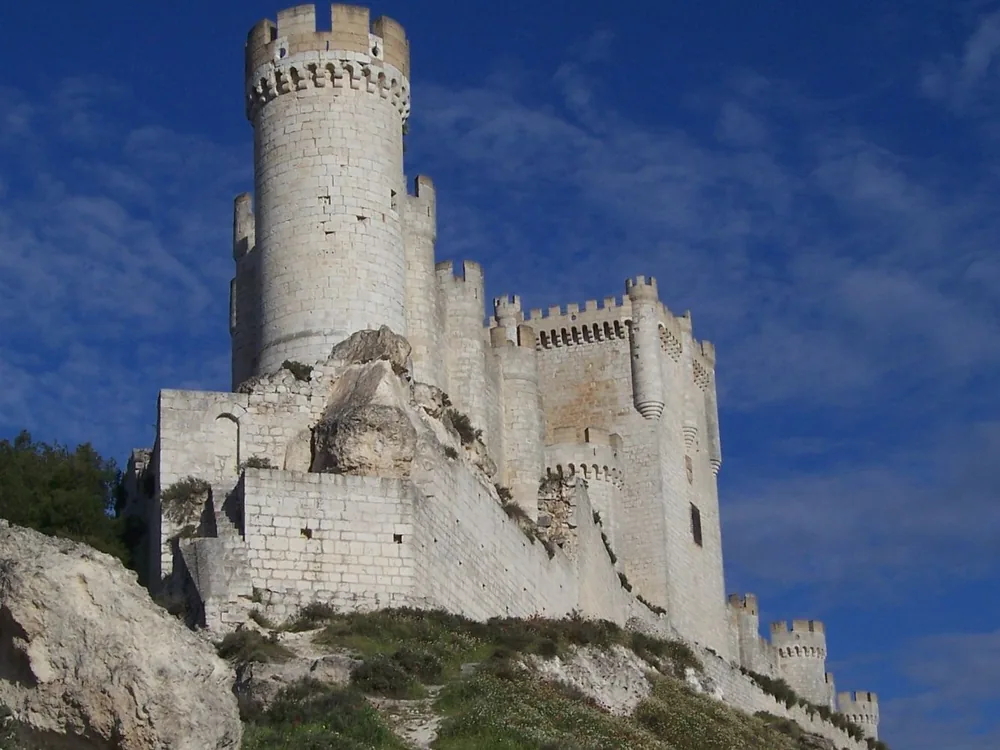
Built 943 · Elongated medieval Castilian fortress on a ship-keel limestone ridge — the castle's defining geometric feature is its extreme proportions: approximately 210 metres long but only 23 metres wide at its widest point, built along the full length of a narrow limestone outcrop above the town of Peñafiel; the central Torre del Homenaje (keep) rises approximately 30 metres at the highest point of the ridge; successive building phases from the 10th through the mid-15th centuries rebuilt and extended the curtain walls and towers; the present structure is primarily 15th-century Castilian military Gothic; declared a Spanish National Monument in 1917; the interior has been adapted since 1999 as the Valladolid Provincial Wine Museum without structural alteration to the medieval fabric
This page is part of an independent travel guide and is not affiliated with, endorsed by, or operated by Peñafiel Castle.
© Castles & Palaces
Quick Facts
- Hours
- Tue–Sat 10:30–14:30 / 16:00–19:30. Sun 10:30–14:30. Closed Mon
- Guided tour from
- €750
- Duration
- 1.5–2 hours (castle + wine museum combined visit)
- Best time
- April to October
- Nearest city
- Peñafiel
Featured Tour
Madrid: Luxury Ribera del Duero Winery Tour
Cancellation available · Instant confirmation
Highlights
- ✦The ship-keel silhouette — Peñafiel Castle is 210 metres long and only 23 metres wide at its widest point, built along the full length of a narrow limestone ridge; the outline, seen from the surrounding Duero plain, resembles the hull of a ship; the geometric constraint of the site produced one of the most distinctive castle profiles in Spain and made the fortress nearly impossible to attack from the sides
- ✦1,000+ years of documented fortification — the site was a pre-Roman defensive position; first documented in 943 during the Reconquista frontier wars; seized by Almanzor's forces in 983 during the al-Mansur raids on the northern Christian kingdoms; retaken by Count Sancho García of Castile in 1013; the name 'Peñafiel' (Faithful Rock) is traditionally attributed to Sancho García's words upon recapturing it
- ✦The Provincial Wine Museum inside a medieval castle (€6.60 combined ticket) — since 1999 the Valladolid Provincial Council has operated the Museo del Vino de Castilla y León within the castle's interior, covering the five Designations of Origin of Valladolid province, the history of winemaking in the Meseta, and the Ribera del Duero appellation that has placed this corner of Castile on international wine maps; visitors walk the medieval keep alongside exhibits and, in higher-tier visits, wine tastings
- ✦The Torre del Homenaje at 30 metres — the central keep at the highest point of the ridge; the views from the top over the confluence of the Duero and Duraton rivers and the broad Castilian plain are the most extensive available from any accessible structure in the Ribera del Duero wine zone
- ✦Spanish National Monument since 1917 — Peñafiel Castle was declared a Bien de Interés Cultural in the early wave of Spanish heritage protection, recognizing it as an exceptional example of elongated Castilian military architecture from the Reconquista period
- ✦GetYourGuide Madrid Luxury Ribera del Duero Winery Tour with castle access (provider rating, from €750 full private day tour from Madrid; independent combined entry €6.60)
Skip the queue with a guided tour
Skip-the-line tickets & expert guides
The approach to Peñafiel from any direction on the Duero plain resolves the same view: a long, narrow limestone ridge rising above the town, and along the entire length of that ridge, a fortress that follows the rock's geometry so faithfully that the castle and the outcrop appear to be a single object — the curtain walls running the full 210 metres of the ridge's length, the keep rising at its highest point, the overall shape unmistakably resembling the hull of a ship. This is not a design choice but a geographic one: the ridge dictated the castle, and the castle had no option but to become what the ridge required.
The site's fortified history precedes both the castle and the name. Pre-Roman peoples used the ridge as a defensive position — its height, its near-vertical flanks, and its commanding view over the confluence of the Duero and Duraton rivers made it a natural choice for anyone who needed to hold this stretch of the Castilian Meseta. The documented history begins in 943, shortly after the Battle of Simancas in 939, in which Ramiro II of León defeated the army of the Umayyad Caliph Abd al-Rahman III and stabilized the northern Christian frontier. The fortification at Peñafiel was documented as part of the post-Simancas consolidation of the Duero valley, one of many strongpoints on a frontier that was contested, raided, and occasionally lost across the following century.
The most consequential of those losses came in 983, when al-Mansur — Almanzor in Christian chronicles, the Hajib or regent of Caliph Hisham II and the most effective military commander the Caliphate of Córdoba ever produced — led his forces north in a series of devastating raids on the Christian kingdoms. Almanzor's campaigns of the 970s and 980s sacked Barcelona, León, and Compostela; Peñafiel fell during this same expansionary phase, passing into Moorish hands as part of the systematic dismantling of the Leonese frontier position. The castle remained under Muslim control for three decades.
Count Sancho García of Castile retook the site in 1013. The name 'Peñafiel' — Faithful Rock, from the Spanish peña (crag) and fiel (faithful) — is traditionally attributed to Sancho's words upon recapturing the fortress: a promise that the rock would henceforward be faithful to the Christian cause. The attribution is likely apocryphal, as such founding etymologies typically are, but the name stuck and the history it encodes — a fortification seized and retaken, contested and held — accurately describes the site's Reconquista biography.
The castle took its present form through successive building phases from the 10th through the mid-15th century, with the most substantial construction occurring in the later medieval period under Castilian noble families who held the Peñafiel lordship. The mid-15th-century building campaign, which produced the curtain walls and towers in their current configuration, is the predominant layer of the surviving structure — 15th-century Castilian military Gothic, with the characteristic Torre del Homenaje rising 30 metres at the ridge's highest point. Declared a Spanish National Monument in 1917, the castle was leased to the Valladolid Provincial Council in 1999.
The Provincial Council's decision to install the Museo del Vino de Castilla y León inside the castle walls was a pragmatic and successful intervention in a building that had no obvious other use. The Ribera del Duero Designation of Origin — established in 1982 and centered precisely on the stretch of the Duero valley visible from Peñafiel's keep — had by 1999 emerged as one of Spain's most prestigious wine appellations, producing Tempranillo-based reds that competed internationally with the Rioja wines that had previously dominated Spanish wine exports. Valladolid province contained five separate Designations of Origin: Ribera del Duero, Rueda (white wines from Verdejo grapes), Toro, Cigales, and Tierra de León. The museum covers all five through exhibits on viticulture, winemaking history, and the specific terroir conditions of each appellation, with higher-tier visits including tastings. The result is a museum whose subject matter (wine) and setting (a medieval castle on a ridge above a wine region) are more coherently matched than most heritage museum installations.
Entry to the castle and museum is by guided tour only — no free-roam access. The castle-only guided visit is approximately €3.30; the combined castle and wine museum ticket is €6.60, which represents the recommended visit for anyone coming specifically to see both. The GetYourGuide luxury winery day trip from Madrid includes the castle with 'privileged access' as part of a private full-day circuit covering Ribera del Duero wineries — the €750 covers the complete private tour, not the €6.60 castle entry.
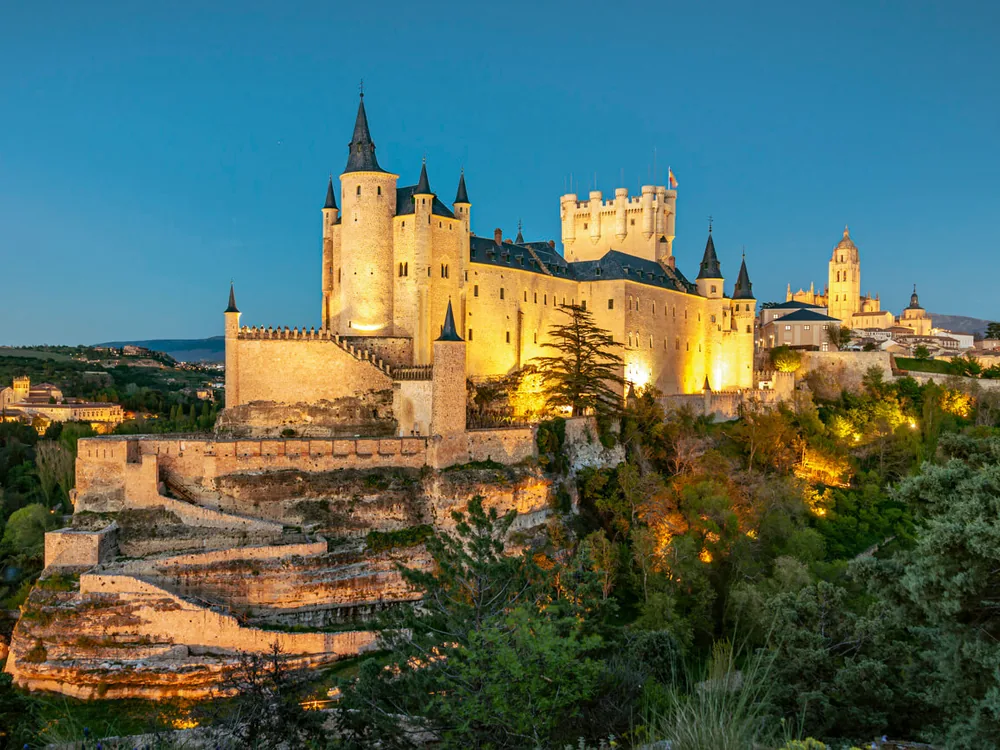
[Alcázar of Segovia](/castles/spain/alcazar-of-segovia), 100 kilometres northwest in the southern Castile and León uplands, is the most architecturally celebrated castle of the same Castilian royal tradition — a turreted palace-fortress on another dramatic rocky spur, transformed by the same succession of Castilian and Habsburg rulers who shaped the region Peñafiel defended.
History
The limestone ridge above the Duero-Duraton confluence was used as a defensive position before Roman occupation, and it was first documented as a fortification in 943 — part of the Reconquista frontier consolidation that followed Ramiro II of León's victory at the Battle of Simancas in 939. The castle's hold on the Duero plain proved precarious: Almanzor's forces seized it in 983 during the Umayyad campaigns against the northern Christian kingdoms. Count Sancho García of Castile retook it in 1013, and the name Peñafiel — Faithful Rock — is traditionally attributed to this moment of recovery, though the etymology is disputed.
Multiple Castilian building phases through the 11th to 15th centuries expanded and rebuilt the fortifications as successive noble lords held and improved the site. The final major building phase in the mid-15th century established the castle's present configuration: the curtain walls, towers, and the 30-metre Torre del Homenaje in 15th-century Castilian military Gothic that gives the ridge its ship-prow profile.
Declaration as a Spanish National Monument came in 1917. The castle was leased to the Valladolid Provincial Council in 1999, which inaugurated the Museo del Vino de Castilla y León within the walls — an appropriate use for a fortress in the heart of the Ribera del Duero wine region. Open by guided tour only.
How to Visit
Getting there: Peñafiel is about 60 km east of Valladolid; buses from Valladolid take around 1 hour 15 minutes, with the castle a steep 10-minute walk from the town centre. By car from Madrid it is around 1 hour 45 minutes (A-1 north to Aranda de Duero, then N-122 west). Parking is available at the base of the castle hill.
Tickets: Walk-up entry €6.60 adult (combined castle + Provincial Wine Museum — the recommended option; castle-only is ~€3.30). Visits are by guided tour only with no free-roam access; confirm current tour times at museodelvinodecastillayleon.es. The GetYourGuide tour — a full private day trip from Madrid covering the castle with privileged access alongside Ribera del Duero winery visits — book in advance if you want a chauffeur-guided Ribera del Duero day from the capital.
Practical tips: The castle is closed on Mondays. The ridge approach is exposed with no shade — early morning visits in summer are strongly advisable. The combined ticket is worth the extra €3.30 over the castle-only option: the wine museum provides context that makes the landscape visible from the keep genuinely comprehensible, and in higher-tier visits includes tastings. Before or after the castle, the Plaza del Coso in the town below is one of the best-preserved medieval bullfighting squares in Castile — 15 minutes and free.
Combine with: Alcázar of Segovia — the most celebrated Castilian royal castle, about 100 km northwest — or Royal Palace of La Granja in the Sierra de Guadarrama, making a full Castile and León heritage circuit.
Frequently Asked Questions
The Provincial Wine Museum housed inside the castle provides the historical and cultural context that makes the fortress's location comprehensible: the Ribera del Duero wine region visible from the keep is the economic and social landscape that the castle was built to control and protect. Separating the medieval military architecture from the wine culture it presided over produces a less complete understanding of either. The €3.30 price difference is minimal; the added museum content — covering five Valladolid Designations of Origin, the history of viticulture in Castile, and in higher-tier visits including wine tastings — is worth the upgrade for most visitors.
Location
Calle Cuesta de San Miguel, 47300 Peñafiel, Valladolid, Spain
Nearby Castles
Tours & Tickets
Powered by GetYourGuide
From
€750/ person