
Royal Palace of La Granja de San Ildefonso
Real Sitio de La Granja de San Ildefonso
Spain · Castile and León, Segovia — 11km south of Segovia city · Near Segovia
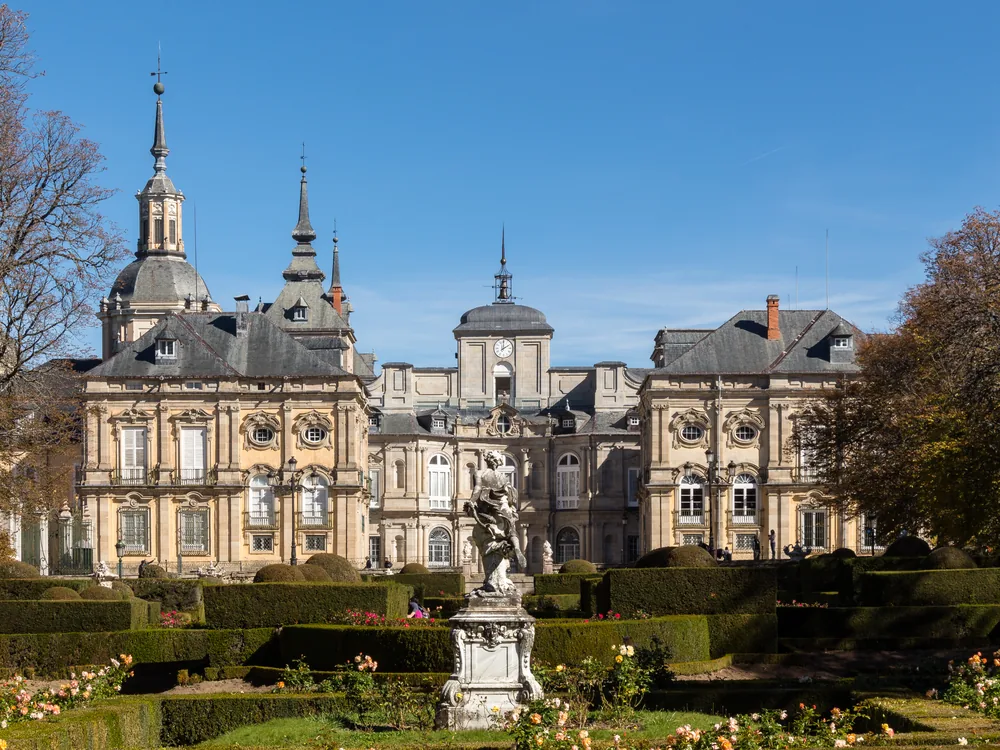
Built 1721 · French Baroque palace in a Spanish mountain setting — designed by Filippo Juvara and Giovanni Battista Sacchetti (the Italian architects also responsible for the Royal Palace in Madrid) for Philip V (Philip of Anjou), the first Bourbon king of Spain; the palace exterior is characterised by the French Baroque vocabulary Philip V brought from Versailles — two-storey stone facade, projecting central pavilion, mansard-influenced roof line — in local Segovia granite that gives it a heavier texture than its French models; the interior was heavily damaged and rebuilt after an 1918 fire; the gardens, designed by the French landscape architect René Carlier, are the palace's most distinguished element: 26 monumental sculpted fountains, formal parterres, lime-tree bosquets (woodland screens), and a water supply system that still functions by gravity from the Sierra de Guadarrama above
This page is part of an independent travel guide and is not affiliated with, endorsed by, or operated by Royal Palace of La Granja de San Ildefonso.
© Castles & Palaces
Quick Facts
- Hours
- Tue–Sun 10:00–18:00. Closed Mon
- Guided tour from
- €26
- Duration
- 2–3 hours (palace interior + garden walk)
- Best time
- May to September
- Nearest city
- Segovia
Featured Tour
La Granja de San Ildefonso: Guided Palace & Garden Tour
Cancellation available · Instant confirmation
Highlights
- ✦26 monumental fountains — the garden's defining feature: 26 sculpted Baroque fountains fed by a gravity-powered water system from the mountains above; the sculptures are lead allegorical figures of extraordinary scale and ambition, comparable to the grandest Versailles fountains; on full-operation days (3 days per year), all 26 run simultaneously in a water display that lasts approximately 30 minutes and attracts 10,000+ visitors
- ✦Philip V's Versailles — Philip of Anjou, grandson of Louis XIV and the first Bourbon king of Spain, was homesick for Versailles; La Granja was his attempt to recreate a French Baroque garden in the Spanish Sierra; Juvara's palace and Carlier's gardens are the most complete French-inspired Baroque landscape in Spain
- ✦The garden layout — formal parterres with embroidered planting, lime-tree bosquets (tall woodland screens punctuated by fountains and clearings), and a cross-axial design derived from the French garden tradition; the bosquets at La Granja are particularly fine — mature lime trees planted in the early 18th century creating shaded allées of considerable atmospheric quality
- ✦Palace collection — the rebuilt interior (after the 1918 fire) contains a significant collection of Spanish royal tapestries, including the 'Royal Tapestries of La Granja': a series of 17th–18th-century Brussels and Flemish tapestries that survived the fire and are among the most important tapestry collections in Spain; also Flemish and Italian paintings from the Bourbon royal collection
- ✦Philip V's tomb — Philip V and his wife Isabel de Farnesio are buried in the palace church; this is one of only two Bourbon monarchs interred outside the royal pantheon at El Escorial (the other being Ferdinand VI), reflecting Philip V's own preference for this site above all others in Spain
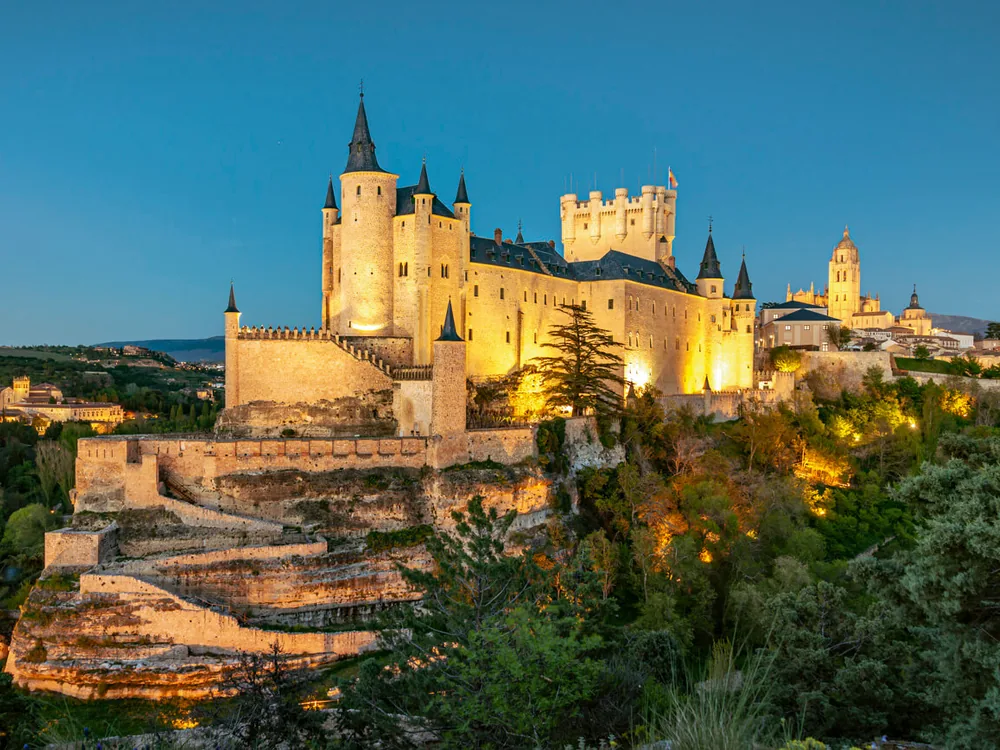
- ✦11km from [Alcázar of Segovia](/castles/spain/alcazar-of-segovia) — the fairy-tale Disney-prototype castle on its rocky promontory above Segovia; the two sites together make a full Segovia day: the Alcázar in the morning, La Granja in the afternoon
Skip the queue with a guided tour
Skip-the-line tickets & expert guides
The Royal Palace of La Granja de San Ildefonso stands at the foot of the Sierra de Guadarrama, 11 kilometres south of Segovia, at an altitude of approximately 1,190 metres. The mountain setting — which Philip V chose deliberately for its resemblance to the forested hills around Versailles — is what first strikes the visitor: the formal French Baroque gardens run up against the Sierra's wooded slopes on one side and look out over the high Castilian plateau on the other, creating a landscape combination impossible at Versailles itself, where the flat Île-de-France extends to every horizon.
Philip V — born in Versailles as Philip of Anjou, grandson of Louis XIV, installed as King of Spain in 1700 as the first Bourbon monarch — never fully reconciled himself to Spain. He suffered from severe melancholia (possibly bipolar disorder by contemporary diagnostic criteria) and reportedly spoke of Versailles with nostalgia throughout his reign. The Real Sitio de La Granja was his response: a hunting lodge he expanded from 1721 into a full palace and garden complex that represented a deliberate transplantation of French Baroque landscape design into the Castilian mountains.
The palace was designed by Filippo Juvara — the Sicilian-born architect who was the dominant figure of early 18th-century Baroque architecture in the Italian tradition — and completed after Juvara's death in 1736 by Giovanni Battista Sacchetti, who also designed the Royal Palace in Madrid. The exterior presents the French Baroque palace vocabulary that Philip V specified: a two-storey facade of local Segovia granite with a projecting central pavilion, formal window arrangement, and a silhouette reminiscent of a Second Empire French château. The granite gives it a character different from the lighter limestone of Versailles — heavier, more northern in feeling, more consonant with the mountain setting.
The gardens, designed by the French landscape architect René Carlier, are the palace's most celebrated element. The layout follows the established French formal garden programme: cross-axial organisation, parterres with embroidered planting near the palace, and lime-tree bosquets (tall woodland screens of mature lime trees, planted in regular rows with allées cut between them) extending into the lower garden. What makes La Granja's gardens exceptional are the fountains: 26 monumental lead-sculpted Baroque fountains distributed through the garden, each fed by a gravity-powered water supply system that draws from the Sierra de Guadarrama above the palace.
The fountain sculptures are comparable to the grandest Versailles fountain groups: allegorical figures of Apollo, Diana, Latona, Fame, Neptune, and others at scales of three to six metres, with cascades, jets, and spray systems. On regular visiting days, three to five fountains are typically in operation; on three specific days per year (usually late July and August), all 26 run simultaneously, creating a water display that lasts approximately 30 minutes and draws 10,000–15,000 visitors. These full-operation days are announced in advance on the Patrimonio Nacional website. Arriving on a day when only a few fountains are running (the normal situation) is still worthwhile — the sculptures and the garden layout are magnificent regardless — but visitors who want the complete spectacle should plan specifically for one of these dates.
Philip V died at La Granja in 1746. He is buried, with his wife Isabel de Farnesio, in the palace church — one of only two Bourbon Spanish monarchs interred outside the royal pantheon at El Escorial (the other being Ferdinand VI), a choice that reflects the depth of his attachment to this site. The palace suffered a severe fire in 1918 that destroyed a significant portion of the interior; the rebuilt state rooms are furnished with surviving royal collections, most notably the Brussels and Flemish tapestries (the 'Royal Tapestries of La Granja') that represent one of the most important tapestry collections in Spain.
The GetYourGuide guided tour covers the palace interior and the principal garden fountains with a licensed guide. Visiting La Granja in combination with the [Alcázar of Segovia](/castles/spain/alcazar-of-segovia) — 11 kilometres north and architecturally the polar opposite, a medieval castle rising from a rocky promontory above the confluence of two rivers — makes the natural Segovia day for visitors with a car or a willingness to take a taxi between the two.
History
Site originally a hunting ground and small farm (granja) belonging to the monastery of El Parral. Philip V acquires the site 1700. Construction of the palace begins 1721 (architect Filippo Juvara). Gardens laid out by René Carlier from 1724. Juvara dies 1736; Giovanni Battista Sacchetti completes the palace. Philip V dies at La Granja 1746; buried with Queen Isabel de Farnesio in the palace church. Subsequent Bourbon monarchs use the palace as a summer residence. 1918 fire damages the palace interior substantially; rebuilding follows. Current management by Patrimonio Nacional (Spanish Royal Patrimony). Palace and gardens open to the public year-round.
How to Visit
Getting there: La Granja is 11 km south of Segovia. From Segovia, bus line 691 runs to La Granja in about 30 minutes; taxis take 15 minutes. From Madrid, regular buses from Moncloa bus station reach La Granja in around 1 hour 15 minutes. By car from Madrid, the A-601 via Segovia takes about 1 hour 30 minutes; the scenic mountain-pass route (SG-V-6121) is slightly longer but more dramatic.
Tickets: Walk-up entry €10 adult, free child. EU citizens enter free Tuesday to Sunday from 16:00 — verify current policy at patrimonionacional.es before relying on this, as it changes. The GetYourGuide tour — a licensed-guide 2–2.5-hour visit of the palace interior and principal garden fountains — is worth booking in advance on full-fountain days when the site is busy.
Practical tips: Check the fountain operation calendar at patrimonionacional.es before visiting. On regular days, 3–5 of the 26 fountains run; all 26 operate simultaneously on just 3 days per year (usually late July to August), drawing very large crowds — book Segovia accommodation well in advance for those dates. The palace is closed on Mondays. The garden bosquets turn golden in October and are among the finest autumn landscapes in Castile.
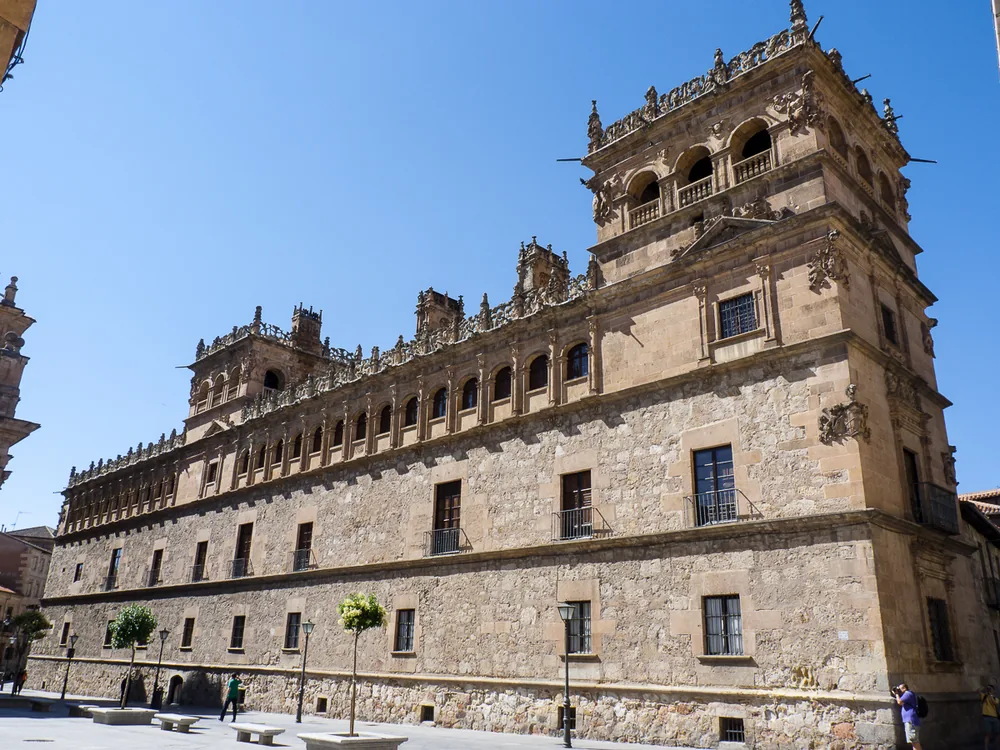
Combine with: Alcázar of Segovia — 11 km north, the medieval castle above Segovia makes a natural morning to afternoon pairing with La Granja — or Monterrey Palace in Salamanca for the Spanish Renaissance tradition in contrast to La Granja's French Bourbon formality.
Frequently Asked Questions
The full-operation of all 26 fountains requires maintenance and a specific water management schedule; running all simultaneously is only done three times per year (typically late July and twice in August). On regular visiting days, 3–5 fountains are in operation — the choice varies by the site's maintenance programme. The full-operation days are announced at patrimonionacional.es; they draw very large crowds. The garden and palace are fully worth visiting even with only partial fountain operation.
Location
Plaza de España 15, 40100 La Granja de San Ildefonso, Segovia, Spain
Nearby Castles
Tours & Tickets
Powered by GetYourGuide
From
€26/ person