
Solliden Royal Palace
Sollidens slott
Sweden · Öland · Near Borgholm, Öland
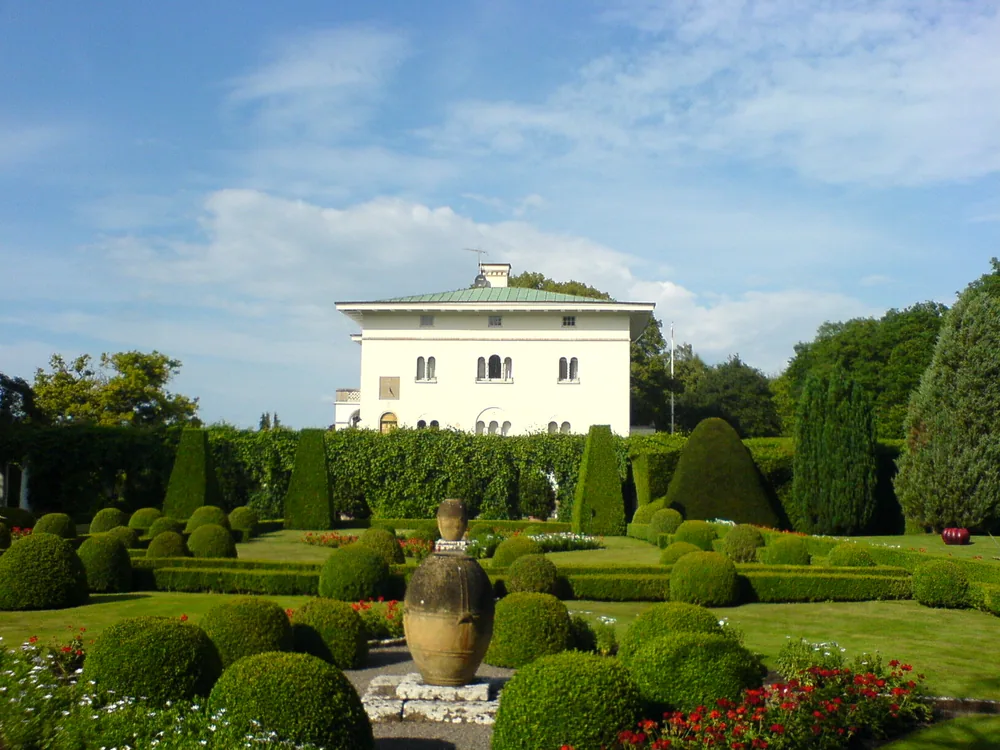
Built 1906 · Italian Renaissance villa built 1903–1906 to the design of architect Agi Lindegren for Crown Princess Victoria (later Queen Victoria of Sweden); the asymmetric composition features a loggia, terraced gardens, and ochre-rendered facades that reflect the Crown Princess's long stays in Italy for health reasons and her preference for Mediterranean architecture; set on a limestone ridge above the island of Öland with views over the Baltic; the palace remains a working royal summer residence of the Swedish royal family, not open to the public, while the extensive gardens are open seasonally
This page is part of an independent travel guide and is not affiliated with, endorsed by, or operated by Solliden Royal Palace.
© Castles & Palaces
Quick Facts
- Hours
- Daily 11:00–17:00
- Entry via GetYourGuide
- €18
- Duration
- 1–1.5 hours
- Best time
- June to August
- Nearest city
- Borgholm, Öland
Featured Tour
Solliden Royal Palace Gardens Entry Ticket
Cancellation available · Instant confirmation
Highlights
- ✦Solliden was built in 1903–1906 for Crown Princess Victoria (grandmother of the current king Carl XVI Gustaf, not to be confused with today's Crown Princess Victoria), who spent extended periods in Italy for health reasons and requested an Italian Renaissance-villa style residence on her husband's family's Baltic island — creating one of the most architecturally anomalous royal residences in Scandinavia
- ✦The gardens open to visitors include an English park, a Dutch garden, and a terraced Italian garden — three distinct garden idioms reflecting both the Crown Princess's Italian aesthetic preferences and the formal garden traditions of the Swedish royal court; the gardens are managed to a high standard and are the primary visitor draw
- ✦The palace remains a working summer residence of the Swedish royal family, occupied each summer by King Carl XVI Gustaf and Queen Silvia — meaning the palace interior is genuinely not accessible, but the gardens are maintained to the standard of an actively used royal retreat rather than a preserved historic site
- ✦Öland, the long flat limestone island connected to mainland Sweden by the Öland Bridge from Kalmar, is designated a UNESCO World Heritage Site for its 'Agricultural Landscape' — the limestone 'alvar' plateau, traditional windmills, and summer flower meadows that make the island an unusual natural and cultural landscape
- ✦The ruined Borgholm Castle — a dramatic roofless 17th-century fortress less than 1 km from Solliden — is visible from the gardens and forms a natural paired visit covering both the island's royal summer residence and its most atmospheric castle ruin
Skip the queue with a guided tour
Skip-the-line tickets & expert guides
The story of Solliden begins with a health problem and a climate disagreement. Crown Princess Victoria of Sweden — born 1862, married to Prince Gustaf (later Gustaf V) in 1881, and referred to here as 'Princess Victoria' to distinguish her from today's Crown Princess Victoria — spent much of her life in poor health, and Swedish winters did not help. Her doctors recommended warmer climates, and she developed a strong attachment to Italy, particularly San Remo and Rome, where the Mediterranean light and architecture suited both her health and her aesthetic preferences. When she needed a summer residence on Öland — the long flat limestone island off the Swedish coast, where the Swedish royal family had traditional ties — she wanted something that felt more like Italy than Scandinavia.
The result, built between 1903 and 1906 to designs by architect Agi Lindegren, is an Italian Renaissance villa on a Baltic island. The asymmetric composition, ochre-rendered facades, and loggia opening onto the gardens are unmistakably Mediterranean in character — a piece of Italian architecture transposed to a latitude where Italy is rarely what the landscape suggests. The visual incongruity is the point: this was built for a woman who missed the south, and who had the resources and the royal authority to build a southern-feeling residence without leaving Sweden.
The gardens that surround the palace and are open to visitors reflect the same layered aesthetic. An English park provides the informal landscape setting that 19th-century garden taste required of any serious estate. A Dutch garden with its formal geometry and clipped hedges adds a more structured element. A terraced Italian garden — the most directly connected to Victoria's architectural preferences — brings the Mediterranean terracing tradition to a site where limestone outcrops and Baltic wind provide the physical conditions. Managing all three idioms on a Swedish island in the Baltic Sea involves considerable horticultural effort, and the gardens are maintained to the standard of a working royal retreat rather than a historic preservation project.
The palace itself is not accessible to the public. This is not a restored historic monument but an actively used royal summer residence: King Carl XVI Gustaf and Queen Silvia spend part of each summer at Solliden, and the palace functions as a working private home. The garden ticket covers the grounds; the architecture is appreciated from the exterior and from the garden terraces that frame it. For visitors expecting a royal palace tour, this is an important clarification. For visitors interested in Swedish royal garden culture and the specific story of an Italian villa built on a northern island, the exterior and the gardens are the visit.
Öland itself adds context to any visit to Solliden. The island is a UNESCO World Heritage Site — designated for its 'Agricultural Landscape of Southern Öland,' the limestone plateau (alvar) that creates a distinctive treeless grassland supporting traditional farming practices that have continued largely unchanged since the Stone Age. The island's traditional windmills, the flat limestone light, and the summer wildflower meadows are unlike anything on the Swedish mainland and give Öland an identity that is both natural and cultural heritage. The Öland Bridge from Kalmar (on the mainland) is the standard approach, and Kalmar itself — home to Kalmar Castle, one of the best-preserved Renaissance castles in Sweden — makes a natural gateway for mainland visitors.
Borgholm Castle, less than 1 kilometre from Solliden, is the island's other major heritage site: a dramatic roofless ruin of a 17th-century fortress, burned in the 18th century and left as a picturesque shell ever since. It is not yet a separate entry on this site, but it occupies the same ridge above Borgholm town as Solliden and is a natural companion to the palace gardens visit — the ruined fortress and the working royal villa, separated by a short walk, representing the island's military and residential royal histories respectively.
The GetYourGuide garden entry ticket covers seasonal access to the Solliden gardens. It is a newer listing without an established public review count yet. Confirm seasonal opening dates at sollidensslott.se before visiting, as the exact mid-May to mid-September window varies by year.
The island of Öland has a quality of light and flatness of landscape that is distinctively different from the forested Swedish mainland. The limestone alvar plateau — the specific terrain type that earned the UNESCO World Heritage designation — is a treeless grassland that supports an unusual flora of wild orchids, fritillaries, and other limestone-adapted species that bloom in the early summer weeks. The traditional windmills that punctuate the island's flatness at intervals along the main road are working structures rather than picturesque ruins, confirming the continuity of agricultural practice that the UNESCO designation was intended to protect. The long views across flat limestone to the Baltic Sea in multiple directions create a landscape experience with no obvious parallel in mainland Sweden.
For visitors travelling from the mainland, Kalmar makes a natural overnight base. Kalmar Castle — a well-preserved Renaissance fortress on the shore immediately beside the Öland Bridge — is the primary heritage site on the mainland side and provides the historical anchor for an overnight stay. The bridge crossing (no toll, approximately 6 km) takes less than 10 minutes by car, and the Borgholm area, with Solliden and the castle ruins, is reachable in another 30 minutes along the island's western coastal road. The combination of Kalmar Castle, the bridge crossing, Borgholm Castle ruins, and Solliden gardens can be managed as a comprehensive day from a Kalmar base, though an overnight on the island in summer — when the days are extremely long at this latitude — gives more time to absorb a landscape that rewards slow travel.
History
Solliden Palace was built between 1903 and 1906 for Crown Princess Victoria of Sweden (1862–1930), wife of Crown Prince Gustaf (later Gustaf V). Designed by architect Agi Lindegren in an Italian Renaissance villa style, the palace was constructed on the island of Öland as a summer retreat reflecting Victoria's preference for Mediterranean architecture developed during her extended stays in Italy for health reasons. The palace has remained a working summer residence of the Swedish royal family, currently used by King Carl XVI Gustaf and Queen Silvia. The gardens are opened to the public seasonally.
How to Visit
Getting there: Solliden is on the island of Öland, connected to mainland Sweden by the Öland Bridge from Kalmar. By car from Kalmar: cross the bridge (no toll) and follow the road north along the western shore to Borgholm, approximately 30 minutes. Borgholm is accessible by local bus from Kalmar. Note: the island has no train service; a car is strongly recommended.
Tickets: GetYourGuide garden entry ticket. The palace interior is not accessible. Confirm seasonal opening at sollidensslott.se — the gardens open approximately mid-May to mid-September.
Visit length: 1–1.5 hours for the gardens.
Practical tips: June to August.
Combine with: Borgholm Castle ruins (1 km, roofless 17th-century fortress, dramatic setting) makes the obvious same-hour addition. Kalmar Castle on the mainland (30 min, one of Sweden's best-preserved Renaissance castles) is the natural day-trip anchor for the Öland visit.
Frequently Asked Questions
No — the palace interior is not accessible to the public. Solliden is a working royal summer residence of the Swedish royal family, and the building itself is a functioning private home. The GetYourGuide ticket covers the gardens only: the English park, the Dutch garden, and the Italian terraced garden. The palace architecture is visible from the garden and from the exterior approach, but interior tours are not offered.
Location
Solliden, 387 92 Borgholm, Sweden
Nearby Castles
Tours & Tickets
Powered by GetYourGuide
From
€18/ person