
Château de Prangins
Château de Prangins
Switzerland · Vaud · Near Geneva
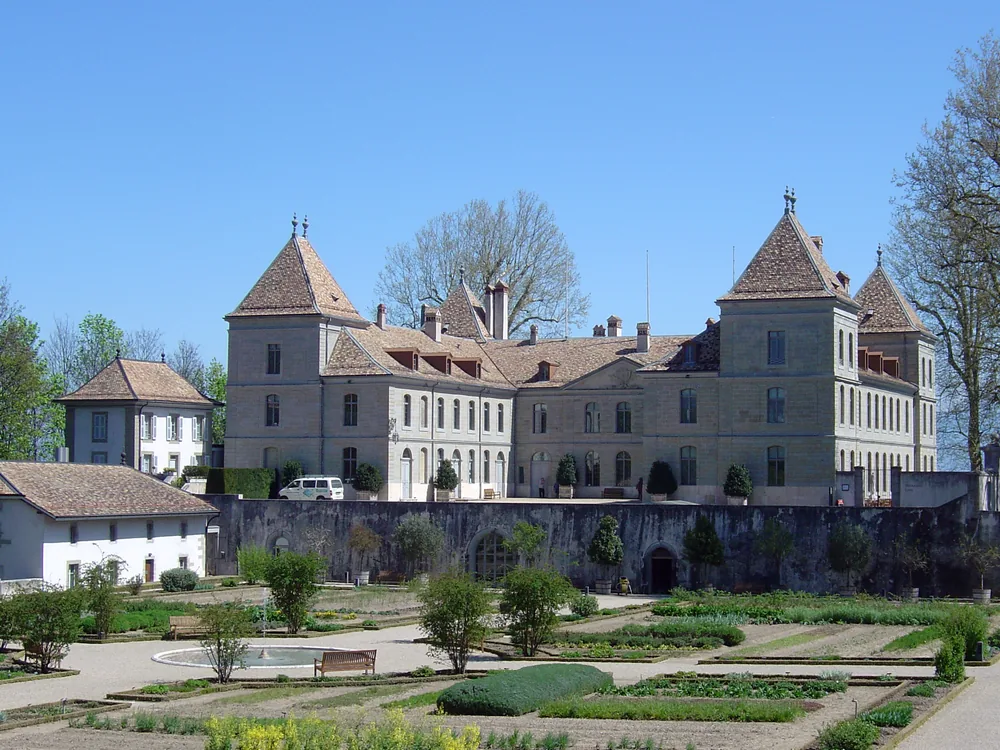
Built 1726 · Largest 18th-century château open to the public in Switzerland; built c.1723–1730 for Louis Guiguer de Prangins on an elevated site above Lake Geneva between Geneva and Lausanne; former owners included Joseph Bonaparte (Napoleon's elder brother), who lived here 1806–1813; now houses the Swiss National Museum for French-speaking Switzerland (Musée National Suisse); the 5-hectare estate includes a restored historical kitchen garden cultivating 18th-century varieties of vegetables, fruits, and medicinal plants; 6 km from Nyon on the Lake Geneva shore
This page is part of an independent travel guide and is not affiliated with, endorsed by, or operated by Château de Prangins.
© Castles & Palaces
Quick Facts
- Hours
- Tue–Sun 10:00–17:00. Closed Mon
- Entry via GetYourGuide
- €14
- Duration
- 2 hours
- Best time
- April to October
- Nearest city
- Geneva
Featured Tour
Prangins, Lake Geneva: Château de Prangins Entry Ticket
Cancellation available · Instant confirmation
Highlights
- ✦The largest 18th-century château open to the public in Switzerland — built 1723–1730 and set on a ridge above Lake Geneva with views across the water to the French Alps
- ✦Home of Joseph Bonaparte, Napoleon's elder brother and King of Naples and Spain, who lived here from 1806 to 1813 as the Napoleonic empire collapsed around him
- ✦Now the Swiss National Museum for French-speaking Switzerland — the principal museum of Swiss cultural and material history in the Romandy cantons
- ✦A 5-hectare estate with one of the most carefully researched historical kitchen gardens in Europe, cultivating 18th-century vegetable varieties, fruit trees, and medicinal plants largely disappeared from modern cultivation
- ✦Located 6 km from Nyon on the northern Lake Geneva shore, within the UNESCO Lavaux vineyard landscape that extends east toward Lausanne
Skip the queue with a guided tour
Skip-the-line tickets & expert guides
On a slight rise above the northern shore of Lake Geneva, between Geneva and Lausanne, a well-proportioned 18th-century château looks out over vineyards and the blue expanse of the lake toward the French Alps. The Château de Prangins is neither a medieval fortress nor a Baroque palace on the scale of Versailles; it is a Swiss country house of serious ambition, built in the 1720s for a Protestant banking family and subsequently owned by a Bourbon king, a Napoleonic emperor's brother, and eventually the Swiss Confederation. Today it houses the Swiss National Museum for French-speaking Switzerland — the most important museum of Swiss history in the Francophone part of the country — and a 5-hectare estate with one of the most carefully researched historical kitchen gardens in Europe.
The château's most famous resident was Joseph Bonaparte — Napoleon's elder brother — who lived here from 1806 to 1813. Joseph had a complicated career as a Napoleonic proxy ruler: Napoleon made him King of Naples (1806–1808) and then King of Spain (1808–1813), where his reign coincided with the catastrophic Peninsular War and the brutal guerrilla resistance that the Spanish called their guerra de independencia. When the Napoleonic project collapsed in 1813–1814, Joseph came to Prangins as a refuge — it was one of the few substantial properties he could retain on neutral Swiss soil. He lived here in considerable comfort, maintaining a court in miniature and receiving the network of Bonapartist exiles who passed through western Switzerland in the years of Restoration. In 1815, after Waterloo, he left for the United States, where he lived for the next decade under the assumed name Monsieur de Survilliers, in a New Jersey country house he tried to make resemble a European estate. Prangins remained in the Bonaparte orbit for years afterward before eventually passing to other hands.
In 1998, the Swiss Confederation opened the Château de Prangins as the national museum for the Romandy — the French-speaking cantons of Switzerland. The permanent collection focuses on Swiss cultural and everyday history from the 16th to the 20th century, with particular strength in decorative arts, household objects, clothing, tools, and the material culture of daily life across the social spectrum. The collection is deliberately domestic in scale: rather than dynastic treasures and military trophies, it emphasises the textures of ordinary Swiss life across the centuries — pewter kitchenware, 18th-century furniture, 19th-century agricultural machinery, domestic textiles. The museum's approach reflects a broader Swiss cultural politics: national identity articulated through shared material practices rather than heroic narratives. Temporary exhibitions rotate through the upper rooms and regularly draw on the Swiss National Museum's wider collection, held primarily at the Landesmuseum in Zürich.
The estate's 5-hectare grounds include a substantial kitchen garden that has been restored to represent the kind of working garden a Swiss country house of the 1720s would have maintained. The garden cultivates historical varieties of vegetables — including types of leek, carrot, and bean common in the 18th century and largely displaced from modern cultivation — alongside fruit trees trained in period espalier forms and medicinal plants organised according to 18th-century principles of garden layout. The garden is managed by a team of specialist horticulturalists and functions as both a living museum and a working production garden; some varieties grown are used in the museum café and in the museum shop, which sells seeds from the historical collection. It is among the most carefully documented historical kitchen gardens in Switzerland and draws visitors specifically interested in the history of European food cultivation.
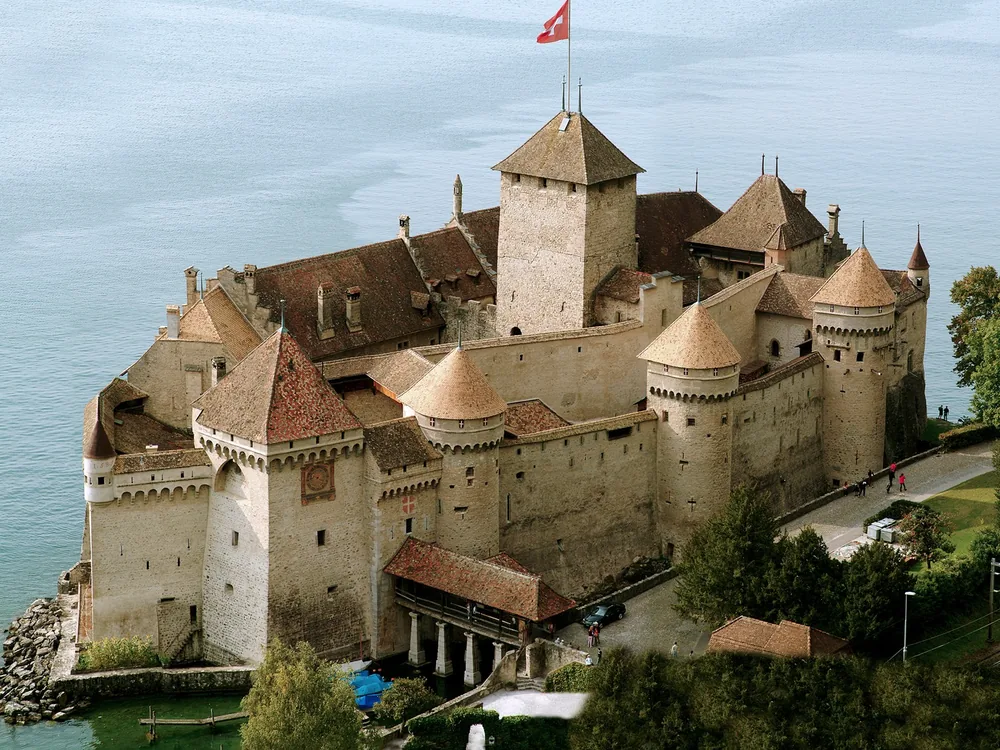
The Lake Geneva corridor between Geneva and Lausanne is one of the most historically concentrated landscapes in Switzerland, and Prangins sits at the centre of it. The vineyard landscape that begins at the château's edge extends eastward as the UNESCO-listed Lavaux terraces — stone-walled vine terraces built from the 12th century onward, descending steeply to the lake shore between Lausanne and Montreux. Château de Chillon, at the eastern end of the lake near Montreux, is the region's signature medieval castle, a 13th-century island fortress made famous by Byron's poem; together with Prangins, it forms a natural paired circuit of lake-shore heritage sites separated by the full length of the northern lake shore.
History
The site of Prangins has been occupied since antiquity — Roman remains have been found on the hillside above the lake. The present château was built between 1723 and 1730 for Louis Guiguer de Prangins, a member of a prominent Protestant banking family of French and Swiss origins, who constructed the largest private country house on the Lake Geneva shore. The building passed through several hands before being purchased by Joseph Bonaparte in 1806, who used it as his principal residence during the later Napoleonic period and as a refuge after the Empire's collapse.
After Joseph's departure for America in 1815, Prangins was owned by a succession of private individuals, including for a period the family of the exiled King Carlos X of France. The Swiss Confederation acquired the property in the late 20th century and undertook a comprehensive restoration, opening the château in 1998 as the Swiss National Museum for French-speaking Switzerland — a branch of the national museum system intended to serve the Romandy cantons with a collection focused on Swiss material and cultural history from the early modern period onward.
How to Visit
Getting there: Prangins is 6 km southwest of Nyon and 25 km northeast of Geneva, accessible by train from Geneva Cornavin to Nyon in approximately 25–30 minutes (frequent service on the Geneva–Lausanne main line). From Nyon station, the château is a 20-minute walk through the town and up the hill, or a 5-minute taxi ride. By car from Geneva, take the A1 motorway north to the Nyon exit, then follow signs to Prangins.
Tickets: The GetYourGuide ticket is the official Swiss National Museum entry ticket, covering all permanent and temporary exhibitions. Free cancellation. Direct entry at the box office is CHF 16 (children free). The kitchen garden is included in the entry and is open April to October.
The kitchen garden: The best season for the kitchen garden is May through September, when the annual and perennial crops are at their most productive and the espalier fruit trees are in active growth. A garden plan is available at the entrance; the museum shop sells seeds from the historical collection and publications on Swiss garden history.
Practical tips: April to October.
Combine with: Château de Chillon (60 km east on the lake shore, accessible by train via Lausanne) is the region's premier medieval castle and a natural paired circuit with Prangins — together they cover the lake's full range of château heritage from the 13th to the 18th century. Nyon's Roman museum (in the town centre, 20 minutes' walk from the château) documents the Roman city of Noviodunum on the same ridge.
Frequently Asked Questions
Joseph Bonaparte (1768–1844) was Napoleon's elder brother, appointed by Napoleon as King of Naples (1806–1808) and then King of Spain (1808–1813). His reign in Spain coincided with the Peninsular War, the brutal guerrilla conflict that helped drain French resources and hasten Napoleon's defeat. When the Napoleonic Empire collapsed, Joseph fled to Switzerland — one of the few neutral European states where he could maintain a private life without extradition. He lived at Prangins from 1813 to 1815, maintaining a Bonapartist circle, before leaving for the United States after Waterloo.
Location
Rue du Château 1, 1197 Prangins, Switzerland
Nearby Castles
Tours & Tickets
Powered by GetYourGuide
From
€14/ person