
Beylerbeyi Palace
Beylerbeyi Sarayı
Turkey · Istanbul — Asian shore, Bosphorus waterfront, Beylerbeyi neighbourhood, Üsküdar district · Near Istanbul
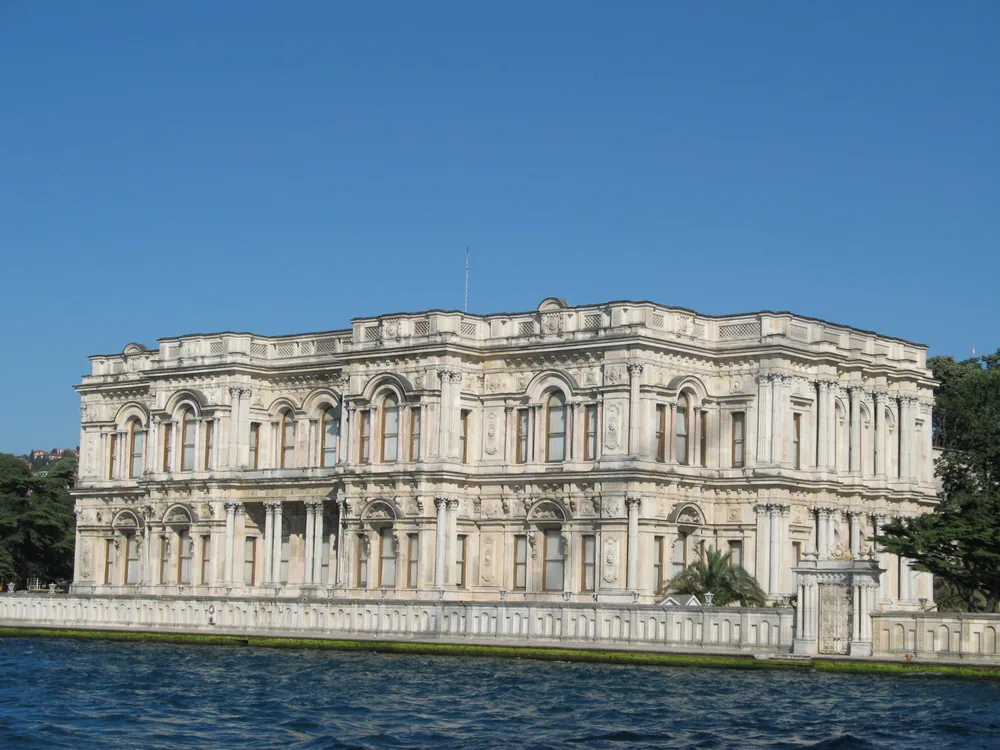
Built 1865 · Ottoman-European fusion palace, 1863–1865, commissioned by Sultan Abdülaziz — Beylerbeyi Palace is the finest expression of the Ottoman-European Eclectic style that emerged in the mid-19th century as the Ottoman court sought architectural forms that could articulate modernity and parity with European imperial courts while retaining distinctly Ottoman spatial and decorative elements; the palace was designed by Nikoğos Balyan and completed in 1865; the plan follows a European palace model — a three-storey main block with symmetrical flanking wings, formal reception rooms on the piano nobile, and service facilities below — while integrating Ottoman architectural conventions including the harem apartments, the selamlık (men's quarters), the hamam (Turkish bath), and the wooden kiosks in the waterfront gardens; the exterior is limestone ashlar with European Baroque ornamental vocabulary — quoins, balustrades, acanthus capitals, and arched windows — combined with Ottoman decorative motifs in the carved stone panels and the tile work of the hamam and service areas; the interior of the main reception rooms is equally hybrid: European-style gilded plasterwork ceilings and parquet floors combined with Ottoman mother-of-pearl inlay, monumental crystal chandeliers (gifts from the French court and the Emperor Napoleon III), and the distinctive Ottoman practice of multilateral room planning that avoids the strict axis of European Baroque state apartments; the palace's Bosphorus waterfront elevation — approached by boat in the 19th century, as the Bosphorus Bridge did not exist — was designed to impress arriving diplomats and heads of state from the water
This page is part of an independent travel guide and is not affiliated with, endorsed by, or operated by Beylerbeyi Palace.
© Castles & Palaces
Quick Facts
- Hours
- Wed–Sun 09:00–17:00. Closed Mon & Tue
- Entry via GYG
- €17.49
- Duration
- 1.5–2 hours (the main reception rooms of the selamlık — the grand staircase, the main hall, the reception rooms with their chandeliers and mother-of-pearl inlay, the waterfront terrace view — plus the marble pool pavilion and the hamam; the harem apartments are included in the guided circuit)
- Best time
- Spring
- Nearest city
- Istanbul
Featured Tour
Istanbul: Beylerbeyi Palace Entry Ticket
Cancellation available · Instant confirmation
Highlights
- ✦The Ottoman-European fusion interior — the most ambitious hybrid palace of the Tanzimat era — Beylerbeyi Palace was completed in 1865 during the Ottoman Tanzimat reform period, when the court sought architectural forms that could demonstrate both modernity and cultural parity with the European imperial powers: the palace receives European royal guests, they must arrive at something that matches their expectations of palatial grandeur; the interior of Beylerbeyi achieves this with remarkable sophistication — the main reception rooms of the selamlık combine gilded European Baroque plasterwork ceilings with Ottoman mother-of-pearl inlay panels, European-style parquet floors with Ottoman blue and white tile work in the bath complex, and crystal chandeliers received as gifts from the French imperial court alongside carved stone panels in distinctly Ottoman ornamental registers; the result is not compromise but synthesis: a palace that is simultaneously recognisable to a European diplomat as 'palatial' and to an Ottoman court official as 'properly Ottoman'; the main hall's grand staircase, its marble floor, and the monumental chandeliers overhead are the visual centre of this synthesis
- ✦Empress Eugénie's 1869 visit — the palace as diplomatic reception space — the most famous guest in Beylerbeyi Palace's history is Empress Eugénie, wife of Napoleon III, who visited Istanbul in 1869 en route to the opening of the Suez Canal; her stay at Beylerbeyi Palace is documented in Ottoman court records and in French imperial accounts; the Empress is said to have admired the palace so much that she requested a portable version of one of the window frames — a story repeated on every guided tour; the visit was part of a broader European diplomatic circuit that used the palace as a demonstration of Ottoman imperial sophistication; Sultan Abdülaziz's gifts to the French imperial court — and the French court's reciprocal gifts, including the crystal chandeliers that still hang in the reception rooms — were the material residue of this diplomatic relationship; Empress Eugénie's visit placed Beylerbeyi in the same category of imperial reception palaces as Versailles, Schönbrunn, and Windsor
- ✦The Bosphorus Asian shore position — the view that the palace was built to offer — Beylerbeyi Palace stands on the Asian shore of the Bosphorus, 300 metres from the water, in the position that the Bosphorus Bridge (completed 1973, visible from the palace gardens) now spans overhead; in 1865 there was no bridge — the palace was approached by boat from the European shore, and its waterfront elevation was designed to impress arriving guests from the water; the waterfront terrace today provides a view over the Bosphorus strait that is among the most scenic in Istanbul: the European shore with its Ottoman minarets and 19th-century Pera facades, the traffic of the Bosphorus with its shipping lanes and ferries, and the suspension bridge overhead; the palace's position on the Asian shore also meant it served as a summer retreat for the Ottoman court — cooler than the Topkapı Palace in the city proper, accessible by boat across the strait, and surrounded by the gardens and kiosks that give the Beylerbeyi estate its spatial generosity
- ✦Sultan Abdülhamid II's gilded captivity — the palace as prison — the last act in Beylerbeyi Palace's active Ottoman history is the most unexpected: Sultan Abdülhamid II (1842–1918), deposed in the 1909 Young Turk revolution, spent his final years as a captive in the palace he had visited as a court member but never ruled from; the deposed sultan was confined at Beylerbeyi from 1912 until his death in 1918, living in the rooms designed for imperial reception in circumstances of comfortable but surveilled confinement; the rooms he occupied are included in the guided palace circuit; the detail of a deposed sultan confined in an empire's most elaborate summer palace — surrounded by the crystal chandeliers and mother-of-pearl inlay of his family's ambition, looking out at the Bosphorus — is the kind of historical irony that makes palace histories interesting
Skip the queue with a guided tour
Skip-the-line tickets & expert guides
The Bosphorus Bridge — completed in 1973, its deck visible from the Beylerbeyi Palace gardens — didn't exist when Sultan Abdülaziz built this palace on the Asian shore in 1865. To reach it from the European side, you crossed by boat. The palace's waterfront elevation was designed to be seen from the water, approaching by caïque: a limestone facade with Baroque ornamental vocabulary, its three storeys rising from the Bosphorus bank, designed to impress arriving European diplomats and royal guests at the moment of landing.
Beylerbeyi Palace was the Ottoman Empire's answer to a specific problem: how do you receive Empress Eugénie, or the Austro-Hungarian court, or any European power's representative, in a setting that meets their expectations of imperial grandeur while remaining distinctly Ottoman? The answer, as the court's preferred architect Nikoğos Balyan resolved it in 1863–65, was architectural synthesis rather than imitation. The main reception rooms of the selamlık combine gilded European Baroque plasterwork ceilings with Ottoman mother-of-pearl inlay panels, European parquet floors with Ottoman tile work in the bath complex, and crystal chandeliers received as diplomatic gifts from Napoleon III's court alongside carved stone decorative panels in Ottoman ornamental registers.
The most famous guest the palace received was Empress Eugénie herself, who visited in 1869 en route to the opening of the Suez Canal. Her stay at Beylerbeyi is documented in Ottoman court records and French imperial accounts; she reportedly found the palace so beautiful that she requested to take one of its window frames back to France. The crystal chandeliers that still hang in the main reception hall — gifts from the French imperial court — are the material residue of this relationship. The diplomatic circuit that brought Eugénie to Beylerbeyi also brought the palace's interior its most celebrated objects.
The palace's position on the Bosphorus Asian shore gave it its function as an imperial summer retreat: cooler than the Topkapı Palace in the city proper, accessible across the strait by boat, surrounded by waterfront gardens and wooden kiosks that made the estate feel different from the enclosed urban character of the older palace complex. The gardens contain two marble pool pavilions and the hamam (Turkish bath) attached to the main building — the Ottoman residential programme integrated into the European palace plan.
The last chapter of the palace's Ottoman history is its least triumphant. Sultan Abdülhamid II, deposed in the 1909 Young Turk revolution, spent his final years confined at Beylerbeyi — a captive in the palace he had visited as a court member but never ruled from. He died there in 1918. His rooms are included in the guided palace circuit.
Today the palace is managed by the Turkish National Palaces Administration (Milli Saraylar). Visits are conducted with palace guides in groups — visitors purchase the entry ticket and join a group that tours the selamlık rooms and harem apartments together. The GYG entry ticket (t1413373, from €17) is the most straightforward booking approach for independent travellers.
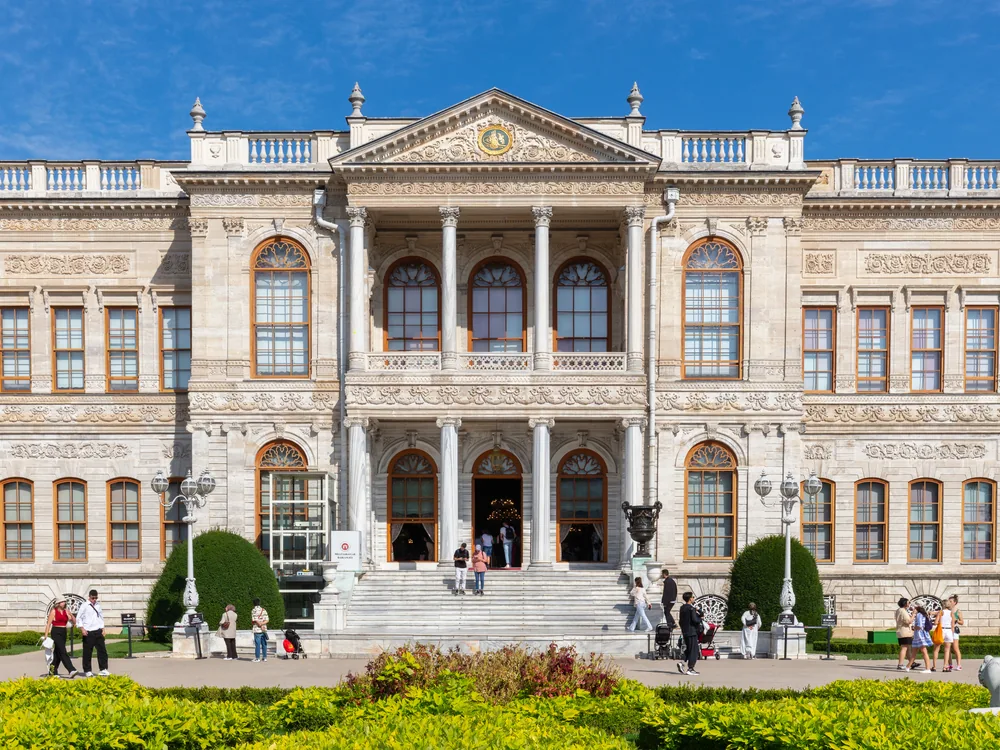
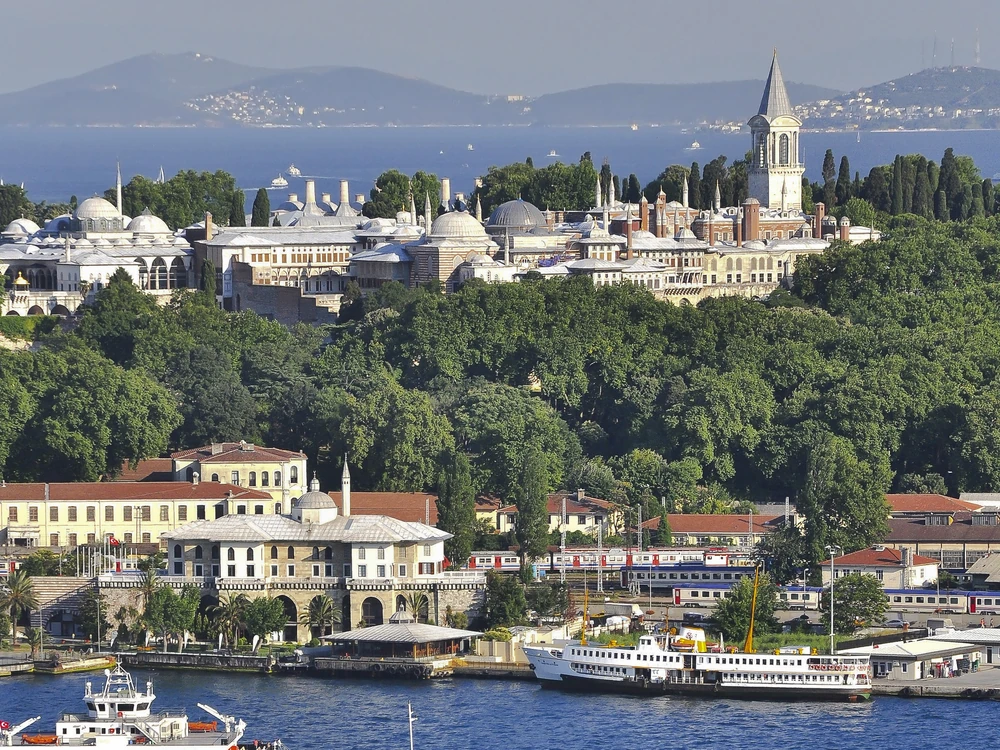
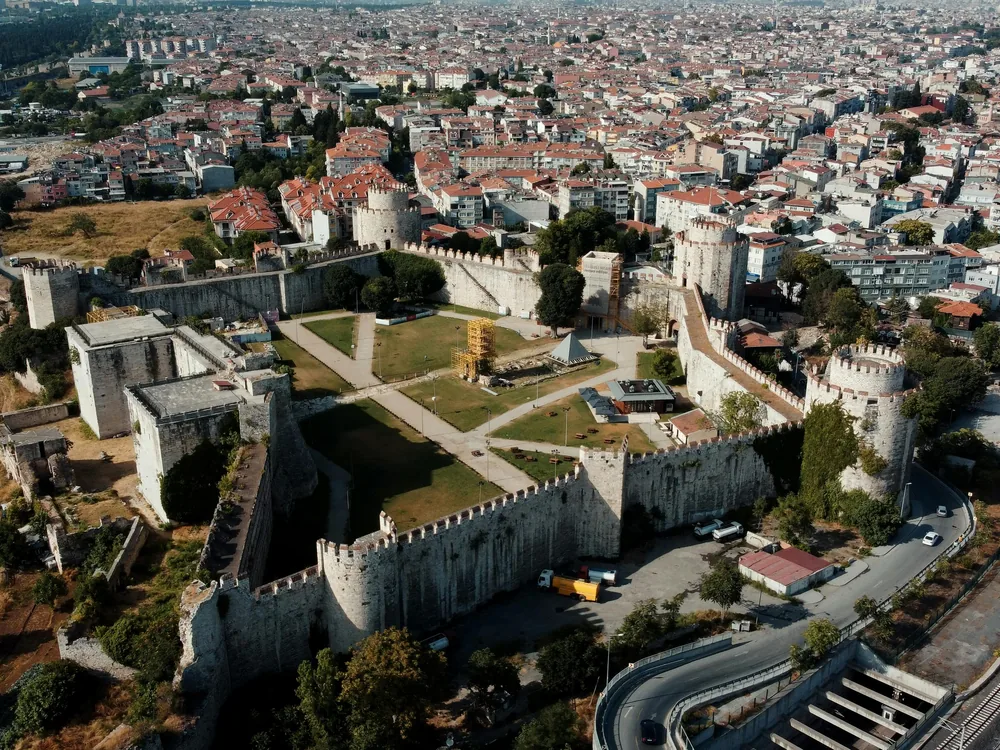
[Dolmabahçe Palace](/castles/turkey/dolmabahce-palace) — the vast European-style palace on the European shore of the Bosphorus, the primary Ottoman imperial residence from 1856 — is the architectural cousin and historical companion to Beylerbeyi, built by the same Balyan family architects in the same period. [Topkapı Palace](/castles/turkey/topkapi-palace) represents the older Ottoman court architecture that both Dolmabahçe and Beylerbeyi were designed to replace or supplement. [Yedikule Fortress](/castles/turkey/yedikule-fortress) extends Istanbul's Byzantine and Ottoman military heritage circuit.
History
Sultan Mahmud II built a first wooden summer palace — the Beylerbeyi Kasrı — on the Asian Bosphorus shore in 1829, but it was destroyed by fire. Sultan Abdülaziz commissioned the current marble palace in 1863, completed in 1865 to the design of Nikoğos Balyan — a two-storey neoclassical structure on the waterfront intended primarily as a guest palace for visiting European dignitaries rather than as a full residential court.
The diplomatic function was immediately exercised: Empress Eugénie of France visited Beylerbeyi in 1869 en route to the opening of the Suez Canal, and the exchange of gifts between the Ottoman and French imperial courts included the crystal chandeliers that still hang in the reception rooms. Under Sultan Abdülhamid II, who reigned from 1876 to 1909, Beylerbeyi served as the summer palace and the principal venue for receiving foreign heads of state and ambassadors, while the Sultan himself governed from the main Yıldız Palace complex nearby. When Abdülhamid II was deposed in the Young Turk revolution of 1909, the political turn was made physical: he was confined at Beylerbeyi Palace from 1912 until his death there in 1918.
Abolition of the Ottoman sultanate in 1924 transferred the palace to Turkish Republic state administration. The Bosphorus Bridge, completed in 1973 and visible from the palace gardens, frames the view across the strait that the palace was designed to command from the Asian shore. The Turkish National Palaces Administration (Milli Saraylar) manages the palace, open Wednesday to Sunday.
How to Visit
Getting there: Beylerbeyi Palace is on the Asian shore of the Bosphorus, directly beneath the Bosphorus Bridge in the Beylerbeyi neighbourhood of Üsküdar. The most atmospheric approach from the European side is by ferry from Kabataş or Beşiktaş to Üsküdar, then a 10-minute taxi or bus to the palace gate. By taxi across the Bosphorus Bridge from the European side, the journey takes about 20–30 minutes depending on traffic. The palace is well signposted from the Bosphorus Bridge approach road.
Tickets: Walk-up entry TRY 16 adult, TRY 250 child. Note that visits inside the palace are conducted with palace guides in groups — a guide is assigned at the entrance and visitors tour the selamlık rooms and harem apartments together; fully solo self-guided walkthroughs are not available. The GYG tour (t1413373, from €17) is the official entry ticket — the most straightforward booking approach for independent travellers — book in advance.
Practical tips: The palace is closed Monday and Tuesday — Wednesday through Sunday are the only open days. Arrive before 11:00 on weekends to join a smaller early group before the tour buses arrive. Confirm photography rules at the entrance, as interior policies change; the waterfront garden and Bosphorus views are always freely photographable.
Combine with: [Dolmabahçe Palace](/castles/turkey/dolmabahce-palace) on the European shore — the larger Ottoman-European palace by the same Balyan architects, for the full Tanzimat-era comparison — or [Yedikule Fortress](/castles/turkey/yedikule-fortress) to extend into Istanbul's Byzantine and Ottoman military heritage.
Frequently Asked Questions
Both Beylerbeyi and Dolmabahçe are mid-19th-century Ottoman-European fusion palaces built by the Balyan family of architects for the Ottoman court in the same period. Dolmabahçe (1856) is larger, on the European shore of the Bosphorus, and served as the primary imperial residence — the palace where Atatürk died in 1938. Beylerbeyi (1865), on the Asian shore, was the summer retreat and official guest reception palace — the palace that hosted Empress Eugénie in 1869. Beylerbeyi is more intimate in scale, generally less crowded, and offers the Bosphorus view from the opposite (Asian) side. Dolmabahçe is the more famous and more visited; Beylerbeyi is the better experience for visitors who prefer fewer crowds and the Asian shore perspective.
Location
Beylerbeyi Sarayı, Abdullah Ağa Cad., 34676 Üsküdar/İstanbul, Turkey
Nearby Castles
Tours & Tickets
Powered by GetYourGuide
From
€17.49/ person