
Dolmabahçe Palace
Dolmabahçe Sarayı
Turkey · Istanbul — Beşiktaş, European shore of the Bosphorus · Near Istanbul
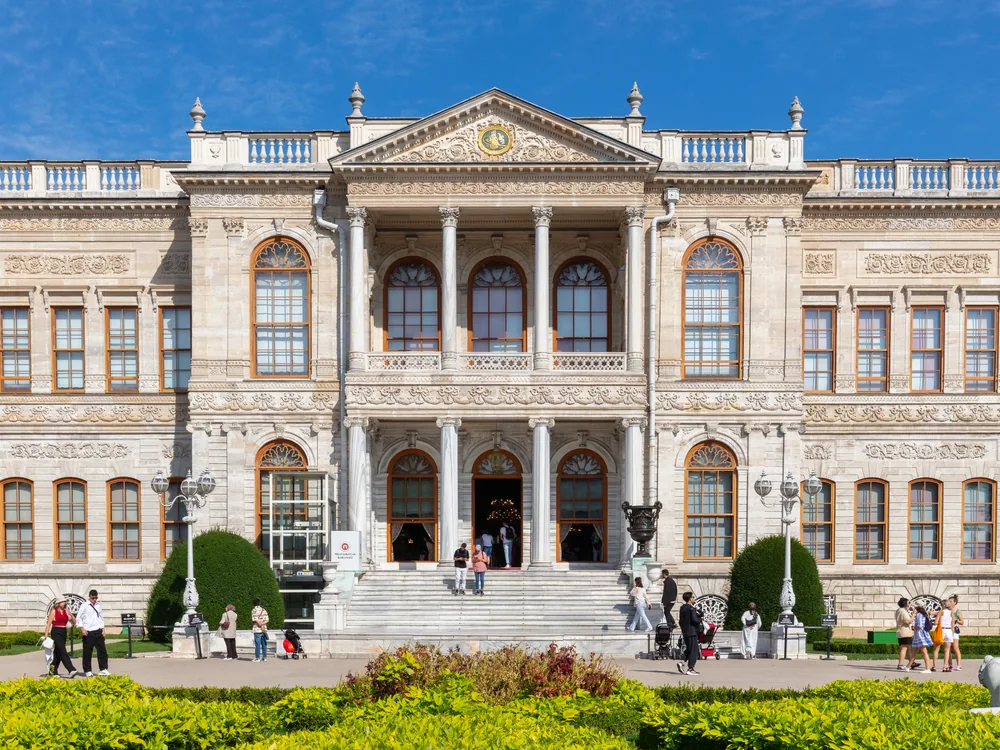
Built 1856 · Ottoman Baroque and Beaux-Arts palace of the mid-19th century — built 1843–1856 by Sultan Abdulmecid I to replace Topkapi Palace as the primary Ottoman imperial residence; the principal architect was Nikogos Balyan of the Armenian-Ottoman Balyan dynasty, who designed the palace in a deliberately European style combining Ottoman decorative tradition with French Baroque and Neoclassical palace architecture; the building is the largest palace in Turkey (approximately 45,000 sqm on the footprint), with 285 rooms, 43 halls and salons, 68 toilets, 6,000 sqm of hand-woven Hereke silk carpets, a 4.5-tonne Bohemian crystal chandelier (the largest in the world at the time of installation) in the Ceremonial Hall, and an estimated 14 tonnes of gold used in gilding the interiors; the palace fronts directly on the Bosphorus with a 600-metre waterfront facade, creating one of the most dramatic palace-waterway relationships in European or Asian architectural history
This page is part of an independent travel guide and is not affiliated with, endorsed by, or operated by Dolmabahçe Palace.
© Castles & Palaces
Quick Facts
- Hours
- Tue & Wed 09:00–16:00. Fri–Sun 09:00–16:00. Closed Mon, Thu
- Guided tour from
- €44
- Duration
- 2–2.5 hours (Selamlık state rooms + Harem Section; guided tours run on fixed timetables in both sections)
- Best time
- March to May and September to November
- Nearest city
- Istanbul
Featured Tour
Istanbul: Dolmabahçe Palace Skip-the-Line Entry + Harem + Audio Guide (10 languages)
Cancellation available · Instant confirmation
Highlights
- ✦All clocks stopped at 09:05 — Mustafa Kemal Atatürk, the founder of the Turkish Republic, spent his final years in the Dolmabahçe Palace and died here on November 10, 1938, at 09:05 in the morning; by tradition, every clock in the palace is permanently stopped at 09:05 to mark the moment of his death; this small, silent, and total gesture — hundreds of clocks throughout 285 rooms all displaying the same time — is one of the most viscerally affecting acts of national mourning institutionalised in a building anywhere in the world
- ✦4.5-tonne Bohemian crystal chandelier — the Ceremonial Hall (Muayede Salonu) contains the largest chandelier installed in the palace: a Bohemian crystal chandelier weighing 4.5 tonnes and measuring 13 metres in height, with 750 lamps; it was the largest chandelier in the world at the time of its installation; Queen Victoria of Britain donated it as a state gift to Sultan Abdulmecid; the Ceremonial Hall itself, at 2,000 sqm, is the largest single room in the palace
- ✦The Harem Section — the private residential quarters of the sultan's family occupy a large section of the palace's northern wing; the Harem at Dolmabahçe is a domestic, residential architecture of considerable sophistication — not the popular misconception of a prison-like enclosure but a palace-within-a-palace of suites, dining rooms, a swimming pool (the only one in any Ottoman palace), and a private garden with a direct Bosphorus view; the GetYourGuide product includes Harem Section entry
- ✦Replacing Topkapi Palace — Sultan Abdulmecid I commissioned Dolmabahçe expressly to replace [Topkapi Palace](/castles/turkey/topkapi-palace) as the Ottoman seat of power; Topkapi had been the imperial centre since Mehmed the Conqueror's reign (1453), and its replacement with a European-style palace on the Bosphorus was a deliberate statement about Ottoman modernity and the Tanzimat reform programme; visiting both palaces together shows the full arc of Ottoman imperial self-presentation across four centuries
- ✦600-metre Bosphorus waterfront facade — the palace's waterfront gate and colonnaded quayside extend for approximately 600 metres along the European shore of the Bosphorus; the facade was designed to be viewed from the water, where the scale and symmetry of the building appear most coherent; a Bosphorus ferry or Şehir Hatları boat service passing the palace gives a perspective not available from the land approach
- ✦Six sultans, one republic president — Dolmabahçe was the primary Istanbul residence of sultans Abdulmecid I, Abdulaziz, Murad V, Abdulhamid II, Mehmed V, and Mehmed VI (the last Ottoman sultan, who left the palace in 1922 when the sultanate was abolished); Atatürk used the palace as his Istanbul residence from 1927 until his death in 1938; the building therefore witnessed both the end of the Ottoman Empire and the first decade of the Turkish Republic
Skip the queue with a guided tour
Skip-the-line tickets & expert guides
Dolmabahçe Palace stands on the European shore of the Bosphorus in the Beşiktaş district of Istanbul, its 600-metre waterfront colonnade and neoclassical facade facing the straits that have divided Europe and Asia for as long as there has been a city here. The palace's name — 'filled-in garden' in Ottoman Turkish — refers to the land on which it was built: a royal garden established on a bay filled in by the Ottomans in the 17th century, which over two centuries became a preferred imperial retreat before Sultan Abdulmecid I chose the site for his new palace in 1843.
The commission was given to Nikogos Balyan of the Armenian-Ottoman Balyan family, a dynasty of architects who had served the Ottoman court for three generations and who were responsible for many of the palace and mosque buildings of 19th-century Istanbul. Nikogos designed Dolmabahçe in the European idiom — French Baroque and Neoclassical, with Ottoman decorative elements integrated into a Western structural language — because Sultan Abdulmecid's intention was precisely this: to present the Ottoman Empire as a modern, European-aligned state to the European powers and to its own elite. The Tanzimat period (1839–1876), during which Dolmabahçe was designed and built, was the era of intensive Ottoman administrative and cultural Westernisation, and the palace is its largest and most permanent architectural expression.
The building contains 285 rooms, 43 halls and galleries, and 68 toilets — numbers that, when quoted, convey the scale without adequately preparing a visitor for the experience of moving through it. The Ceremonial Hall (Muayede Salonu) is the pivot: a 2,000-square-metre space with a ceiling height of 36 metres, covered in hand-woven Hereke silk carpet and lit by the Bohemian crystal chandelier that Queen Victoria donated to Sultan Abdulmecid — a 4.5-tonne, 13-metre, 750-lamp installation that was the largest chandelier in the world at the time of its installation and remains one of the most visually overwhelming suspended objects in any European or Asian palace interior.
The palace is divided into two sections with separate guided tours. The Selamlık (state rooms, reception rooms, public functions of the imperial court) covers the throne hall, the ceremonial stairs, the diplomatic reception rooms, and the state apartments. The Harem (the private residential quarter of the sultan's family) is a domestic palace in its own right: multi-storey residential suites, a private dining room, a swimming pool (the only one in any Ottoman palace), and private garden terraces with Bosphorus views. Both sections are included in the GetYourGuide audio guide product.
The detail that most visitors remember is the clocks. Mustafa Kemal Atatürk — the military commander who led the Turkish War of Independence (1919–1923), abolished the sultanate and caliphate, founded the Republic of Turkey (1923), and spent the following decade imposing the most radical state transformation in modern history on a country emerging from the ruins of empire — used the Dolmabahçe Palace as his Istanbul residence from 1927. He died here on November 10, 1938, at 09:05 in the morning. Every clock in the palace — and there are many — is permanently stopped at 09:05. This is not a symbolic gesture on specific anniversaries but a permanent institutional condition: on any day you visit Dolmabahçe, every clock shows the same time.
The GetYourGuide audio guide product includes skip-the-line access, an audio guide in 10 languages, and entrance to both the Selamlık and Harem sections. This is one of the highest-reviewed products on the site. The standalone entry (approximately €20 for adults, available at the palace ticket office without the audio guide) gives access to the same rooms on the guided tour schedule.
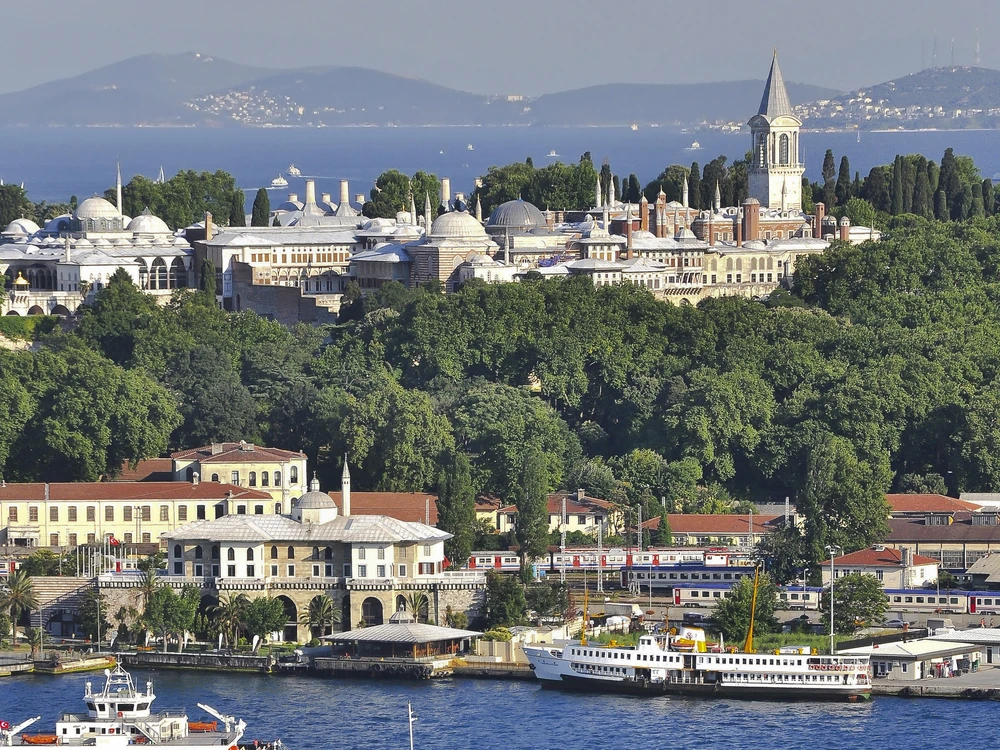
Dolmabahçe is the natural companion to [Topkapi Palace](/castles/turkey/topkapi-palace) — the medieval and early-modern seat of the Ottoman Empire from 1453 to 1856 — which is located approximately 4 kilometres southeast on the historic peninsula. The two palaces represent the full arc of Ottoman imperial self-presentation: Topkapi as an inward-looking, organically developed complex of pavilions and courtyards in the Ottoman tradition; Dolmabahçe as an outward-facing, symmetrically composed Baroque palace designed to impress European visitors. Visiting both on the same Istanbul day is the most efficient way to understand the four centuries of Ottoman court culture that shaped Istanbul.
History
The site of Dolmabahçe had been a royal garden established on land filled in over a Bosphorus bay since the 17th century, used as a summer kiosk location by Ottoman sultans. Sultan Abdulmecid I commissioned an entirely new imperial palace on the filled-in ground in 1843 — a decision to replace Topkapi Palace as the primary Ottoman court residence with a building that engaged directly with 19th-century European palace architecture. The architect was Nikoğos Balyan of the Armenian-Ottoman Balyan dynasty, who designed a Baroque-neoclassical-Ottoman hybrid across a 600-metre waterfront facade.
Dolmabahçe Palace was completed and inaugurated in 1856, becoming the primary residence of the Ottoman imperial court and the seat of government for the six sultans who used it: Abdulmecid I, Abdulaziz, Murad V, Abdulhamid II, Mehmed V, and Mehmed VI. The palace's 285 rooms, 43 halls, and 6 hammams were furnished in European styles funded partly through enormous Imperial Ottoman Bank loans. Mehmed VI left the palace in 1922 following the abolition of the Ottoman sultanate by the Grand National Assembly.
Mustafa Kemal Atatürk began using the palace as his Istanbul residence from 1927. He died at Dolmabahçe on 10 November 1938 at 09:05; the clocks in the palace are permanently stopped at this time. The palace was opened to the public as a museum after 1938.
How to Visit
Getting there: Dolmabahçe Palace is in Beşiktaş on the European shore of the Bosphorus. By metro take the M2 to Kabataş (about 10 minutes' walk to the palace gate); by tram take the T1 line to Kabataş. Şehir Hatları ferries stop at Beşiktaş pier, about 5 minutes' walk from the entrance. From the historic peninsula (Sultanahmet area), tram T1 to Kabataş takes roughly 15 minutes. The palace is closed Monday and Thursday.
Tickets: Walk-up entry €20 adult, free child. Both the Selamlık (state rooms) and Harem sections are on guided timetables — not self-guided; a fixed group forms at timed intervals. The GetYourGuide tour includes skip-the-line access, Selamlık plus Harem entry, and an audio guide in 10 languages — book in advance, especially in summer when queues can be long.
Practical tips: Arriving at opening time (09:00) is strongly recommended in June through September when the palace becomes very crowded by mid-morning. Every clock in the palace is permanently stopped at 09:05 — the moment Atatürk died on 10 November 1938 — look for this detail in each room. Budget 2 to 2.5 hours for both sections.
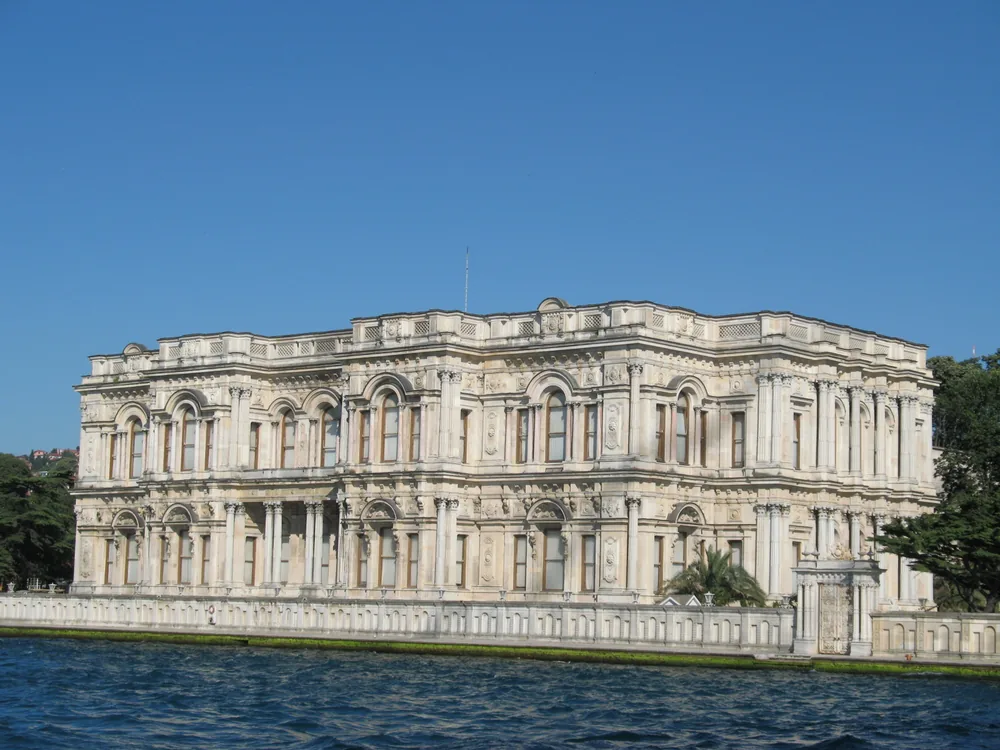
Combine with: Beylerbeyi Palace on the Asian shore — the Ottoman guest palace by the same Balyan architects, a short ferry ride across the Bosphorus — or Galata Tower in Beyoğlu for a Genoese medieval contrast minutes from Beşiktaş.
Frequently Asked Questions
Mustafa Kemal Atatürk, the founder of the Turkish Republic, died in the Dolmabahçe Palace on November 10, 1938, at 09:05 in the morning. All clocks in the palace have been permanently stopped at that time since his death — not just on the anniversary, but every day. This is a standing institutional practice: on any visit to Dolmabahçe, every clock in every room shows 09:05. The gesture is one of the most quietly powerful acts of memorial in any public building anywhere.
Location
Vişnezade Mah., Dolmabahçe Cd., 34357 Beşiktaş, İstanbul, Türkiye
Nearby Castles
Tours & Tickets
Powered by GetYourGuide
From
€44/ person