
Brynkir Tower
Wales · Gwynedd — near Golan, Llŷn Peninsula foothills · Near Porthmadog
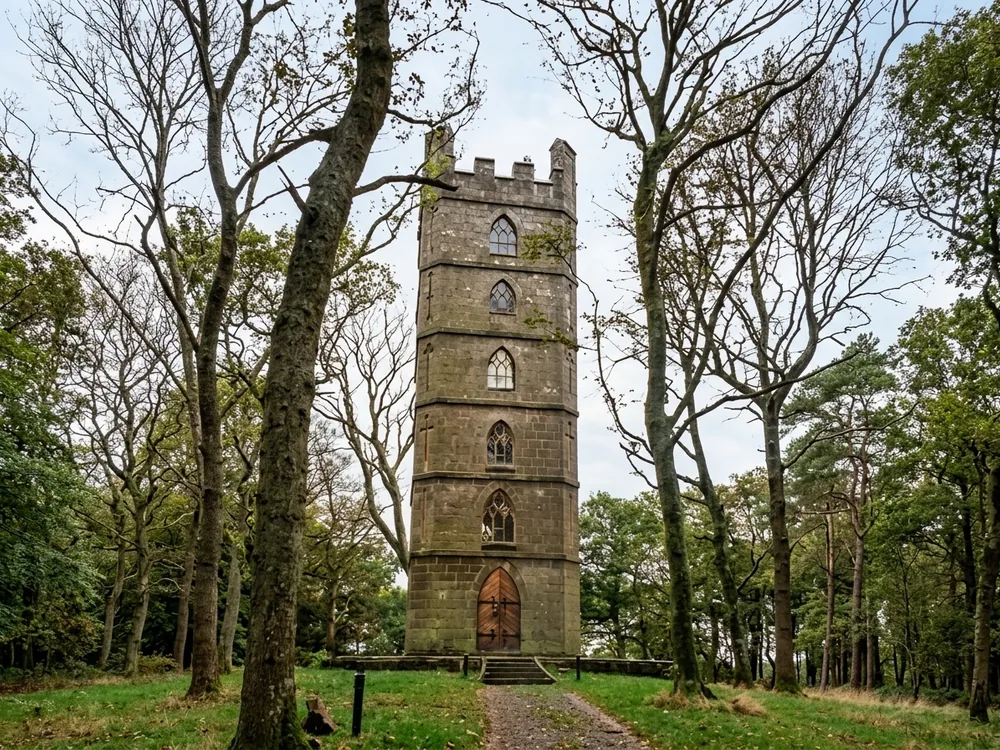
Built 1821 · 20-metre Gothic folly tower built in 1821, a genuine period commemorative structure rather than a modern recreation
This page is part of an independent travel guide and is not affiliated with, endorsed by, or operated by Brynkir Tower.
© Castles & Palaces
Quick Facts
- Rooms from
- £100 / night
- Duration
- Overnight stay only — self-catering accommodation, no day-visit access
- Best time
- Year-round
- Nearest city
- Porthmadog
Stay Here
Brynkir Tower
Booked via Booking.com · Free cancellation on most rates
Highlights
- ✦A 20-metre Gothic folly tower built in 1821 by Joseph Huddart, High Sheriff of Caernarfonshire, to commemorate the knighthood of King George IV
- ✦A genuine period construction, not a modern recreation — the same precedent as Augill Castle in England, a folly castle built in 1841
- ✦The estate's history reaches back to the medieval era, tracing descent from Owain ap Gruffudd, King of Gwynedd
- ✦A large manor house, now ruined, was built near the tower's site in 1644; the Huddart family bought and renovated the wider estate in 1809
- ✦The estate collapsed financially by the late 19th century and its buildings stood abandoned from 1910, before the tower was renovated as holiday accommodation in the early 1990s
Stay in the castle itself
Book a room via Booking.com
Brynkir Tower rises 20 metres above the foothills near the Llŷn Peninsula in Gwynedd, North Wales, a genuinely striking Gothic folly with a history that reaches back much further than its own comparatively recent construction date might suggest. The tower itself was built in 1821 by Joseph Huddart, then High Sheriff of Caernarfonshire, specifically to commemorate the knighthood granted to King George IV — a purely celebratory and symbolic structure rather than any kind of defensive fortification, built in the wider 18th- and 19th-century British tradition of ornamental follies raised on private estates to mark family or national occasions.
It is worth being explicit that Brynkir is a genuine period construction rather than a modern pastiche: the tower dates authentically to 1821, placing it firmly within the same tradition of legitimate historic folly-building as Augill Castle in England, itself a folly castle built two decades later in 1841. Both structures clear this collection's quality bar precisely because their apparent castellated styling reflects real period romantic and commemorative architectural fashion, not a 21st-century recreation dressed up as something older.
The wider Brynkir estate carries a considerably older documented history than the tower alone. The land's ownership traces back to the medieval era, with descent recorded from Owain ap Gruffudd, King of Gwynedd, one of the medieval Welsh kingdoms whose rulers governed this part of North Wales long before the Edwardian conquest reshaped Welsh political geography in the late 13th century. A large manor house was later built near the site of the present tower in 1644, during the turbulent mid-17th century, though that house has since fallen into ruin and today survives only as a remnant on the estate grounds. The Huddart family, whose most notable member built the tower itself, bought and renovated the wider estate in 1809, consolidating their ownership of the land shortly before Joseph Huddart's commemorative tower project began in earnest.
Brynkir's fortunes did not remain secure indefinitely. The estate collapsed financially by the late 19th century, a fate shared by numerous British landed estates as agricultural income declined and maintaining large rural properties became increasingly unsustainable for families without other substantial sources of wealth. The buildings stood abandoned from 1910 onward, left to the elements for the better part of a century, before a renovation effort in the early 1990s converted the tower into holiday accommodation, giving this distinctive Gothic structure new life after decades of dereliction.
Today Brynkir Tower operates purely as self-catering accommodation, with no restaurant or traditional hotel service on site — a deliberately simple offering built around the character of the tower itself rather than any additional amenities. An interior spiral staircase, original to the tower's 1821 construction, connects the building's 6 rooms across its full height, giving guests a genuinely immersive experience of ascending through a real 19th-century folly rather than a modern building merely styled to resemble one. This self-catering, no-day-visit model places Brynkir alongside Aikwood Tower and Faside Estate in Scotland within this collection — distinctive, characterful properties intended purely as accommodation rather than as public attractions.
The surrounding Llŷn Peninsula foothills offer some of North Wales's quieter and less-visited countryside, within reach of Porthmadog and the wider Snowdonia (Eryri) landscape further inland. For visitors seeking a genuinely unusual overnight stay built around a real piece of Georgian-era commemorative architecture, rather than a restored castle or manor house in the more conventional sense, Brynkir Tower offers a distinctive alternative rooted in an estate whose documented history stretches back to the medieval kingdom of Gwynedd itself.
The folly-building tradition that produced Brynkir Tower was widespread across Georgian and Victorian Britain, with wealthy landowners commissioning ornamental towers, mock ruins and commemorative monuments across their estates as both landscape features and statements of taste, patriotism or personal achievement. What distinguishes Brynkir from many surviving examples of this tradition is that its tower has been returned to genuine practical use as accommodation rather than left as a purely ornamental, uninhabitable folly — meaning visitors today can actually climb the same spiral staircase and look out from the same upper windows that Joseph Huddart's original 1821 structure was built to provide, rather than simply admiring the tower from the surrounding parkland.
History
Brynkir Tower was built in 1821 by Joseph Huddart, High Sheriff of Caernarfonshire, to commemorate the knighthood of King George IV — a genuine period folly, not a modern recreation, comparable to Augill Castle in England. The wider estate's history traces to the medieval kingdom of Gwynedd, with descent recorded from Owain ap Gruffudd. A large manor house, now ruined, was built near the tower's site in 1644, and the Huddart family bought and renovated the estate in 1809. The estate collapsed financially by the late 19th century, its buildings abandoned from 1910, before the tower was renovated as holiday accommodation in the early 1990s.
Frequently Asked Questions
No. Brynkir Tower operates purely as self-catering accommodation with no restaurant or day-visit access, the same model as Aikwood Tower and Faside Estate in Scotland elsewhere in this collection.
Location
Golan, Garndolbenmaen, Gwynedd LL51 9AQ, Wales
Nearby Castles
Rooms from
£100/ night