
Harlech Castle
Castell Harlech
Wales · Gwynedd / Snowdonia · Near Harlech
Built 1282 · Edwardian Concentric Medieval
This page is part of an independent travel guide and is not affiliated with, endorsed by, or operated by Harlech Castle.
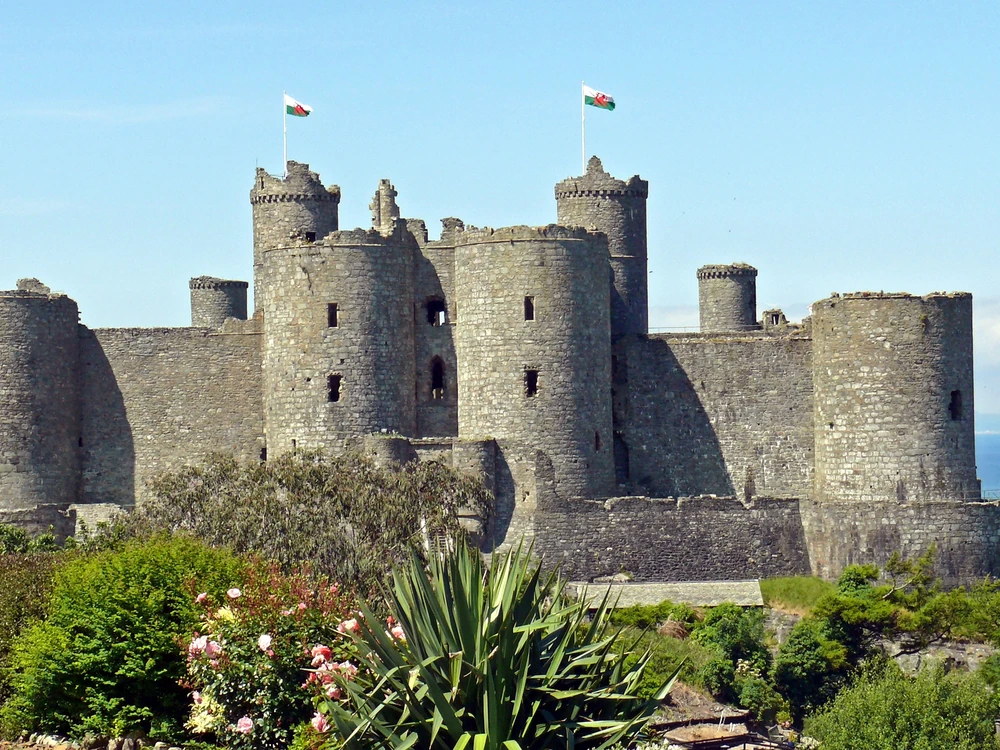
© Unsplash
Quick Facts
- Hours
- Daily 09:30–17:00
- Guided tour from
- €932
- Duration
- 1.5–2 hours
- Best time
- May to September
- Nearest city
- Harlech
Featured Tour
From London: Wales 5-Day Group Tour
Cancellation available · Instant confirmation
Highlights
- ✦Part of UNESCO's 'Castles and Town Walls of King Edward in Gwynedd' — one of four Iron Ring fortresses
- ✦Built in just 6 years (1282–1289) by Master James of St. George, Edward I's master castle-builder
- ✦The massive twin-towered gatehouse is one of the finest in Britain — near-impregnable in its day
- ✦The famous 'Way from the Sea' — 108 steps cut into the cliff face — once the castle's seaborne supply route
- ✦Views from the battlements: Cardigan Bay, the Llŷn Peninsula, and Snowdon on clear days
Skip the queue with a guided tour
Skip-the-line tickets & expert guides
Harlech Castle sits on a rock 60 metres above Tremadog Bay, and in 1282 when it was built, the sea came to the base of that rock. The 'Way from the Sea' — a long flight of steps cut into the cliff face — was the castle's supply route, allowing ships to offload provisions directly into the fortification even during siege. The sea has since receded, leaving Harlech's cliff stranded a kilometre from the water, but the steps remain, and the quality of the position — controlling the whole sweep of Cardigan Bay from an almost unassailable natural platform — is as apparent today as it was to Edward I's military engineers.
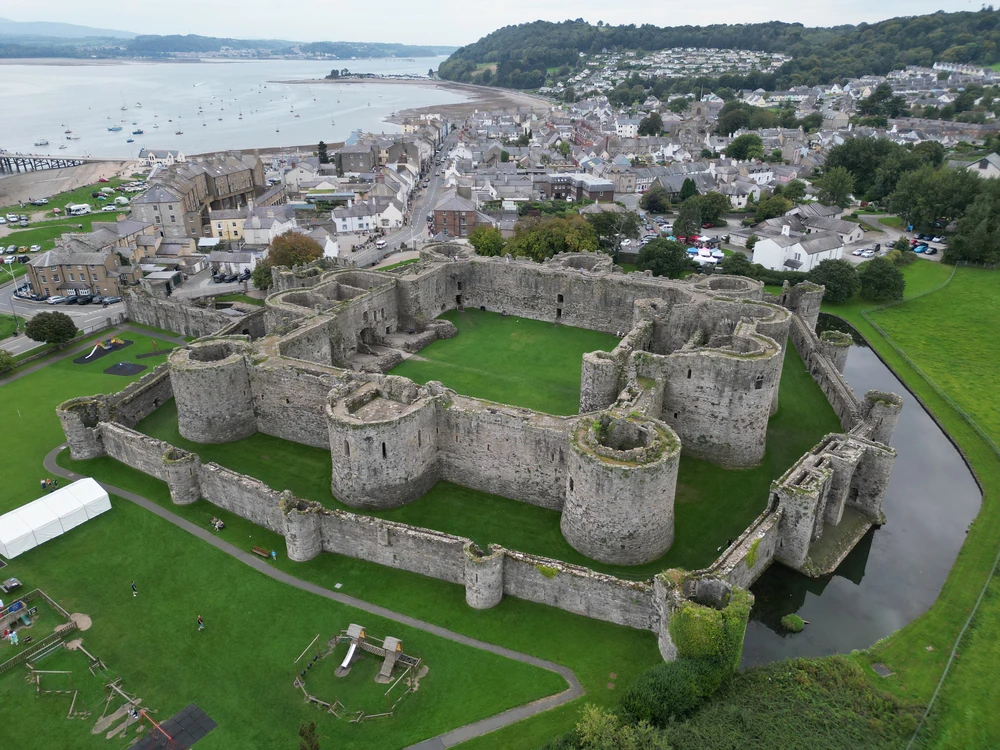
Harlech was built between 1282 and 1289 by Master James of St. George, the Savoyard architect who designed all four of Edward I's Iron Ring castles in north Wales. The design is a masterpiece of concentrated military architecture: a massive twin-towered gatehouse capable of independent defence, an inner ward with four round corner towers, and an outer ward with lower walls — all fitted into the irregular shape of the rock with extraordinary precision. The gatehouse alone, with its two D-shaped towers rising five storeys, is one of the most impressive pieces of medieval military architecture in Britain.
Harlech's historical fame rests on two long sieges. In 1404, Owain Glyndŵr — the Welsh national hero — captured the castle after a lengthy siege and held court here as Prince of Wales for several years, using it as his de facto capital. In 1461–1468, during the Wars of the Roses, Harlech became the last Lancastrian stronghold in England and Wales, holding out under Dafydd ap Ieuan for seven years. It was the inspiration for the march 'Men of Harlech,' still one of the most famous Welsh songs.
History
Harlech was built as part of Edward I's programme of military conquest following the defeat of the last native Prince of Wales, Llywelyn ap Gruffudd, in 1282. Edward needed a chain of fortresses to hold north Wales permanently, and Master James of St. George was commissioned to design and build Harlech, Conwy, Caernarfon, and Beaumaris — the Iron Ring.
Construction at Harlech was completed with remarkable speed — the castle was essentially finished in six years at a cost of around £8,190 (a very large sum for the period). The workforce at peak construction included over 950 workers brought from across England.
The castle's greatest test came during the revolt of Owain Glyndŵr (1400–1415), Wales's most serious attempt to throw off English rule. Glyndŵr captured Harlech in 1404 and used it as his capital and family home. His wife, children, and mother-in-law were eventually captured here when English forces retook the castle in 1409.
During the Wars of the Roses, Harlech's Lancastrian garrison held out from 1461 to 1468 against Yorkist forces — the longest siege in the Wars and possibly the inspiration for the march 'Men of Harlech.' After its eventual surrender, the castle gradually fell into disrepair and was already ruinous by the 16th century. It was inscribed as a UNESCO World Heritage Site in 1986.
How to Visit
Getting there: Harlech is on the Cambrian Coast railway line, with direct services from Machynlleth (change from Birmingham/Shrewsbury) and from Pwllheli. The journey from London involves a change at Machynlleth or Shrewsbury and takes about 5–6 hours. By car from Chester, allow about 2 hours via the A55 and A496. Parking is available in the town below the castle.
Tickets: Walk-up entry €13 adult, €8 child. The GYG tour (t173934, 4.7★/48 reviews, from €932) — From London — offers a guided visit; book in advance.
Practical tips: May to September — views across Cardigan Bay and Snowdonia are clearest in summer.
Combine with Snowdonia: Harlech is on the southern edge of Snowdonia National Park. The combination of the castle in the morning and an afternoon walk in Snowdonia — whether the Rhinog mountains above Harlech or the Snowdon massif further north — makes for an excellent Wales day.
The Way from the Sea: Don't miss the descent of the 108 steps cut into the cliff face on the castle's seaward side. This was the medieval supply route from the sea and gives a visceral sense of how the castle functioned as a military installation dependent on maritime supply.
Frequently Asked Questions
The Iron Ring (or Iron Ring of Castles) refers to the chain of fortresses built by King Edward I of England between 1277 and 1295 to control north Wales after his conquest of the region. The four main Iron Ring castles — Conwy, Caernarfon, Harlech, and Beaumaris — were all designed by the same architect, Master James of St. George, and were all designated UNESCO World Heritage Sites in 1986. They represent the most sophisticated programme of castle construction in medieval history and effectively ended any prospect of Welsh independence for several centuries.
Location
Castle Square, Harlech, Gwynedd LL46 2YH, Wales
Nearby Castles
Tours & Tickets
Powered by GetYourGuide
From
€932/ person