St Pierre Country Club
Wales · Monmouthshire — near Chepstow · Near Chepstow
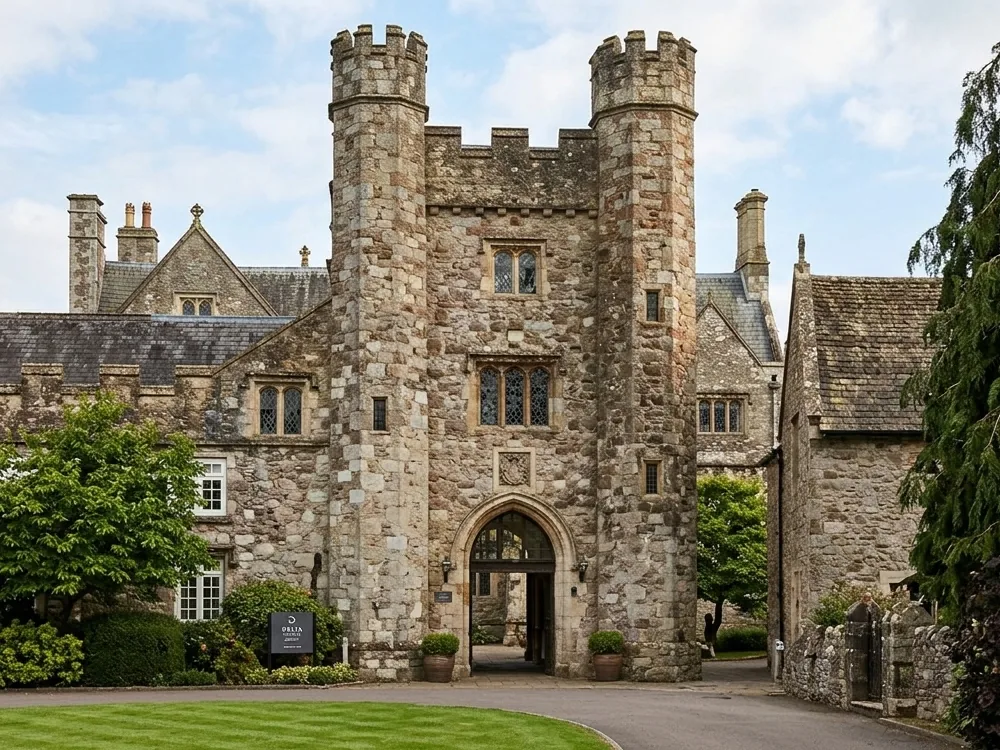
Built 1475 · Tudor manor house built 1475–1508 by the Lewis family over the foundations of an 11th-century hunting lodge, with a 16th-century gatehouse holding its own listed-building status
This page is part of an independent travel guide and is not affiliated with, endorsed by, or operated by St Pierre Country Club.
© Castles & Palaces
Quick Facts
- Rooms from
- £65 / night
- Hotel rating
- 4-Star Hotel
- Duration
- Golf: 18-hole round, several hours, weekdays only for non-members; overnight stay separately bookable
- Best time
- Year-round
- Nearest city
- Chepstow
Stay Here
St Pierre Country Club, Delta Hotels by Marriott
4-Star HotelBooked via Booking.com · Free cancellation on most rates
Open to day visitors without booking a room — see How to Visit below.
Highlights
- ✦Originated as an 11th-century hunting lodge granted to the St. Pierre family for their loyalty at the Battle of Hastings
- ✦Sir David de St. Pierre was a key financier to Henry IV and Henry V during their wars against France — legend holds that Henry V deposited the Crown Jewels with him as collateral for a loan
- ✦The Lewis family built the present Tudor manor house between 1475 and 1508 on the earlier foundations
- ✦The 16th-century gatehouse has its own Wikipedia entry as a listed building, genuine evidence of heritage protection
- ✦Today a golf resort and hotel operated by Marriott under the Delta Hotels brand, with two 18-hole courses — the Old Course hosted the 1996 Solheim Cup
Stay in the castle itself
Book a room via Booking.com
St Pierre Country Club sits within its own parkland near Chepstow in Monmouthshire, on the Welsh side of the River Wye close to the English border, and its origins reach back further than its present Tudor manor house might suggest. The estate began life as an 11th-century hunting lodge, granted to the St. Pierre family in recognition of their loyalty to William the Conqueror at the Battle of Hastings in 1066 — placing the site's earliest documented history directly at the founding moment of Norman rule in Britain.
The St. Pierre family's later prominence extended well beyond their original grant of land. Sir David de St. Pierre became a key financier to both Henry IV and Henry V during their wars against France in the early 15th century, a position of genuine national significance that placed the family at the heart of English royal finance during one of the most militarily active periods of the Hundred Years' War. The estate's most colourful piece of surviving legend dates from this period: tradition holds that Henry V deposited the Crown Jewels with Sir David as collateral for a loan, an extraordinary claim that — whether taken as literal history or embellished legend — speaks to the real financial trust once placed in the family.
The manor house standing today dates to a later period than this founding legend: the Lewis family, who acquired the estate, built the present Tudor manor house between 1475 and 1508, constructing their new residence over the foundations of the earlier medieval hunting lodge. This layering of an 11th-century origin beneath a genuinely substantial late-15th and early-16th century Tudor building gives St Pierre a depth of documented history considerably older than its current architectural fabric alone might suggest. The estate's 16th-century gatehouse survives today and holds its own listed-building status recognised with a dedicated Wikipedia entry — a small but concrete piece of evidence of the genuine heritage protection this site has been afforded, distinguishing it clearly from a merely fashionable golf-resort rebrand.
It is worth noting explicitly that St Pierre is not a castle in the traditional baronial or fortified sense — it appears on Francisco's own original list simply as 'St Pierre Country Club', without the word 'Castle' attached, and this site classifies it accordingly as a manor rather than a castle, the same distinction already applied to Dalmahoy in Scotland. The underlying history, however, is genuinely old and substantial, comfortably clearing the quality bar applied across this entire collection despite the absence of castellated architecture.
Today St Pierre operates as a golf resort and hotel under Marriott's Delta Hotels brand, built around two full 18-hole golf courses set within the historic parkland. The Old Course carries particular sporting pedigree, having hosted the Solheim Cup in 1996, one of women's professional golf's most prestigious international team events, pitting Europe against the United States. That tournament history places St Pierre among a select group of British golf venues with genuine major international championship credentials.
Non-members can access the golf courses on weekdays, with green fees reaching up to £55 at peak times and a valid handicap required to play — weekend access is restricted to hotel guests and club members. This weekday-only, golf-based public access mirrors the pattern already established at Dalmahoy and Dalmunzie in Scotland, where golf facilities rather than castle tours or restaurant dining provide the primary route for non-residents to experience the estate. For golfers exploring South Wales and the Wye Valley borderlands, St Pierre offers a rare combination of championship-standard golf and a documented estate history stretching back, in outline if not in surviving fabric, to the immediate aftermath of the Norman Conquest.
History
St Pierre Country Club originated as an 11th-century hunting lodge, granted to the St. Pierre family for their loyalty at the Battle of Hastings in 1066. Sir David de St. Pierre later became a key financier to Henry IV and Henry V during their wars against France, with legend recording that Henry V deposited the Crown Jewels with him as collateral for a loan. The Lewis family built the present Tudor manor house between 1475 and 1508 over the earlier foundations, and the estate's 16th-century gatehouse survives today as a recognised listed building. St Pierre now operates as a golf resort and hotel under Marriott's Delta Hotels brand, with its Old Course having hosted the 1996 Solheim Cup.
Frequently Asked Questions
Yes, on weekdays. The two 18-hole golf courses are open to non-members Monday to Friday, with green fees reaching up to £55 at peak times and a valid handicap required. Weekend access is restricted to hotel guests and club members — the same weekday-only pattern already established at Dalmahoy and Dalmunzie in Scotland.
Location
St Pierre Park, Chepstow, Monmouthshire NP16 6YA, Wales
Nearby Castles
Rooms from
£65/ night