
Departing from Brașov
From Brașov: Făgăraș Fortress & the Transfăgărășan Highway
The fortress that was once a prison for Transylvanian princes and the mountain road that was forbidden to exist — a 7-hour day from Brașov across the Southern Carpathians to the glacial lake at Bâlea and back
From
€163/ person
Duration
7 hours
Languages
English
Group size
Max 8 people
About This Tour
The Transfăgărășan Highway was built under Nicolae Ceaușescu's personal order between 1970 and 1974, crossing the Southern Carpathians at 2,042 metres above sea level. Ceaușescu had been disturbed by the Soviet invasion of Czechoslovakia in 1968 and wanted a military road across the Fagaraș Mountains that could move troops and equipment quickly between Transylvania and Wallachia in the event of a similar intervention from the north. The road cost 40 lives during its construction. It was opened in 1974, classified as a secondary route, and largely ignored for military purposes once the Cold War ended — then rediscovered as one of Europe's most extraordinary mountain drives after BBC Top Gear named it the 'best road in the world' in 2009.
This 7-hour small-group tour (provider: Trips in Transylvania, English-speaking guide, max 8, from Brașov, not suitable for wheelchair users) pairs the Transfăgărășan Highway drive — up through the Southern Carpathian forest, through a 900-metre tunnel bored through the mountain ridge, and out to the glacial Bâlea Lake at 2,034 metres — with a morning visit to Făgăraș Fortress, one of the most historically significant and least-visited of Romania's major castle sites.
No verified public reviews yet: the GetYourGuide listing shows a provider rating with no verified public review count — a new or thin-reviewed GetYourGuide listing. This does not reflect on the quality of the sites (Făgăraș Fortress is a well-maintained state museum) or the Trips in Transylvania operator. Treat the star display as indicative only until verified reviews accumulate.
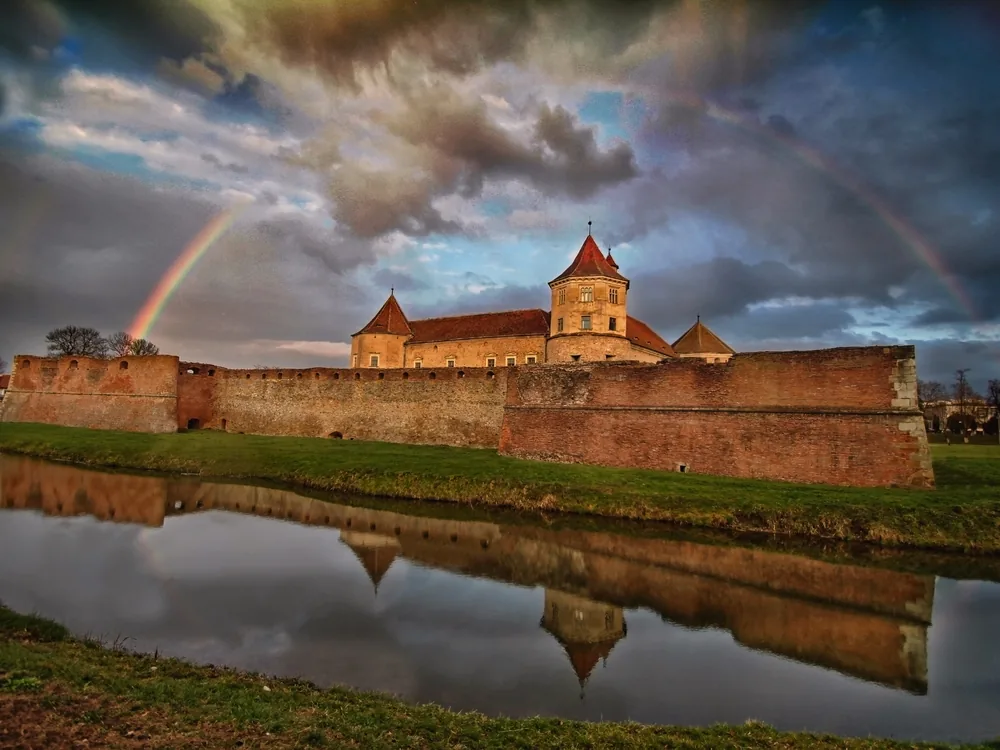
Făgăraș Fortress is genuinely different from every other Romania castle page on this site — from the German Neo-Renaissance of Peleș, the Bram Stoker Gothic of Bran, the Hungarian Hunyadi Gothic of Corvin, and the Wallachian Brâncoveanu style of Mogoșoaia. It is a 14th-century moated fortress on flat ground in the Făgăraș Depression, a place where rivers flood rather than cliffs dominate — where the defence was water and walls rather than elevation. It was built by the Voivodes of Wallachia, passed to the Transylvanian Principality, used as a prison for Transylvanian princes (including Gavril Bethlen), became a Habsburg administrative garrison, and is now a county museum with one of the most complete medieval moat systems surviving in Romania. The tour can be combined with a Brașov day or with the Saxon Villages tour — another Brașov-based departure covering different terrain in the opposite direction.
Highlights
- ✓Transfăgărășan Highway — Ceaușescu's military road across the Southern Carpathians (1970–1974), built at 2,042m elevation through the highest section of the Fagaraș Mountains; BBC Top Gear named it 'the best road in the world' in 2009; the tour drives the full northern ascent from the Argeș valley to the Bâlea tunnel, with the glacial Bâlea Lake at the summit as a stopping point
- ✓Bâlea Lake — a glacial lake at 2,034 metres above sea level at the Transfăgărășan's highest point, surrounded by the Fagaraș alpine ridge; the stop includes time for views and photography; weather at this elevation changes rapidly regardless of valley conditions below
- ✓Făgăraș Fortress — a 14th-century moated fortress on the flat Wallachia-Transylvania boundary, built by the Voivodes of Wallachia; architecturally distinct from all other Romania castle sites on this site (moat-and-wall defence on flat terrain rather than hilltop or clifftop); notable for its complete surviving moat system and for its history as a political prison for Transylvanian princes and later a Habsburg garrison; now the Brașov County Museum's historical collections
- ✓No content overlap with existing Romania castle pages — this tour's combination of flat-ground medieval fortress, mountain highway, and high-alpine lake is entirely different from Bran (Dracula's castle), Peleș (Neo-Renaissance palace in Sinaia), Corvin (Gothic Hunyadi castle), and Mogoșoaia (Wallachian Brâncoveanu palace)
- ✓Small group max 8, live English guide, 7 hours from Brașov — a full-day excursion that combines architectural history in the morning with mountain driving in the afternoon
- ✓⚠️ Not wheelchair accessible — the Transfăgărășan's alpine terrain and Făgăraș Fortress's medieval surfaces are not accessible; GetYourGuide's listing does not mark this tour as accessible
Ready to book this tour?
Free cancellation · Instant confirmation
Itinerary
The tour departs Brașov westward along the southern foot of the Fagaraș Mountains — the longest mountain range in Romania, extending 70km along the Transylvania–Wallachia border — to the town of Făgăraș, approximately 70km from Brașov. Făgăraș Fortress sits in the centre of the town, surrounded by a water-filled moat that makes it visually unique among Romanian castles: no clifftop drama, no mountain backdrop, just walls rising from dark water in the flat Făgăraș Depression. The fortress was built in the 14th century by the Voivodes of Wallachia (the medieval principality south of the Carpathians), who held the Transylvanian lands around Făgăraș as a fiefdom of the Hungarian crown. In the 16th century it passed to the Transylvanian Principality and served as an administrative centre and — periodically — as a detention site for nobility whose political fortunes had turned; Gavril Bethlen, who briefly held the Transylvanian princeship, was among its prisoners. After the Habsburgs incorporated Transylvania in 1699, the fortress became a garrison and military supply depot. The Brașov County Museum now occupies the fortress with historical and archaeological collections; the complete moat circuit, the towers, and the courtyard are all part of the visit. The guide covers the Wallachian-Transylvanian border history, the fortress's architecture, and the town's role in the region.
From Făgăraș, the tour turns south onto the Transfăgărășan Highway — Romania's DN7C road, which climbs from approximately 350 metres at the Argeș valley floor to 2,042 metres at the ridge tunnel in under 100km of switchbacks, hairpins, and forest. The guide covers the road's Cold War construction history: Ceaușescu ordered the military road in 1970 following his alarm at the Warsaw Pact invasion of Czechoslovakia in 1968, judging that Romania's mountain crossings were inadequate for rapid military movement. The highway was built in four years using army engineering units and civilian contractors; approximately 40 workers died in accidents and rockfalls during construction. It was opened to civilian traffic in 1974 and classified as a 'road of national importance,' then quietly demoted to a secondary route once its strategic rationale ended. The drive ascends through increasingly dramatic scenery — beech and fir forest giving way to alpine meadows, then bare rocky ridgeline — with viewpoints where the group stops to photograph the hairpin road below.
The highway passes through the Bâlea Tunnel — a 900-metre road tunnel bored directly through the Fagaraș ridge at 2,042 metres, the highest road tunnel in Romania — and emerges at the northern rim of the Bâlea Lake basin, a glacial cirque lake at 2,034 metres above sea level. The Bâlea Lake itself (Lacul Bâlea) covers approximately 4.6 hectares and sits beneath the rocky peaks of the main Fagaraș Ridge, which at this point reaches elevations of 2,500–2,535 metres (Moldoveanu Peak, the highest point in Romania at 2,544 metres, is visible on clear days). The mountain weather at this elevation is independent of valley conditions — cloud, wind, and even summer snow are all possible regardless of what Brașov looked like in the morning. The guide covers the geology of the glacial lake, the ecology of the alpine zone, and the history of the Fagaraș Mountains as a natural boundary between Transylvania and Wallachia. The stop includes photography time on the lake shore and at the viewpoints above the tunnel entrance. The descent returns via the northern side of the Transfăgărășan and the return drive to Brașov.
What's Included
- ✓Private vehicle with live English-speaking guide (Trips in Transylvania)
- ✓Pickup from Brașov
- ✓Făgăraș Fortress entry
- ✓Transfăgărășan Highway drive and Bâlea Lake stop
- ✓Small group max 8
Not Included
- ✗Lunch (stop in Curtea de Argeș or at the Bâlea Lake café; independently arranged)
- ✗Personal expenses
- ✗Tips
Insider Tips
⚠️ The Transfăgărășan Highway is seasonal: the summit section (above Bâlea Tunnel, from Cumpăna to Bâlea Lake) is typically closed from mid-October to late June due to snow; confirm the current road status before booking outside July–October
Weather at 2,034 metres (Bâlea Lake) can be significantly colder, windier, and cloudier than Brașov — bring a warm layer regardless of the season and expect the unexpected
This tour is not wheelchair accessible — Făgăraș Fortress has medieval surfaces and narrow passages, and the alpine terrain at Bâlea Lake is uneven
For a complementary Brașov-departure tour covering the opposite direction (northeast, toward the Saxon heritage villages), see the Transylvania Saxon Villages tour — Rupea Fortress, Criț, Viscri, and Saschiz
Bran Castle and Peleș Castle are both reachable from Brașov — see the dedicated castle pages for each: Bran Castle is 30km west, Peleș Castle is 45km south in Sinaia
Frequently Asked Questions
Why is the Transfăgărășan Highway famous?
The Transfăgărășan became internationally famous after BBC Top Gear (series 12, 2009) drove it and Richard Hammond described it as 'the best road in the world' — a designation that generated enormous tourist interest and is now prominently mentioned in Romanian tourism marketing. The road's engineering is genuinely remarkable: it crosses the highest mountain range in Romania at over 2,000 metres elevation, with hairpin bends cut into the rock face that achieve elevation gains of 1,700 metres over a relatively short horizontal distance. Before the Top Gear episode, it was primarily known to Romanian drivers and alpine hiking enthusiasts.
How is Făgăraș Fortress different from Bran, Peleș, and the other Romania castles on this site?
Every other Romania castle page on this site involves either elevation (Bran on its rock, Peleș in the Carpathian mountain forest, Corvin on its Hunedoara hill) or the specific riverside Wallachian palace architecture (Mogoșoaia). Făgăraș Fortress is a moated stronghold on flat terrain — its defence was water and walls, not height. It was built by Wallachian Voivodes rather than Transylvanian nobles or the Habsburg court, and its architecture reflects a plainer military logic. It is also the only site in this tour combination to have served as a political prison for Transylvanian princes — a different layer of history from royal palace or noble residence.
Is the Transfăgărășan open year-round?
No — the summit section of the highway (from Cumpăna to Bâlea Lake and beyond) is typically closed from mid-October to late June due to snowfall and icing. The road is usually open from late June to mid-October; exact dates vary by year and snowpack. The section below the Bâlea Tunnel on the northern side is open year-round, but the tour's Bâlea Lake stop requires the full road to be passable. Confirm the current status with the operator before booking outside July–October.
More Tours from Brașov
Powered by GetYourGuide
From
€163
per person
Free cancellation available on most dates · Secure booking
Meeting point
Pickup from Brașov — confirm exact meeting point with Trips in Transylvania at booking.
From
€163/ person