Fortress of Bashtova
Kalaja e Bashtovës
Albania · Kavajë District · Near Durrës
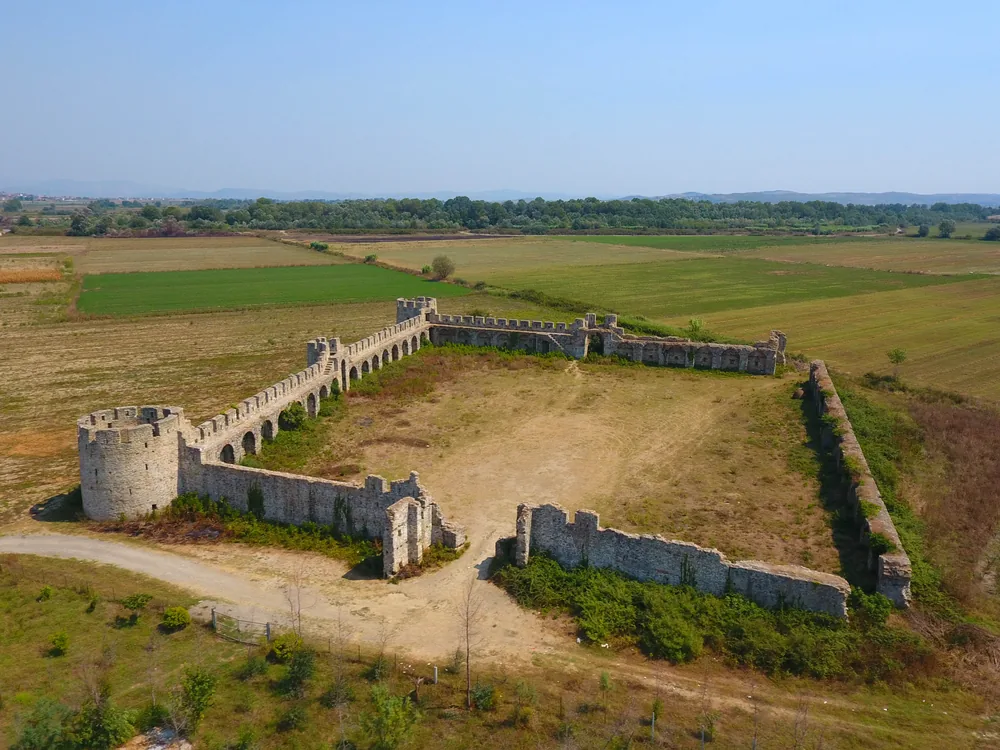
Built 1444 · 15th-century quadrangular Venetian-Ottoman fortress on the Albanian coastal plain at the mouth of the Shkumbin River; rectangular plan approximately 60 x 90 metres with fortified stone walls and towers rising up to 9 metres, built to guard the historic Via Egnatia trade route and control regional grain commerce; held successively by Venetian and Ottoman powers; one of Albania's most significant yet least-visited fortifications, now paired on guided tours with the Kavaja Ethnographic Museum
This page is part of an independent travel guide and is not affiliated with, endorsed by, or operated by Fortress of Bashtova.
© Castles & Palaces
Quick Facts
- Hours
- Daily 09:00–17:00
- Guided tour from
- €100
- Duration
- 1 hour
- Best time
- April to October
- Nearest city
- Durrës
Featured Tour
Fortress of Bashtova and Ethnographic Museum Tour
Cancellation available · Instant confirmation
Highlights
- ✦A 15th-century quadrangular Venetian-Ottoman fortress with walls rising up to 9 metres, built at the mouth of the Shkumbin River to control the most important coastal trade route in the eastern Mediterranean — the ancient Via Egnatia linking the Adriatic to Constantinople
- ✦One of Albania's most architecturally intact yet least-visited medieval fortifications — an experience without the crowds that better-known sites like Rozafa or Berat attract
- ✦The layered military architecture of two rival powers — Venetian and Ottoman — applied successively to the same coastal stronghold across the 15th and 16th centuries
- ✦Typically paired on organised tours with the Kavaja Ethnographic Museum in nearby Kavajë, covering traditional Albanian rural life — textiles, tools, and craft traditions — in a half-day excursion from Tirana or Durrës
- ✦Set on the Adriatic coastal plain within easy reach of Durrës's beach resorts and the ancient Roman city of Dyrrachium
Skip the queue with a guided tour
Skip-the-line tickets & expert guides
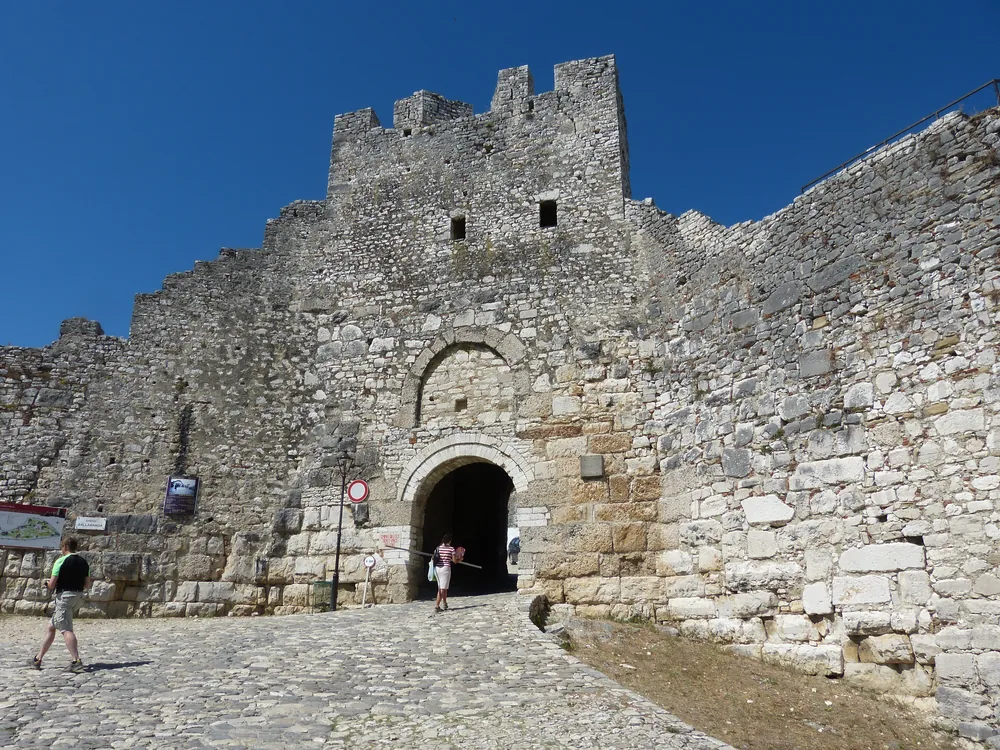
On the flat coastal plain where the Shkumbin River meets the Adriatic, a rectangular fortress of grey stone rises from farmland that gives no warning of its scale until you are standing beneath its walls. The Fortress of Bashtova is one of Albania's most architecturally significant yet least-visited monuments — a 15th-century Venetian-Ottoman stronghold that once oversaw one of the most important trade corridors in the eastern Mediterranean, and today sees a fraction of the visitors that better-known Albanian sites like Rozafa or Berat attract.
Bashtova's quadrangular plan — roughly 60 by 90 metres, with walls rising up to 9 metres — was purpose-built to protect and tax the commerce moving along this stretch of coast. The corridor it controlled was the Via Egnatia, the Roman military road that linked the port of Dyrrachium (modern Durrës, 20 kilometres north) to Thessaloniki and ultimately Constantinople — for over a millennium the primary overland connection between the Latin and Greek worlds, carrying armies, merchants, pilgrims, and diplomatic missions in both directions across the entire medieval period. Controlling this stretch of coastal plain, at the point where the Shkumbin's valley opened onto the sea and the road turned inland toward the Balkans, meant controlling a meaningful share of the regional grain trade and the wider commercial traffic that followed the same route. This explains both the fortress's scale and the priority it represented to successive powers.
Like much of the Albanian coast, Bashtova passed between Venetian and Ottoman control across the 15th and 16th centuries as the two powers competed for the eastern Adriatic. The fortress's construction and later modifications reflect this layered history of use — a pattern that characterises most of Albania's coastal fortifications, which typically show evidence of both Italian and Ottoman military practice applied to the same core structure over successive generations. At Bashtova, the quadrangular plan with corner towers represents the Venetian tradition of compact, geometrically efficient fortification; subsequent Ottoman modifications added to this framework without fundamentally altering it. The result is a building that speaks clearly to the specific military geography of the Adriatic coast in the age when sea power, trade routes, and the competition between Christian and Muslim polities shaped the landscape.
Despite its scale and historical significance, Bashtova remains one of the more overlooked destinations in Albanian heritage tourism, lacking the name recognition of Rozafa Castle in Shkodër (associated with Albania's most famous founding legend), Krujë Castle (inseparable from the national hero Skanderbeg), or the UNESCO-listed old towns of Berat and Gjirokastër. For visitors willing to make the trip, this obscurity is part of the appeal: an intact medieval fortification, experienced without queues or crowds, on a coastal plain that offers long views to the Adriatic and across the farmland that made the site strategically worth holding in the first place.
Organised tours from Tirana or Durrës typically pair Bashtova with the Kavaja Ethnographic Museum in nearby Kavajë — a half-day excursion that combines the military history of the coast with the domestic and craft history of the Albanian hinterland. The Kavajë museum focuses on traditional rural and craft life: textiles, agricultural tools, household objects, and traditional dress that document the material culture of Albanian communities in this part of the country before the communist industrialisation of the mid-20th century. The combination reflects a sensible pattern in Albanian tour design — pairing a lesser-known monument with a supporting cultural experience to justify the transport time from the capital.
The GetYourGuide guided tour is a 5-hour half-day excursion from the Tirana/Durrës area: approximately 65 minutes of transport each way, 40 minutes at the ethnographic museum in Kavajë, and roughly 50 minutes at the fortress itself. The guide speaks Albanian, English, and Italian. This is not a standalone fortress visit — the fortress portion of the day is comparatively brief, and the tour's value lies in the combination of the two sites and the qualified local guide's regional context.
History
The Fortress of Bashtova was constructed in the 15th century, during the period of intense competition between Venice and the Ottoman Empire for control of the eastern Adriatic coast. Built on the Albanian coastal plain at the mouth of the Shkumbin River, it guarded the historic Via Egnatia trade route and controlled the grain trade along this stretch of coast. The fortress passed between Venetian and Ottoman control as the two powers contested the region; both left architectural traces in the quadrangular structure and its towers, which survive largely intact today.
The fortress's strategic importance derived from its position at the junction of the Shkumbin valley route — the natural inland passage connecting the Adriatic coast to the Balkan interior — and the coastal road. Control of this point meant authority over one of the most significant commercial and military corridors in the eastern Mediterranean. The fortress subsequently fell into disuse as the Via Egnatia route lost its primacy following the consolidation of Ottoman power across the region and the economic shifts of the 16th and 17th centuries. It remains one of Albania's most intact and least-visited medieval fortifications.
How to Visit
Getting there: Bashtova lies on the Adriatic coastal plain approximately 20–25 km south of Durrës and 45 minutes from Tirana by car. Direct public transport to the fortress is very limited; independent travellers should use a rental car. The GetYourGuide tour departs from the Tirana/Durrës area and handles all transport.
Tickets: Walk-up entry is €3. The GetYourGuide guided tour is a 5-hour half-day excursion from the Tirana/Durrës area: it covers approximately 65 minutes of transport each way, 40 minutes at the Kavaja Ethnographic Museum in Kavajë, and roughly 50 minutes at the fortress itself, with a multilingual guide (Albanian, English, Italian). This is a combined cultural excursion rather than a standalone fortress visit.
Practical tips: The site has minimal visitor infrastructure — bring water and wear comfortable shoes, as the ground is uneven. April to October is the best window; early morning visits avoid heat on the exposed coastal plain and give the best light on the stone walls.
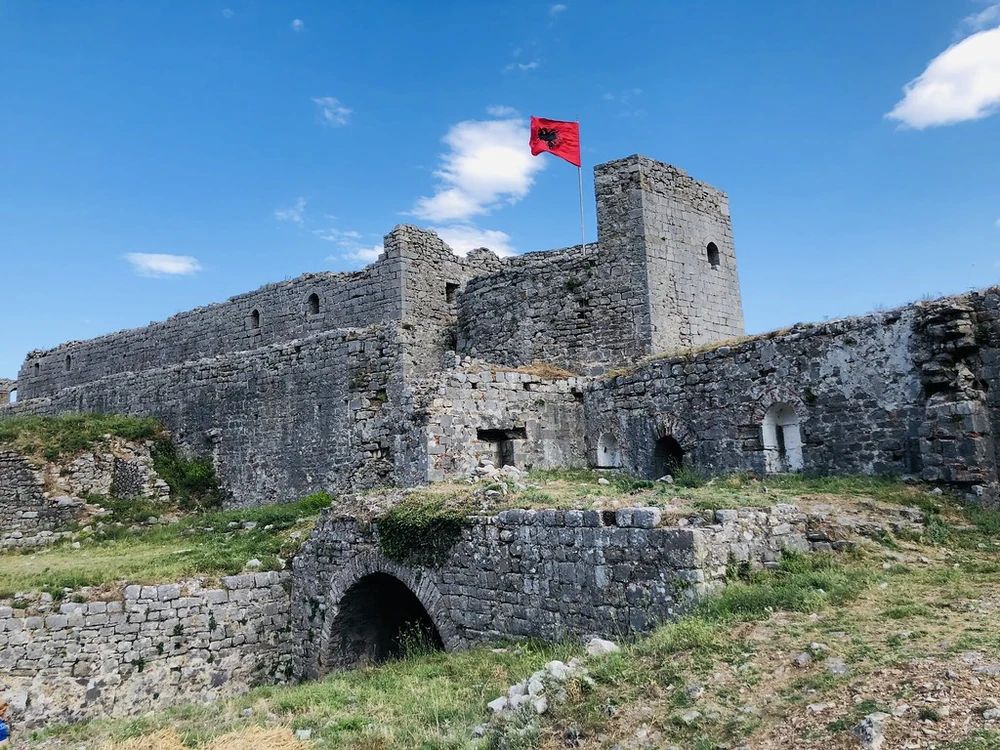
Combine with: Rozafa Castle — the hilltop fortress above Shkodër, one of Albania's most dramatically sited medieval strongholds and a natural pairing for a broader Albanian fortifications itinerary.
Frequently Asked Questions
The Via Egnatia was the principal Roman military road connecting the Adriatic port of Dyrrachium (modern Durrës) to Thessaloniki and Constantinople. Built by the Romans in the 2nd century BC, it remained the primary overland link between the western and eastern halves of the Mediterranean world for over a millennium, carrying armies, merchants, pilgrims, and diplomats in both directions. Bashtova was built at the point where the Shkumbin River valley opened onto the Adriatic coast — the western terminus of the inland route to the Balkan interior — making it the natural position from which to control and tax traffic moving along this corridor.
Location
Bashtovë, Kavajë, Albania
Nearby Castles
Tours & Tickets
Powered by GetYourGuide
From
€100/ person