
Artstetten Castle
Schloss Artstetten
Austria · Lower Austria · Near Pöchlarn
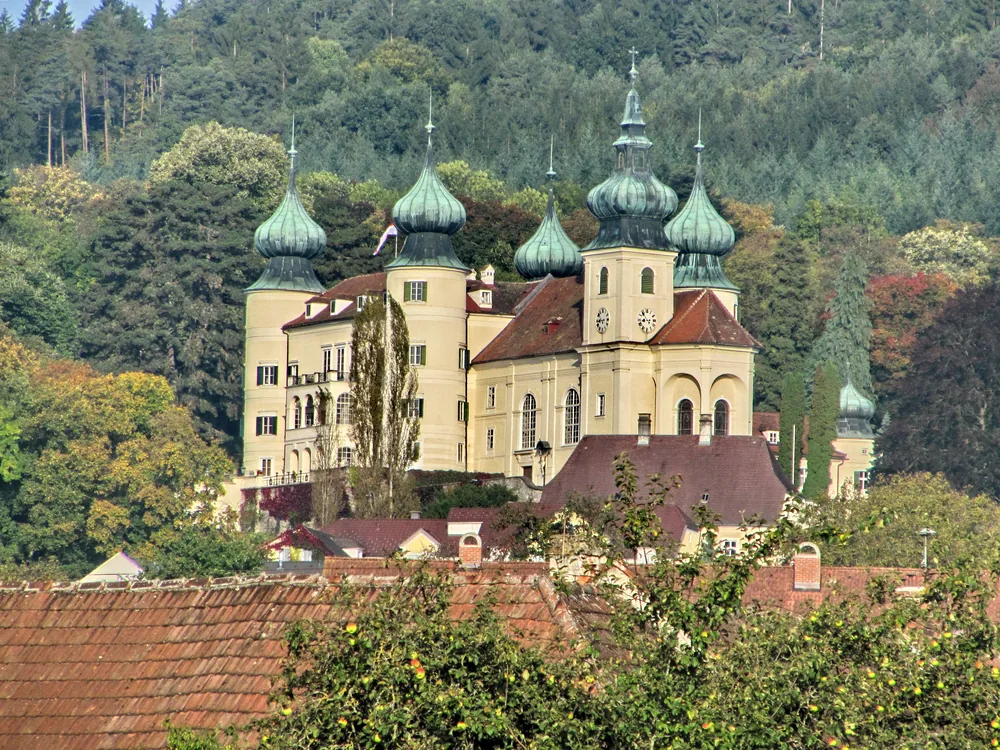
Built 1597 · Renaissance castle with Baroque and later modifications — the current seven-towered structure developed from a 16th-century Renaissance nucleus, with the characteristic multiple towers giving it a distinctly fortified silhouette above the Danube valley; the interior was modernised in the late 19th century for Franz Ferdinand's occupancy; the castle church and crypt date to the 17th century and were modified by Franz Ferdinand for the family burial that became historically necessary
This page is part of an independent travel guide and is not affiliated with, endorsed by, or operated by Artstetten Castle.
© Castles & Palaces
Quick Facts
- Hours
- Daily 09:00–17:30
- Entry via GetYourGuide
- €23
- Duration
- 1.5–2 hours (castle, museum, nature park, and crypt)
- Best time
- April to October
- Nearest city
- Pöchlarn
Featured Tour
Artstetten Castle: Self-Guided Admission (Museum, Crypt & Nature Park)
Cancellation available · Instant confirmation
Highlights
- ✦The crypt of Franz Ferdinand and Sophie — buried here by Franz Ferdinand's explicit prior arrangement, because his wife Sophie (Duchess of Hohenberg, born Countess Chotek) was a morganatic wife and thus barred from burial in the Habsburg Imperial Crypt (Kaisergruft) in Vienna; Franz Ferdinand was determined that in death he and Sophie would not be separated as they had been in life by Habsburg court protocol; they have lain together at Artstetten since July 1914
- ✦The Museum of Archduke Franz Ferdinand — a permanent exhibition covering Franz Ferdinand's life, his role as heir to the Austro-Hungarian throne, his modernising ambitions for the empire's federal structure, and the context of the June 28, 1914 assassination in Sarajevo; includes personal objects, photographs, and documents from the archducal household
- ✦The seven towers — the castle's most distinctive exterior feature, giving it a profile unlike any other Lower Austrian castle; the towers developed across different construction phases and give the building a romantic silhouette above the Danube valley
- ✦The private nature park — an adjacent landscaped park with specimen trees, ponds, and walking paths included in the castle admission; one of the more extensive private natural grounds associated with a Lower Austrian castle open to the public
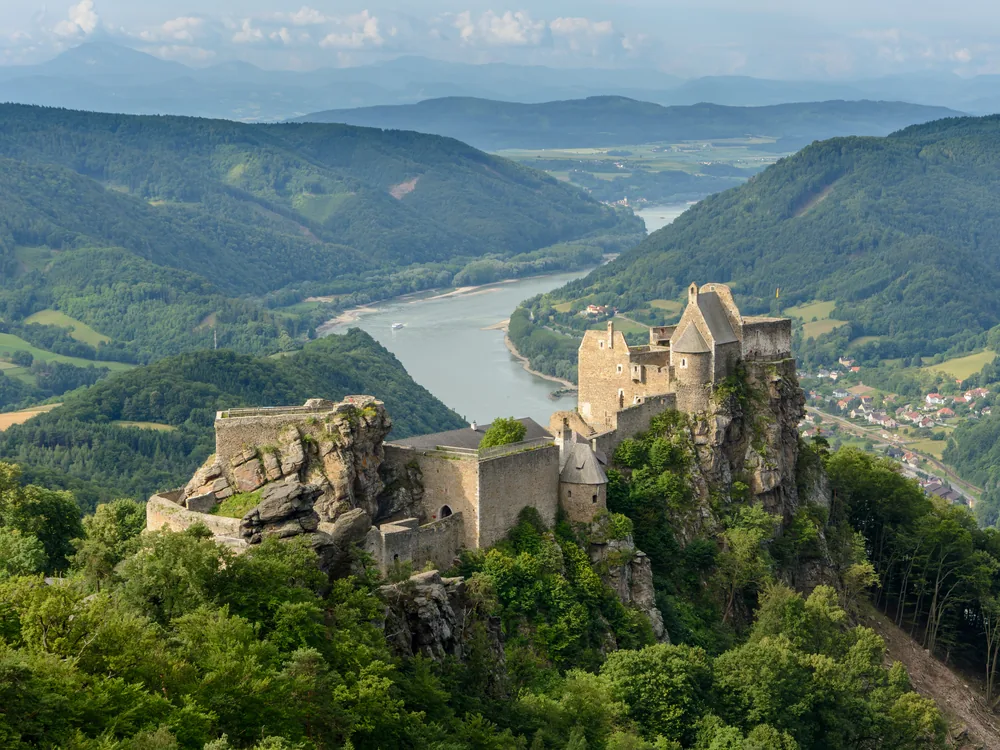
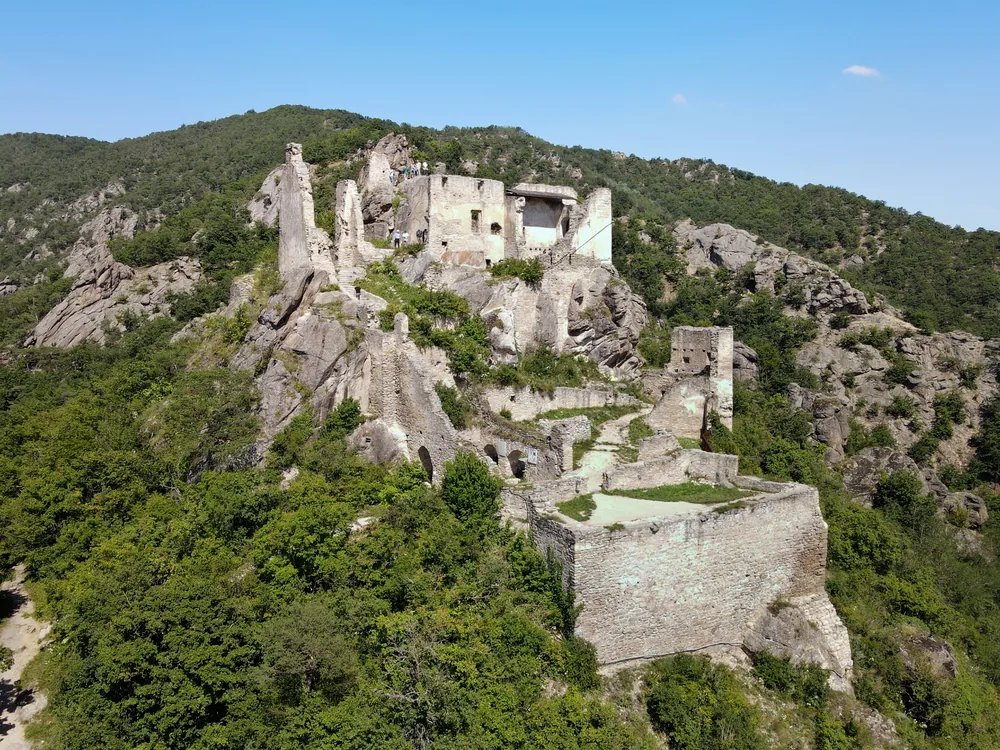
- ✦Near the Wachau Valley — Artstetten sits in the Pöggstetter Arm of the Wachau region, approximately 20km from the ruined Aggstein Castle and 25km from Dürnstein Castle; all three can be combined on a Wachau day trip from Vienna
- ✦Self-guided admission (€14, wheelchair accessible) — visitors move through the museum, crypt, castle rooms, and nature park at their own pace; guided tours are available in German on request; the English text throughout the museum is comprehensive
Skip the queue with a guided tour
Skip-the-line tickets & expert guides
Artstetten Castle sits on a hill above the village of Artstetten in Lower Austria, roughly 80 kilometres west of Vienna in the region that borders the Wachau Valley. It would be a moderately interesting seven-towered Renaissance castle in its own right — the distinctive towers, the Danube valley setting, the private nature park — but what Artstetten has that no other Austrian castle possesses is the crypt beneath the castle church, where Archduke Franz Ferdinand and his wife Sophie, Duchess of Hohenberg, have been buried since July 1914: the couple whose assassination in Sarajevo on June 28, 1914, provided the immediate trigger for the First World War.
Franz Ferdinand was the heir apparent to the Austro-Hungarian throne from 1896 until his death — the nephew of the aged Emperor Franz Joseph I, whose own son Crown Prince Rudolf had died by suicide at Mayerling in 1889. Franz Ferdinand is a figure of genuine complexity, obscured by the enormity of what followed his death. He was difficult, obstinate, and in some respects reactionary; he held pan-German, Catholic, and centralist instincts that sit poorly with later-20th-century sensibilities. But he was also a committed reformer of the imperial structure — his plans for the Austro-Hungarian empire involved a significant devolution of power to the empire's Slavic and Romanian populations, a reorganisation that might have forestalled the ethnic nationalisms that the war would ultimately release. His assassination by Gavrilo Princip (acting for the Black Hand, a Serbian nationalist organisation with connections to the Serbian military intelligence) on the Sarajevo Latin Bridge removed the one Habsburg figure who might have steered the empire toward a federal future rather than toward the military mobilisation that Franz Joseph and his generals chose instead.
The detail that Artstetten preserves most intimately is the love story. Franz Ferdinand met Sophie Chotek, a lady-in-waiting at the imperial court, in the 1890s. The relationship was the most politically difficult of his life: Sophie, born Countess Chotek of Chotkow and Wognin, was from a distinguished Bohemian noble family but was not of sufficiently high birth to marry into the Habsburg dynasty without a morganatic arrangement — the renunciation of dynastic rights for any children of the union. After years of resistance, Emperor Franz Joseph gave his consent to the marriage in 1900 only on condition that Franz Ferdinand swear before the assembled privy council that he renounced any dynastic rights for his children and accepted Sophie's status as a lesser member of the court hierarchy.
For eighteen years, Franz Ferdinand and Sophie navigated a court environment that treated her subordination as institutional fact. At official events, she sat away from her husband; at ceremonies, she was separated by rank from the imperial family. In private life and at Artstetten — which Franz Ferdinand purchased from his uncle Ludwig Viktor in 1889 — they had a marriage of evidently genuine affection that produced three children. Franz Ferdinand was explicit in his will that he wanted to be buried beside Sophie, in the Artstetten crypt rather than the Vienna Kaisergruft, because he would not permit death to arrange the separation that the Habsburg court had imposed in life.
When both were killed in Sarajevo on June 28, 1914, the court's management of their bodies continued the subordination in small ways — the precise arrangements of the lying-in-state were contested — but Franz Ferdinand's explicit written wishes prevailed. They were brought to Artstetten and buried in the castle crypt on July 4, 1914, together, as he had specified. The crypt is included in the self-guided admission, accessible beneath the castle church.
The museum installed in the castle covers Franz Ferdinand's life, his hunting interests (he was one of the most prolific game hunters in European aristocratic history, a fact displayed here without apology), his plans for the empire's restructuring, and the Sarajevo event and its consequences. The seven-towered exterior and the private nature park make the visit comprehensively worthwhile even outside the historical significance of the crypt.
The GetYourGuide-listed admission (self-guided, wheelchair accessible) provides entry to all elements: museum, crypt, castle rooms, and nature park. The castle is approximately 20km from Aggstein Castle ruins and 25km from Dürnstein Castle — both on this site and natural companions for a Wachau Valley day from Vienna.
History
Castle site developed from the 16th century. Purchased by Archduke Franz Ferdinand from his uncle Ludwig Viktor in 1889. Modified for Franz Ferdinand's occupancy; he specified Artstetten as his burial site. Franz Ferdinand and his wife Sophie assassinated in Sarajevo, June 28, 1914 — their deaths triggered the First World War. Both buried at Artstetten crypt, July 4, 1914. Castle remained in Habsburg (Hohenberg branch) family ownership. Now open as a museum and heritage attraction, managed by the Hohenberg family foundation.
How to Visit
Getting there: Artstetten is approximately 80 km west of Vienna — about 90 minutes by car via the A1/B1 through Pöchlarn. By rail, Westbahn trains reach Pöchlarn in approximately 50 minutes; from there it is 5 km to the castle by taxi (no direct bus). Open April to October only; closed November to March.
Tickets: Walk-up entry is €14 adults, €7 children, covering the museum, crypt, castle rooms, and nature park. The GetYourGuide self-guided admission ticket (wheelchair accessible) covers the same full access through online booking.
Practical tips: Allow at least 1.5 hours — the Franz Ferdinand museum, the crypt, the castle rooms, and the private nature park each take time. The crypt beneath the castle church is the centrepiece; the museum's English-language text is comprehensive and works well for self-guided visits without a guide. Visit the nature park last — it is a good place to slow down after the more emotionally charged interior.
Combine with: Aggstein Castle (20 km east along the Danube) and Dürnstein Castle (25 km east) complete the classic Lower Wachau castle circuit — all three can be driven in a single long day from Vienna.
Frequently Asked Questions
The Habsburg Imperial Crypt (Kaisergruft) in Vienna is reserved for members of the imperial dynasty. Sophie, as a morganatic wife, was not a member of the dynasty by court protocol — she held the title Duchess of Hohenberg but not Archduchess of Austria. Franz Ferdinand was determined that they would be buried together, not separated by the same protocol that had governed their official life. He specified Artstetten in his will. His wishes were honoured: both were brought to Artstetten and buried in the castle crypt on July 4, 1914, six days after their assassination.
Location
Schlossplatz 1, 3661 Artstetten-Pöbring, Austria
Nearby Castles
Tours & Tickets
Powered by GetYourGuide
From
€23/ person