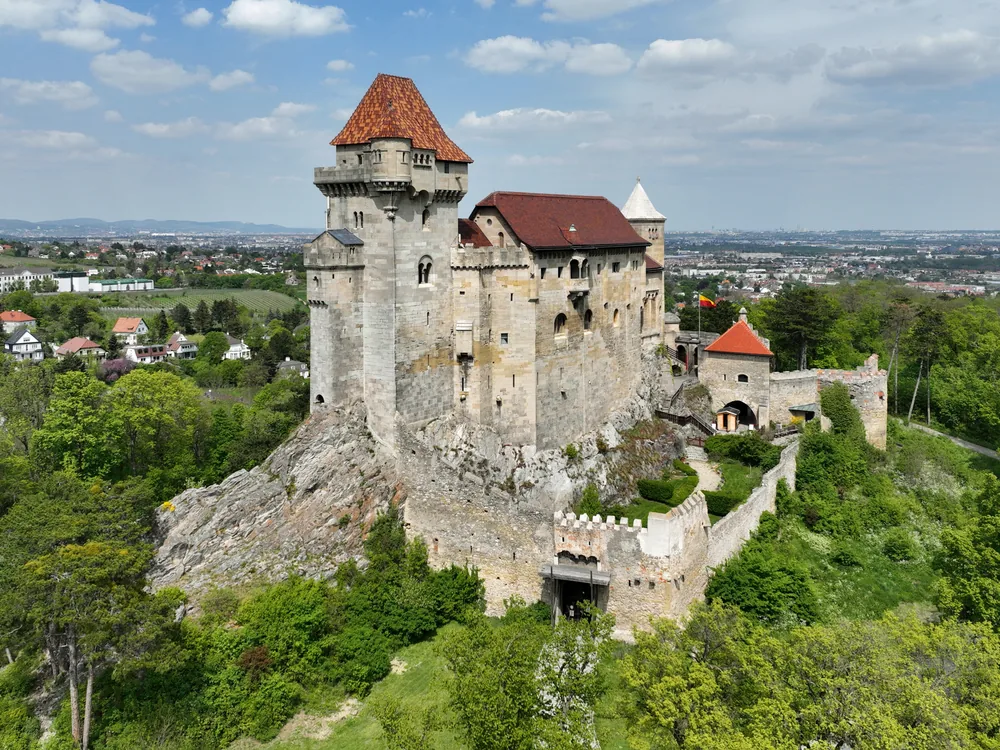
Liechtenstein Castle
Burg Liechtenstein
Austria · Lower Austria — Maria Enzersdorf, Mödling District, Baden bei Wien region, ~20 km south of Vienna · Near Vienna
Built 1816 · Romanesque origins (1122–1136); extensively rebuilt in Historicist/Gothic Revival style during the 1808–1816 restoration by Joseph Hardtmuth; privately owned by the Princely House of Liechtenstein Foundation
This page is part of an independent travel guide and is not affiliated with, endorsed by, or operated by Liechtenstein Castle.
© Castles & Palaces
Quick Facts
- Hours
- Check official website
- Guided tour from
- €216
- Duration
- 1.5–2 hours (as one stop on the Vienna multi-castle day tour)
- Best time
- Summer
- Nearest city
- Vienna
Featured Tour
Vienna / Bratislava: Castles around Vienna + Underground Lake
Cancellation available · Instant confirmation
Highlights
- ✦Hugo I built the castle between 1122 and 1136 and named his family after it — the origin of the von Liechtenstein dynasty name, the same family that centuries later founded the Principality of Liechtenstein, giving a European country its name from an Austrian hilltop.
- ✦Destroyed by Ottoman forces during the 1529 siege of Vienna and destroyed again in 1683 — the castle bore the brunt of both great Ottoman campaigns in Central European history and stood as a ruin for over 100 years.
- ✦Standing as a ruin for more than 100 years after the 1683 destruction, it was repurchased by Johann I Joseph, Prince of Liechtenstein, in 1808, who commissioned architect Joseph Hardtmuth to rebuild it in Historicist Gothic Revival style.
- ✦The 1808–1816 Hardtmuth reconstruction makes Liechtenstein Castle one of the earliest Gothic Revival projects in Austria — predating by decades the style's widespread adoption in European castle restoration, built over genuine surviving medieval fabric.
- ✦The castle hosts the annual Nestroy Theatre Festival each summer, one of Lower Austria's major cultural events, keeping the privately owned historic site in active cultural use as a performance venue rather than as a pure museum.
Skip the queue with a guided tour
Skip-the-line tickets & expert guides
Liechtenstein Castle stands in Maria Enzersdorf, Lower Austria — not in the Principality of Liechtenstein. The confusion is understandable, because the logic runs exactly the other way: the Principality is named after the dynasty, and the dynasty named itself after this castle. Hugo I built the fortress on this hill in the Wienerwald between 1122 and 1136 and took the family name "von Liechtenstein" from it. That family, across the following centuries, built one of the most significant noble landholding networks in Central Europe, eventually acquiring the territories that became the modern Principality. The country is named after the family; the family named itself after an Austrian hilltop. The castle itself has never been anything other than in Austria.
Through the 12th and 13th centuries the Liechtenstein family held the fortress as a base for their expansion across the Vienna region and the wider Habsburg lands. Control of the castle shifted over the medieval period, passing through different hands as the dynasty's primary seat of power moved to their many other properties. What eventually damaged it most was not dynastic politics but military geography: the castle stood squarely in the path of the two greatest Ottoman offensives against Vienna. Ottoman forces destroyed it during the first siege of Vienna in 1529. They destroyed it again during the Battle of Vienna in 1683 — two of the defining confrontations in Central European history, with the dynasty's founding symbol bearing the brunt of both. After 1683, the ruin stood abandoned for more than a century.
Johann I Joseph, Prince of Liechtenstein, repurchased the ancestral seat in 1808 and commissioned the architect Joseph Hardtmuth to rebuild it. The restoration ran from 1808 to 1816 and produced what visitors see today: a Historicist Gothic Revival interpretation of the medieval original, built over the surviving fabric of the ruin rather than from cleared ground. This makes Liechtenstein Castle one of the earliest Gothic Revival projects in Austria — the style would become widespread in European castle restoration only decades later, and Hardtmuth's work here predates the more famous examples. The result is not a replica: it is an early-19th-century reading of what a 12th-century hilltop fortress should look like, sympathetically constructed from the remains of the original.
The castle remains privately owned by the Princely House of Liechtenstein Foundation, which gives it a different character from a state-managed heritage site: access is limited and seasonal, and the experience reflects the private custodianship of a family still closely identified with the property. Each summer the Nestroy Theatre Festival uses the castle as a stage — one of Lower Austria's significant cultural events, and an unusual way to encounter a historic site in active rather than static use. Most visitors come as part of a Vienna day tour combining Liechtenstein Castle with Kreuzenstein Castle and the Seegrotte underground lake at Hinterbrühl.
History
Hugo I built a fortress on this hilltop between 1122 and 1136 and named his family after it — an act of identity that gave the von Liechtenstein dynasty its name and, through a long chain of territorial acquisition extending over the following centuries, eventually gave the Principality of Liechtenstein its name as well. Through the medieval period the family used the castle as a base for building the influence and landholding network that made them one of the most powerful noble houses in the Habsburg sphere. Control of the property shifted over time, but the castle's significance as the dynasty's ancestral founding site was never forgotten.
The 16th and 17th centuries were catastrophic for the site. Ottoman armies destroyed the fortress during the first siege of Vienna in 1529, and destroyed it again more completely during the Battle of Vienna in 1683 — two of the most consequential military confrontations in Central European history, with the dynasty's founding symbol absorbing the brunt of both. After 1683, the ruin stood untouched for more than 125 years. Johann I Joseph, Prince of Liechtenstein, repurchased the ancestral seat in 1808 and engaged Joseph Hardtmuth to reconstruct it in Gothic Revival style; the work was completed in 1816. The rebuilt castle is now managed by the Princely House of Liechtenstein Foundation and hosts the annual Nestroy Theatre Festival each summer.
How to Visit
Getting there: Maria Enzersdorf is approximately 20 km south of central Vienna. By car, take the A2 Südautobahn south and follow signs to Mödling and Maria Enzersdorf. Public transport options exist but are limited for the castle itself — most visitors arrive on an organised day tour from Vienna. The Wienerwald (Vienna Woods) setting makes the approach scenic by any route.
Tickets: Access is limited and seasonal — the castle is privately owned by the Princely House of Liechtenstein Foundation. Verify current 2026 public opening hours and any admission pricing at burgliechtenstein.at before visiting independently. The GetYourGuide Vienna day tour — combining Kreuzenstein Castle, Liechtenstein Castle, and the Seegrotte underground lake (Europe's largest underground lake, used by the Nazi regime as an aircraft factory during WWII) in one day from Vienna with transport — is the main structured option and the most efficient way to see all three sites.
Practical tips: This is one of three stops on the recommended day tour — plan it as a multi-site outing rather than a standalone destination. If visiting during summer, check the Nestroy Theatre Festival schedule — the festival uses the castle as a stage and the atmosphere of a performance here is a distinctly different experience from a daytime heritage visit. The Wienerwald surrounding Maria Enzersdorf is one of the most pleasant forest walking areas near Vienna and worth time before or after the castle.
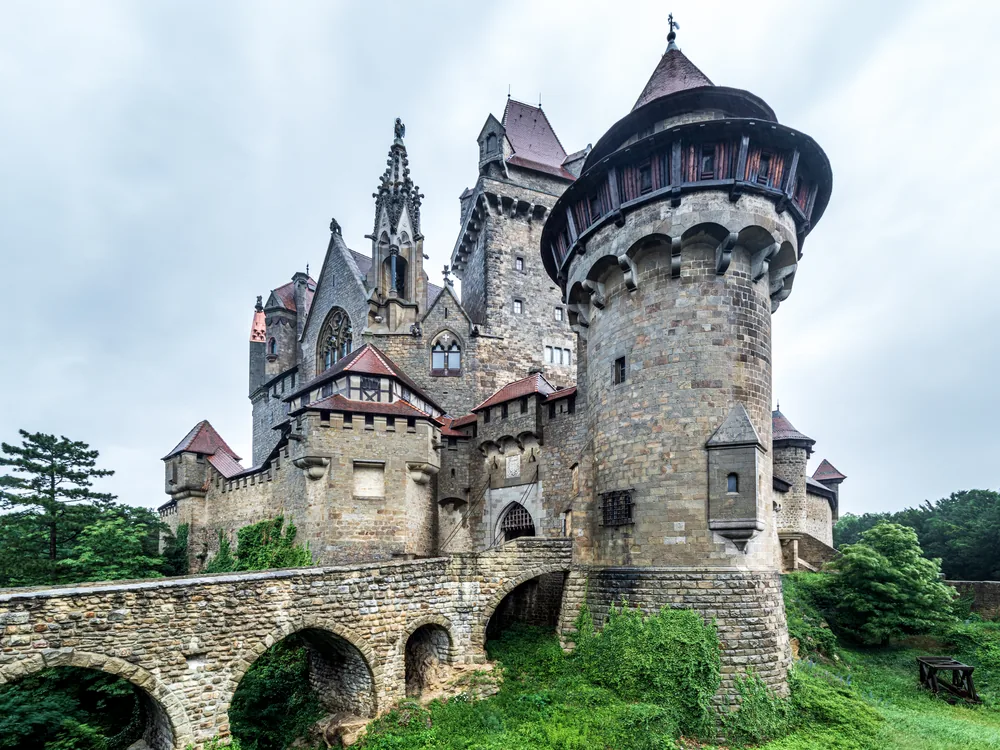
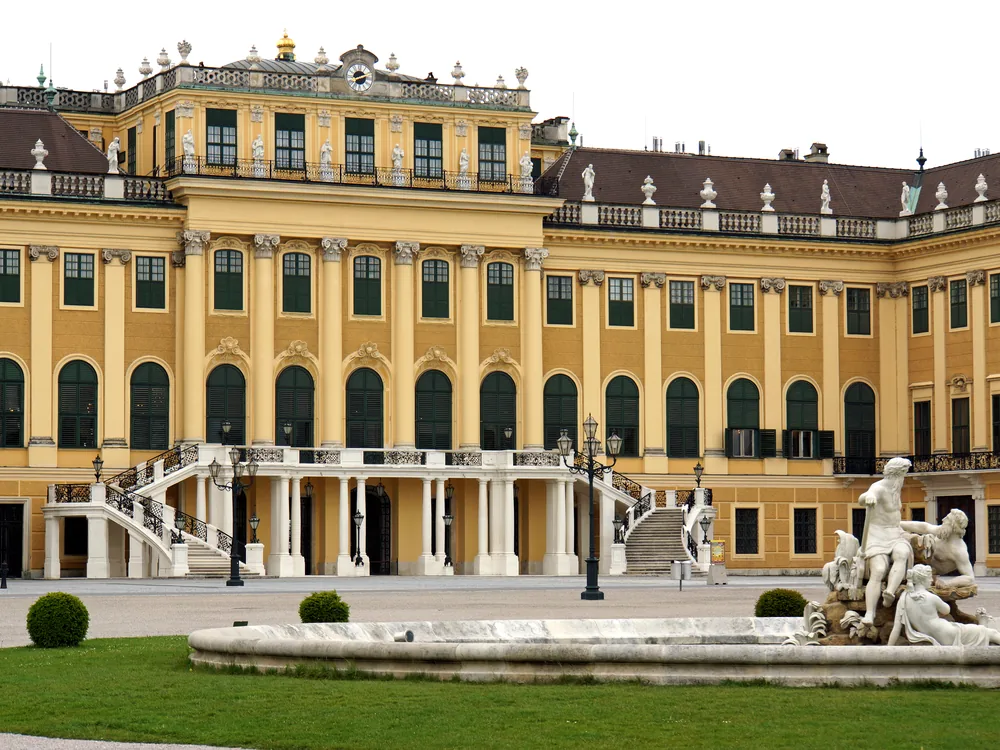
Combine with: Kreuzenstein Castle (~25 km north — the perfectly intact neo-Gothic fantasy castle rebuilt 1882–1906 by Count Wilczek to house his medieval art collection, included on the same GetYourGuide Vienna day tour) and Schönbrunn Palace (in Vienna — the Habsburg imperial summer residence, 1,441 rooms, and arguably the single most significant palace visit in Austria).
Frequently Asked Questions
No — it is in Maria Enzersdorf, Lower Austria, approximately 20 km south of Vienna. The castle is the ancestral namesake of the House of Liechtenstein, the dynasty that later founded the Principality, but the building itself is and always has been in Austria. The country took its name from the family; the family took its name from this castle.
Location
Burg Liechtenstein, 2344 Maria Enzersdorf, Lower Austria, Austria
Nearby Castles
Tours & Tickets
Powered by GetYourGuide
From
€216/ person