
Tsarevets Fortress
Царевец
Bulgaria · Veliko Tarnovo Province · Near Veliko Tarnovo
Built 1185 · Medieval Bulgarian fortification
This page is part of an independent travel guide and is not affiliated with, endorsed by, or operated by Tsarevets Fortress.
© Unsplash
Quick Facts
- Hours
- Daily 08:00–19:00
- Guided tour from
- €15
- Duration
- 2–3 hours
- Best time
- Spring and autumn for pleasant temperatures
- Nearest city
- Veliko Tarnovo
Featured Tour
Veliko Tarnovo: City Monuments Guided Walking Tour
Cancellation available · Instant confirmation
Highlights
- ✦The capital fortress of the Second Bulgarian Empire (1185–1393) — one of the most powerful medieval states in the Balkans
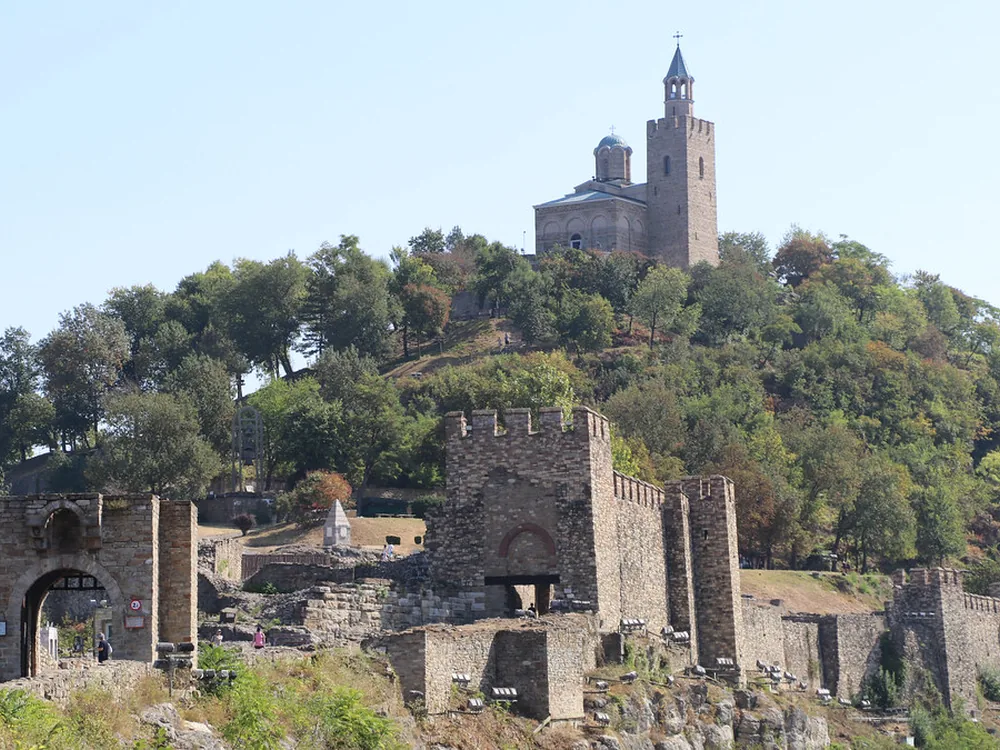
- ✦The hilltop Cathedral of the Holy Ascension — rebuilt after the Ottoman destruction of 1393, now the symbol of Bulgarian national identity
- ✦The Sound and Light Show — the fortress is illuminated with coloured lights, projections, and laser beams on selected evenings, telling the story of Bulgaria's medieval golden age
- ✦The Execution Rock — a cliff on the eastern side from which traitors were thrown into the river bend below, according to medieval Bulgarian chronicles
- ✦The view over the Yantra River gorge and the medieval city of Veliko Tarnovo — one of the most scenic historic cities in the Balkans
Skip the queue with a guided tour
Skip-the-line tickets & expert guides
Tsarevets rises from a steep hill encircled on three sides by a horseshoe bend of the Yantra River — a natural fortress that the Bulgarian Tsars transformed into the most powerful citadel in medieval Balkan history. From this hill, the emperors of the Second Bulgarian Empire ruled a state that stretched from the Danube to the Aegean and from the Black Sea to the Adriatic, challenging Byzantium and matching the great medieval kingdoms of Europe at their 13th-century height.
The fortress is a complex of over 400 houses, 18 churches, a royal palace, the Patriarch's Cathedral, and the execution cliff — an entire medieval city compressed onto a single hilltop. After the Ottoman conquest of Tarnovo in 1393 — when the last Bulgarian Patriarch Euthymius was imprisoned and the city was systematically destroyed — the site fell into ruin. The catastrophic fall of the capital became the defining trauma of Bulgarian national memory, and the reconstruction of the fortress and Cathedral, undertaken between 1930 and 1981, was a deliberate act of national cultural recovery.
The Sound and Light Show, performed on selected evenings, illuminates the entire hilltop with coloured lights, lasers, and recorded narration telling the story of the Bulgarian Empire's rise, golden age, and fall. It is one of the most atmospheric historical spectacles in the Balkans — the fortress, river, and surrounding town transformed into a single dramatic stage.
History
The hill at Tsarevets has been inhabited since Neolithic times and fortified since the early Byzantine period. Its defining historical moment came in 1185 when the brothers Asen and Peter led a rebellion against Byzantine rule from this hill, establishing the Second Bulgarian Empire with Tarnovo (later renamed Veliko — 'Great' — Tarnovo) as its capital.
The Second Bulgarian Empire was a major Balkan power for two centuries. Under Tsar Kaloyan (1197–1207), who defeated and captured the Latin Emperor Baldwin I after the Fourth Crusade, and under Ivan Asen II (1218–1241), whose empire reached its maximum extent, Tsarevets was one of the great royal courts of the medieval world. The Patriarch's Cathedral on the hilltop was the spiritual centre of the Bulgarian Orthodox Church, which had achieved independence from Constantinople in 1235.
The Ottoman conquest of 1393 ended the Second Bulgarian Empire definitively. The Ottoman commander Ali Pasha's forces besieged the city for three months; when it fell, the Patriarch Euthymius was exiled, the nobility was executed, and the churches and palace were systematically dismantled. Bulgaria remained under Ottoman rule for nearly 500 years. When Bulgarian independence was restored in 1878, Tsarevets became a symbol of the lost medieval golden age, and the reconstruction programme begun in 1930 was completed by the communist government in 1981.
How to Visit
Getting there: Veliko Tarnovo is 230 km from Sofia (2.5–3 hours by bus or car). Regular buses run from Sofia's Yug (South) terminal. By car, take the Hemus highway east from Sofia. Tsarevets hill is visible from the town centre — walk across the footbridge over the Yantra River to the fortress entrance.
Tickets: Adult €6, child €2. No advance booking required — tickets at the fortress entrance. The GetYourGuide "Veliko Tarnovo: City Monuments Guided Walking Tour" is a 2.5-hour guided walk covering Tsarevets and the city's key monuments.
Practical tips: The Sound and Light Show is the most atmospheric way to experience Tsarevets — the entire fortress is illuminated with coloured lights, projections, and lasers on selected evenings (primarily Fridays in summer, plus special events); check the Veliko Tarnovo municipality website for dates. For the best photograph of the fortress, position yourself on Gurko Street on the opposite hill — from there the full silhouette with the Cathedral at the summit is visible above the Yantra river gorge. Allow 2–3 hours inside.
Combine with: Belogradchik Fortress is Bulgaria's other major fortress site — best treated as a separate overnight trip (about 3 hours northwest by car). Closer to hand, Arbanasi village (3 km northeast) has beautifully preserved 17th–18th-century merchant houses and makes a natural afternoon addition.
Frequently Asked Questions
In July 1393, after a three-month siege, Ottoman forces under Ali Pasha captured Tarnovo. The last Bulgarian Patriarch Euthymius was put on trial and sentenced to exile (he died in a Bulgarian monastery around 1402). The Bulgarian nobility was largely executed. The churches, palace, and administrative buildings were demolished. The last Bulgarian Tsar, Ivan Shishman, was captured and killed in 1395, ending the Second Bulgarian Empire after 208 years.
Location
Tsarevets Hill, 5000 Veliko Tarnovo, Bulgaria
Nearby Castles
Tours & Tickets
Powered by GetYourGuide
From
€15/ person