
Walls of Dubrovnik
Dubrovačke gradske zidine
Croatia · Dalmatia, Dubrovnik — complete circuit around the Old Town · Near Dubrovnik
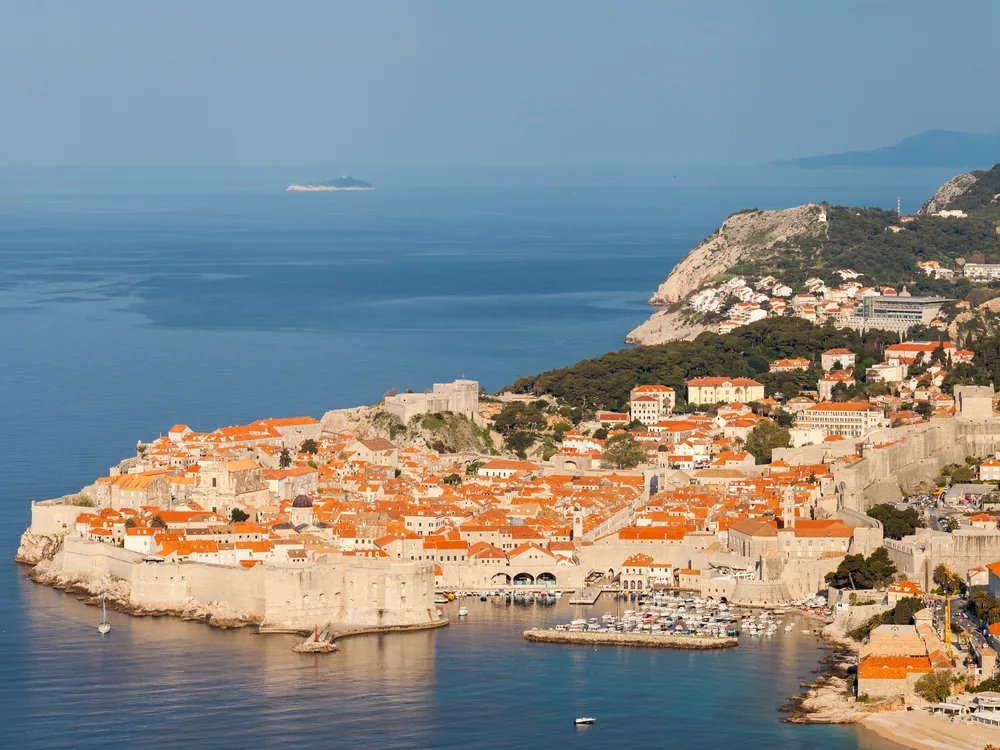
Built 1272 · Medieval and Renaissance urban fortification — a complete 1,940-metre circuit of walls enclosing the Old Town from sea level to 25 metres on the landward side; the definitive form was reached c. 1453 following the fall of Constantinople; the circuit includes 3 round towers, 14 square towers, 5 bastions, 2 corner fortifications, and St. John's Fortress guarding the harbour entrance; on the landward side the main walls are backed by Fort Bokar — a casemate fort and one of the oldest of its kind in Europe — plus one large bastion and nine smaller semicircular ones; the seaward walls are lower and backed by the harbour; the entire circuit rests on the medieval urban fabric of the Old Town and has never been significantly breached by military action
This page is part of an independent travel guide and is not affiliated with, endorsed by, or operated by Walls of Dubrovnik.
© Castles & Palaces
Quick Facts
- Hours
- Daily 08:00–19:30 (April–October); 10:00–15:00 (November–March)
- Guided tour from
- €25
- Duration
- 1.5–2 hours (circuit at easy pace); 2 hours (GetYourGuide guided tour)
- Best time
- May, June, and September
- Nearest city
- Dubrovnik
Featured Tour
Dubrovnik: City Walls Early Morning or Sunset Walking Tour
Cancellation available · Instant confirmation
Highlights
- ✦A complete unbroken 1,940-metre circuit — 3 round towers, 14 square towers, 5 bastions, and St. John's Fortress enclosing the entire Old Town without interruption; no significant breach has ever been made in the walls by military action; the circuit's continuous form is what allowed the walls to survive the 1667 earthquake that destroyed the city within them
- ✦UNESCO World Heritage Site (1979) — the inscription of the Old City of Dubrovnik explicitly includes the walls as the defining physical boundary of the site; the walls are not peripheral to the inscription but the structure that makes the inscribed area legible and coherent
- ✦The Republic of Ragusa's insurance policy — the walls protected a merchant city-state that maintained genuine independence for over four centuries (c. 1358–1808) between the Venetian and Ottoman empires, using a combination of fortification and diplomatic tribute-paying to preserve autonomy that no military ally could have provided; the walls made the cost of attacking Ragusa too high for any power to find it worthwhile
- ✦The 1453 construction surge — the fall of Constantinople to the Ottomans in May 1453 forced every Christian trading power on the Adriatic to invest immediately in fortification; Ragusa's response was the extension and completion of the wall circuit to the form that largely survives today, the definitive bastion additions and tower reinforcements all dating from the decades after this geopolitical shock
- ✦Survived the 1667 earthquake intact — the catastrophic earthquake of 6 April 1667 killed approximately 2,000 Ragusans and destroyed most of the city's buildings, palaces, and churches; the walls came through largely undamaged; this structural resilience — the continuous circuit distributing seismic forces rather than concentrating them — is the direct reason the Old Town was rebuilt rather than abandoned
- ✦GetYourGuide Early Morning or Sunset Walking Tour — the best-reviewed guided fortification tour in Croatia on this site; structured around the two periods when the circuit is least crowded and the light most photogenic
Skip the queue with a guided tour
Skip-the-line tickets & expert guides
The walls of Dubrovnik are 1,940 metres of unbroken fortification built in a complete circuit around the Old Town, running from sea level on the harbour side to heights of up to 25 metres on the landward side, reinforced by 3 round towers, 14 square towers, 5 bastions, 2 corner fortifications, and St. John's Fortress at the harbour mouth. They are the physical boundary of the UNESCO World Heritage Site inscribed in 1979 as the Old City of Dubrovnik, and they are the reason that old city survives intact: the walls came through the catastrophic earthquake of 1667 largely undamaged, making reconstruction possible when it might otherwise have meant abandonment.
The site has been fortified since the 8th century, when the settlement was still an island — ancient Ragusium on a rocky limestone outcrop separated from the Slavic settlement of Dubrava on the mainland shore by a shallow sea channel. By the 12th century the channel had been filled and the two communities merged; the course of the main street, the Stradun (Placa), follows exactly the line of the old channel. The systematic stone walls in something approaching their current form began to appear from the 12th century onward as the city grew and the Republic of Ragusa — the name the city-state adopted as it developed into a genuine independent polity — invested its considerable mercantile wealth in fortifications that it hoped would guarantee independence from the competing powers around it.
The year 1453 marks the critical turning point in the walls' construction history. The fall of Constantinople to the Ottoman Sultan Mehmed II in May of that year reordered the eastern Mediterranean's political geography overnight: the last vestige of the Eastern Roman Empire was extinguished, the Ottomans were now a land and sea power with unconstrained access to the Adriatic, and every Christian trading city on the coast was forced to reconsider its fortification. Ragusa responded by completing and extending its wall circuit to the form that largely survives today. The walls that visitors walk now are in significant part the emergency fortification programme of the 1450s through to the late 16th century, when the bastion system was added on the landward side — a programme driven by the same strategic shock that reshaped European military architecture across the continent.
What the Republic of Ragusa built the walls to protect was an unusual political creation: a merchant republic that maintained genuine independence for over four centuries through a combination of fortification and extraordinary diplomatic agility. The Republic paid an annual tribute to the Ottoman Sultan — negotiated in 1458 and renewed periodically — in exchange for near-total commercial and political autonomy: the right to trade under its own flag, operate its own courts, and govern its own affairs. This arrangement, simultaneously subordinate and independent, allowed Ragusan merchants to trade freely in Ottoman markets, Ragusan ships to operate in the eastern Mediterranean under the Ottoman umbrella, and the Republic to remain effectively neutral in the conflicts between the Ottoman Empire and the Christian powers of Venice, Spain, and the Habsburgs. The walls, in this context, were both a genuine military deterrent and a diplomatic signal: a fortification that told every potential aggressor that taking Ragusa would cost more than it was worth, so that the less costly option of diplomatic engagement and tributary arrangement would continue to look attractive.
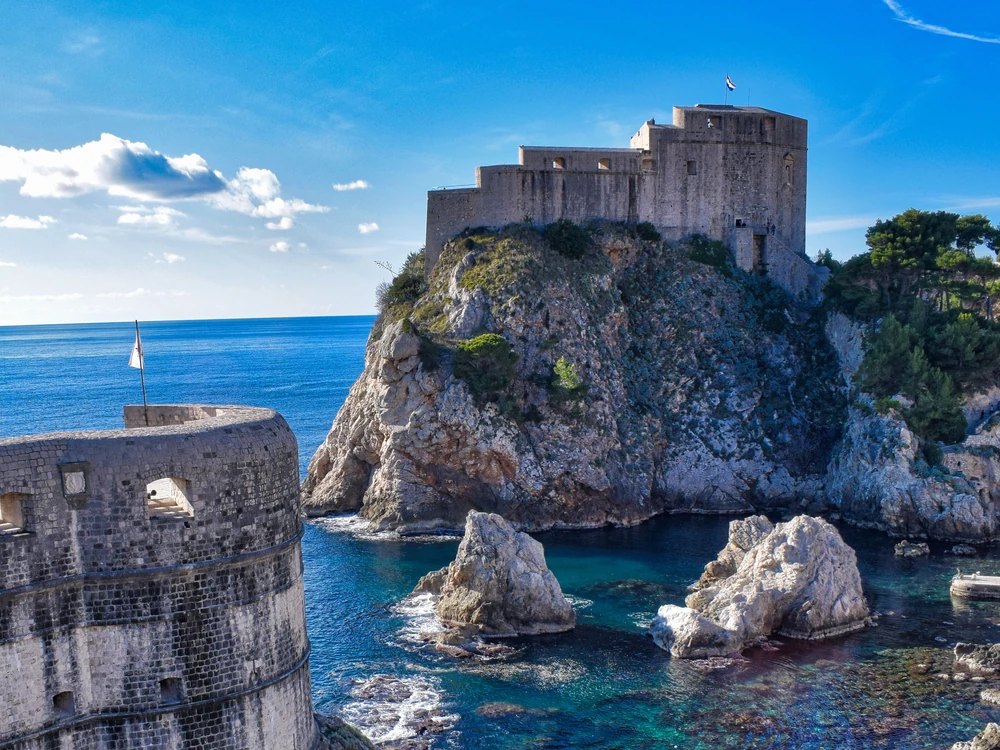
The motto of the Republic — "Libertas" (Liberty) — is inscribed over the gate of [Lovrijenac Fortress](/castles/croatia/lovrijenac), the independent fortification standing just outside the main city walls on a rocky sea-level promontory to the west. The inscription in full reads "Non bene pro toto libertas venditur auro": liberty is not well sold for all the gold in the world. Lovrijenac is a separate structure from the walls but historically inseparable from them — the two form a single defensive system, with the Republic's statutes specifying that Lovrijenac's commander (appointed monthly, never the same person twice) could be executed on the spot if he allowed the fortress to fall into foreign hands.
The walls' greatest test was not military but geological. On 6 April 1667, an earthquake estimated at approximately magnitude 7.0 struck the Dubrovnik coast. Within seconds, the earthquake and the fires it ignited killed roughly 2,000 people — approximately a third of the city's population at the time — and levelled most of the city's public buildings, palaces, churches, and private housing. The walls, however, came through largely intact: the massive continuous stone structure distributed the seismic forces across the whole circuit rather than concentrating them at specific points. The walls' survival made the choice to rebuild the Old Town rather than abandon it viable; the circuit that had been built to keep enemies out ended up being the reason the city could be put back together after the most devastating non-military event in its history. The baroque urban fabric visible from the wall-walk today — the uniform red-roofed buildings rebuilt after 1667 — is the reconstruction, not the original medieval city.
Walking the walls today — a 1,940-metre circuit that takes approximately 1.5 to 2 hours at a comfortable pace — gives an experience of the Old Town that no street-level perspective provides. The interior of the circuit displays the city's rebuilt baroque fabric as a unified composition within the enclosing walls; to the exterior, the Adriatic and the island of Lokrum on the seaward side, the harbour and the limestone hills on the landward. The GetYourGuide city walls early morning or sunset walking tour takes advantage of the off-peak access and light conditions that transform the circuit — the walls in late afternoon looking west over the harbour are among the most photographed sights in the Adriatic.
The site gained a second global audience when the Game of Thrones production team chose Dubrovnik's Old Town — and specifically the city walls, the Stradun, and the harbour — as the primary filming location for King's Landing, the capital of the Seven Kingdoms, across all eight seasons (2011–2019). The walls feature prominently in the series as King's Landing's battlements; the association drove a significant surge in visitors and the walls are now one of the most walked fortification circuits in Europe.
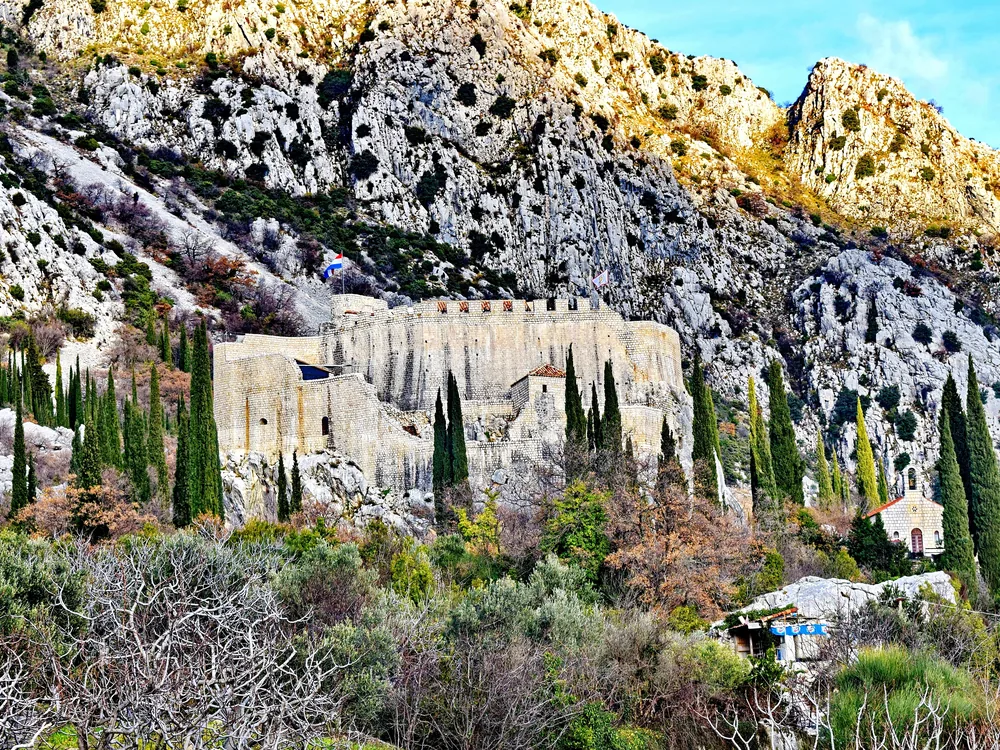
For the full Croatian fortification context on this site: [Lovrijenac Fortress](/castles/croatia/lovrijenac) immediately outside the walls — historically and physically part of the same defensive system — and [Sokol Fortress](/castles/croatia/sokol-fortress) in the Konavle region south of Dubrovnik.
History
Ragusa began as a limestone island settlement separated from the mainland Slavic town of Dubrava by a narrow sea channel. The island's first fortifications date to the 8th century; when the channel was filled in the 12th century and the two communities merged into a single city, systematic stone walls began to define the new urban perimeter. The Republic of Ragusa that emerged through the 13th and 14th centuries invested continuously in its walls as its mercantile wealth grew, understanding that the circuit of stone was what made the city's independence legible to its neighbours.
Independence from Venice came with the Peace of Zadar in 1358. The fall of Constantinople to the Ottomans in 1453 triggered a period of emergency extension and reinforcement that brought the wall circuit to its definitive form: the towers, bastions, and Fort Bokar (the oldest casemate fort of its type in Europe) that visitors walk today were substantially complete by the late 15th century. In 1458, Ragusa negotiated a characteristic solution to the Ottoman threat — an annual tribute payment in exchange for commercial autonomy and free trade under the Ragusan flag, effectively buying its independence while its Venetian rival fought and lost.
The catastrophic earthquake of 6 April 1667 killed some 2,000 citizens and destroyed most of the city's buildings; the walls survived largely intact, and the Old Town was rebuilt in baroque style within the standing circuit. Napoleon's forces occupied Ragusa in 1806, and the Republic was formally dissolved in 1808 after approximately 450 years of independence. The walls were inscribed as part of the UNESCO World Heritage Site in 1979. Yugoslav People's Army shelling in 1991–92 damaged sections of the Old Town but left the wall circuit structurally intact — evidence, once again, of the quality of construction that had protected the city for centuries.
How to Visit
Getting there: Dubrovnik has no rail connection — reach the Old Town by bus from Dubrovnik Airport (30 minutes) or the main bus terminal. Three wall entrances: Pile Gate (west, most popular), Ploče Gate (east), and the Maritime Museum entrance at St. John's Fortress.
Tickets: Approximately €35 adult / €10 child at peak season (lower in winter); the same-day ticket also covers Lovrijenac Fortress. Buy at the gate on arrival. The GetYourGuide City Walls Early Morning or Sunset Walking Tour is a 2-hour guided circuit at the quietest and most photogenic times of day; confirm whether wall entry is included or payable separately at the time of booking.
Practical tips: Arrive at opening (08:00) or in the last 1–2 hours before closing — July and August midday is intensely crowded with cruise-ship visitors and the exposed wall-walk has no shade. The counterclockwise direction (starting from Pile Gate) puts the best harbour and sea views on your right side in morning light. The full circuit takes 1.5–2 hours at a comfortable pace.
Combine with: Lovrijenac Fortress, just outside Pile Gate and included with the same day ticket, is a 30-minute addition essential for the "Libertas" inscription and the views back to the walls. Sokol Fortress in the Konavle Valley south of Dubrovnik extends the Ragusan defensive heritage to the city's rural hinterland.
Frequently Asked Questions
The Republic of Ragusa was an independent merchant city-state centred on Dubrovnik that maintained genuine political independence for approximately 450 years (c. 1358–1808). It survived between the Venetian Empire to the north and west and the Ottoman Empire to the east by combining formidable fortifications with sophisticated diplomacy — most famously by paying an annual tribute to the Ottoman Sultan in exchange for the right to trade freely under its own flag throughout Ottoman-controlled territory. The walls were the physical guarantee that made this diplomatic arrangement credible: no aggressor could take Ragusa cheaply, so every power found it more profitable to trade with Ragusa than fight it. The Republic's motto — 'Libertas' — is inscribed over the nearby Lovrijenac Fortress.
Location
Placa (Stradun), 20000 Dubrovnik, Croatia
Nearby Castles
Tours & Tickets
Powered by GetYourGuide
From
€25/ person