
Walls of Ston
Stonske zidine
Croatia · Pelješac Peninsula, Dubrovnik-Neretva County, Croatia · Near Ston
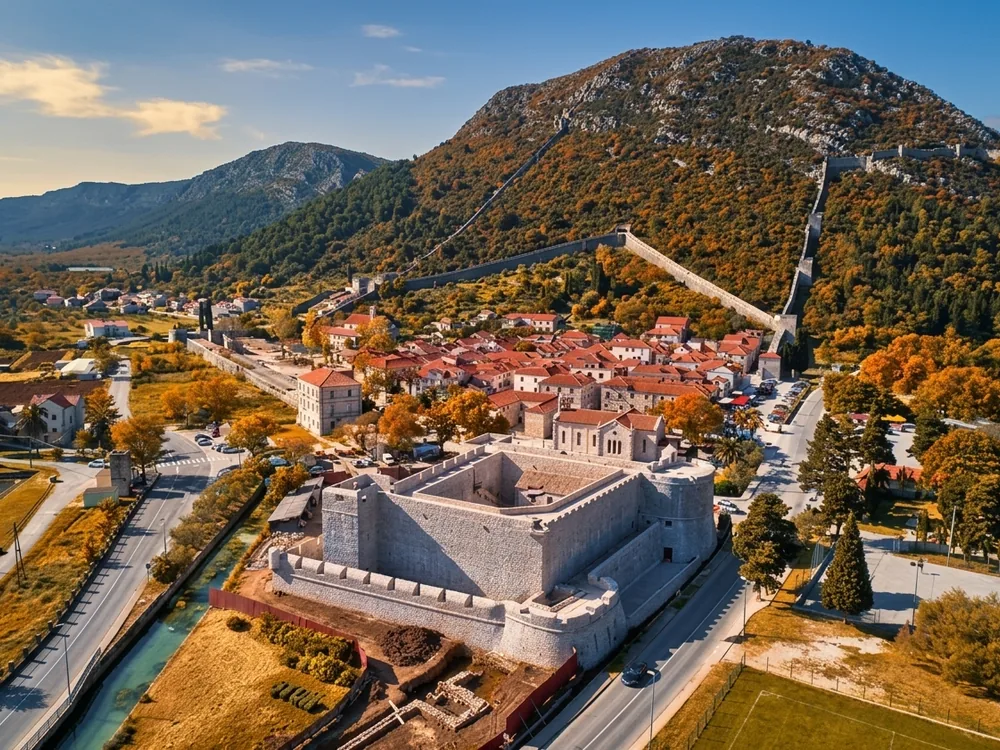
Built 1359 · Late-medieval Ragusan defensive wall system; 5.5 km of surviving fortification (originally approximately 7 km) connecting the twin towns of Ston and Mali Ston across the Pelješac Peninsula; towers, crenellated parapets, and two anchor fortresses at the Ston and Mali Ston ends of the circuit
This page is part of an independent travel guide and is not affiliated with, endorsed by, or operated by Walls of Ston.
© Castles & Palaces
Quick Facts
- Hours
- Daily 09:00–18:00
- Guided tour from
- €46
- Duration
- 1.5–2.5 hours
- Best time
- May to October
- Nearest city
- Ston
Featured Tour
From Dubrovnik: Ston and Mali Ston Guided Walking Tour
Cancellation available · Instant confirmation
Highlights
- ✦5.5 km of surviving medieval fortification — the Walls of Ston form the second-longest medieval defensive wall in the world (after the Great Wall of China), stretching across the Pelješac Peninsula to connect Ston and Mali Ston with a circuit of towers, gates, and crenellated parapets
- ✦Built by the Republic of Ragusa from 1359 to guard the salt production that funded the republic's wealth — Ston's saltworks were the most productive in the Adriatic and the economic engine behind Dubrovnik's reputation as the 'Pearl of the Adriatic'
- ✦The Ston saltworks are still in operation today — one of the oldest continuously operated salt production facilities in Europe, using the same wind-and-sun evaporation method as the medieval Ragusan era, and a working stop on the GetYourGuide tour
- ✦The GetYourGuide guided tour from Dubrovnik covers the wall walk, both the Ston and Mali Ston fortresses, and a visit to the working saltworks, with all entrance fees included
- ✦Ston's shellfish — the town's proximity to the Mali Ston Bay, sheltered by the wall's northern arm, makes the bay one of Croatia's finest oyster and mussel cultivation zones; many visitors combine the wall with lunch at a seafood restaurant in Mali Ston
Skip the queue with a guided tour
Skip-the-line tickets & expert guides
The Walls of Ston were built by the Republic of Ragusa starting in 1359 for a reason that was straightforwardly economic: Ston's saltworks were the most productive on the eastern Adriatic coast, and salt was the commodity that funded Ragusan prosperity. The republic needed to protect what was, in medieval terms, a treasury. The solution was one of the most ambitious fortification programmes in medieval Europe: a continuous defensive circuit connecting the twin towns of Ston (on the south slope of the peninsula) and Mali Ston (on the north coast facing the Neretva estuary) — a distance of approximately 5.5 km across the narrowest point of the Pelješac Peninsula.
The resulting structure is the second-longest surviving medieval defensive wall in the world. The wall system includes 40 towers and five fortresses, with the principal fortress Veliki Kaštio anchoring the Ston end and the smaller Koruna fortress protecting the Mali Ston end. The combination of the circuit wall, the towers, and the fortresses formed a system of redundant defense in depth: an attacker who breached one section faced fresh defensive positions at the next. The wall's reputation in medieval Europe was significant — Ragusan sources recorded that diplomats and visitors compared it favourably to the most formidable fortifications in Europe.
The saltworks below the walls are still in operation using essentially the same technology as in 1359: seawater pumped or channelled into shallow evaporation pans, dried by sun and wind, then raked into crystalline salt — a process that has not fundamentally changed in 650 years. The salt is sold commercially, and visits to the working pans are part of the GetYourGuide tour from Dubrovnik.
The GetYourGuide guided tour covers the wall walk, the Ston and Mali Ston fortresses, and the saltworks visit in a half-day from Dubrovnik, with all entrance fees included. The drive from Dubrovnik along the Pelješac Peninsula also passes through some of the most scenic coastal road in Dalmatia.
History
The Republic of Ragusa (Dubrovnik) purchased the Ston area from the Kingdom of Bosnia in 1333 and immediately began planning its fortification. Construction of the wall system started in 1359, designed by Ragusan master builders and local stone masons, and the main circuit was completed over the following decades. The fortification programme was a direct response to the strategic importance of Ston's salt: the republic's administrative records show that the saltworks generated revenues that were a significant fraction of Ragusa's annual income. The walls were substantially damaged in the 1667 earthquake that also devastated Dubrovnik and reduced much of the town of Ston to rubble. Reconstruction and repair continued through the 18th century. Further damage in the 1996 earthquake required another major restoration programme, completed in phases through the 2000s. The saltworks have been in continuous operation since the medieval period.
How to Visit
Getting there: Ston is 65 km north of Dubrovnik on the Pelješac Peninsula, connected by the D8 coastal road. Buses from Dubrovnik's main station serve Ston (journey time approximately 1.5 hours). The GetYourGuide guided tour from Dubrovnik provides transport. Note: the Pelješac Bridge (opened 2022) now allows direct road access from Dubrovnik to the peninsula without crossing Bosnia-Herzegovina, simplifying the journey.
Tickets: Walk-up entry to the wall walk and both fortresses costs approximately €15 per adult, €7 per child, purchased at the wall entrance in Ston. The GetYourGuide guided half-day tour from Dubrovnik includes all wall and fortress entrance fees, the saltworks visit, and a professional English-speaking guide. The saltworks have no separate entry charge; they are included in the wall ticket.
Practical tips: The full wall walk is approximately 5.5 km with consistent ascents and descents on stone steps and exposed parapets — allow 1.5–2 hours for the walk itself. It is fully exposed: sun protection and 1–1.5 litres of water per person are essential in summer. Early morning (before 10:00) or late afternoon are far more comfortable than midday in July and August. After the wall, most visitors walk or drive the 2 km to Mali Ston for lunch at one of the bay's shellfish restaurants — Mali Ston oysters are one of the region's signature products.
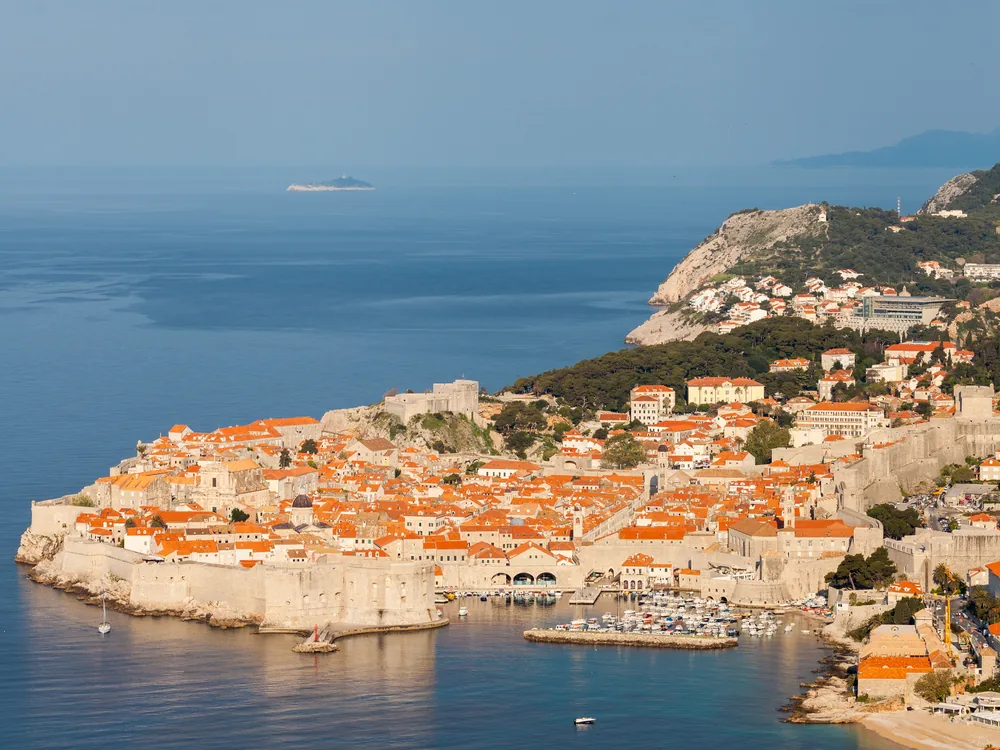
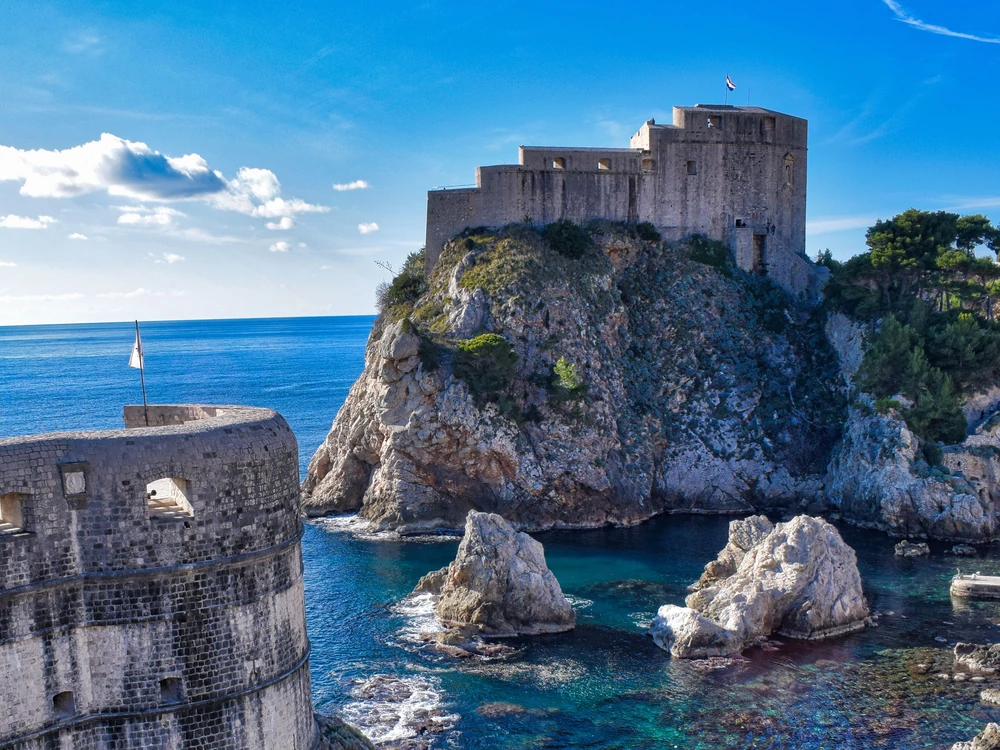
Combine with: Walls of Dubrovnik (~65 km south — Dubrovnik's extraordinary medieval city wall system, UNESCO-listed, with panoramic views over the old town from the parapet walk) and Lovrijenac (~65 km south — the detached Ragusan fortress built on a 37-metre rock just outside Dubrovnik's walls, with Game of Thrones filming connections).
Frequently Asked Questions
Yes — the Walls of Ston, at approximately 5.5 km of surviving structure (from an original circa 7 km), are frequently cited as the second-longest medieval defensive wall in the world after the Great Wall of China. The comparison requires some caveats: the Great Wall is a system of walls rather than a single continuous structure, and 'medieval' applies to different periods in different contexts. But in the European context, the Ston circuit is exceptional: no other medieval European defensive wall of comparable length and completeness survives in a single, continuously visible site.
Location
Ston 20230, Dubrovnik-Neretva County, Croatia
Nearby Castles
Tours & Tickets
Powered by GetYourGuide
From
€46/ person