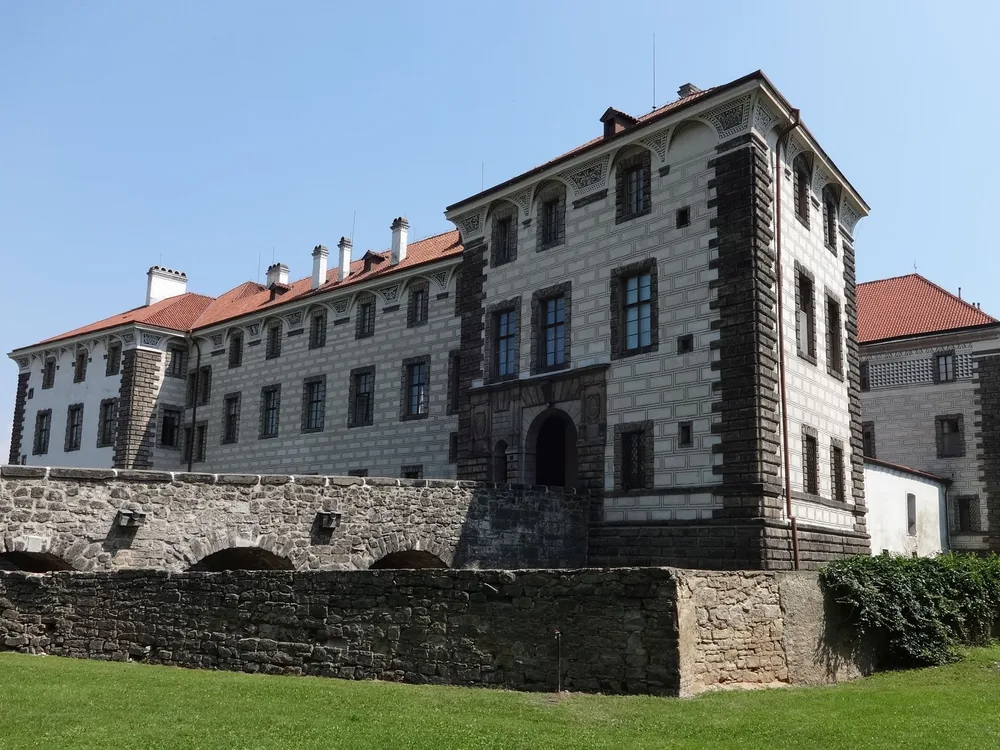
Nelahozeves Castle
Zámek Nelahozeves
Czech republic · Central Bohemia · Near Nelahozeves, near Prague
Built 1553 · Renaissance castle built by the Lobkowicz family between 1553 and 1614, directly above the Vltava River approximately 30 km north of Prague; the castle's facade features sgraffito decoration in the Czech Renaissance tradition, one of the most complete Renaissance sgraffito exteriors in Bohemia; the interior houses 12 rooms of the Lobkowicz Museum, containing Old Master paintings (including works attributed to Bruegel, Velázquez, and Canaletto), music manuscripts from the family's patronage collection (including scores connected to Haydn and Beethoven), historical armoury, and decorated period rooms; the village of Nelahozeves is also the birthplace of Antonín Dvořák, whose childhood home operates as a separate museum at the foot of the castle hill
This page is part of an independent travel guide and is not affiliated with, endorsed by, or operated by Nelahozeves Castle.
© Castles & Palaces
Quick Facts
- Hours
- Tue–Sun 09:00–17:00. Closed Mon
- Guided tour from
- €11
- Duration
- 1.5–2.5 hours
- Best time
- April to October
- Nearest city
- Nelahozeves, near Prague
Featured Tour
Nelahozeves: Tour of Nelahozeves Castle
Cancellation available · Instant confirmation
Highlights
- ✦The Lobkowicz family were among the most significant private art patrons in Central European history: their Nelahozeves collection includes Old Master paintings attributed to Pieter Bruegel the Elder, Diego Velázquez, and Giovanni Antonio Canaletto, alongside one of the most important private music manuscript collections in Europe — including original scores annotated by Haydn and Beethoven, both of whom received Lobkowicz patronage
- ✦The village of Nelahozeves is the birthplace of Antonín Dvořák (1841–1904), one of the most performed composers in the classical repertoire; his childhood home at the foot of the castle hill is a separate museum dedicated to the composer's early life, making Nelahozeves a rare site where a major aristocratic art collection and a major composer's origins coincide in a single small village
- ✦Nelahozeves Castle was built by the Lobkowicz family from 1553 to 1614 and features one of the most complete Renaissance sgraffito exteriors in Bohemia — the decorative plaster-incision work on the facade is a distinctive visual element that immediately distinguishes the castle from the Baroque and Gothic buildings that dominate most Czech castle lists
- ✦The Lobkowicz collection was confiscated twice in the 20th century — first by the Nazi occupation in 1939 and again by the communist government after 1948 — and was restituted to the family in the 1990s after the Velvet Revolution; the family's decision to return the collection to Nelahozeves and open it to the public makes the castle's display a story about cultural restitution as much as aristocratic heritage
- ✦From Prague, Nelahozeves is a 40-minute S-train journey from the city centre — one of the most accessible significant castle visits in Bohemia, without the coach-tour crowds that descend on Český Krumlov or the longer travel times required for Hluboká or Lednice
Skip the queue with a guided tour
Skip-the-line tickets & expert guides
The Lobkowicz family's position in Central European art history is built on a combination of factors that rarely overlap in a single noble house: territorial wealth in Bohemia across many generations, active patronage of the leading composers of the late 18th and early 19th centuries, a systematic collecting programme for Old Master paintings across three centuries, and the documentary survival of the collection's history through two catastrophic 20th-century confiscations and two restitutions. The result is a private collection — now housed in Nelahozeves Castle and in Lobkowicz Palace at Prague Castle — that represents one of the most historically layered and intellectually rich museum experiences in Central Europe, in a setting that most visitors from outside the Czech Republic have never heard of.
The castle at Nelahozeves was built by the Lobkowicz family from 1553 to 1614, on a cliff directly above the Vltava River approximately 30 kilometres north of Prague. The construction spans the Czech Renaissance period and is visible in the facade's sgraffito decoration — a technique in which the surface plaster is scratched or incised before it dries, creating patterns that contrast the different layers of the plaster to produce geometric and figural decorations. The Nelahozeves sgraffito is one of the most complete Renaissance sgraffito exteriors surviving in Bohemia, giving the castle a visual character distinct from the Gothic and Baroque buildings that dominate most Czech castle itineraries and immediately signalling the specific historical moment of its construction.
The 12 rooms of the Lobkowicz Museum inside the castle present the family's collections in period settings that maintain something of the original residential character. The painting collection includes works attributed to Pieter Bruegel the Elder — a 16th-century Flemish master whose works are among the most sought-after and most expensive in the Old Master market — alongside pictures attributed to Diego Velázquez and Giovanni Antonio Canaletto. These attributions, as with most Old Master attributions, carry the inherent uncertainty of centuries of changing scholarly opinion and market pressure, but the core of the collection is well-documented and the Lobkowicz family's collecting history is traceable through archival records that survived both 20th-century confiscations.
The music manuscript collection is the family's most distinctive holding in European cultural terms. The Lobkowicz family were major patrons of late 18th and early 19th-century classical music in a period when private aristocratic patronage was still the primary mechanism by which composers received support and commissions. Franz Joseph Haydn dedicated his op. 77 string quartets to Prince Joseph Franz Maximilian von Lobkowicz. Ludwig van Beethoven dedicated the Eroica symphony, the Triple Concerto, and several string quartets to the same prince, and received from him a regular annuity that provided significant financial security during the critical years of his middle period. The original scores and manuscript materials associated with these dedications — annotated with the composers' corrections and the prince's annotations — are among the Lobkowicz holdings, making the collection's music manuscripts among the most historically important private musical archives in existence.
The collection was confiscated twice in the 20th century. When Nazi Germany occupied Czechoslovakia in 1939, the Lobkowicz family fled and their property was seized. After the war's end, the family returned briefly before the 1948 communist coup led to a second confiscation under the new government's nationalisation programme. The family spent the Cold War in exile, and their collections were dispersed to various state museums and institutions. The 1989 Velvet Revolution opened the path to restitution, which was completed across the 1990s. The family's decision to bring the collection back to Nelahozeves — rather than selling it or maintaining it in a more commercially prominent location — and to open it to the public as a private museum is itself a significant cultural-heritage decision, and it gives the visit a dimension beyond the standard noble-collection experience.
The coincidence with Antonín Dvořák's birthplace is the site's other hook, and it is specific and checkable: Dvořák was born in 1841 in the village of Nelahozeves, directly below the castle, in the house of his father, who was a village butcher and innkeeper. The house is preserved as the Dvořák Birthplace Museum and is a short walk from the castle entrance. Visiting both — the Lobkowicz collection in the castle above and the Dvořák house below — gives Nelahozeves a cultural double-bill unusual for a village of this size: 16th-century aristocratic art patronage in the castle and one of the most performed composers in the classical repertoire in the house at the foot of the hill. The two are not directly connected historically — the Lobkowicz family's great musical patron was the 18th-century prince who died decades before Dvořák was born — but their proximity in one small Bohemian village is the kind of coincidence that heritage itineraries are built around.
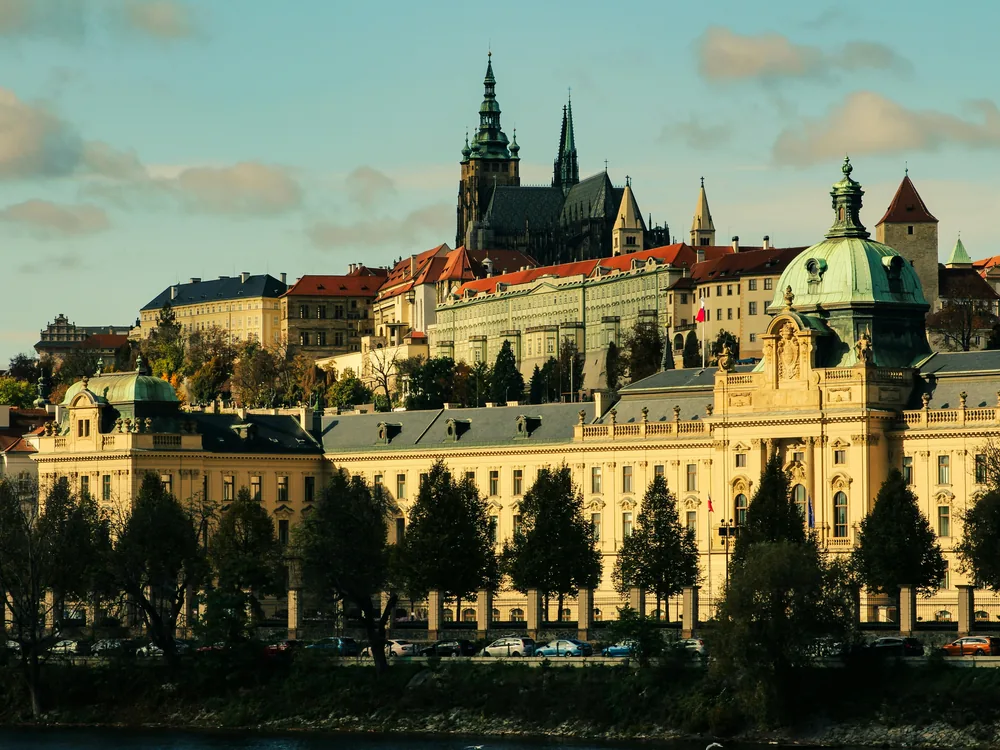
Practically, Nelahozeves is one of the most accessible significant castle destinations from Prague. The S4 suburban train from Masarykovo nádraží or Holešovice takes approximately 40 minutes to Nelahozeves zastávka, with regular services through the day. The castle is a 10-minute walk uphill from the station. The GetYourGuide ticket includes a 1-hour guided tour in Czech, English, or German — the guide is important for decoding the collection's patronage history, which the rooms themselves suggest but do not fully explain. Prague Castle, approximately 30 kilometres south and already on this site, is the day-trip companion for visitors spending time in the capital; the contrast between the grand state castle that defined Bohemian royal power and the smaller private Lobkowicz collection in a Renaissance village above the Vltava captures a significant range of Czech heritage.
History
Nelahozeves Castle was built by the Lobkowicz family from 1553 to 1614 on a cliff above the Vltava, one of the major examples of Renaissance castle construction in Bohemia. The Lobkowicz family were major private art collectors and musical patrons; Beethoven and Haydn both received Lobkowicz patronage in the early 19th century. The castle and collection were confiscated during the Nazi occupation (1939) and again by the communist government (1948). Following the 1989 Velvet Revolution, the family received restitution of their properties and returned the collection to Nelahozeves, opening it as the Lobkowicz Museum. The village is also the birthplace of composer Antonín Dvořák (1841), whose childhood home is preserved as a separate museum.
How to Visit
Getting there: Take the S4 suburban train from Praha Masarykovo nádraží or Holešovice to Nelahozeves zastávka (~40 minutes). The castle is a 10-minute walk uphill from the station. By car from Prague, take the D8 motorway north to the Nelahozeves exit (~35 minutes).
Tickets: Walk-up entry is €9 adult, €5 child. The GetYourGuide guided tour includes a 1-hour tour in Czech, English, or German — the guide is valuable for understanding the collection's patronage history, which the rooms alone do not fully explain.
Practical tips: Allow 1 hour for the guided castle tour plus extra time for the Dvořák Birthplace Museum in the village below (separately ticketed, a short walk downhill from the castle entrance). The castle closes on Mondays.
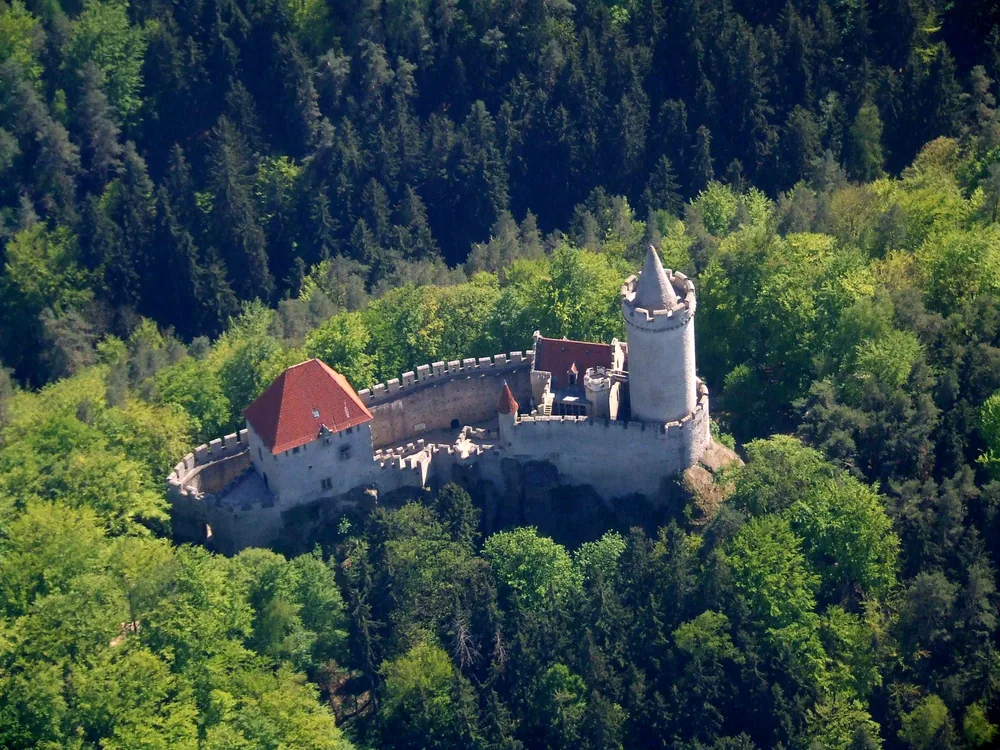
Combine with: Prague Castle — 30 km south, the natural pairing for Prague-based visitors contrasting royal state power with private aristocratic patronage. Kokořín Castle — the Gothic sandstone-ridge castle 30 km northeast.
Frequently Asked Questions
The Lobkowicz family were major patrons of late 18th and early 19th-century composers, most notably Prince Joseph Franz Maximilian von Lobkowicz, to whom Beethoven dedicated the Eroica symphony, Triple Concerto, and several string quartets, and who also received Haydn's op. 77 quartets. The original manuscript scores, letters, and annotated materials associated with these works are among the Lobkowicz holdings at Nelahozeves, making the collection one of the most historically important private musical archives in Europe. The collection was twice confiscated in the 20th century and was restituted to the family after 1989.
Location
Zámek Nelahozeves 1, 277 51 Nelahozeves, Czech Republic
Nearby Castles
Tours & Tickets
Powered by GetYourGuide
From
€11/ person