
Bickleigh Castle
England · Devon — Bickleigh, near Tiverton · Near Exeter
Built 600 · A Saxon Moot House (now the Chapel) dating to around 600 AD, with a Norman motte-and-bailey castle added in 1018, altered in the 15th and 17th centuries
This page is part of an independent travel guide and is not affiliated with, endorsed by, or operated by Bickleigh Castle.
© Castles & Palaces
Quick Facts
- Rooms from
- £64 / night
- Day-visit entry
- £4
- Duration
- Garden walk: around 1 hour; combined garden walk and guided tour: 1.5–2 hours, Thursdays only, April to October, 12:00–17:00
- Best time
- April to October
- Booking
- Required — book 1+ days ahead
- Nearest city
- Exeter
Stay Here
Bickleigh Castle
Booked via Booking.com · Free cancellation on most rates
Open to day visitors without booking a room — see How to Visit below.
Highlights
- ✦The Saxon Moot House, today the Chapel, dates to around 600 AD; the original Norman motte-and-bailey castle was built in 1018 to defend the Bickleigh community, later altered in the 15th and 17th centuries
- ✦One of Devon's most significant medieval manor houses, seat of a cadet branch of the Earls of Devon and later the Carew family, a leading county gentry family
- ✦A Royalist stronghold in the Civil War: in 1644, Queen Henrietta Maria, wife of Charles I, stayed as a guest of Sir Henry and Lady Dorothy Carew
- ✦Besieged by Parliamentary forces under General Fairfax in late 1645; deliberately 'slighted' (damaged) afterward to prevent future military use
- ✦Today a 15-room bed and breakfast in thatched cottages around the castle courtyard, with the castle, chapel and gardens open to day visitors on Thursdays, April to October, 12:00–5pm — garden walk £4 adult, combined garden walk and guided tour with resident historian £9 adult / £5 child, cream teas served 12:00–2pm
Stay in the castle itself
Book a room via Booking.com
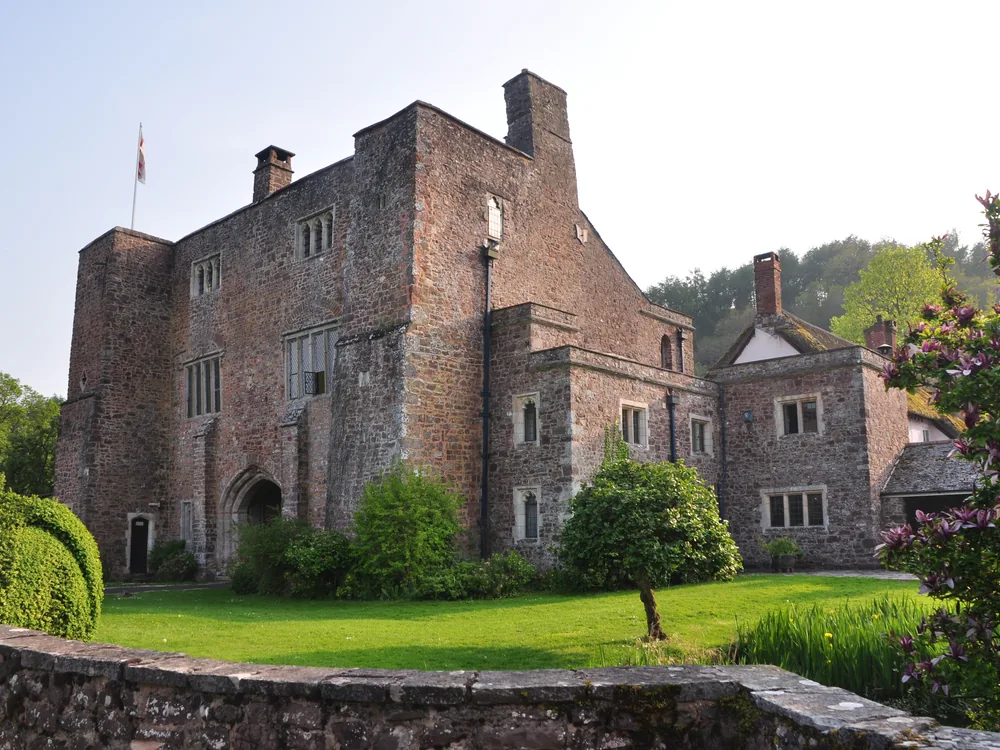
Bickleigh Castle sits on the banks of the River Exe near Tiverton in Devon, and its documented history reaches back further than almost any other property in this entire pilot collection. The site's oldest structure, the Saxon Moot House — the meeting hall of an Anglo-Saxon community, today preserved as the castle's Chapel — dates to around 600 AD, centuries before the Norman Conquest reshaped English landholding and fortification. The Normans added a motte-and-bailey castle on the same ground in 1018, built specifically to defend the Bickleigh community, and the resulting complex was subsequently altered in both the 15th and 17th centuries as successive owners adapted the buildings to changing needs and tastes.
Bickleigh developed into one of Devon's most historically significant medieval manor houses, serving as the seat first of a cadet branch of the Earls of Devon and later of the Carew family, one of the county's leading gentry families. The Carews' tenure placed Bickleigh firmly on the Royalist side during the English Civil War, and the castle's most evocative historical moment came in 1644, when Queen Henrietta Maria, wife of King Charles I, stayed at Bickleigh as a guest of Sir Henry and Lady Dorothy Carew — a direct royal visit during one of the most turbulent periods in English constitutional history.
That Royalist association came at a cost. In late 1645, Bickleigh was besieged by Parliamentary forces under General Fairfax, one of the New Model Army's most effective commanders, and following the siege the castle was deliberately 'slighted' — partially demolished — to prevent it from being used for military purposes again. This practice of slighting captured Royalist strongholds was common across England during and after the Civil War, and Bickleigh's altered later form reflects this deliberate wartime damage layered onto centuries of earlier peaceful development.
Today Bickleigh operates as a 15-room bed and breakfast, its guest accommodation arranged in thatched cottages surrounding the castle's own courtyard — a genuinely distinctive architectural arrangement compared to the single large building found at most comparable properties. What sets Bickleigh apart most clearly within this collection, however, is its approach to day-visitor access: rather than relying on hotel restaurant dining, Bickleigh opens the castle, its Saxon chapel and its gardens to genuine day visitors on Thursdays, from April through October, between noon and 5pm — a real, independently structured visitor product comparable in spirit to Appleby Castle's Norman Centre in this same collection.
Visitors on these Thursday openings can choose a simple garden walk for £4 per adult, or a combined garden walk and guided tour led by the castle's resident historian for £9 per adult and £5 per child, with the guided tour departing at 2:30pm. Cream teas are served between noon and 2pm, rounding out a genuinely full afternoon's visit built around real historical content rather than a hotel amenity dressed up as an attraction. The Saxon chapel and the castle's ground floor are wheelchair accessible, a detail worth knowing given how many buildings of this age present genuine accessibility barriers. For visitors exploring Devon's Exe valley, Bickleigh offers a rare combination in this collection: over 1,400 years of continuous documented history on a single site, a real siege story, a royal guest, and a clearly priced, seasonal day-visit product built around genuine historical interpretation.
The surrounding Exe valley is itself a genuine draw beyond the castle walls, with the river offering opportunities for wild swimming and paddling on quieter stretches near Bickleigh, and the wider Mid Devon countryside providing a genuinely rural, unhurried counterpoint to Devon's better-known coastal resorts further south. Bickleigh's position within easy reach of both Exeter and Tiverton makes it a workable day-trip destination for visitors based in either town, while its limited Thursday-only opening schedule rewards those who plan their visit specifically around the castle's own calendar rather than assuming year-round or daily access.
History
Bickleigh Castle's Saxon Moot House, today the Chapel, dates to around 600 AD. The Normans built a motte-and-bailey castle on the site in 1018 to defend the Bickleigh community, later altered in the 15th and 17th centuries. The castle became the seat of a cadet branch of the Earls of Devon and later the Carew family. In 1644, Queen Henrietta Maria stayed at Bickleigh as a guest of Sir Henry and Lady Dorothy Carew. The castle was besieged by Parliamentary forces under General Fairfax in late 1645 and deliberately slighted afterward to prevent future military use. Today it operates as a 15-room bed and breakfast in thatched cottages around the castle courtyard, with the castle, chapel and gardens open to day visitors on Thursdays from April to October.
Frequently Asked Questions
Yes, on a specific schedule: the castle, Saxon chapel and gardens are open to day visitors on Thursdays only, from April through October, between noon and 5pm. A simple garden walk costs £4 per adult, while a combined garden walk and guided tour with the resident historian, departing at 2:30pm, costs £9 per adult and £5 per child. Cream teas are served between noon and 2pm.
Location
Bickleigh, Tiverton, Devon EX16 8RP, England
Nearby Castles

Rooms from
£64/ night