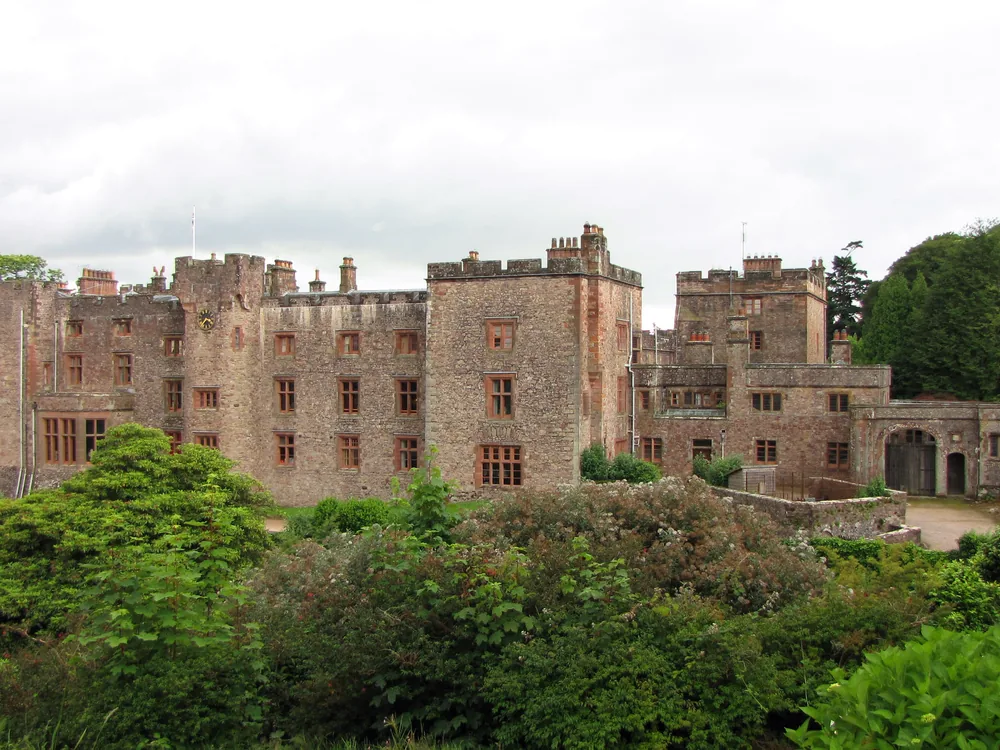
Muncaster Castle
Muncaster Castle
England · Cumbria / Lake District · Near Ravenglass
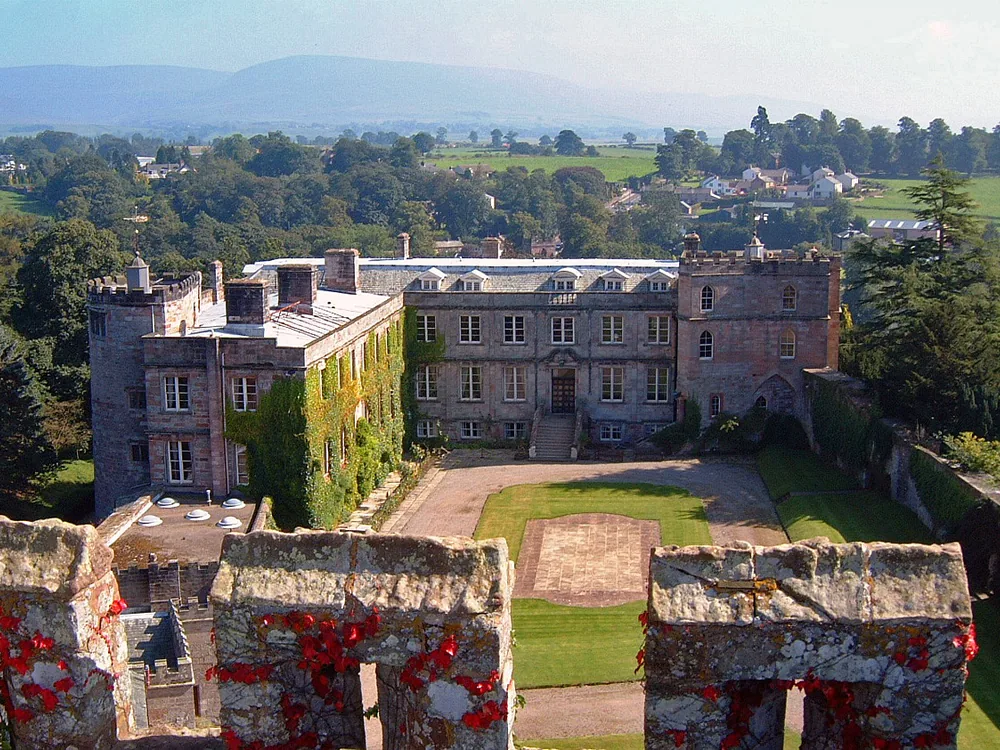
Built 1325 · Medieval peel tower with Victorian Gothic additions — the original 1325 peel tower (a defensive farmstead characteristic of the Anglo-Scottish borders region) was substantially expanded in the Victorian period by Anthony Salvin under the 2nd Earl of Muncaster (1860s), who added the formal reception rooms, the Octagonal Library, and the roofscape; set in 70 acres of Himalayan gardens above the Esk valley with views to the Scafell massif and the western Lake District fells
This page is part of an independent travel guide and is not affiliated with, endorsed by, or operated by Muncaster Castle.
© Castles & Palaces
Quick Facts
- Hours
- Daily 10:30–17:00
- Day trip from
- €129
- Duration
- 3–4 hours (house + gardens + World Owl Trust + Medieval Weapons Hall); the grounds alone justify a full morning
- Best time
- March to June
- Nearest city
- Ravenglass
Featured Tour
From Windermere: Muncaster Castle Guided Day Trip with Lunch
Cancellation available · Instant confirmation
Highlights
- ✦The 'Luck of Muncaster' — the blown-glass bowl given by Henry VI to Sir John Pennington after the Pennington family sheltered the fugitive king following the Battle of Barnet (1461); Henry VI's last words to Sir John were reportedly 'as long as this cup remains unbroken, the Pennington family shall never want a male heir'; the Luck has remained unbroken for over 560 years and the Pennington family still owns the castle
- ✦The guided tour from £17 — the GetYourGuide-listed day trip (8 hours) includes admission, guided tour of the castle interiors, lunch in the castle tearoom, and the Medieval Weapons Hall; one of the most comprehensive castle day-trip experiences in Cumbria
- ✦The Medieval Weapons Hall — a dedicated display of medieval weaponry including swords, maces, crossbows, and armour in the castle's vaulted ground-floor rooms; one of the most significant small arms collections in the Lake District
- ✦The Himalayan garden — 70 acres of woodland garden planted with rhododendrons, azaleas, and magnolias collected from Himalayan plant-hunting expeditions of the 19th and early 20th centuries; at their peak in March–June, they are among the finest rhododendron and azalea gardens in the north of England
- ✦Tom Fool of Muncaster — Thomas Skelton (d. 1600), the castle jester, was a historical figure whose name gave rise to the English phrase 'tomfool'; he was reportedly genuinely dangerous — local legend credits him with directing lost travellers toward danger — and is said to be the model for the Fool in Shakespeare's King Lear
- ✦First Cumbria / western Lake District entry on this site — Muncaster is in the remotest part of the Lake District accessible without mountaineering; the Esk valley setting, with views to Scafell Pike (England's highest mountain), is scenically exceptional
Skip the queue with a guided tour
Skip-the-line tickets & expert guides
Muncaster Castle has been owned by the same family — the Pennington family, now the Ramsdens — since 1208, a continuity of ownership that gives it something no amount of restoration can manufacture: the actual furniture, portraits, objects, and inherited oddities of a family whose connections with this landscape go back 800 years. The Luck of Muncaster, the blown-glass bowl given by Henry VI to Sir John Pennington after the Battle of Barnet in 1461, is still in the castle and still in one piece. The Pennington family has maintained its male line, as Henry VI promised it would, so long as the cup remained unbroken.
The story of the Luck is worth dwelling on because it locates Muncaster precisely in the sequence of events that defined 15th-century English history. The Battle of Barnet (April 1471) was the Yorkist victory that ended Henry VI's brief restoration to the throne. Henry fled north after the battle; his route took him through Lancashire and Cumberland, and at some point he arrived at Muncaster, where Sir John Pennington gave him shelter. Henry, grateful and reportedly in a state of piety, gave Pennington a bowl of greenish-blue Venetian glass as a token of thanks, with his blessing that the family would prosper while it remained intact. Henry was captured shortly afterward, taken to the Tower of London, and almost certainly murdered in May 1471. The bowl stayed at Muncaster. The family's male line has continued. The blown-glass bowl — fragile, 560 years old, kept in the castle — is the most tangible surviving object connected to Henry VI outside the Tower.
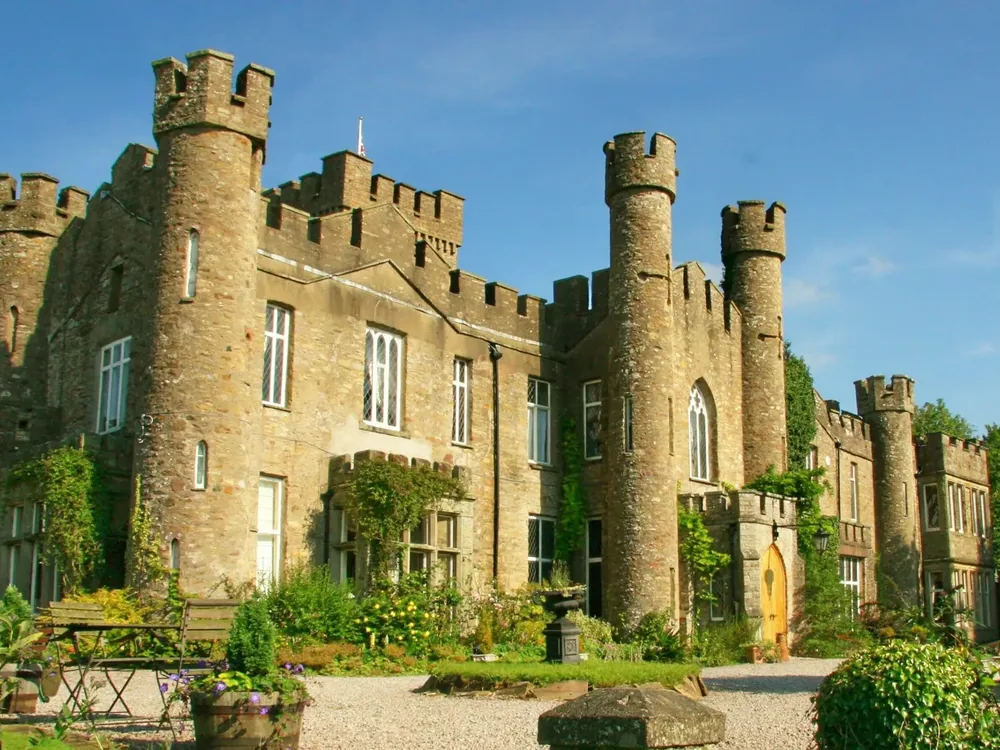
The castle building has its own separate history. The original 1325 peel tower was a defensive structure of the kind common in the Anglo-Scottish borders region — a fortified farmstead tower, square, thick-walled, designed to serve as a refuge during border raids. The Penningtons expanded around it through the medieval period. The Victorian transformation of the 1860s, carried out by the architect Anthony Salvin for the 2nd Earl of Muncaster, added the formal reception rooms, the Octagonal Library (a genuinely unusual room, entered through an arch from the main corridor), and the Victorian roofscape. The result is a building that layers medieval, Tudor, and Victorian fabric in the way that most lived-in English castles do — not a consistent architectural statement but an accumulation.
The grounds are one of Muncaster's strongest assets. The 70-acre Himalayan garden above the Esk valley was developed by generations of the family from the late 19th century, when plant-hunting expeditions from the Himalayas began introducing rhododendron and magnolia species to English gardens; the Muncaster collection became one of the most significant in the north. In March and April, the rhododendrons bloom across the valley-facing slopes; in May the azaleas follow. The views from the Terrace Walk over the Esk valley to the western fells of the Lake District — Scafell Pike, Sca Fell, Harter Fell — are among the best easily-accessible views in Cumbria.
The World Owl Trust, a conservation organisation, operates from the castle grounds with a significant collection of owl species and daily hawk-walk and owl-meet demonstrations. Tom Fool of Muncaster — Thomas Skelton, the historical court jester of the 1590s, whose name may have given the English language the word 'tomfool' and who is said to have been genuinely dangerous rather than merely comic — adds the requisite note of dark northern eccentricity.
The GetYourGuide-listed day trip (8 hours) departs from Windermere and includes coach transport, guided tour of the castle interiors, lunch in the castle tearoom, and the Medieval Weapons Hall — a complete package that is the most practical way to reach Muncaster from the central Lake District without a car. The castle is in Ravenglass, on the Cumbrian coast, accessible by the Ravenglass & Eskdale Railway (the 'La'al Ratty') from Ravenglass station on the main Cumbrian Coast Line.
History
Pennington family ownership documented from 1208. Original 1325 peel tower built as a border defensive structure. Henry VI sheltered at Muncaster after the Battle of Barnet (1461) and gave Sir John Pennington the 'Luck of Muncaster' glass bowl. Victorian expansion by Anthony Salvin in the 1860s under the 2nd Earl of Muncaster. The castle has remained in continuous family ownership (now the Ramsden family) to the present day. World Owl Trust established in the grounds. Now a significant heritage tourism attraction in the western Lake District.
How to Visit
Getting there: Muncaster is near Ravenglass on the Cumbrian coast. By train, Ravenglass is on the Cumbrian Coast railway line from Barrow-in-Furness (via Whitehaven); the castle is 1.5 km from Ravenglass station on foot. By car from Windermere: approximately 50 minutes via the A590; from Keswick: around 1 hour via the A66 west. Parking is available at the castle.
Tickets: Walk-up admission is £17 for adults and £11 for children, covering the house, gardens, World Owl Trust, and Medieval Weapons Hall. The GetYourGuide guided day trip from Windermere includes return coach transport, a guided castle tour, lunch in the tearoom, and all attractions — book at least a week ahead in summer as capacity is limited.
Practical tips: The 70-acre Himalayan garden is at its most spectacular in March–April (rhododendrons) and May (azaleas) — timing a visit around this window is strongly worthwhile. The Luck of Muncaster — the blown-glass bowl Henry VI gave to his hosts in 1461, still intact after 560 years — is included on the guided castle tour and is one of the most historically resonant small objects in any English castle collection.
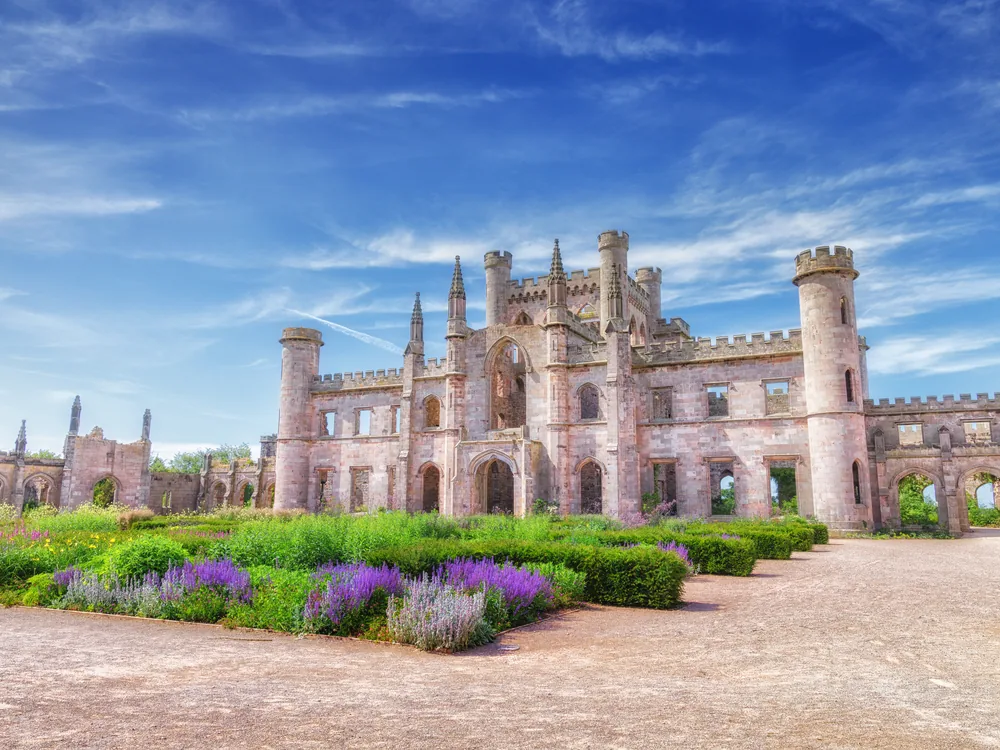
Combine with: A journey on the Ravenglass & Eskdale Railway ('La'al Ratty'), the narrow-gauge heritage steam line running from Ravenglass into the Esk valley, pairs naturally with the castle for a full western Lake District day. Lowther Castle, 60 km to the east near Penrith, is the other major castle destination in Cumbria.
Frequently Asked Questions
The Luck of Muncaster is a bowl of greenish Venetian blown glass, approximately 20cm across, given by King Henry VI to Sir John Pennington in 1461 after the Pennington family sheltered him following his defeat at the Battle of Barnet. Henry's supposed blessing — that the family would never want a male heir as long as the cup remained unbroken — has held: the family's male line has continued for over 560 years and the cup is intact. The Luck is on display inside the castle and is one of the most historically significant small objects in the northern English castle heritage. Yes, it is included on the guided castle tour.
Location
Muncaster Castle, Ravenglass, Cumbria CA18 1RQ, England
Nearby Castles
Tours & Tickets
Powered by GetYourGuide
From
€129/ person