
Pendennis Castle
Pendennis Castle
England · South West England — Cornwall, Falmouth, Pendennis Point headland · Near Falmouth
Built 1540 · Tudor artillery fort (Device Fort type), c. 1540–1544, circular keep with angled bastions — Pendennis Castle is one of Henry VIII's chain of coastal artillery fortifications known as the Device Forts or the Henrician castles, built between 1539 and 1545 along the southern and eastern coasts of England in response to the threat of French and Spanish invasion following England's break with Rome; the design reflects the demands of artillery-age warfare rather than medieval castle conventions: instead of high curtain walls and towers designed for defending against siege equipment, the Device Forts were built low and thick to mount and absorb cannon fire, with circular plans that eliminated the blind corners exploited by medieval escalade tactics; Pendennis follows the standard Device Fort pattern: a circular keep (the main residential and command structure) surrounded by a lower outer enclosure (the chemise) with a gatehouse; the outer enceinte was added later in the 16th century under Elizabeth I to expand the fort's defensive capacity; the castle was modified again in subsequent centuries as artillery technology evolved, adding gun batteries in the Victorian period and substantial underground tunnel infrastructure in World War I and again in World War II; the full range of military technology from Tudor cannon to WWII coastal defence hardware is represented in the castle's collection
This page is part of an independent travel guide and is not affiliated with, endorsed by, or operated by Pendennis Castle.

© Castles & Palaces
Quick Facts
- Hours
- Daily 10:00–17:00
- Entry via GYG
- €16
- Duration
- 2–3 hours (circular keep and its Tudor interior, WWII hidden tunnels, Field Train Shed, big guns display spanning Tudor to 20th-century artillery, and the headland viewpoints over Falmouth Bay and Carrick Roads)
- Best time
- Year-round
- Nearest city
- Falmouth
Featured Tour
Pendennis Castle Entry Ticket
Cancellation available · Instant confirmation
Highlights
- ✦Henry VIII's Device Forts — the artillery-age coastal defense strategy — Pendennis Castle belongs to the most ambitious coastal fortification programme in English history: Henry VIII's chain of artillery forts built along the southern and eastern coasts between 1539 and 1545 in response to the papal excommunication of England and the resulting risk of a Franco-Spanish Catholic invasion; the Device Forts — the name comes from the contemporary term for the defensive scheme ('device') — represented a fundamental architectural shift from medieval castle design; instead of high walls and towers designed for archers and siege defence, the Device Forts were low, massively thick emplacements designed to mount artillery and withstand cannon fire; their circular plans eliminated the right-angle corners that medieval siege tactics exploited; Pendennis, positioned on the headland at the mouth of the River Fal and Carrick Roads, was one of the most strategically significant of the entire chain
- ✦St Mawes Castle and the paired-fort defense of Carrick Roads — the architectural twin across the water — the mouth of the River Fal at Falmouth is guarded by two Device Forts positioned to create interlocking fields of fire across the waterway: Pendennis on the Falmouth headland (Pendennis Point) and St Mawes Castle on the opposite shore of the Fal estuary; any enemy ship attempting to enter the Carrick Roads — one of the world's largest natural harbours, which made Falmouth a supremely valuable anchorage — would have faced coordinated cannon fire from both forts simultaneously; the visual dialogue between the two Tudor forts, visible to each other across the water, is one of the most distinctive aspects of the Falmouth landscape and a direct expression of Henry VIII's coastal defense strategy; St Mawes Castle, the more elaborately decorated of the two (it was designed at the same time and by the same programme but received more architectural ornament), is managed by English Heritage and is separately visitable
- ✦The WWII hidden tunnels — a Tudor fort in a 20th-century war — Pendennis Castle's most unexpected experience for many visitors is the hidden tunnel system dug during both World War I and World War II, when the castle was reactivated as a coastal defense installation guarding Falmouth Harbour and the Western Approaches; the WWII tunnels include a command post, an observation and plotting room, and gun emplacements connecting the castle's 16th-century outer walls with mid-20th-century military infrastructure; the experience of moving from Tudor masonry into World War II corridors within the same building gives Pendennis a layered quality that few historic sites can match; the castle's gun collection spans the same arc — from Tudor iron cannon of Henry VIII's period through Victorian gun batteries to WWII coastal defense pieces — physically presenting the 500-year evolution of artillery technology in a single headland installation
- ✦The Cornish Civil War siege — Pendennis's other great military episode — beyond the World Wars, Pendennis Castle's most celebrated historical moment was in 1646, during the English Civil War: Pendennis was the last Royalist stronghold in England to surrender after the fall of Oxford, holding out for five months after the war's effective end under Colonel John Arundell; the garrison of 900 men, women, and children (including civilian refugees from the conflict) resisted Parliamentary siege until starvation and disease forced the surrender in August 1646; Arundell was allowed to march out with full military honours — the recognition by Parliamentary forces that Pendennis had been defended with exceptional courage; the 1646 Civil War siege and the adjacent Corfe Castle Civil War episode (both Royalist holdouts that fell in the same year to Parliamentary forces) give the two castles a shared historical chapter despite being 150 miles apart on England's south coast
Skip the queue with a guided tour
Skip-the-line tickets & expert guides
Pendennis Point is the headland on the western side of Falmouth Bay where the River Fal meets the sea. The headland controls the entrance to the Carrick Roads — one of the world's largest natural harbours, a deep-water anchorage that has been strategically valuable since before recorded history. Henry VIII understood this when he placed one of his coastal artillery forts here in the early 1540s, facing St Mawes Castle across the water on the opposite shore of the Fal.
Pendennis Castle was built as part of the Device Forts programme — Henry VIII's response to the threat of French and Spanish invasion following England's break with Rome and his excommunication by Pope Paul III in 1538. With the major Catholic powers potentially allied against England, Henry needed coastal defences capable of preventing enemy fleets from landing troops. The Device Forts were built between 1539 and 1545 along the southern and eastern coasts: low, massively thick artillery emplacements with circular plans that mounted cannon rather than mounted archers, designed for the new age of gunpowder warfare rather than the medieval conventions they replaced.
The castle's circular keep — the central residential and command structure — was built first, followed by the lower outer enclosure and later by an expanded outer enceinte under Elizabeth I in the 1590s, when the Spanish Armada scare of 1588 had made the inadequacy of the original Device Fort design clear. Pendennis grew into a substantial fortified headland with multiple gun batteries, a garrison, and residential quarters that would continue in military use for the next four centuries.
The first major test came in the English Civil War. Pendennis declared for Charles I and became one of the last Royalist strongholds in England. Under the command of 70-year-old Colonel John Arundell of Trerice, the garrison held out for five months after the rest of England had effectively surrendered to Parliament, enduring Parliamentary siege while the castle's 900 defenders — soldiers, civilians, and refugees — were reduced to starvation and disease. The garrison finally surrendered in August 1646, marching out with full military honours in recognition of their extraordinary resistance. The same year, Corfe Castle in Dorset fell after its own famous Civil War siege.
Pendennis was reactivated for World War I and again for World War II, when Falmouth Harbour and the Western Approaches became critical strategic assets. The WWII infrastructure built within the castle's 16th-century walls — the hidden tunnels, the command post, the observation room, the gun emplacements — gives Pendennis its most visually unexpected experience: moving from Tudor masonry into mid-20th-century military corridors and back again. The castle's gun collection makes this temporal journey concrete, presenting the evolution of artillery from Henry VIII's iron cannon through Victorian cast-iron batteries to World War II coastal defence pieces in a single headland installation.
English Heritage manages the castle and the GYG entry ticket (t1412954, from €16) covers full access including the hidden tunnels, the Field Train Shed, the big guns display, and the circular keep interior. The ticket is one of the most affordable entry points to a major English Heritage site on the south coast.
The view from Pendennis Point across to St Mawes Castle — visible on the opposite shore, close enough to see clearly — is the most immediate way to understand Henry VIII's coastal defence strategy. Two Tudor forts, facing each other across the entrance to one of England's great natural harbours, still occupying their original positions as they have for nearly 500 years.
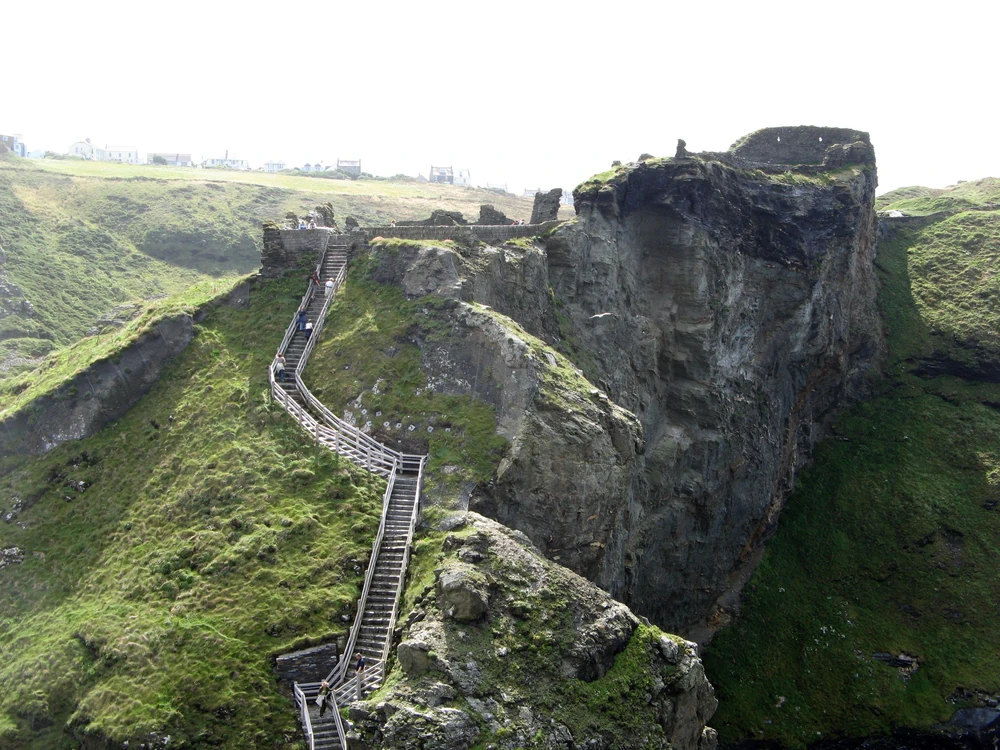
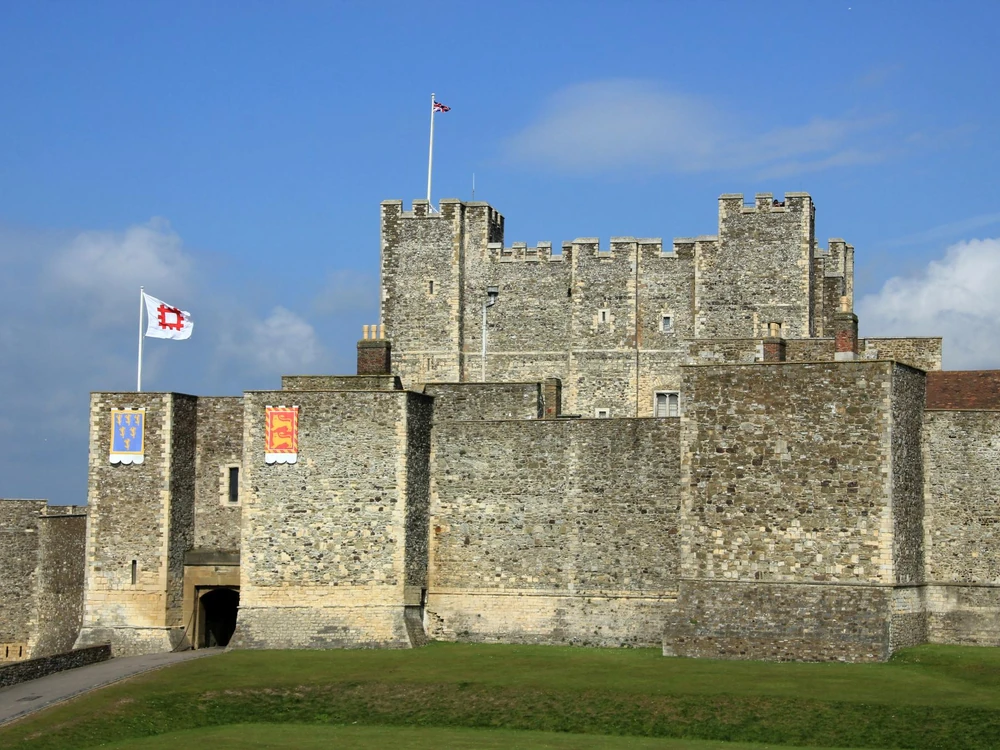
[Corfe Castle](/castles/england/corfe-castle) — Dorset's dramatic slighted ruins, the other Royalist holdout of 1646 that fell the same year as Pendennis — is 150 miles east along the south coast and the natural companion for visitors interested in the Civil War chapter. [Tintagel Castle](/castles/england/tintagel-castle) — Cornwall's legendary Arthurian clifftop site, 40 miles to the north — extends the Cornish castle circuit. [Dover Castle](/castles/england/dover-castle) is England's other major coastal fortress for the full south-coast arc.
History
Henry VIII's Device Forts programme, launched in the late 1530s in response to the threat of French and Spanish invasion, placed one of its most strategically important installations on Pendennis Point. Between approximately 1540 and 1544, a circular keep and chemise (inner enclosure) were constructed on the headland to guard the mouth of the River Fal and the Carrick Roads — one of the world's largest natural deep-water anchorages. St Mawes Castle, built simultaneously on the opposite bank of the Fal estuary, was designed to work in conjunction with Pendennis as a paired defensive system.
The Elizabethan period brought expansion: an outer enceinte with larger walls and a gatehouse was added in the 1590s in response to the renewed Spanish threat following the Armada. The outer enclosure transformed Pendennis from a single circular fort into a more comprehensive defensive work capable of sustained siege resistance — a quality it demonstrated decisively during the English Civil War. When Parliamentary forces besieged the castle in 1646, the Royalist garrison under Colonel John Arundell held for five months before surrendering in August — the last major Royalist stronghold to fall in England, granted military honours at its capitulation.
Military use continued at Pendennis across the following centuries: Victorian gun batteries, World War I coast artillery, and in the Second World War a coastal defence command post with hidden tunnels cut through the headland. The castle transferred to the Ministry of Works in 1946 and is now managed by English Heritage, with the hidden tunnels, gun collection, and Tudor keep all open to visitors.
How to Visit
Getting there: Pendennis Castle is at the end of Castle Drive, Falmouth (TR11 4LP). By train, Falmouth Docks station (end of the Maritime Line from Truro, around 30 minutes) is a 15-minute walk. By car, take the A39 to Falmouth and follow signs to Pendennis Castle; parking is on site. Seasonal passenger ferries run from Falmouth town centre across the Carrick Roads to St Mawes.
Tickets: Walk-up admission is £17 for adults and £11 for children; English Heritage members enter free. The GYG entry ticket (t1412954, from £16) covers the castle, hidden WWII tunnels, Field Train Shed, and big guns display — self-guided, no booking required but available in advance online.
Practical tips: The hidden WWII tunnels are the most surprising element for many visitors — moving from Tudor masonry into a 1940s coastal defence command post within the same building is a genuinely distinctive experience. Allow 2–3 hours for the full site including the headland viewpoints over Falmouth Bay. Taking the seasonal ferry to St Mawes and visiting both Tudor forts on the same day gives the best understanding of Henry VIII's paired-fort coastal strategy.
Combine with: [Corfe Castle](/castles/england/corfe-castle), the other great Royalist Civil War holdout that fell to Parliament in the same year as Pendennis (1646), and [Tintagel Castle](/castles/england/tintagel-castle), Cornwall's legendary Arthurian clifftop site 65 km to the north.
Frequently Asked Questions
The hidden tunnels are the WWII-era underground infrastructure built within the castle's headland during World War II, when Pendennis was reactivated as a coastal defence installation guarding Falmouth Harbour and the Western Approaches. The tunnels include a command post, an observation and plotting room, and connecting passages between the gun emplacements on the castle's outer walls. They are 'hidden' in the sense that they were constructed within and beneath the 16th-century Tudor masonry, invisible from the exterior and invisible to most of the castle's visitors for decades before they were opened to the public as part of the English Heritage interpretation. Moving from Tudor masonry into a World War II command post within the same historic building is the experience that most surprises first-time visitors to Pendennis.
Location
Pendennis Castle, Castle Drive, Falmouth TR11 4LP, England
Nearby Castles

Tours & Tickets
Powered by GetYourGuide
From
€16/ person