
Tower of London
Her Majesty's Royal Palace and Fortress of the Tower of London
England · Greater London · Near London
Built 1078 · Norman, Medieval — White Tower 1078, outer walls 13th century
This page is part of an independent travel guide and is not affiliated with, endorsed by, or operated by Tower of London.
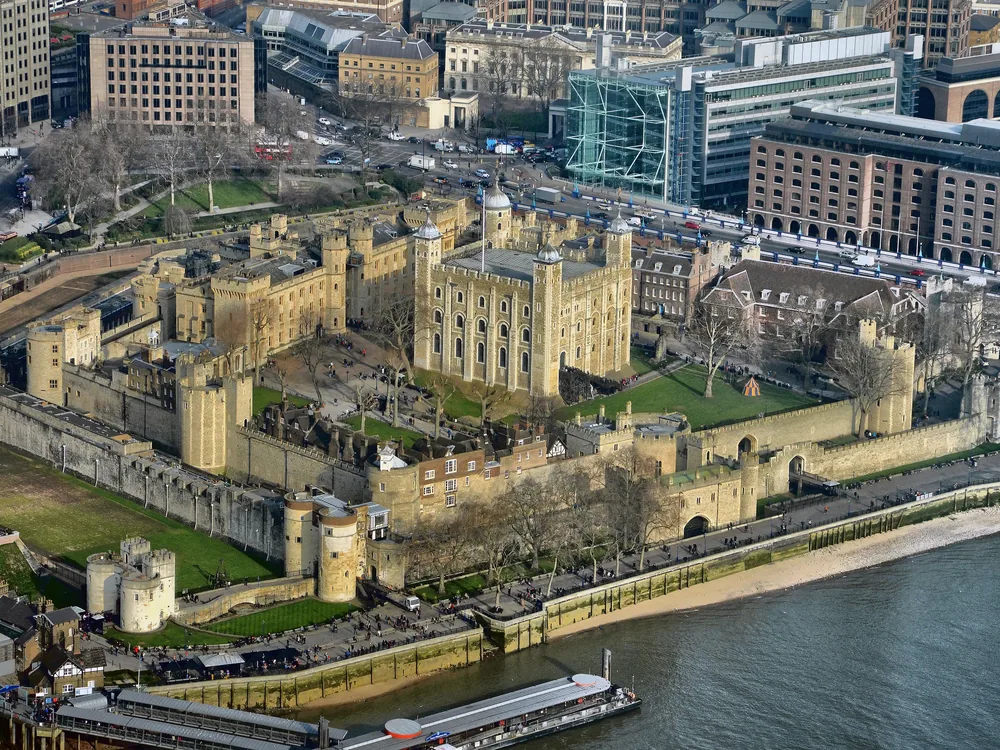
© Castles & Palaces
Quick Facts
- Hours
- Tue–Sat 09:00–17:30. Sun 10:00–17:30. Closed Mon
- Entry via GetYourGuide
- €43
- Duration
- 3–4 hours
- Best time
- March and October
- Booking
- Required — book 14+ days ahead
- Nearest city
- London
Featured Tour
London: Tower of London and Crown Jewels Exhibition Ticket
Cancellation available · Instant confirmation
Highlights
- ✦The Crown Jewels — the actual crowns, orbs and sceptres used in British coronations, guarded by the Yeoman Warders
- ✦The White Tower — the Norman keep built by William the Conqueror in 1078, now housing the Royal Armouries collection
- ✦The Yeoman Warders (Beefeaters) — ceremonial guards who also serve as guides and have lived within the Tower since 1485
- ✦The Ravens — at least six ravens must reside at the Tower by royal decree, or 'the kingdom will fall'
- ✦Traitors' Gate — the watergate through which prisoners accused of treason arrived by boat from Westminster
Tickets & tours
Book through GetYourGuide
The Tower of London has been simultaneously a royal palace, a prison of state, a treasury, a menagerie and an execution ground across its near-thousand-year history. Built by William the Conqueror after the Norman Conquest of 1066, the White Tower — the original square keep — still stands at the heart of the complex, surrounded by concentric rings of walls, towers and a moat (now dry) added by later medieval kings.
Today the Tower is most famous for two things: the Crown Jewels and the Yeoman Warders. The Jewel House holds the actual regalia used in British coronations — St. Edward's Crown, the Sovereign's Orb, the Sceptre with the Cross — along with the Koh-i-Noor diamond set into a queen consort's crown. Visitors pass the display on moving walkways to prevent bottlenecks, but it is possible to step off and stand still before the jewels. The Yeoman Warders, popularly called Beefeaters, have guarded the Tower since the 15th century. They live within the walls, serve as guides, and conduct the nightly Ceremony of the Keys — the formal locking of the Tower's gates, performed without interruption for over 700 years.
The Tower's dark history is inseparable from English history. Anne Boleyn, Catherine Howard, Lady Jane Grey, Thomas More and Walter Raleigh all spent time here, and many were executed either on Tower Green (for those of noble rank) or on Tower Hill outside the walls. The two young princes — Edward V and his brother — disappeared within the Tower in 1483 in a mystery that remains unsolved.
History
William the Conqueror began building the White Tower around 1078 as both a fortress and a symbol of Norman power over his newly conquered English subjects. The choice of site, just inside the old Roman city walls on the Thames, was strategic: it controlled river traffic into London and overlooked the city's wealthiest district. Subsequent kings expanded the complex — Richard I and Henry III added outer walls and towers, Edward I completed the concentric fortification and created the moat.
From the 13th to the 16th centuries the Tower served as the principal royal palace in London, as the country's main state prison, and as the repository of the royal treasury and records. The Tudor monarchs used it most dramatically as a political prison: the Tower saw the execution of two of Henry VIII's wives and contained, at various times, almost every major figure in the turbulent politics of the English Reformation. Elizabeth I was herself briefly imprisoned there before becoming queen. After the Restoration in 1660, the Tower's role as a residence faded, but it remained a prison until 1952, when Rudolf Hess was held there briefly during World War II.
How to Visit
Getting there: Tower Hill Underground station (Circle and District lines) is directly outside the main entrance. London Bridge station is a 5-minute walk across Tower Bridge. Thames Clipper river buses stop at Tower Pier, offering a scenic approach from Westminster or Embankment.
Tickets: Advance online booking is essential — the Tower sells out on peak days. Adult admission is £34 and children £17. The GetYourGuide official entry ticket includes timed access to the Crown Jewels exhibition. Yeoman Warder guided tours depart from the main gate every 30 minutes and are free with entry. The Ceremony of the Keys (nightly at 21:30) requires separate free tickets booked months ahead via the Historic Royal Palaces website; only about 40 people are admitted each night.
Practical tips: Arrive at opening to reach the Crown Jewels before queues build — the moving walkways can be stepped off to view the main display cases at your own pace. Allow 3–4 hours minimum: the White Tower, the Crown Jewels, and a Yeoman Warder tour each take 45–60 minutes. The Tower is closed on Mondays (Tuesday–Saturday 09:00–17:30, Sunday 10:00–17:30).
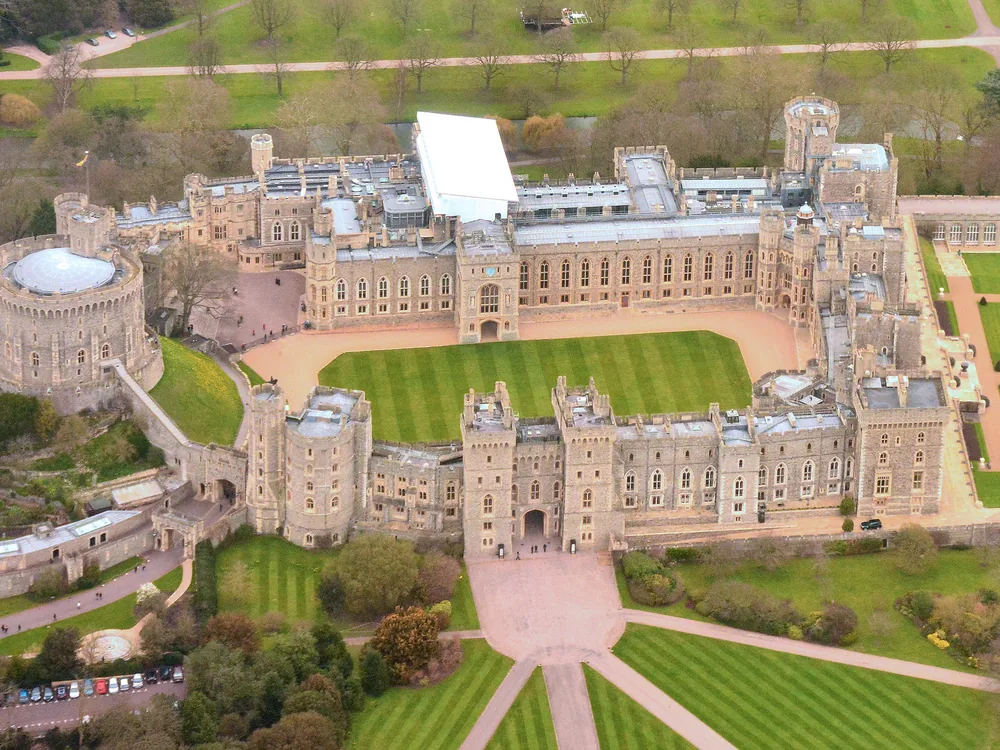
Combine with: Hampton Court Palace, 25 km upstream and reachable by Thames Clipper, and Windsor Castle, 40 km west by direct train from London Waterloo, make natural royal heritage extensions beyond the city.
Frequently Asked Questions
According to tradition, at least six ravens must live at the Tower at all times, or the kingdom and the Tower will fall. The ravens are resident birds whose wings are partially clipped to prevent flight. They have individual names and personalities and are cared for by the Ravenmaster, a Yeoman Warder. The tradition is often attributed to Charles II, though its exact origins are unclear. The current ravens are Jubilee, Harris, Gripp, Rocky, Erin, Poppy, George and Georgie.
Location
Tower Hill, London EC3N 4AB, England
Nearby Castles
Tours & Tickets
Powered by GetYourGuide
From
€43/ person