
Suomenlinna
Suomenlinna — Sveaborg
Finland · Helsinki — six islands in Helsinki harbour, 15 minutes by ferry from Market Square · Near Helsinki
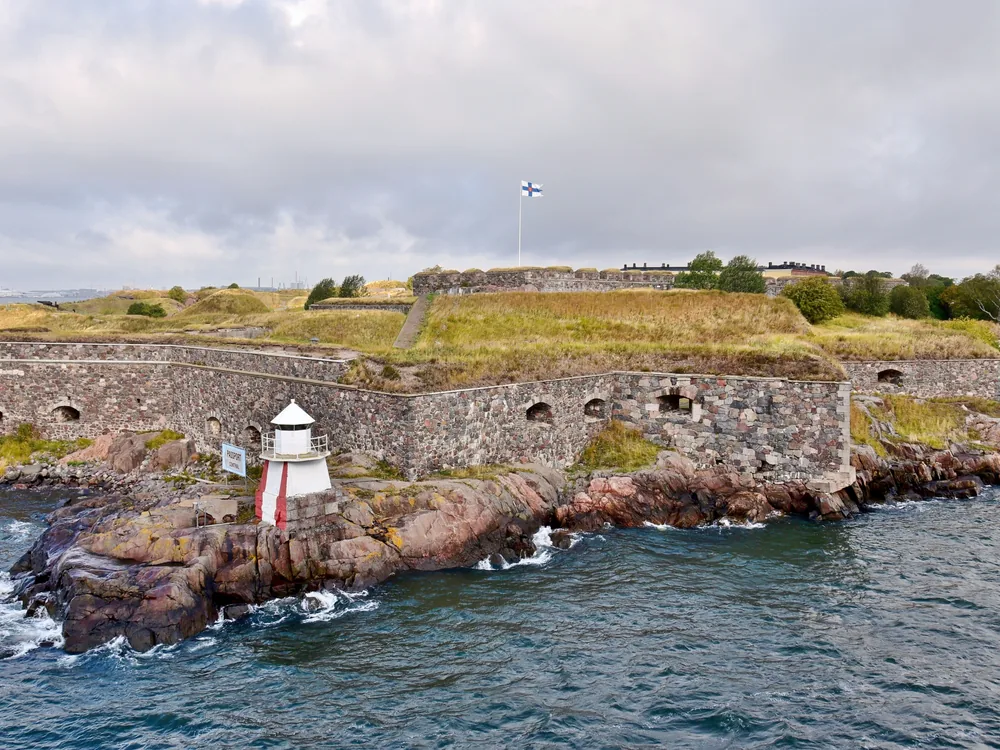
Built 1748 · Vauban-influenced bastion sea fortress — designed from 1748 by Swedish Admiral and military architect Augustin Ehrensvärd, who adapted the bastion fortification theories of the French engineer Sébastien Le Prestre de Vauban to the unique geography of six rocky islands in Helsinki harbour; the principal defensive works — the King's Gate, the Ehrensvärd Bastion, the Crown Bastion, the dry dock — were built through the 1750s and 1760s; the fortress covers 210 hectares across six islands, with approximately 200 buildings and six kilometres of defensive walls; the Ehrensvärd Museum in the rebuilt castle building on Susisaari island occupies the former residential quarters of the fortress commander; the site includes a functioning dry dock used from 1756 that is one of the oldest operational dry docks in the world
This page is part of an independent travel guide and is not affiliated with, endorsed by, or operated by Suomenlinna.
© Castles & Palaces
Quick Facts
- Hours
- Mon–Sun Ferries run year-round (Helsinki public transport HSL)
- Guided tour from
- €26
- Duration
- 3–5 hours (full fortress exploration); 2 hours (GetYourGuide guided walking tour)
- Best time
- May to September
- Nearest city
- Helsinki
Featured Tour
Helsinki: Ferry Ride to Suomenlinna & Walking Tour
Cancellation available · Instant confirmation
Highlights
- ✦UNESCO World Heritage Site inscribed 1991 — the whole 210-hectare complex across six islands, with roughly 200 buildings and six kilometres of defensive walls, was inscribed as 'an outstanding example of European military architecture'
- ✦Three countries, one fortress — originally built as Sveaborg ('Fortress of Sweden'), captured by Russia in 1808 (two months after the siege began, without a major assault), renamed Viapori under Russian rule, and finally renamed Suomenlinna ('Fortress of Finland') after Finnish independence in 1918; it is one of very few major European fortresses that changed national allegiance twice without being demolished and rebuilt
- ✦Augustin Ehrensvärd's Vauban adaptation — the Swedish admiral who designed the fortress from 1748 adapted the bastion fortification theories of the French engineer Vauban (the dominant figure in 17th-century European military architecture) to the unique challenge of six rocky islands; Ehrensvärd is buried on the island, and his tomb on Susisaari is one of the site's most visited spots
- ✦The dry dock, built 1756 — one of the oldest operational dry docks in the world, still in use; built to service Sweden's galley fleet, it remains a working shipyard and gives the fortress its most distinctive industrial-heritage element
- ✦A living community, not a museum relic — approximately 800 people live on Suomenlinna year-round, in apartments within the historic buildings; the fortress contains a school, a post office, a church, restaurants, and breweries, functioning as a small inhabited island community 15 minutes by ferry from Helsinki Market Square
- ✦Ferry + guided walking tour — includes the HSL ferry crossing and a 2-hour guided walk through the principal defensive works, the King's Gate, the Ehrensvärd Bastion, and the dry dock
Skip the queue with a guided tour
Skip-the-line tickets & expert guides
Suomenlinna — Fortress of Finland — is the name given in 1918 to a fortification that had previously been called Sveaborg (Fortress of Sweden) and, under Russian administration, Viapori. It is built across six small rocky islands in Helsinki harbour, 15 minutes by public ferry from the city's Market Square, and it has been continuously occupied as a military and civilian installation for 275 years. No other major European fortress has changed national allegiance twice — Swedish, Russian, Finnish — without being substantially demolished and rebuilt in between; this continuity of fabric through changes of sovereignty makes Suomenlinna an exceptional document of Baltic military and political history, and the UNESCO inscription of 1991 reflects exactly this quality.
The fortress was conceived and designed from 1748 by Augustin Ehrensvärd, a Swedish admiral with a sophisticated understanding of European military architecture theory. The dominant influence on 17th and 18th-century European fortification was Sébastien Le Prestre de Vauban, the French engineer-general who systematised the angled bastion system into a comprehensive and widely imitated method. Ehrensvärd adapted Vauban's principles to the specific problem of six rocky islands of varying size and shape in a northern Baltic harbour — a challenge with no European precedent, since Vauban had designed for flat or gently rolling continental terrain. The result was not a literal application of any standard Vauban type but a site-specific composition that used the islands' natural cliffs and shorelines as outer defensive walls, connecting them with built bastion works, curtain walls, and sea-level gun batteries. The principal works — the King's Gate, the Crown Bastion, the Ehrensvärd Bastion, the dry dock — were built through the 1750s and 1760s under Ehrensvärd's personal direction; he died on the island in 1772 and is buried in the forecourt of the commander's residence on Susisaari.
The fortress's original purpose was to protect the Kingdom of Sweden against Russian naval and ground forces pushing westward along the Gulf of Finland coast — a strategic pressure that had been mounting since Peter the Great established St Petersburg in 1703 and began building a Baltic fleet. Suomenlinna was intended to be the anchor of Swedish maritime defence in the eastern Baltic, capable of sheltering the Swedish galley fleet in its dry dock and resisting any Russian advance through the islands. It gained the nickname 'Gibraltar of the North,' though this reputation was never tested in the way Gibraltar's was.
When Russia did attack, in February 1808, the fortress's performance was disappointing. The Finnish War (1808–1809) was a Russian effort to force Sweden to join Napoleon's Continental System, and Suomenlinna was a central objective. The Russian siege was not a sustained assault on the fortifications; it proceeded more through blockade, a Swedish winter campaign that failed to relieve the fortress, and ultimately the Finnish War's broader diplomatic dynamics. The commander, Vice Admiral Carl Olof Cronstedt, capitulated in May 1808, two months after the siege began, with the fortress largely intact and the garrison still capable of resistance. The capitulation was widely condemned in Sweden and Finland as a betrayal; Cronstedt spent the rest of his life in shadow.
Under Russian rule, the fortress was renamed Viapori (a Finnish rendering of the Swedish Viapori, itself a Finnish-inflected rendering of Sveaborg) and functioned as a Russian naval base for over a century. Russia used it to defend its new imperial capital at St Petersburg, maintaining and modifying the existing works but not fundamentally remaking them. A major explosion in 1855 — during the Crimean War, when a British and French fleet attacked and bombarded the fortress — caused significant damage to one section; the Russian repairs are still visible in the altered masonry. After Finnish independence in 1917, the fortress remained under Finland's Defense Department until 1973, when most of the site transitioned to civilian administration.
Today Suomenlinna is an inhabited island community as much as a monument. Approximately 800 people live here year-round in apartments within the historic buildings; the fortress has a school, a church (built by the Swedish in 1854, reconstructed), restaurants, breweries, and a post office. The Suomenlinna Museum in the main visitor centre and the Ehrensvärd Museum in the commander's former residence on Susisaari provide the historical framework, but the majority of the fortress experience is outdoor — walking the six kilometres of defensive walls, exploring the bastions and gun batteries, sitting on the King's Gate ramparts above the sea, or visiting the dry dock (built 1756, one of the oldest operational dry docks in the world, still functioning as a shipyard).
The GetYourGuide ferry and walking tour (includes HSL ferry crossing and 2-hour guided walk) is the easiest way to structure a first visit with historical context. Independent visitors use the regular HSL ferry (line J from Market Square, approximately every 40–60 minutes, covered by standard Helsinki day pass or single ticket), arriving at the main island pier and following the well-marked trail system.
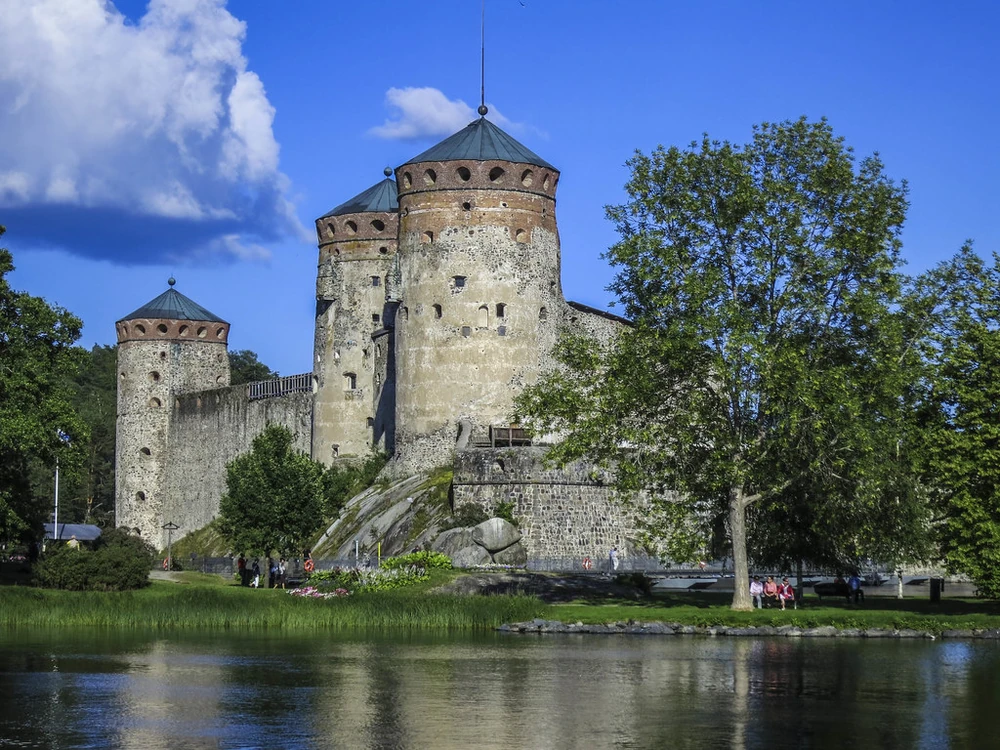
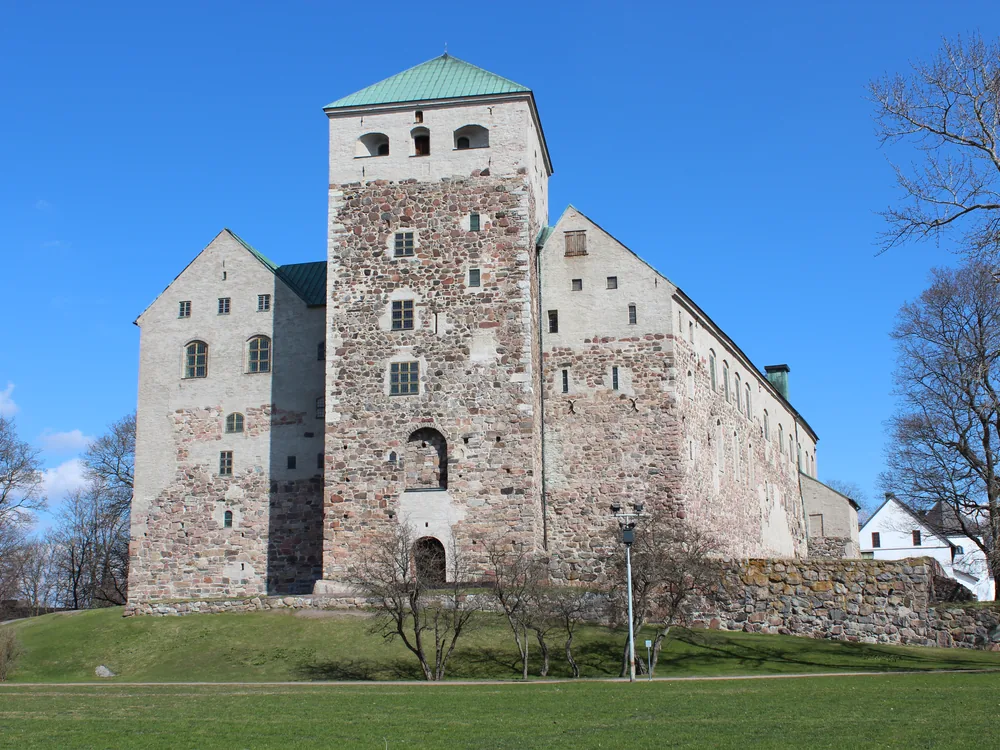
For Finnish context: [Olavinlinna Castle](/castles/finland/olavinlinna-castle), in Savonlinna on the Saimaa lake system, and [Turku Castle](/castles/finland/turku-castle), at the mouth of the Aura river in Finland's former medieval capital, are Finland's two other principal historic fortifications covered on this site. Together the three represent the full arc of Finnish fortress history: Turku the earliest (mid-13th century), Olavinlinna the medieval Swedish border fortress (1475), and Suomenlinna the 18th-century bastion sea fortress built at the height of the Vauban era.
History
Swedish Admiral Augustin Ehrensvärd began construction of the island fortress in 1748, adapting Vauban's bastion fortification theory to the specific geography of six rocky islands in Helsinki harbour. Over the following 24 years, the principal works took shape: the King's Gate, the Crown Bastion, the Ehrensvärd Bastion, and the dry dock, completed in 1756. Ehrensvärd died on Susisaari in 1772 and was buried there — a detail that gives the fortress an unusual personal quality, as the man who conceived it rests within its walls.
The fortress's most consequential failure came in 1808, when Russian forces besieged Suomenlinna — then known as Sveaborg, the Fortress of Sweden — during the Russo-Swedish War. Vice Admiral Cronstedt capitulated after two months in circumstances that became deeply controversial in Swedish historical memory: the fortress was, by any reasonable military assessment, defensible for far longer. Sweden lost Finland as a result of the war; the fortress passed to Russian administration as Viapori and served as a Russian naval base for over a century. A British-French fleet attack during the Crimean War in 1855 caused significant damage and modified portions of the fabric through the subsequent Russian repairs.
Finnish independence in 1917 brought a new name — Suomenlinna, Fortress of Finland — in 1918. Defense Department administration gave way to civilian management in 1973, and UNESCO World Heritage inscription followed in 1991. Today the six islands support a permanent community of approximately 800 residents alongside a substantial visitor presence reached by HSL ferry from the Helsinki Market Square.
How to Visit
Getting there: Take HSL ferry line J from Helsinki Market Square (Kauppatori) — every 40–60 minutes, 15-minute crossing. Market Square is 15 minutes' walk from Helsinki Central Station, or a short tram ride.
Tickets: The islands are free to enter; the ferry crossing is ~€3.20 one-way (included in an HSL day pass). The Suomenlinna Museum and Ehrensvärd Museum each charge separate entry (~€9 adult). The GetYourGuide guided tour includes the ferry crossing and a 2-hour guided walk through the principal fortification works — the easiest way to get historical context on a first visit.
Practical tips: Collect a map at the visitor centre on arrival and walk the main trail: King's Gate → Ehrensvärd Bastion → dry dock → Susisaari → Ehrensvärd's tomb. Allow 3–5 hours independently or 2–3 hours with the GetYourGuide tour. July is the busiest month; September offers the same weather with smaller crowds.
Combine with: Olavinlinna Castle and Turku Castle to cover Finland's three principal historic fortifications on a longer Finnish trip.
Frequently Asked Questions
Suomenlinna was built by Sweden (1748–1808) to defend against Russian expansion. It fell to Russia in 1808 when the Swedish commander capitulated during the Finnish War, and it remained under Russian naval administration until Finnish independence in 1917. After independence, the fortress transferred to Finland in 1918 and was renamed Suomenlinna. Throughout these changes of sovereignty, the physical fortification was maintained and modified rather than demolished and rebuilt — which is what makes the fabric so exceptional: the walls, bastions, and buildings of the original Swedish period survive within a structure that Russian and Finnish additions also contributed to.
Location
Suomenlinna, 00190 Helsinki, Finland
Nearby Castles
Tours & Tickets
Powered by GetYourGuide
From
€26/ person