
Besançon Citadel
Citadelle de Besançon
France · Bourgogne-Franche-Comté · Near Besançon
Begun in the 1670s, from plans Vauban drew up in 1668 · A Vauban-designed bastioned fortress crowning the hill that closes the loop of the Doubs river around Besançon's old town, part of the "Fortifications of Vauban" UNESCO World Heritage inscription
This page is part of an independent travel guide and is not affiliated with, endorsed by, or operated by Besançon Citadel.
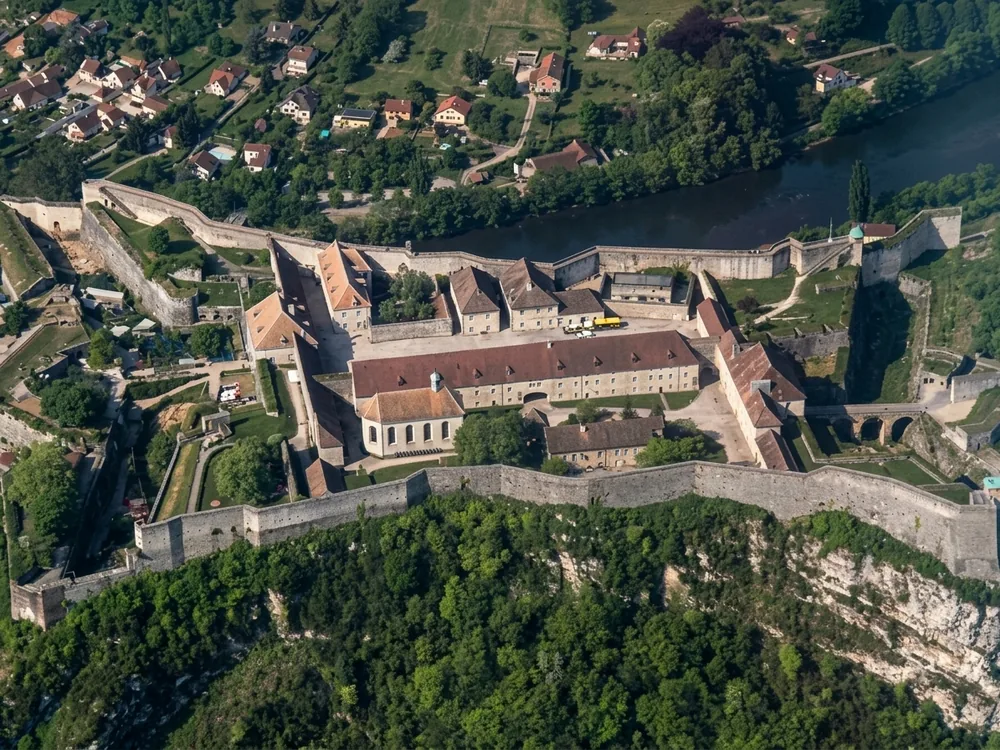
© Castles & Palaces
Quick Facts
- Skip-the-line from
- €27
- Duration
- Self-guided — allow time for the museums as well as the fortifications
- Best time
- Year-round
- Nearest city
- Besançon
Featured Tour
Besancon Citadel Entry Ticket
Cancellation available · Instant confirmation
Highlights
- ✦Designed by Vauban, with plans drawn up in 1668 and construction beginning in the 1670s
- ✦Inscribed on the UNESCO World Heritage List on 7 July 2008 as part of "Fortifications of Vauban," a group of 12 sites, alongside Besançon's own Fort Griffon
- ✦Owned by the city of Besançon since 1959
- ✦Holds three museums, each recognised as a Musée de France
- ✦Crowns the hill that closes the loop of the Doubs river around Besançon's old town
Skip the queue with a guided tour
Skip-the-line tickets & expert guides
Besançon Citadel occupies the hill that closes the great loop of the Doubs river around the old town below — a natural chokepoint that made the site a defensive priority for centuries before Vauban ever drew a plan for it. Sébastien Le Prestre de Vauban, Louis XIV's leading military engineer, produced plans for the citadel in 1668, during the brief period when Franche-Comté had reverted to Spanish control; construction itself began in the 1670s, after the French crown's definitive conquest of the region made building a permanent fortress here a French, not a Spanish, priority.
The result is one of Vauban's signature works: a bastioned fortress using the hill's own steep contours as part of its defences, commanding both the river loop and the approaches to the city below. Besançon Citadel's significance was formally recognised on 7 July 2008, when UNESCO inscribed it on the World Heritage List as part of "Fortifications of Vauban" — a joint inscription covering twelve of Vauban's fortified sites across France, with Besançon represented by both the citadel itself and the city's separate Fort Griffon.
The citadel passed into municipal ownership in 1959, and the city has since developed it well beyond its original military function: three museums on site are each recognised as a Musée de France, the French state's official quality designation for museum collections of national significance. According to the citadel's own published figures, the site draws around 270,000 visitors a year.
A standard visit covers the fortifications themselves — walking the ramparts and bastions along slopes, cobblestones and stairs that demand reasonably sure footing — alongside the museums, which require separate tickets for some temporary exhibitions and activities. Entry tickets of the kind sold through GetYourGuide include skip-the-line access to the citadel but exclude guided tours, transport, and any exhibition requiring its own ticket. Visitors should bring photo ID, and the site's own guidance states it is not suitable for people with mobility impairments, given the terrain. Pets, large bags and drones are not permitted. Check the official site directly for current opening hours and exhibition-specific ticketing.
History
Vauban drew up plans for Besançon's citadel in 1668, while Franche-Comté was briefly back under Spanish control; construction began in the 1670s, after the French conquest of the region. The citadel was inscribed on the UNESCO World Heritage List on 7 July 2008 as part of the "Fortifications of Vauban" group of twelve sites, alongside Besançon's own Fort Griffon. The city of Besançon has owned the citadel since 1959 and operates three museums on site, each recognised as a Musée de France.
Frequently Asked Questions
Yes — it was inscribed on 7 July 2008 as part of "Fortifications of Vauban," a joint UNESCO listing covering twelve of Vauban's fortified sites across France. Besançon is represented by both the citadel and the city's separate Fort Griffon.
Location
Nearby Castles
Tours & Tickets
Powered by GetYourGuide
From
€27/ person