
Château de Saint-Fargeau
Château de Saint-Fargeau
France · Saint-Fargeau, Yonne, Burgundy · Near Auxerre
Built 1472 · Late medieval and Renaissance château — originally a fortified 10th-century stronghold, the current structure was substantially rebuilt from 1472 by Antoine de Chabannes from a Gothic fortress into a more refined residential château of five towers arranged around a central courtyard; further modifications in the 17th century during the period of Anne Marie Louise d'Orléans (la Grande Mademoiselle), who was exiled here by Louis XIV; the building preserves its medieval tower plan while the interior and courtyard reflect early modern French residential taste; the château also hosts France's largest historical spectacle — the Spectacle de Saint-Fargeau — a summer outdoor show with 600 volunteer performers, 50 horsemen, and pyrotechnics, staged in the castle's natural terrain
This page is part of an independent travel guide and is not affiliated with, endorsed by, or operated by Château de Saint-Fargeau.
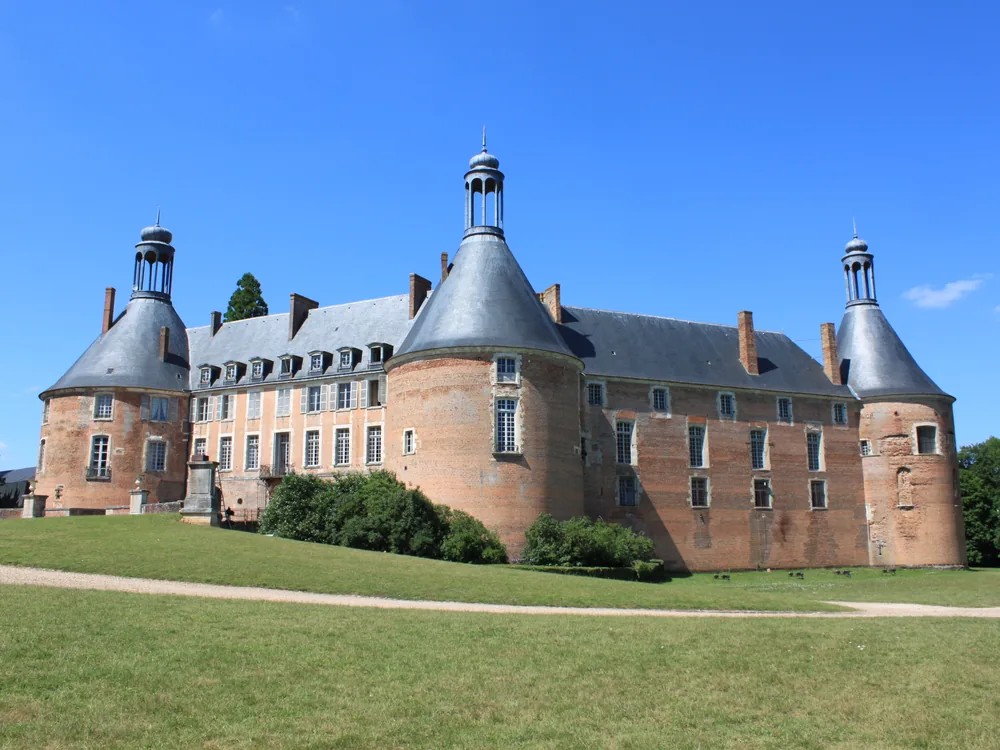
© Castles & Palaces
Quick Facts
- Hours
- Daily 10:00–18:00
- Entry from
- €12
- Duration
- 1.5–2 hours (self-guided daytime château visit); the Spectacle de Saint-Fargeau runs approximately 90 minutes from start to finish (plus setup from 7 PM)
- Best time
- May to September
- Nearest city
- Auxerre
Highlights
- ✦Spectacle de Saint-Fargeau — France's largest historical outdoor spectacle: 600 volunteer performers (all local residents), 50 horsemen, period costumes, live music, fireworks, and illuminations, staged in the natural terrain of the château park on Friday and Saturday evenings from mid-July to late August (approx. 10 July–22 August). The show covers 1,000 years of local and French history in approximately 90 minutes. Doors open at 7 PM; show starts after dark (10–10:30 PM). A unique Burgundian cultural event that has no equivalent in France
- ✦Connection to the Grande Mademoiselle — Anne Marie Louise d'Orléans, Duchess of Montpensier, was exiled to Saint-Fargeau by Louis XIV for her role in the Fronde rebellion; she spent much of the 1650s here and transformed the château, commissioning major renovations and writing her famous Mémoires. Her story — a royal cousin powerful enough to be exiled, literary enough to document the experience, and remarkable enough to have influenced French literature of the period — gives the château its most distinctive historical layer
- ✦Five-tower medieval plan — the château's five towers arranged around a central courtyard preserve the defensive logic of the 10th-century stronghold in the structure of a 15th-century residential château; the pink brick of Antoine de Chabannes's 1472 rebuilding gives the exterior a distinctive warm tone unusual among Burgundian châteaux
- ✦Burgundy countryside position — Saint-Fargeau is in the Puisaye, a forested and bocage landscape in western Burgundy that was the setting for the writer Colette's childhood (she was born in Saint-Sauveur-en-Puisaye, 12km away). The surrounding landscape is of a type that has largely disappeared from France: ancient coppiced woodland, small lakes, and isolated farms. The château and the Puisaye together make a compelling off-beaten Burgundy destination
- ✦Cross-link with [Château de Tavannes](/castles/france/chateau-de-tavannes) — a smaller medieval castle 30 minutes east, extending a château-focused day in the Burgundian Yonne
Skip the queue with a guided tour
Skip-the-line tickets & expert guides
Château de Saint-Fargeau sits in the Puisaye — the forested bocage landscape of western Burgundy, a territory of ancient woodland, small lakes, and scattered manor houses that lies well off the beaten track of Loire Valley château tourism to the west or Côte d'Or wine country to the east. It is one of the more architecturally compelling and historically layered châteaux in Burgundy: a five-tower medieval fortress rebuilt in the 15th century as a more refined residential château, closely associated with one of the most remarkable women of 17th-century France, and the site of what is said to be the largest historical outdoor spectacle in the country.
The site's fortification history dates to the 10th century, when the early medieval lords of the region established a stronghold at Saint-Fargeau on the edge of the Puisaye forest. Through the medieval period, the castle changed hands multiple times among the major noble families of Burgundy and the Crown of France. In 1472, Antoine de Chabannes — a commander of royal armies who had been granted the lordship — undertook the substantial rebuilding that gave the château its current form: a symmetrical plan of five towers in pink brick arranged around a central courtyard, transforming the Gothic military fortress into a château of Renaissance residential ambition while retaining the basic tower plan of its medieval predecessor. The pink brick of Chabannes's rebuilding is the château's most immediately distinctive feature, giving the exterior a warm tone unusual among the grey stone châteaux of Burgundy.
The château's most famous inhabitant was Anne Marie Louise d'Orléans, Duchess of Montpensier, known to history as la Grande Mademoiselle (the Great Mademoiselle). She was a first cousin of Louis XIV, the wealthiest unmarried noblewoman in Europe for much of her life, a participant in the Fronde rebellion (she famously ordered the cannon of the Bastille fired at the royal troops in 1652), and author of the Mémoires that are one of the significant literary documents of 17th-century France. For her role in the Fronde, Louis XIV exiled her to Saint-Fargeau in 1652, and she spent most of the following decade here. Her Mémoires describe her initial despair at finding the château in a state of neglect and decay, her gradual investment in its restoration and embellishment, and the peculiar mixture of domesticity and frustration of a great noblewoman confined to a provincial estate. She commissioned major interior renovations, transformed the gardens, and eventually turned the exile into a period of literary productivity. She was pardoned and allowed to return to court in 1657.
The daytime château visit (€12 general admission) covers the interior rooms, the courtyard, the stables, and the grounds — a substantial walk-and-look experience appropriate for visitors interested in the Grande Mademoiselle, the architectural history of Burgundian châteaux, or the landscape of the Puisaye. The interior preserves period rooms from the 17th century and materials associated with the Grande Mademoiselle's occupancy.
The Spectacle de Saint-Fargeau is a completely separate experience, running on Friday and Saturday evenings from approximately 10 July to 22 August each year. It is described as the largest historical outdoor spectacle in France: 600 volunteer performers (all local residents of Saint-Fargeau and surrounding villages), 50 horsemen, period costumes spanning the château's 1,000-year history, live music, and a firework finale that illuminates the château towers. The show runs approximately 90 minutes, starting after nightfall (around 10:00–10:30 PM, after doors open at 7 PM for settling in and the atmosphere of the château by twilight). The production covers major events in French and local history, from the medieval origins through the Grande Mademoiselle's exile to the Revolution, and has been running for decades as the château's primary cultural identity. Tickets via GetYourGuide are approximately €22/person. This is not a traditional castle visit activity — it is an outdoor community theatre event of considerable scale, dependent on good weather, and most meaningful for those who understand some French (though the visual spectacle is compelling regardless of language).
Two things are critically important for booking: the Spectacle ticket is entirely separate from the daytime château admission; and the show is seasonal (Fri/Sat only, approximately mid-July to late August — check exact dates for 2026 at saint-fargeau.com or via GetYourGuide). If you want to visit the château during the day AND see the Spectacle in the evening, you need two separate tickets on the same Friday or Saturday.
The Puisaye landscape surrounding Saint-Fargeau is itself worth noting. The novelist Colette (author of Gigi, the Claudine novels, and Sido) was born in Saint-Sauveur-en-Puisaye, 12 kilometres south, in 1873, and her writing is saturated with the landscapes and sensory character of this particular corner of Burgundy — the smell of lichen on ancient stone, the quality of light through old forest, the flavours of regional cooking. The Musée Colette in Saint-Sauveur is a worthwhile addition to a Saint-Fargeau day for readers of French literature.
History
10th-century fortified stronghold at Saint-Fargeau. Medieval ownership through Burgundian noble families. Antoine de Chabannes rebuilds in pink brick to five-tower courtyard plan, 1472. 17th century: Anne Marie Louise d'Orléans (la Grande Mademoiselle) exiled to Saint-Fargeau by Louis XIV following the Fronde, 1652–1657; commissions interior renovations; writes her Mémoires. Château passes through various owners after Revolution. 19th–20th century: gradual decline and restoration. Spectacle de Saint-Fargeau established as an annual summer outdoor historical show. The château remains privately owned and the Spectacle continues as the flagship cultural event.
How to Visit
Getting there: Saint-Fargeau is ~180 km southeast of Paris (~2 hours by car via the A6 and N151). There is no direct rail connection — the nearest station is Migennes (~35 km east), reachable from Paris Bercy. A car is strongly recommended; the Puisaye's bocage landscape, small lakes, and scattered towns are best explored by driving.
Tickets: Walk-up daytime admission is €12 for adults, €6 for children, covering the interior rooms, courtyard, stables, and grounds with no timed entry. The Spectacle de Saint-Fargeau historical show runs Friday and Saturday evenings from approximately 10 July to 22 August, doors open 7 PM, show begins after dark around 10–10:30 PM. The Spectacle ticket is entirely separate from daytime admission and does not include château access; check exact 2026 dates and book at saint-fargeau.com.
Practical tips: If attending the Spectacle, visit the château during the day (10:00–18:00) then return at 7 PM — both experiences fit on the same Friday or Saturday with a manageable gap. The show runs in French but the visual scale — 600 performers, 50 horsemen, illuminated towers, firework finale — carries the experience regardless of language.
Combine with: Château de Tavannes is ~30 minutes east in the Burgundian Yonne and makes a natural morning pairing before an afternoon at Saint-Fargeau. Colette's birthplace at Saint-Sauveur-en-Puisaye (12 km south, Musée Colette open in season) rounds out a full Puisaye literary-and-château day.
Frequently Asked Questions
Yes — the Spectacle runs on Friday and Saturday evenings from approximately 10 July to 22 August. If you plan your visit on one of those evenings, you can visit the château during the day (10:00–18:00, €12 separate ticket) and return for the Spectacle at 7 PM (separate ticket, approx. €28–29). This is the ideal way to experience both. The château and Spectacle share the same site but use completely separate ticketing. The long summer days make the gap between daytime closing and Spectacle opening (7 PM, show after dark at 10 PM) manageable.
Location
Château de Saint-Fargeau, 89170 Saint-Fargeau, Yonne, France
Nearby Castles
Tours & Tickets
Powered by GetYourGuide
Entry from
€12/ adult