
Château de Tavannes
Château de Tavannes
France · Burgundy (Châtillonnais) · Near Châtillon-sur-Seine
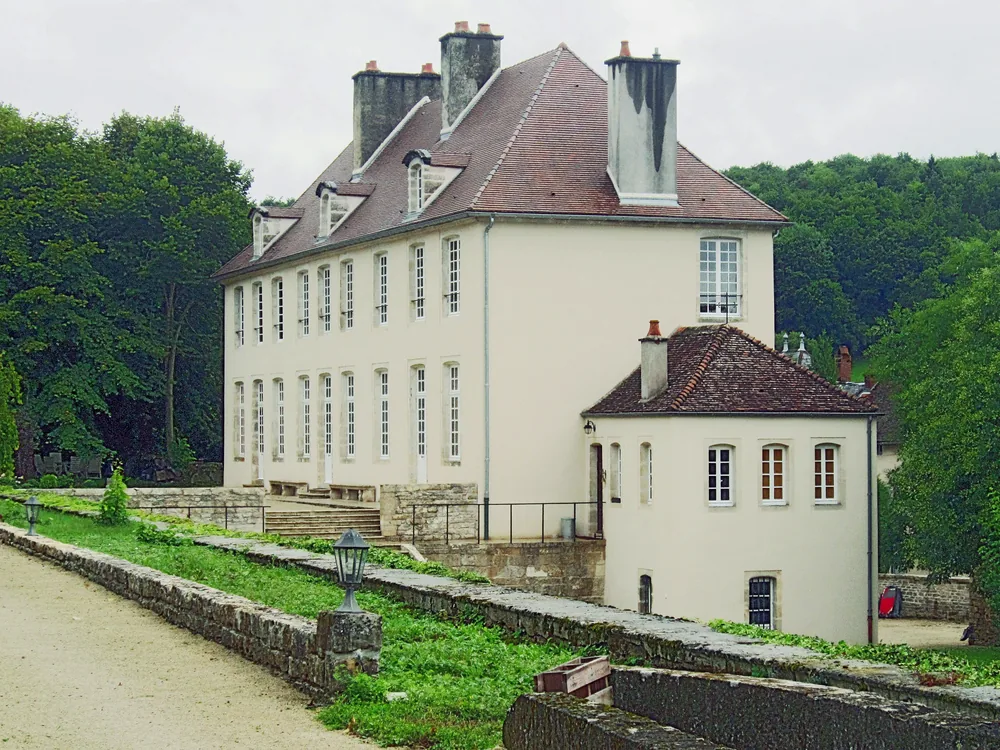
Built 1735 · 18th-century classical château built 1735–1744 for Charles de Saulx, Viscount of Tavannes; incorporates a 15th–16th-century staircase turret predating the main construction, creating a visible junction between the earlier medieval element and the classical 18th-century body; listed as a Historic Monument of France since 1988; the estate includes a working vineyard in the Burgundy-stone cellar tradition of the Châtillonnais, with owner-led visits covering the grounds, octroi pavilions, and the Burgundy-stone cellar
This page is part of an independent travel guide and is not affiliated with, endorsed by, or operated by Château de Tavannes.
© Castles & Palaces
Quick Facts
- Hours
- Daily By appointment
- Guided tour from
- €8
- Duration
- 35–60 minutes
- Best time
- May to October
- Booking
- Required — book 3+ days ahead
- Nearest city
- Châtillon-sur-Seine
Featured Tour
Château de Tavannes: a guided tour of the outdoor estate and the basements
Cancellation available · Instant confirmation
Highlights
- ✦The tour of Château de Tavannes is explicitly exteriors and cellar only — the interior of the château itself is not open to visitors; what the owner-led visit covers is the estate grounds, the 18th-century octroi pavilions, the surrounding vineyard, and a Burgundy-stone cellar that is the estate's working heart as a wine producer
- ✦The château's 15th–16th-century staircase turret predates the main 1735–1744 classical construction by approximately two centuries, creating a visible architectural junction between the older medieval element — built for a different conception of a noble residence — and the classical 18th-century body Charles de Saulx had designed around it
- ✦Château de Tavannes is listed as a Historic Monument of France (Monument Historique) since 1988, recognising the estate's architectural and historical significance within the Châtillonnais — the northern sub-region of Burgundy, cooler and less celebrated than the Côte d'Or vineyards further south, but with its own distinct character and production tradition
- ✦The Châtillonnais is the region that produces Châtillon-en-Diois wines and contains the source of the Seine river — a corner of northern Burgundy that most wine-focused visitors pass through without stopping; the estate visit is one of the few ways to access the area's private agricultural heritage in a guided format
- ✦The tour is led by the current owner, giving the visit the character of a personal introduction to a family property rather than a commercial heritage attraction — the kind of access to private French châteaux and their associated agricultural traditions that is becoming increasingly rare as estates commercialise or close to the public
Skip the queue with a guided tour
Skip-the-line tickets & expert guides
The Châtillonnais is the part of Burgundy that the wine guides mention briefly before moving on to the Côte d'Or. It sits at the northern tip of the Côte-d'Or department, where the rolling plateau of the limestone Burgundy escarpment begins to flatten toward the Paris basin. The Seine rises here, as a small spring near the village of Source-Seine rather than the broad urban river most visitors associate with the name. The vineyards are more modest than those of Gevrey-Chambertin or Puligny-Montrachet, the grand crus absent, the landscape quieter and less internationally trafficked. This is where Château de Tavannes sits, and the first thing to establish about it is that this location is not a disadvantage but a context: an 18th-century estate in the French provincial tradition, working as it has worked for three centuries, in a landscape that has not been transformed by tourist infrastructure.
The château was built from 1735 to 1744 for Charles de Saulx, Viscount of Tavannes, as the classical-style country residence that French noble families of the period regarded as both a statement of cultivated taste and a practical administrative centre for managing agricultural estates. The Saulx-Tavannes family had long-standing connections to the Burgundy region — the family produced military commanders, bishops, and court figures through the 16th and 17th centuries, and the Châtillonnais estate was one component of a broader landholding network. The classical architectural programme of 1735–1744 follows the conventions of 18th-century French provincial château design: a rectangular body, a restrained facade without the elaborate sculptural ornament of the grandes architectures, octroi pavilions flanking the entrance approach, and a cellar complex built in local Burgundy stone for the estate's agricultural and wine-making functions.
The older element — the 15th–16th-century staircase turret — predates everything around it by approximately two centuries. Its presence within or adjacent to the 18th-century body is one of the most common features of French château architecture: the medieval or early modern structure that survived earlier phases of the estate's history, incorporated into or set beside the classical replacement rather than demolished. The turret at Tavannes is a visible architectural junction, its stone and proportions belonging to a different conception of noble building from the classical symmetry that dominates the estate's current appearance. It was retained because it was functional, because demolition was costly, or because the builder recognised its value as an emblem of family continuity — the specific reason has not been recorded, but the result is that the estate carries two architectural periods in a single composition.
The visit offered through the GetYourGuide listing is specific about what it includes and what it does not. The tour is exteriors and cellar only: the grounds, the octroi pavilions at the estate entrance, the vineyard, and the Burgundy-stone cellar. The interior of the château itself is not open to visitors — this is a private working family residence, not a public museum, and the owner-led format of the visit makes clear that access is to the estate's public and productive spaces rather than to its private rooms. Visitors who come expecting to walk through period staterooms will be disappointed; visitors who come expecting an introduction to a working Burgundy estate in the hands of the family that has maintained it will find exactly what is offered.
The owner-led character of the tour is its primary distinction from a standard château visit. In much of France, and particularly in Burgundy, the private château as working agricultural estate has been under economic pressure for decades: maintenance costs exceed income from traditional agriculture, and the response has been either commercialisation (converting to hotel, event venue, or wine tourism complex) or gradual withdrawal from public access. Château de Tavannes has chosen a third path: small-scale, personal, owner-led visits that maintain the estate's private character while making it accessible on a limited basis. The 35-minute tour format — brisk by the standards of major château visits, but appropriate for a private property being shown personally — reflects this approach.
The Burgundy-stone cellar is the tour's practical centrepiece. Châtillonnais estates have used local limestone for cellar construction since at least the medieval period, the stone's thermal properties and the underground temperature creating conditions well-suited to wine storage and aging. The cellar at Tavannes is a working production and storage space rather than a showpiece — the difference is apparent in the scale, the equipment, and the general absence of interpretation designed for tourists unfamiliar with wine production. Whether wine is offered for purchase at the end of the visit depends on availability and the estate's production in any given year; the GetYourGuide listing notes the optional wine purchase as a possibility rather than a guarantee.
The estate's listing as a Historic Monument of France since 1988 recognises the architectural significance of both the 18th-century classical ensemble and the older turret within the national heritage framework. This designation is the relevant official acknowledgment of the estate's cultural value: not a UNESCO World Heritage Site, not a major national monument receiving hundreds of thousands of visitors annually, but a legally protected historic property in the regional inventory of French architectural heritage.
Practical logistics for visiting are straightforward in outline but require advance planning in practice. The GetYourGuide tour is the primary booking channel, and advance booking is essential — the owner-led format means availability is limited by the owner's schedule rather than by capacity. The nearest significant town is Châtillon-sur-Seine, approximately 20–30 kilometres to the east. Visitors travelling from Dijon (approximately 80 kilometres south) or from the main Burgundy wine road would do well to combine the Châtillonnais detour with Fontenay Abbey (a UNESCO-inscribed Cistercian monastery from the 12th century, near Montbard, 40 kilometres southwest) or the source of the Seine, both of which give the northern Burgundy landscape a broader context than wine alone can provide.
For visitors whose primary interest is Burgundy wine tourism, the Châtillonnais region sits outside the principal appellations but within the geographical range of Burgundy's expanded production area. The estate's wines reflect the cooler northern microclimate — different from the concentrated Pinot Noirs of the Côte de Nuits — and the cellar visit provides an introduction to Châtillonnais wine culture that the better-known Côte d'Or domaines, with their reservation lists and waiting times, rarely offer.
History
The estate at Tavannes has connections to the Saulx-Tavannes family, a Burgundy noble family with extensive regional landholdings. The main château building was constructed from 1735 to 1744 for Charles de Saulx, Viscount of Tavannes, incorporating an older 15th–16th-century staircase turret from an earlier phase of the estate. The property was listed as a Historic Monument of France in 1988. The estate continues to operate as a private family property with a working vineyard and cellar.
How to Visit
Getting there: The estate is in the Châtillonnais area of northern Côte-d'Or, Burgundy, approximately 20–30 km from Châtillon-sur-Seine. Access is by car only — there is no public transport to the estate. From Dijon, approximately 80 km north on the D974/D971.
Tickets: Admission is €9 for adults, €5 for children. Advance booking is essential — the visit is owner-led and availability is limited to the owner's schedule. The GetYourGuide guided estate tour covers the grounds, octroi pavilions, the vineyard, and the Burgundy-stone cellar; the château interior is not included as it remains a private family residence. Wine may be available for purchase at the end of the visit.
Practical tips: Book at least 3 days ahead — the owner-led format means availability is genuinely constrained. The tour runs 35–60 minutes outdoors and in the cellar, so dress appropriately for the weather; summer visits are most comfortable. This is a private estate, not a public heritage site, so expect a personal introduction rather than an interpretive museum experience.
Combine with: Château de Saint-Fargeau is ~30 minutes west in the Puisaye and extends a northern-Burgundy château day. The Abbaye de Fontenay (a UNESCO-inscribed 12th-century Cistercian monastery near Montbard, ~40 km southwest) makes a cultural companion to the Châtillonnais estate visit.
Frequently Asked Questions
No. The Château de Tavannes tour covers the estate exteriors, the octroi pavilions, the vineyard, and the Burgundy-stone cellar only. The interior of the château itself is not open to visitors — it is a private family residence. This is stated clearly in the GetYourGuide listing and is the tour format as offered by the owner.
Location
Châtillonnais, Côte-d'Or, Burgundy, France
Nearby Castles
Tours & Tickets
Powered by GetYourGuide
From
€8/ person