
Genoese Tower
Tour Génoise de Porto
France · Corsica (Porto, Corse-du-Sud) · Near Porto, Corsica
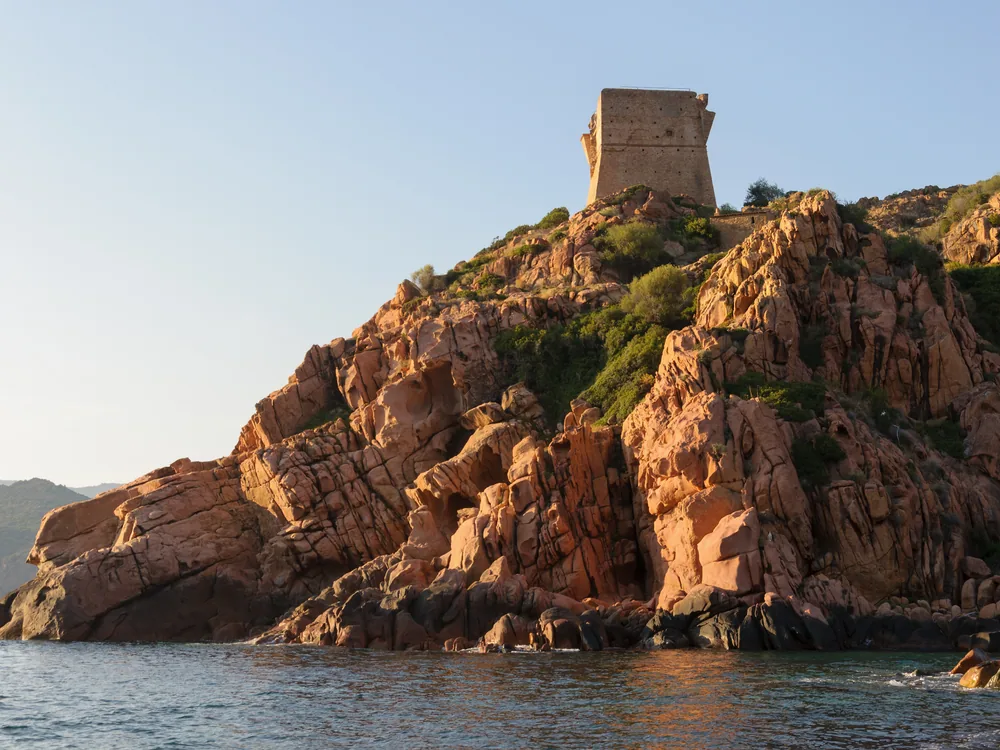
Built 1585 · 16th-century Genoese watchtower of the type built extensively around the Corsican coastline during the Republic of Genoa's administration of the island to warn against Barbary pirate raids; Porto's tower stands on a red granite promontory directly above the beach and the mouth of the Porto river, within the Gulf of Porto and overlooking the bay that forms part of the UNESCO World Heritage site inscribed in 1983 as 'Gulf of Porto: Calanche de Piana, Gulf of Girolata, Scandola Reserve'; the tower is a cylindrical stone structure on a square base, typical of Genoese coastal watch-tower design, with the entry door elevated above ground level to prevent easy access; entry cost is approximately €3 and the tower is climbable to the rooftop platform for panoramic views of the Gulf of Porto
This page is part of an independent travel guide and is not affiliated with, endorsed by, or operated by Genoese Tower.
© Castles & Palaces
Quick Facts
- Hours
- Daily 09:00–19:00
- Entry via GetYourGuide
- €3
- Duration
- 30 minutes
- Best time
- May to September
- Nearest city
- Porto, Corsica
Featured Tour
Porto: Genoese Tower Entry Ticket
Cancellation available · Instant confirmation
Highlights
- ✦Porto's Genoese tower sits on a red granite promontory directly at the mouth of the Gulf of Porto, within the UNESCO World Heritage site inscribed in 1983 as the 'Gulf of Porto: Calanche de Piana, Gulf of Girolata, Scandola Reserve' — the combination of sea, red rock, and the Scandola nature reserve (accessible only by boat) makes the Gulf of Porto the most visually dramatic coastal landscape in Corsica and one of the most arresting in the Western Mediterranean
- ✦The entry cost of approximately €3 makes this one of the most accessible named attractions in any UNESCO World Heritage zone in Europe — practically free, immediately available, with no booking required, and the rooftop view of the Gulf of Porto is the kind that normally costs multiples of what it actually charges here
- ✦The Genoese built approximately 67 watchtowers around the Corsican coastline during their administration of the island (12th–18th centuries) to provide early warning of Barbary pirate raids — the towers were positioned so that a signal fire visible from one tower could be relayed along the coast within hours, creating a coastal alarm network that is one of the most extensive examples of medieval signal-fire infrastructure in the Mediterranean
- ✦The Calanche de Piana — a UNESCO landscape of bizarre red granite formations on the D81 road approximately 10 km south of Porto — can be combined with the Genoese Tower visit in a single Porto-based day: the tower for the bay view, the Calanche for the inland red-rock landscape, and a boat trip from Porto port for the Scandola nature reserve if time allows
- ✦The tower's red granite setting is the specific visual detail that makes Porto photographs distinctive from the rest of Corsica: the orange-red of the porphyritic granite, the deep blue of the Gulf water, the white of the beach, and the cylindrical tower silhouette against the sky produce a colour combination that is specific to this coastal geology and is why Porto consistently appears on lists of Europe's most visually striking coastal villages
Skip the queue with a guided tour
Skip-the-line tickets & expert guides
The Republic of Genoa administered Corsica for approximately six centuries — from the early 13th century, when the Genoese effectively purchased or conquered the island from Pisan influence, until 1768, when Genoa ceded the island to France a year before Napoleon Bonaparte was born in Ajaccio. The relationship between Genoa and Corsica across these centuries was characterised by regular Corsican resistance to Genoese rule, economic exploitation of the island's resources, and the persistent security problem of Barbary pirate raids on the coastal settlements. The Genoese response to the pirate threat was systematic: they built a network of approximately 67 watchtowers around the Corsican coastline, positioned so that a signal fire at one tower was visible from the next, and the alarm could be relayed around the island within hours. Porto's tower was built around 1585, one of the later towers in the network, positioned on a red granite promontory at the mouth of the Gulf of Porto where it commanded views of the bay and the approach routes from the sea.
The tower's entry cost of approximately €3 warrants direct attention before any other aspect of the visit is discussed. This is effectively a token charge — the lowest admission price for any named heritage attraction this site is likely to feature — and the view from the rooftop platform justifies far more than it costs. The Gulf of Porto is one of the most visually impressive coastal landscapes in the Western Mediterranean: the red porphyritic granite of the surrounding cliffs drops directly into water of a blue that shifts with the light and the depth, the Scandola peninsula to the north is a protected natural reserve accessible only by boat and visible from the tower top, and the Calanche de Piana — the UNESCO-listed red granite formations on the road south from Porto — make the land skyline as dramatic as the sea view. To stand on the top of a 16th-century Genoese watchtower and look at this combination for less than three dollars is, by any reasonable measure, one of the better value propositions in European heritage tourism.
The UNESCO inscription of 1983 — 'Gulf of Porto: Calanche de Piana, Gulf of Girolata, Scandola Reserve' — recognised the entire coastal zone as a natural World Heritage site, one of the earliest French sites in the programme and one of the few that is primarily natural rather than cultural in character. The Scandola Reserve is the most environmentally significant component: a marine and terrestrial reserve that prohibits fishing and landing except at one designated point, protecting marine habitats of exceptional richness including Posidonia seagrass meadows, fish nurseries, and seabird colonies. Ospreys nest in the reserve, and the combination of marine and terrestrial protection in a single designated area is unusual in European conservation policy. Access to Scandola is exclusively by boat from Porto or nearby villages, with tour boats running in season to the reserve perimeter.
The Calanche de Piana, accessible by car on the D81 road approximately 10 kilometres south of Porto, is the landscape that most dramatically explains why the UNESCO inscription was sought. The Calanche is a geological formation of heavily eroded porphyritic granite — the same red-orange stone as the Porto tower's promontory — where millions of years of differential weathering have produced bizarre pinnacles, arches, and boulders that the human tendency to find faces and figures in natural forms makes particularly productive. The D81 road winds through the Calanche with viewpoints at intervals; walking paths descend through the formations to the coast. The combination of the Porto tower, the D81 Calanche, and a boat trip to Scandola gives a single day an unusual density of visual experience.
Porto village itself is small — a hotel strip, a port with small fishing and pleasure boats, restaurants focused on seafood — and has the character of a seasonal Corsican coastal resort rather than a year-round community. The tower and the UNESCO landscape bring visitors from June to September; outside this period many businesses close and access to some boat tours is seasonal. Access to the tower from Ajaccio airport, the main international gateway to Corsica, is approximately two hours by car on the D81 coastal road that skirts the Gulf of Ajaccio before turning north through the Piana pass — a drive of consistent visual reward. The coastal road from Porto north to Calvi passes through some of the most spectacular scenery in Corsica — the Gorges de Spelunca, the forest of Aïtone, the high mountain passes — making Porto a logical base or stopping point on a longer Corsican itinerary.
The Genoese tower network that Porto's example belongs to is legible across the Corsican coast if you know what to look for: the same cylindrical stone structures on headlands and promontories, visible from each other in the original signal-fire logic, now serving as landmarks and occasional visitor attractions at various points around the island. The Genoese Towers of Mortella and Nonza are among the others with visitor access; the most photographed may be the Tour d'Agnello on the Cap Corse peninsula in the north. Porto's tower is distinctive for its red granite setting, its UNESCO landscape context, and its near-zero entry cost relative to the view it provides.
The towers are built to a consistent Genoese specification: cylindrical on a square base, walls thick enough to withstand cannon fire, the entry door elevated well above ground level and originally accessed by a removable ladder, and a flat rooftop platform for the fire-signal. Porto's example preserves this standard military design in the most visually dramatic setting any Corsican tower occupies. The short duration of the visit — thirty minutes — is matched to the tower's scale rather than its importance, and visitors who climb to the rooftop and spend five minutes watching the Gulf of Porto below will understand why this site appears in almost every Corsica travel account.
History
Porto's Genoese Tower was built around 1585 as part of the Republic of Genoa's coastal defensive network on Corsica. The Genoese built approximately 67 such towers around the Corsican coastline during their administration of the island (early 13th century to 1768) to provide early warning of Barbary pirate raids through a visual signalling system. Porto's tower was positioned on a red granite promontory at the mouth of the Gulf of Porto to command views of the bay. Genoa ceded Corsica to France in 1768, ending Genoese administration. The Gulf of Porto landscape — including the tower's coastal zone — was inscribed as a UNESCO World Heritage natural site in 1983: 'Gulf of Porto: Calanche de Piana, Gulf of Girolata, Scandola Reserve'. The tower is now a minor-fee visitor attraction with rooftop access.
How to Visit
Getting there: Porto is in western Corsica, ~70 km north of Ajaccio on the D81 coastal road (~2 hours). Ajaccio Airport (AJA) has seasonal connections from Paris, Nice, Marseille, and other European cities. No practical public transport connects Porto from Ajaccio — a car is required. The tower is visible from Porto village and accessible on foot from the parking areas near the port.
Tickets: Walk-up admission is €3 for adults, €2 for children. No advance booking required. The GetYourGuide entry ticket covers the 30-minute tower visit with rooftop access and can be booked in advance.
Practical tips: Climb to the rooftop platform — the view of the Gulf of Porto from the top is the entire point of the visit. Come in the late afternoon when the red granite cliffs glow in the low light; the colour combination of the porphyritic rock, the deep blue water, and the white of the beach is at its most dramatic before sunset.
Combine with: The Calanche de Piana (10 km south on the D81) is the essential same-day pairing — a UNESCO landscape of bizarre red granite formations with walking paths to the coast. Scandola nature reserve boat tours depart from Porto port seasonally and add a half-day marine reserve circuit to see osprey nesting cliffs and Posidonia seagrass visible from the water.
Frequently Asked Questions
The Republic of Genoa built approximately 67 watchtowers around the Corsican coastline primarily to warn against Barbary pirate raids from North Africa, which were a persistent threat to coastal settlements across the 15th, 16th, and 17th centuries. The towers were positioned so that a signal fire visible from one tower could be seen by the next, creating a coastal alarm network that could relay warning of an approaching raid around the island within hours, allowing communities time to flee inland or prepare a defence.
Location
Tour Génoise, 20150 Porto, Corsica, France
Nearby Castles
Tours & Tickets
Powered by GetYourGuide
From
€3/ person