
Tagliolo Monferrato Castle
Castello di Tagliolo Monferrato
Italy · Piedmont · Near Tagliolo Monferrato
Built 1100 · Medieval castle with a core dating to the 11th–12th century, with later Renaissance-era residential additions that softened the purely defensive character of the original structure; continuous noble family ownership across many centuries; today operates as a working wine estate in the heart of the Monferrato DOC zone, a UNESCO World Heritage landscape (inscribed 2014 as 'Vineyard Landscapes of Piedmont: Langhe-Roero and Monferrato'); the tour includes the castle exterior and grounds, the wine cellar, and a guided tasting led by the Marquis
This page is part of an independent travel guide and is not affiliated with, endorsed by, or operated by Tagliolo Monferrato Castle.
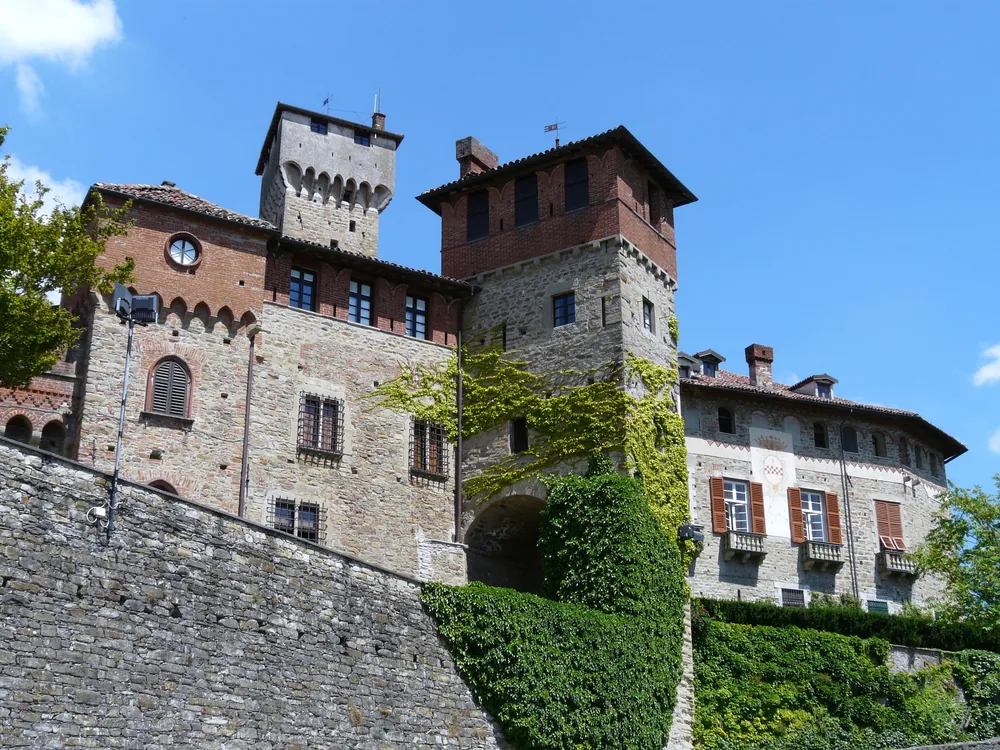
© Castles & Palaces
Quick Facts
- Hours
- Mon–Sun By appointment
- Guided tour from
- €60
- Duration
- 2 hours
- Best time
- April to October
- Booking
- Required — book 5+ days ahead
- Nearest city
- Tagliolo Monferrato
Featured Tour
Visit and Tasting at Tagliolo Monferrato Castle
Cancellation available · Instant confirmation
Stay Here
Castello di Tagliolo Wine Resort
Booked as a whole self-catering property, not by individual room — sleeps up to 6
Rooms are split between the historic building and a newer wing
Booked via Booking.com · Free cancellation on most rates
Already covered by the How to Visit section above: the Marquis-led guided tour is the main channel for accessing the castle's interior, independent of the accommodation.
Highlights
- ✦Tagliolo Monferrato Castle sits within the UNESCO World Heritage landscape 'Vineyard Landscapes of Piedmont: Langhe-Roero and Monferrato' (inscribed 2014) — one of only a handful of European castle sites where the building itself is physically within a UNESCO-designated vineyard landscape, giving the wine produced here a cultural designation that goes beyond appellation certification
- ✦The tour is led by the Marquis — the current owner — making this a genuinely personal introduction to a private Piedmontese noble estate rather than a curated museum experience; the Marquis-led format is rare among Italian castle visits of any scale, and the combination of personal narrative, family history, and direct wine expertise creates a quality of access that organised tours of larger monuments cannot replicate
- ✦The castle's medieval core dates to the 11th–12th century, with Renaissance-era residential additions that give the building a layered character typical of long-occupied Italian noble estates — the transition from a purely defensive structure to a residential one is visible in the architecture, where later windows and loggia elements sit within or beside the older defensive masonry
- ✦The Monferrato wine region — which the UNESCO designation covers in conjunction with Langhe and Roero — produces Barbera d'Asti, Grignolino, and Dolcetto di Ovada among its most significant DOC wines; the estate's cellar visit and tasting provide an introduction to Monferrato wine culture in a context — a medieval castle cellar — that few other venues in the region can offer
- ✦Tagliolo Monferrato Castle represents a type of Italian heritage site that is rapidly disappearing: the privately held medieval castle still owned by the family that has maintained it across generations, not converted to a hotel or winery complex but run as an agricultural estate with selective public access on the owner's terms
Skip the queue with a guided tour
Skip-the-line tickets & expert guides
The Monferrato is a name that wine drinkers know but that most of them locate only vaguely: somewhere in Piedmont, somewhere between the Langhe and the coast, somewhere in the area of Asti and Alessandria that produces Barbera and Grignolino and Dolcetto in a landscape of rolling hills covered with vines. The UNESCO inscription of 2014 — 'Vineyard Landscapes of Piedmont: Langhe-Roero and Monferrato' — gave the landscape an international recognition that the wines had long deserved, classifying the Piedmontese hill country as a cultural landscape of Outstanding Universal Value in the same framework that covers the Loire Valley and the Rhine Gorge and the Tokaj wine region in Hungary. The inscription covers not just the vines but the entire cultural complex: the cellar traditions, the hilltop villages, the castle estates, and the relationship between the land and the families who have worked it across many centuries.
Tagliolo Monferrato Castle is one of the castle estates within this landscape. The village of Tagliolo Monferrato sits in the Ovada hills of the Alessandria province, at the western edge of the Monferrato wine zone where it approaches the Ligurian Apennines — a position that gives the landscape a slightly more rugged character than the gentler hills around Asti, and that defines the specific terroir of the Dolcetto di Ovada DOC, one of the Monferrato's most characteristic wines. The castle stands above the village on the hill that medieval builders invariably selected for fortified estate positions: visible from the surrounding countryside, defensible on multiple sides, and controlling the agricultural land below.
The castle's medieval core dates to the 11th–12th century, placing its foundation in the period of Norman and Germanic feudal consolidation in northern Italy when hilltop strongholds were the primary form of territorial control across the Apennine foothills. The original structure would have been a straightforward defensive installation — tower, walls, perhaps a small residential accommodation — without the residential elaboration that later centuries would add. The Renaissance-era modifications, visible in later windows, loggia elements, and interior adaptations, reflect the broader Italian pattern of the 15th and 16th centuries in which the castle's military function receded and its role as a noble residence and agricultural administrative centre became primary. The transition is legible in the building's fabric: older defensive masonry alongside later residential additions, the two phases in conversation rather than conflict.
What distinguishes the Tagliolo Monferrato experience from other Piedmontese castle visits is the direct involvement of the Marquis — the current owner — who leads the tours personally. The format matters because it changes the nature of the visit. A museum-format castle tour presents curated information through interpretation panels, recorded audio guides, or scheduled group visits with a professional guide hired for the purpose. A Marquis-led tour presents a private property through the eyes and voice of the person whose family has owned it across generations — with the specific knowledge, the specific enthusiasms, the specific omissions and emphases that accompany family ownership of land across a long time span. The result is personal in a way that institutional heritage visits typically are not, and this personal quality is the primary thing that justifies the price premium of the combined visit-and-tasting format.
The wine cellar is the visit's practical centrepiece. Piedmontese estate cellars are typically built into the hillside, using the natural thermal insulation of the rock to maintain the constant cool temperature that wine storage and aging require. The cellar at Tagliolo Monferrato follows this pattern, with Burgundy-stone traditions similar to those of the Langhe estates further south but within the specific Ovada production context. The tasting that concludes the visit covers the estate's principal wines — Dolcetto di Ovada and potentially other Monferrato DOC wines depending on the current production vintage — in the cellar or adjacent tasting space, guided by the Marquis's direct knowledge of how the wines were made and how they reflect the specific conditions of the estate's position in the Ovada hills.
The UNESCO context is worth developing for visitors who may not immediately connect the designation to the specific site. The 'Vineyard Landscapes of Piedmont' inscription is a cultural landscape designation, not a monument designation — the UNESCO value lies in the ongoing human relationship between a specific community and its land rather than in any single building or site. This means that the castle, the village, the vines, the cellar, the road network, and the family who manages it are all part of what the UNESCO inscription recognises. Visiting the castle within this understanding gives the experience a depth that a straightforward castle-and-tasting visit would not have: you are inside the landscape that the international heritage community has identified as an expression of Outstanding Universal Value, engaging with it at the level where the designation was actually earned.
Practical logistics require a car. Tagliolo Monferrato is in the hill country between Ovada and Acqui Terme, approximately 70 kilometres southeast of Genoa and 80 kilometres southwest of Alessandria. The nearest significant towns are Ovada (12 kilometres) and Acqui Terme (20 kilometres), both of which have accommodation and restaurants. The GetYourGuide tour is the primary booking channel; advance booking is essential as visits are led personally by the owner and availability is limited by his schedule.
Elsewhere in Piedmont, Castello di Masino and Castello di Manta — both already on this site — represent other facets of the region's long castle and noble estate tradition. Masino is a large Savoy-era castle covering the dynastic history of the House of Savoy in the Canavese region north of Turin; Manta is a 15th-century fortress in the Cuneo province known for its remarkable cycle of Gothic frescoes. Both are approximately 1.5–2 hours from Tagliolo Monferrato by car, making them regional companions in a Piedmont castle itinerary rather than same-day additions to the Ovada visit.
History
Tagliolo Monferrato Castle was established as a medieval fortress in the 11th–12th century by feudal noble families controlling the Ovada hill area of the Monferrato region. The castle passed through several noble families across the medieval period before coming under the ownership of the family whose descendants hold it today. Renaissance-era residential additions modified the purely defensive structure for noble habitation. The estate has operated as a working wine producer within the Dolcetto di Ovada DOC zone. The surrounding Monferrato landscape was inscribed as a UNESCO World Heritage cultural landscape in 2014 as part of the 'Vineyard Landscapes of Piedmont: Langhe-Roero and Monferrato' designation.
How to Visit
Getting there: Tagliolo Monferrato is in the Ovada hills of Alessandria province, approximately 70 km southeast of Genoa and 80 km southwest of Alessandria. Access is by car — public transport connections are limited. The nearest towns with accommodation are Ovada (12 km) and Acqui Terme (20 km).
Tickets: The GetYourGuide tour is the primary booking channel and covers the castle visit and wine tasting (2 hours, led by the Marquis). Advance booking is essential.
Visit length: 2 hours for the full tour and tasting.
Practical tips: April to October. Book at least 5 days ahead.
Combine with: Ovada town (12 km) and Acqui Terme (20 km, known for its thermal baths and sparkling Brachetto d'Acqui DOCG wines) are the nearest practical additions. For a broader Piedmont castle circuit, Castello di Masino and Castello di Manta are both on this site — approximately 1.5–2 hours north and southwest respectively.
How to Stay
The estate's medieval core and UNESCO Monferrato wine-country setting are already covered above in How to Visit — this section describes the separate overnight option.
Getting there: Same access as the visit section above — by car, about 70 km southeast of Genoa and 80 km southwest of Alessandria.
Rooms & rates: A 2-bedroom apartment (up to 6 guests) in a historic building on the estate, with a full kitchen, garden, and outdoor dining area. From €134/night.
On-site: The estate's own winery, garden, table tennis, bicycle rental — the same grounds where the castle's guided tour takes place.
Good to know: The "Wine Resort" accommodation is a distinct experience from the Marquis-led tour (covered in How to Visit) — guests staying here can combine both, but must book them separately (Booking.com for the stay, GetYourGuide for the tour and tasting).
Combine with: Ovada (~12 km), Acqui Terme (~20 km) — same recommendations as the existing visit section.
Frequently Asked Questions
The 'Vineyard Landscapes of Piedmont: Langhe-Roero and Monferrato' UNESCO World Heritage inscription (2014) is a cultural landscape designation that recognises the ongoing relationship between the Piedmontese communities and their vine-growing territory as a whole — not any single building or site. Tagliolo Monferrato Castle sits physically within this landscape, meaning the castle, the surrounding vines, and the estate's wine production are all part of what UNESCO has identified as Outstanding Universal Value. The wines produced here carry this designation's context in a way that DOC appellation certification alone cannot capture.
Location
Via al Castello, 15070 Tagliolo Monferrato AL, Italy
Nearby Castles

Tours & Tickets
Powered by GetYourGuide
From
€60/ person